To save content items to your account,
please confirm that you agree to abide by our usage policies.
If this is the first time you use this feature, you will be asked to authorise Cambridge Core to connect with your account.
Find out more about saving content to .
To save content items to your Kindle, first ensure no-reply@cambridge.org
is added to your Approved Personal Document E-mail List under your Personal Document Settings
on the Manage Your Content and Devices page of your Amazon account. Then enter the ‘name’ part
of your Kindle email address below.
Find out more about saving to your Kindle.
Note you can select to save to either the @free.kindle.com or @kindle.com variations.
‘@free.kindle.com’ emails are free but can only be saved to your device when it is connected to wi-fi.
‘@kindle.com’ emails can be delivered even when you are not connected to wi-fi, but note that service fees apply.
The period from the inaugural production of the Ring (1876) to the bicentenary of Wagner’s death (2013) encompasses a variety of dramaturgical approaches. The tradition of naturalistic, illusionist theatre, to which Wagner was heir, was exposed within twenty-five years to the innovations of Alfred Roller and Adolphe Appia, then in turn to the austere iconoclasm of Wieland Wagner, the ideological revolutions of Bertolt Brecht and metatheater, and more recently to the radical theories of deconstruction and post-dramatic theater, all of which have come to constitute what is known as Regietheater. Wagner’s richly multivalent cycle also provided fertile territory for political, environmental and feminist interpretations, but this focus on ideological aspects of the work has developed alongside an emphasis on the theatrical dimension (including mime, dance, avant-garde design, video, and new technology). Indeed, it could be argued that the primacy accorded mime, gesture, and choreographed movement in recent decades represents a fidelity, in some respects, to the composer’s concept of the Gesamtkunstwerk and that the apotheosis of the latter has been achieved only in the age of Regietheater.
The men and women we meet in the Ring, via words, music, and stage gesture, span two generations, various rungs in the cosmic hierarchy (god to human, or vice versa), and four dramas. Every character appearing onstage – and most mentioned in the text – receives attention in this chapter. Opening with roots in the natural world, from which each character in one way or another emerges, context, personality, relationships, motivations, and acts are examined, always bearing in mind that, in the Ring, such issues are explored musically as much as verbally, one sometimes in contradiction with the other, and that Wagner’s broader intellectual framework – philosophical, literary, musical, political, religious – also has much to tell us. We must start and end somewhere, of course, but what becomes quickly apparent is that it is the connections between characters – how their deeds, their words, their music shape and affect one another – that propel Wagner’s drama. As we progress, in Wagner’s conception, from Wotan to Brünnhilde; from male patriarch to female rebel; from power politics, through revolution, to renunciation; from Das Rheingold to Götterdämmerung, none of those categories, none of those characters, remains unchanged.
Comprehensive and quite lengthy introduction to Wagner and the Ring. Covers concept of the volume as well as basic biographical details and intellectual and cultural influences for Wagner. Explains the significance of the Ring in musical, literary, and cultural terms. Sections include mythological sources, musical structure, compositional process, discussion of overall “meaning,” approaches to interpretation, performance history and impact.
This chapter analyzes both Wagner's formal processes and his harmonic and motivic structure in the Ring. The first half of the chapter focuses on the forms Wagner employed in these four operas, including such traditional operatic forms as arias and ensembles, as well as Wagner’s own theory of the "poetic-musical period" and the use of Stabreim, and various strophic and "symphonic" forms. The chapter's second half turns attention onto structure, which largely means Wagner's approach to handling tonality. Far from abolishing this system, as is sometimes supposed, Wagner worked exclusively within it. And yet the extreme way in which he sometimes pushed its logic explains in large part the magnetic effect he has had on radical artists and thinkers of the last century and a half.
Introduction to Wagner’s use of leitmotifs in the Ring and the discourse that accompanied and shaped the notion of this compositional technique from its beginnings. Special focus on the making of the concept (which Wagner neither initiated nor supported), on the idea of “foreboding and reminiscent melodic moments” he developed in Opera and Drama and on core motifs from the Ring that provide the material for four evenings of music drama and characterize the tetralogy as a whole (renunciation, woe, Rheingold, Ring, Valhalla, and redemption through love motifs). Aesthetic questions about Wagner’s trademark tool of composition are discussed from the listener’s perspective: Are we really supposed to learn leitmotifs like vocabulary and, if so, what did Wagner think about this? Did he anticipate that for the next 140 years nearly everyone who wanted to say something about his music would talk about leitmotifs? How can we dive into the magic web of the Ring’s leitmotifs without simply blindly memorizing dozens of melodies and their supposed meaning?
In 1852, Wagner described his text for the Ring cycle as “the greatest poem that has ever been written.” This chapter asks to what extent the musical innovations – responding to historical linguistics – were formative for a generation of writers as well as composers. To what extent did innovation in one medium engender innovative techniques in another? After contextualizing Wagner’s operatic reforms within his early writings and related moments within the history of the genre, it explores a cornucopia of modernist writers working in the shadow of the Ring cycle: from Wilde, D. H. Lawrence, and Aubrey Beardsley, to Yeats, Mann, and Beckett; from Mallarmé and Dujardin to Zola and Proust, to name but a few. It traces the profound influence on literature of leifmotivic techniques, as “carriers of feeling,” amid the shift to words as a dereferentialized system of signs. The role of alliteration, direct parody, interior monologue, and involuntary memory all contribute to the overall view that appropriation and influence of “reformist” techniques in literature and linguistics remained in the hands of authors, regardless of Wagner’s predictions for his own literary greatness.
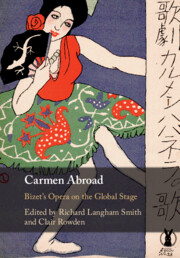
From the 'old world' to the 'new' and back again, this transnational history of the performance and reception of Bizet's Carmen – whose subject has become a modern myth and its heroine a symbol – provides new understanding of the opera's enduring yet ever-evolving and resituated presence and popularity. This book examines three stages of cultural transfer: the opera's establishment in the repertoire; its performance, translation, adaptation and appropriation in Europe, the Americas and Australia; its cultural 'work' in Soviet Russia, in Japan in the era of Westernisation, in southern, regionalist France and in Carmen's 'homeland', Spain. As the volume reveals the ways in which Bizet's opera swiftly travelled the globe from its Parisian premiere, readers will understand how the story, the music, the staging and the singers appealed to audiences in diverse geographical, artistic and political contexts.
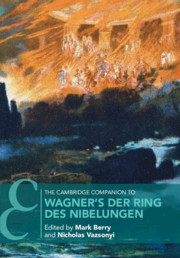
The Companion is an essential, interdisciplinary tool for those both familiar and unfamiliar with Wagner's Ring. It opens with a concise introduction to both the composer and the Ring, introducing Wagner as a cultural figure, and giving a comprehensive overview of the work. Subsequent chapters, written by leading Wagner experts, focus on musical topics such as 'leitmotif', and structure, and provide a comprehensive set of character portraits, including leading players like Wotan, Brünnhilde, and Siegfried. Further chapters look to the mythological background of the work and the idea of the Bayreuth Festival, as well as critical reception of the Ring, its relationship to Nazism, and its impact on literature and popular culture, in turn offering new approaches to interpretation including gender, race and environmentalism. The volume ends with a history of notable stage productions from the world premiere in 1876 to the most recent stagings in Bayreuth and elsewhere.
While it is acknowledged that by 1879 Carmen was a global phenomenon, this chapter examines its reception in the French provinces, revealing the contributing factors which brought it back to the Opéra-Comique in 1883. The picture revealed by the work’s reception in the wake of Bizet’s untimely death, in Brussels, Lyon, Toulouse, Marseilles, Lille and Bordeaux is complex; the relationship of individual provinces with the centre, Bizet hagiography (or lack of), concerns of genre and the perennity of opéra-comique, the difficulty of the score along with its performers are all debates which contribute to a growing critical mass brought to bear upon Léon Carvalho in Paris. In addition, Galli-Marié is revealed as instrumental in the revival of the work, not only through her lobbying of the principal actors, but also through her touring activities. Thus the diverse and evolving French opinions of Bizet’s Carmen, formulated over a period of four years in parallel to the work’s international reputation, are analysed for the first time, revealing national pressures which brought Carmen ‘home’ in 1883.
The international fate of the archetypal Parisian and ‘southern’ opera Carmen was significantly influenced by a German translation first performed on 23 October 1875 in Vienna. Already before Bizet’s untimely death on 3 June of the same year, Franz Jauner, the newly appointed director of the Vienna Court Opera, had commissioned an adapted version of the opera for the Viennese stage. This first revival was subsequently performed 476 times at the Court Opera between 1875 and 1932, with several generations of performers spanning the decades. Today it is easy to forget, that the German translation of Carmen by Julius Hopp played a central role in the work’s subsequent reputation and diffusion, providing reference points for generations of critics and spectators throughout and beyond the German-speaking regions. This chapter looks at Carmen in transition between Paris and Vienna, between the Opéra-Comique and the Court Opera, discussing some of the discourses and materials involved in this transfer. It also considers how the Germanic Carmen moved within Vienna and beyond, crossing both urban and transnational borders in the first decades of its reception history beyond Paris.
From the time of their premieres, Carmen was an immediate success both in Portugal (Lisbon, 1885, in Italian) and, before this, in Brazil (Rio de Janeiro, 1881, in French). By 1915, thanks to travelling companies, principally Italian and French, the opera was widely known and popular throughout both countries, reaching not only principal cities on the coast or up river, but also in the interior, accessible through the increasing railway networks, particularly striking in the hinterland of São Paulo. Performance conditions were very variable, with difficulties often experienced in relation to the orchestra and choruses. Audiences in Lisbon had very high expectations, which were rarely met, while in Brazil reception was much more spontaneous and appreciative. Parodies of Carmen, imported and locally produced, were a feature in both countries. In 1911 a travelling children’s company in Rio, São Paulo and the south of Brazil raised questions in the local press about working conditions and particularly child labour.
Carmen is currently one of the most frequently performed Western operas in Japan where the character of Carmen has become widely known. This chapter explores the complex processes of assimilating and integrating a Western icon into the culture of a Far-Eastern country. It begins by establishing a chronology of performances and adaptations of Carmen in Japan between 1885 and 1945, and examines in detail: 1, the first performance of the opera by a Russian company in 1919; 2, the first all-Japanese-cast production in 1922; 3, the contribution of mixed-race singers such as Yoshiko Sato (1909−1982) and Yosie Fujiwara (1898−1976); and 4, Japan’s eventual role as a disseminator of occidental music to other Asian countries.
These encounters between Carmen and Japan raise fascinating issues of race, gender, class, hybridity and proto-globalisation. By embracing the ‘Otherness’ of Carmen, the Japanese were not asserting their distance from the West but rather attempting to access its mainstream. In this way, by striving to incorporate its Western ‘Other’, Japan embarked upon a shift towards a globalised world.