To save content items to your account,
please confirm that you agree to abide by our usage policies.
If this is the first time you use this feature, you will be asked to authorise Cambridge Core to connect with your account.
Find out more about saving content to .
To save content items to your Kindle, first ensure no-reply@cambridge.org
is added to your Approved Personal Document E-mail List under your Personal Document Settings
on the Manage Your Content and Devices page of your Amazon account. Then enter the ‘name’ part
of your Kindle email address below.
Find out more about saving to your Kindle.
Note you can select to save to either the @free.kindle.com or @kindle.com variations.
‘@free.kindle.com’ emails are free but can only be saved to your device when it is connected to wi-fi.
‘@kindle.com’ emails can be delivered even when you are not connected to wi-fi, but note that service fees apply.
Undernutrition among children under the age of five years is a prevalent global issue, especially in Bangladesh. This study aimed to explore the relationships of household environmental conditions (HECs) with child undernutrition in Bangladesh, with a specific focus on rural–urban variations.
Design:
We analysed children’s data from the 2017/18 Bangladesh Demographic Health Survey. The outcome variable considered were measures of child undernutrition, including stunting, wasting and underweight. The primary exposure variables considered were indicators of HEC. We used a hierarchical multilevel mixed-effect generalized linear models (GLM) modified with a Poisson regression to explore the association between outcomes and exposures, adjusting for potential confounders.
Setting:
Nationally representative cross-sectional survey.
Participants:
8,057 under-5 children.
Results:
The prevalence of stunting, wasting and underweight in Bangladesh was 31%, 8%, and 22%, respectively, with notable urban–rural variations. Under-5 children who lived in houses constructed with unimproved materials (aRR: 1·17), exposed to household air pollution (aPR: 1·37), had unimproved drinking water sources (aPR: 1·28) or had poor handwashing facilities (aPR: 1·24) had a greater likelihood of stunting compared to their counterparts. Similar associations were observed for underweight. The likelihood of stunting and underweight increased with increasing scores of poor HECs, with variations in the effect size across urban–rural areas.
Conclusion:
The high prevalence of stunting and underweight in Bangladesh is linked to poor HECs, therefore, integrated approaches should be adopted to address these environmental factors collectively. Policies and programmes should prioritse enhancing housing quality to achieve sustainable improvements in child nutritional outcomes.
Growth faltering is widespread in many low- and middle-income countries, but its effects on childhood bone mass accrual are unknown. The objective of this study was to estimate associations between length (conditional length-for-age z-scores, cLAZ) and weight (conditional weight-for-age z-scores, cWAZ) gain in three age intervals (ages 0–6, 6–12 and 12–24 months) with dual-energy X-ray absorptiometry-derived measures of bone mass (total body less head (TBLH) bone mineral content (BMC), areal bone mineral density (aBMD) and bone area) at 4 years of age.
Design:
Associations between interval-specific growth parameters (cLAZ and cWAZ) and bone outcomes were estimated using linear regression models, adjusted for maternal, child and household characteristics.
Setting:
Data collection occurred in Dhaka, Bangladesh.
Participants:
599 healthy children enrolled in the BONe and mUScle Health in Kids Study.
Results:
cLAZ in each age interval was positively associated with TBLH BMC, aBMD and bone area at 4 years; however, associations attenuated towards null upon adjustment for concurrent height-for-age z-scores (HAZ) at age 4 years and confounders. cWAZ from 0 to 6 and 6 to 12 months was not associated with bone mass, but every sd increase in cWAZ between 12 and 24 months was associated with greater BMC (7·6 g; 95 % CI: 3·2, 12·0) and aBMD (0·008 g/cm2; 95 % CI: 0·003, 0·014) after adjusting for concurrent WAZ, HAZ and confounders.
Conclusions:
Associations of linear growth (birth to 2 years) with bone mass at age 4 years were explained by concurrent HAZ. Weight gain in the second year of life may increase bone mass independently of linear growth in settings where growth faltering is common.
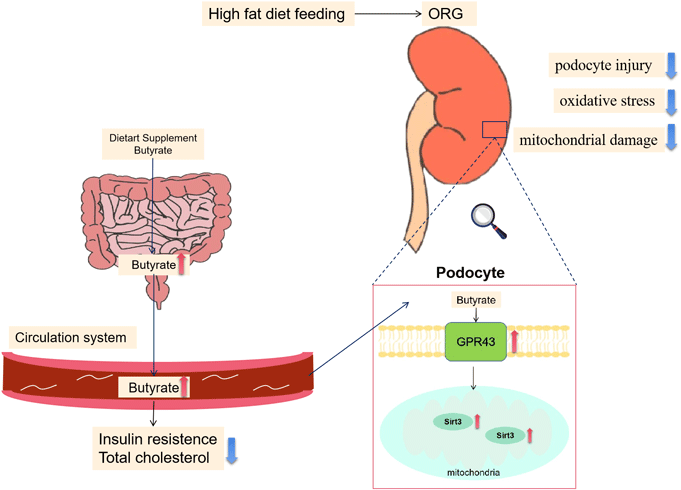
The incidence of obesity-related glomerulopathy (ORG) is rising worldwide with very limited treatment methods. Paralleled with the gut–kidney axis theory, the beneficial effects of butyrate, one of the short-chain fatty acids (SCFA) produced by gut microbiota, on metabolism and certain kidney diseases have gained growing attention. However, the effects of butyrate on ORG and its underlying mechanism are largely unexplored. In this study, a mice model of ORG was established with a high-fat diet feeding for 16 weeks, and sodium butyrate treatment was initiated at the 8th week. Podocyte injury, oxidative stress and mitochondria function were evaluated in mice kidney and validated in vitro in palmitic acid-treated-mouse podocyte cell lines. Further, the molecular mechanisms of butyrate on podocytes were explored. Compared with controls, sodium butyrate treatment alleviated kidney injuries and renal oxidative stress in high-fat diet-fed mice. In mouse podocyte cell lines, butyrate ameliorated palmitic acid-induced podocyte damage and helped maintain the structure and function of the mitochondria. Moreover, the effects of butyrate on podocytes were mediated via the GPR43-Sirt3 signal pathway, as evidenced by the diminished effects of butyrate with the intervention of GPR43 or Sirt3 inhibitors. In summary, we conclude that butyrate has therapeutic potential for the treatment of ORG. It attenuates high-fat diet-induced ORG and podocyte injuries through the activation of the GPR43-Sirt3 signalling pathway.
This study examined the relationship between reformulation and food price in Canadian packaged foods and beverages between 2017 and 2020.
Design:
Matched foods and beverages in the University of Toronto Food Label Information and Price 2017 and 2020 databases were analysed (n 5774). Price change by food category and by retailer were compared using Wilcoxon signed-rank tests. The proportion of products with changes in calories and nutrient levels were determined, and mixed-effects models were used to examine the relationship between reformulation and price changes. The Food Standards Australia New Zealand (FSANZ) nutrient profiling model was applied to calculate nutritional quality scores, and mixed-effects models were used to assess if changes in nutritional quality score were associated with price changes.
Setting:
Large grocery retailers by market share in Canada.
Participants:
Foods and beverages available in 2017 and 2020.
Results:
Food price changes differed by retailer and by food category (e.g. increased in Bakery, Snacks, etc; decreased in Beverages, Miscellaneous, etc.). Nutrient reformulation was minimal and bidirectional with the highest proportion of products changing in sodium (17·8 %; 8·4 % increased and 9·4 % decreased). The relationship between nutrient reformulation and price change was insignificant for all nutrients overall and was not consistent across food categories. Average FSANZ score did not change (7·5 in both years). For Legumes and Combination dishes, improvements in nutritional quality were associated with a price decrease and increase, respectively.
Conclusions:
Stronger policies are required to incentivise reformulation in Canada. Results do not provide evidence of reformulation impacting food prices.
Timing of food intake is an emerging aspect of nutrition; however, there is a lack of research accurately assessing food timing in the context of the circadian system. The study aimed to investigate the relation between food timing relative to clock time and endogenous circadian timing with adiposity and further explore sex differences in these associations among 151 young adults aged 18–25 years. Participants wore wrist actigraphy and documented sleep and food schedules in real time for 7 consecutive days. Circadian timing was determined by dim-light melatonin onset (DLMO). The duration between last eating occasion and DLMO (last EO-DLMO) was used to calculate the circadian timing of food intake. Adiposity was assessed using bioelectrical impedance analysis. Of the 151 participants, 133 were included in the statistical analysis finally. The results demonstrated that associations of adiposity with food timing relative to circadian timing rather than clock time among young adults living in real-world settings. Sex-stratified analyses revealed that associations between last EO-DLMO and adiposity were significant in females but not males. For females, each hour increase in last EO-DLMO was associated with higher BMI by 0·51 kg/m2 (P = 0·01), higher percent body fat by 1·05 % (P = 0·007), higher fat mass by 0·99 kg (P = 0·01) and higher visceral fat area by 4·75 cm2 (P = 0·02), whereas non-significant associations were present among males. The findings highlight the importance of considering the timing of food intake relative to endogenous circadian timing instead of only as clock time.
To investigate the association between food insecurity (FI) and diet quality in private sector service workers.
Design:
Data were collected via electronic questionnaires (2019) and the national register data (2018–2019). FI was measured using the Household Food Insecurity Access Scale (HFIAS) and diet quality using an FFQ and a modified Healthy Food Intake Index (mHFII). The associations between HFIAS and mHFII were studied using ANOVA and ordinal regression analysis.
Setting:
Cross-sectional survey and register data for all municipalities in Finland in 2018–2019.
Participants:
Individuals (n 6435) belonging to the Finnish Service Union United. The members are predominantly women and work mainly in retail trade, tourism, restaurant and leisure services, property maintenance and security services.
Results:
Overall diet quality, measured by mHFII, was significantly lower in those experiencing severe FI than in those who were food secure (8·0 v. 9·1). Additionally, those with severe FI were less likely to have higher (more optimal) scores in sugar-sweetened beverages (OR: 0·67), fibre-rich grains (OR: 0·79), vegetables (OR: 0·54), fruits and berries (OR: 0·61), vegetable oil (OR: 0·80), fish (OR: 0·65), milk (OR: 0·89) and nuts and seeds (OR: 0·66) than food-secure participants. Severe FI was associated with higher odds for less frequent consumption of red and processed meat (OR: 1·15, a higher score represents less frequent consumption).
Conclusions:
Severe FI was linked to both lower overall diet quality and suboptimal consumption of several food groups. Individuals experiencing severe FI may be predisposed to accumulating dietary risk factors for chronic diseases.
This study examined changes food and drink purchasing during the first 3 months of the COVID-19 pandemic in England, and if changes varied by population subgroups.
Design:
We investigated changes in take-home food and drink purchasing and frequency of out-of-home (OOH) purchasing using an interrupted time series analysis design. The start of pandemic restrictions (the intervention) was defined as 16 March 2020, when first announced in the UK.
Setting:
London and the North of England.
Participants:
1245 households reporting take-home and 226 individuals reporting OOH purchases between January 2019 and mid-June 2020 from the GB Kantar Fast Moving Consumer Goods Panel.
Results:
The marginal mean estimate of total take-home energy purchased was 17·4 % (95 % CI 14·9, 19·9) higher during the pandemic restriction period compared with the counterfactual. Increases of 35·2 % (95 % CI 23·4, 47·0) in take-home volume of alcoholic beverages and 1·2 % (95 % CI 0·1, 2·4) in foods and drinks high in fat, salt and sugar were observed. Reductions in purchased energy from fruit and vegetables (–7·3 %, 95 % CI –10·9, –3·6), ultra-processed foods (–4·0 %, 95 % CI –5·2, –2·8) and in OOH purchasing frequency (–44·0 %, 95 % CI –58·3, –29·6) were observed. Changes in chocolate and confectionery, soft drink and savoury snack purchases levelled off over time. Changes in all studied outcomes varied by sociodemographic characteristics and usual purchasing.
Conclusions:
Pandemic restrictions were associated with positive and negative changes in food and drink purchasing, which differed by individual characteristics. Future research should ascertain if changes persist and translate into changes in health.
Orthorexia has been widely studied, but recently, a new conceptualisation was proposed to distinguish its healthy characteristics from its pathological ones. The objective of this study was to differentiate healthy orthorexia (HeOr) from orthorexia nervosa (OrNe) by exploring their sociodemographic, psychological, health and dietary characteristics using comparative and correlational statistical methods.
Design:
Cross-sectional analysis. Participants completed an online, self-administered questionnaire assessing their sociodemographic characteristics, orthorexia, exercise dependence, personality, health anxiety, food choice motives, emotional competences and eating disorders (ED).
Setting:
Data were collected between May 2021 and September 2022.
Participants:
1515 French females (meanage = 37·67). Responses from men were excluded.
Results:
While OrNe was mainly associated with weight control motives in food choices (r = 0·42), HeOr was more strongly correlated with natural content (r = 0·60) and health motives (r = 0·49). In relation to exercising, OrNe showed its highest association with weight control (r = 0·41). Health anxiety was more strongly associated with OrNe than with HeOr. Both OrNe and HeOr were related to diet adherence and regular exercise, but the association was stronger for the latter. Orthorexia scores, mainly OrNe, were higher in participants at the risk of ED. Participants who were afraid to gain weight showed higher OrNe scores.
Conclusions:
HeOr seems to be part of a healthy lifestyle in general. In contrast, OrNe falls into the category of an ED and is associated with more problematic psychological functioning. Particular attention should be given to individuals who are beginning to control and reduce their food intake to prevent them from developing OrNe.
School-based interventions encouraging children to replace sugar-sweetened beverages with water show promise for reducing child overweight. However, students with child food insecurity (CFI) may not respond to nutrition interventions like children who are food-secure.
Design:
The Water First cluster-randomised trial found that school water access and promotion prevented child overweight and increased water intake. This secondary analysis used mixed-effects regression to evaluate the interaction between the Water First intervention and food insecurity, measured using the Child Food Security Assessment, on child weight status (anthropometric measurements) and dietary intake (student 24-h recalls, beverage intake surveys).
Setting:
Eighteen elementary schools (serving ≥ 50 % children from low-income households), in which drinking water had not been previously promoted, in the San Francisco Bay Area.
Participants:
Students in fourth-grade classes (n 1056).
Results:
Food insecurity interacted with the intervention. Among students with no CFI, the intervention group had a lower prevalence of obesity from baseline to 7 months (–0·04, CI –0·08, 0·01) compared with no CFI controls (0·01, CI –0·01, 0·04) (P = 0·04). Among students with high CFI, the intervention group had a pronounced increase in the volume of water consumed between baseline and 7 months (86·2 %, CI 21·7, 185·0 %) compared with high CFI controls (–13·6 %, CI –45·3, 36·6 %) (P = 0·02).
Conclusions:
Addressing food insecurity in the design of water promotion interventions may enhance the benefit to children, reducing the prevalence of obesity.
We aimed to analyse the evolving trends in macronutrient intake and dietary composition among Korean children and adolescents over a 10-year period.
Design:
We utilised cross-sectional data from the Korean National Health and Nutrition Examination Survey (KNHANES) spanning the years 2010–2020. Overall, the study included 11 861 participants aged 6–18 years who completed the 24-h dietary recall survey. Subsequently, we assessed trends in energy consumption and macronutrient intake across population subgroups, including age, sex and obesity status. Survey-weighted linear regression was employed to determine the β coefficient and P-value for trends in dietary nutrient consumption, treating the survey year as a continuous variable.
Setting:
KNHANES from 2010 to 2020.
Participants:
11 861 children and adolescents aged 6–18 years.
Results:
Total energy intake significantly decreased across the 10-year survey period, with a corresponding decline in the percentage of energy intake from carbohydrates. Conversely, the proportion of energy intake from fat increased during the same period. Subgroup analysis revealed changes in the composition of energy intake across age, sex and obesity status, with a consistent increase in total fat intake observed across all subgroups. Upon analysing data on dietary fibres, total sugars and fat subtypes intake, we found insufficient dietary fibre intake and increased intake of all fat subtypes.
Conclusions:
This study underscores the gradually changing dietary intake patterns among Korean children and adolescents. Our findings revealed that these transitions in dietary nutrient consumption may pose potential risks of diet-related diseases in the future.
Autism spectrum disorder (ASD) is a neurodevelopmental condition. Omega-3 fatty acid insufficiency has been linked to ASD. This umbrella meta-analysis was performed to investigate the effects of omega-3 supplementation on clinical manifestations in participants with ASD. Based on the PRISMA statement, databases including Web of Science, PubMed and Scopus were systematically searched for published meta-analyses on the effect of omega-3 supplementation on ASD up to December 2023. To assess the risk of bias, the assessment of multiple systematic reviews (AMSTAR)-2 was utilised. The outcomes were core and non-core symptoms of ASD including social withdrawal/lethargy, cluttering speech, hyperactivity, irritability and stereotypy. Seven meta-analyses eventually remained in the umbrella review. The results revealed that omega-3 fatty acid supplementation caused a significant reduction in cluttering speech in studies conducted on age ≤8 years (effect size (ES) −0·30; 95% confidence interval (CI) −0·55, −0·06; P = 0·02). Omega-3 supplementation caused a significant reduction in hyperactivity in participants ≤8 years (ES −0·30; 95% CI −0·55, −0·06; P = 0·02) and in participants who received the supplements for more than 14 weeks (ES −0·30; 95% CI −0·55, −0·06; P = 0·02). A dosage of ≤1000 mg/d of omega-3 supplementation led to a significant increase in the stereotypy/restricted and repetitive interests and behaviours (ES 0·19; 95% CI 0·03, 0·35; P = 0·02). This umbrella review revealed that omega-3 fatty acid may be a beneficial supplement to control cluttering speech and hyperactivity in children with ASD who are 8 years old or younger.
Ageing is an inevitable biological process accompanied by various physiological changes, and researchers have long sought interventions to promote healthy ageing. This article explores the effects of four natural compounds – omega-3 fatty acids, coenzyme Q10, gingerol and curcumin – on the ageing process. We delve into the scientific literature to examine the potential benefits and mechanisms behind these substances in mitigating age-related conditions. Omega-3’s anti-inflammatory properties, coenzyme Q10’s cellular energy support, gingerol’s antioxidant effects and curcumin’s anti-ageing properties are discussed. By shedding light on the impact of these compounds, this review aims to contribute to a better understanding of how natural substances may play a role in promoting longevity and enhancing the quality of life during the ageing journey.
Coffee is one of the most known and consumed beverages worldwide. Only three species are used in commercial coffee production, that is, Coffea arabica L. (Arabica coffee), Coffea canephora Pierre ex A. Froehner (Robusta coffee) and Coffea liberica Hiern (Excelsa coffee). The world population consumes approximately two billion cups of coffee per day, making it an important commercial resource of bioactive compounds in world markets. High interest in coffee consumption described in the literature is due not only to its organoleptic properties (for example, desirable bitterness, amount of flavours and aromas) but also to its ability to stimulate the central nervous system.
It is now known that there are more than 1000 compounds in coffee beverages, several of which have a bioactive activity. Recent studies show that consuming three to four cups of coffee per day, that is, moderate consumption according to the European Food Safety Authority, may be beneficial for health.
The main objective of the proposed review is to provide a comprehensive overview of bioactive compounds in coffee and other caffeine-containing beverages and their effects on neurodegenerative proteinopathies.
To evaluate the effectiveness of a radio campaign involving serial 10-minute drama episodes, 10-minute on air discussion of each episode by trained community health workers and 30-minute phone-ins from listeners in improving mothers’ nutrition- and health-related attitudes (HNRAs) and children’s minimum acceptable diet (MAD).
Design:
A two-arm quasi-experimental trial with a pre-post design was used to quantify the effect of a radio campaign on nutrition before and immediately after the 6-month intervention. Difference-in-difference (DID) analysis was performed to assess the intervention’s effect.
Setting:
Saboba district (intervention) and Central Gonja (comparison district) of northern region of Ghana.
Participants:
At baseline, a total of 598 mothers with children aged 6–22 months were randomly selected from the intervention (n 298) and control (n 300) districts. At endline (6 months post-intervention), 252 mother–child dyads in the intervention district and 275 mother–child dyads in the control district were followed up.
Results:
The radio campaign was significantly and positively associated with a change in health- and nutrition-related attitudes (HNRA) over time, with DID in mean attitudes significantly improving more over time in the intervention district than the control (DID = 1·398, P < 0·001). Also, the prevalence of MAD over time in the intervention district was significantly higher than the control district (DID = 16·1 percentage points, P = 0·02) in the presence of food insecurity.
Conclusions:
The study indicates that a radio campaign on nutrition is associated with improved mothers’ HNRA and children’s MAD. Communication interventions on child nutrition targeting low-resource settings should consider this innovative approach.
Chrono-nutrition is an emerging field that examines how the frequency and timing of meals impact health. Previous research shows inconsistency in the relationship between chrono-nutritional components and cardiometabolic health. We investigated cross-sectional associations between these components and cardiometabolic health in 825 Iranian adults aged 20–59 years. Dietary data, including the number of eating occasions, meal timing and meal irregularity of energy intake, were collected using three 24-h dietary recalls. Anthropometric measurements, blood pressure and laboratory tests (fasting plasma glucose, lipid profile, insulin, uric acid and C-reactive protein) were conducted. Insulin resistance and sensitivity (homeostatic model assessment for insulin resistance, homeostatic model assessment for insulin sensitivity), the TAG-glucose, the lipid accommodation product and BMI were calculated. The demographic and morning-evening questionnaire was completed. General linear regression was used to assess associations between chrono-nutritional components and outcomes. Interactions with age and BMI were examined in all associations. Chrono-nutrition components were not significantly related to cardiometabolic risk factors in the total population. However, a lower number of eating occasions was associated with an increased LDL-cholesterol:HDL-cholesterol ratio (β (95 % CI): 0·26 (0·06, 0·48)) among overweight and obese participants. Additionally, less irregularity in breakfast energy intake was associated with a lower total cholesterol:HDL-cholesterol ratio (–0·37 (–0·95, –0·18)) and a lower LDL-cholesterol:HDL-cholesterol ratio (–0·32 (–0·79, –0·13)) among participants with a normal BMI (all P< 0·05). The study concluded that more frequent meals and regular energy intake might enhance cardiometabolic health cross-sectionally, highlighting the need for prospective studies to further investigate these associations and the mediating role of BMI.
Obesity is a chronic, complex and multi-factorial condition with an increasing prevalence worldwide. Irregular eating schedules might be a contributing factor to these numbers through the dysregulation of the circadian system. Time-restricted eating (TRE), an approach that limits eating windows, has been studied as a strategy to treat obesity, aligning eating occasions with metabolic circadian rhythms. This review aims to provide an overview of the impact of TRE protocols on metabolic, inflammatory, oxidative stress and circadian rhythm biomarkers in people with overweight or obesity. Most studies report significant weight loss following TRE protocols. While glucose levels decreased in nearly all TRE interventions, only a few studies demonstrated statistically significant differences when compared to the control groups. The findings for c-reactive protein and TNF-α were inconsistent, with limited significant differences. Changes in lipid profile changes were variable and generally did not reach statistical significance. Both 4-hour and 6-hour TRE interventions significantly reduced 8-isoprostane levels. Additionally, TRE significantly altered clock gene expression, as well as that of genes associated with metabolic regulation in subcutaneous adipose tissue. While the evidence is still inconsistent, limiting eating to a consistent daily window of 8 to 12 h can improve insulin sensitivity, reduce blood glucose, cholesterol and triglyceride levels and promote weight loss. These effects are likely attributable to both direct metabolic impacts and indirect benefits from weight loss and improved dietary habits. However, data on circadian, inflammatory and specific metabolic biomarkers remain scarce and occasionally contradictory, highlighting the need for further research on these interventions.
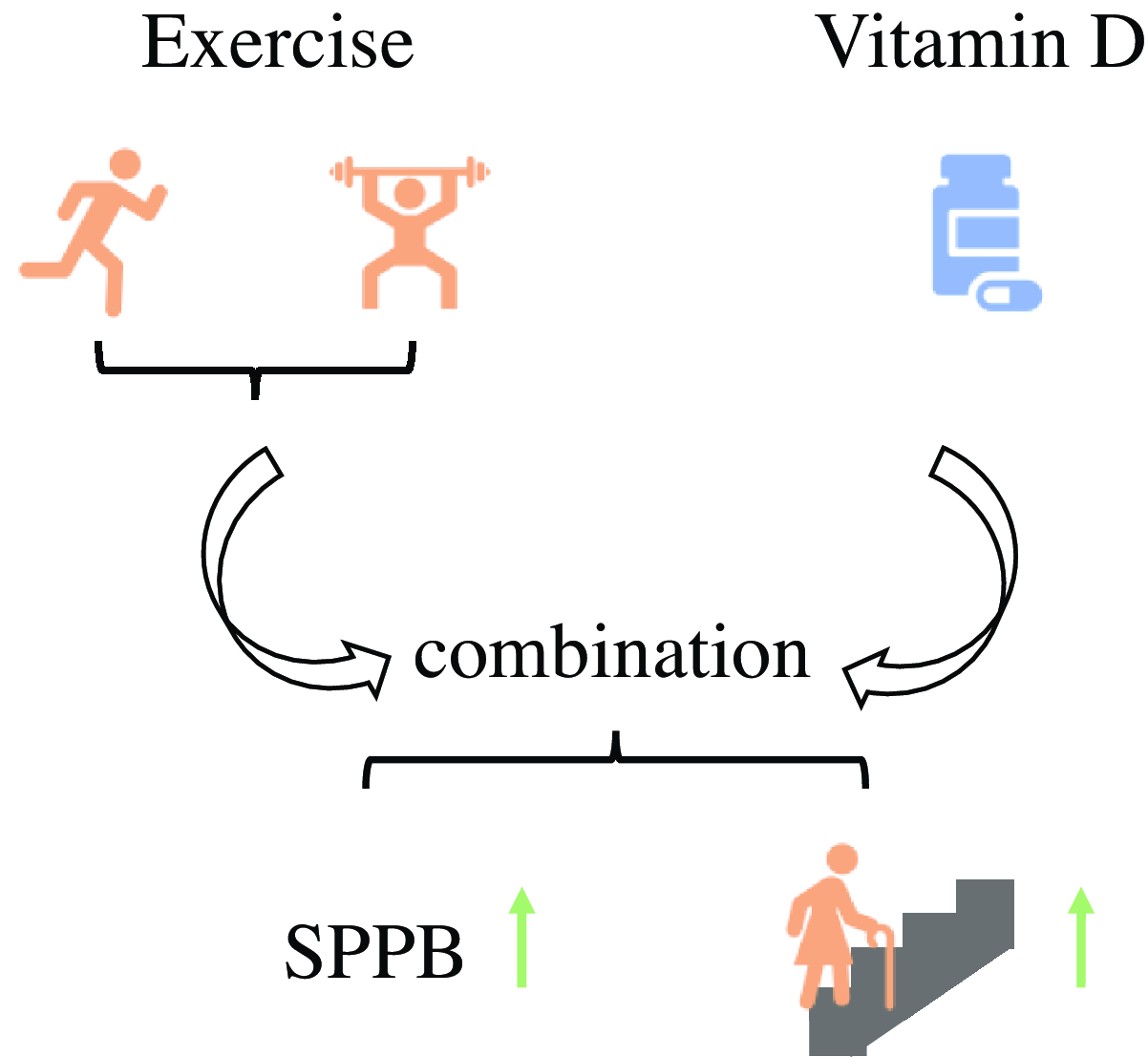
This scoping review aimed to evaluate the effect of exercise combined with vitamin D supplementation on skeletal muscle health in older individuals. We implemented a systematic search of electronic databases, including PubMed, the Cochrane Library, Web of Science and Embase, which was conducted from the time of library construction to January 2024. Eligible studies were randomised controlled trials including men and women aged ≥ 65 years or mean age ≥ 65 years; exercise training and vitamin D supplementation; outcomes of muscular strength, function, muscular power, body composition and quality of life; and results compared with those of exercise intervention alone. The results showed thirteen studies including 1483 participants were identified. The proportions of male and female sex were 22·05 and 77·95 %, respectively. Exercise intervention methods included resistance exercises and multimodal exercise training. All vitamin D interventions involved supplementation with vitamin D3. A significant increase was identified in short physical performance battery and stair climbing but not in skeletal muscle mass, skeletal strength, the timed up and go test and gait speed in older adults after exercise combined with vitamin D supplementation. In conclusion, exercise combined with vitamin D supplementation has additive health effects on short physical performance battery and stair climbing. Furthermore, when vitamin D was deficient at baseline, the combined effect of exercise and vitamin D intervention significantly increased the timed up and go test and gait speed in older adults. In future randomised controlled trials on this topic, baseline vitamin D nutritional status, health condition and sex should be considered.
The food we eat has a critical impact on human and planetary health. Food systems are responsible for approximately a third of total global greenhouse gas emissions (GHGE). This review summarises studies that have measured dietary GHGE and assessed their associations with various demographic variables. Most studies report dietary emissions at the individual level, but some studies use households as the unit of analysis. Studies investigating individuals estimate dietary intakes using 24-hour dietary recalls, FFQ, diet history interviews, food diaries or other dietary records. Studies investigating households rely on food purchasing data and expenditure surveys. The majority of studies estimate dietary GHGE using process-based life cycle assessments. It is difficult to directly compare emissions estimates between studies at either the individual or household-level due to methodological differences. In general, there are mixed findings with regard to the relationships between various demographic variables and dietary emissions, although older adults generally had higher dietary GHGE than younger adults, and men typically had higher dietary GHGE than women, even when standardising for total energy intake. This review may be useful in informing and targeting policies and interventions to reduce GHGE of dietary intake.
Food systems in Africa are under pressure from climate change, conflicts, health pandemics such as COVID-19 and rising food prices. The COVID-19 pandemic highlighted weaknesses in global food systems and indeed Africa’s was not spared. Although COVID-19 mortality and morbidity in Africa were relatively low in comparison to other regions, the containment measures employed by countries amplified a rather dire situation. Disruptions were seen in livelihoods, food value chains, increases in food prices and loss of income. These changes affected access to nutritious foods. A resilient food system that can withstand and recover from disruption and shocks will be important for ensuring access to healthy diets for all. This review paper assesses the state of food insecurity and malnutrition situation pre-COVID-19 and the impact of COVID-19 on Africa’s food systems and access to healthy diet. To put Africa on a path to accelerated recovery, a resilient and sustainable food system will be crucial. The following recommendations are made: (i) increasing agriculture productivity, with special attention to the foods that contribute to healthy diets – fruits and vegetables, and animal source foods (ii) promoting the production and consumption of nutritious African traditional and indigenous foods (iii) transforming Africa’s food systems to be gender-sensitive (iv) investing in well-targeted social protection programmes (v) supporting food environments that protect healthy diets and (vi) employing data and information to monitor food systems transformation.
The longer-term trend towards decreasing foreign assistance has aroused great interest in tracking domestic funding given that more than half of the anticipated additional funding for nutrition is expected from domestic sources. Given the limited trend analysis of nutrition budgets across developing countries, this review aimed to examine trends in nutrition financing as a proxy of national commitment to nutrition. We explored the programme-based budget allocations and expenditure from 2017 to 2019 in the Chad Republic, Gambia and Ghana for food and nutrition security (FNS) activities in various sectors. The total annual allocations for FNS activities from 2017 to 2019 in the Chad Republic, Gambia and Ghana were €24,796,501, €155,416,112 and €3,299,472,194 of which 93.5%, 15.7% and 100% respectively of allocated funded were expended. The proportion of FNS allocations and expenditure was <5% of the gross domestic product across the three countries. Three-quarters (the Chad Republic and Gambia) and one-quarter (Ghana) of all FNS activities were nutrition-friendly as compared to being nutrition-specific/sensitive. Of the nutrition-specific/sensitive activities, about 9 in 10 were nutrition-sensitive. The main thematic areas of FNS activities were agriculture/food systems, health, education, water, sanitation and hygiene. There were significant resource gaps in FNS budget allocations and expenditure across the three countries making it difficult to establish a consistent domestic funding trend. Resource mobilisation plans to bridge budget implementation gaps for domestic funding are urgently needed to scale-up government commitments toward the attainment of the sustainable development goals in these countries.