To save content items to your account,
please confirm that you agree to abide by our usage policies.
If this is the first time you use this feature, you will be asked to authorise Cambridge Core to connect with your account.
Find out more about saving content to .
To save content items to your Kindle, first ensure no-reply@cambridge.org
is added to your Approved Personal Document E-mail List under your Personal Document Settings
on the Manage Your Content and Devices page of your Amazon account. Then enter the ‘name’ part
of your Kindle email address below.
Find out more about saving to your Kindle.
Note you can select to save to either the @free.kindle.com or @kindle.com variations.
‘@free.kindle.com’ emails are free but can only be saved to your device when it is connected to wi-fi.
‘@kindle.com’ emails can be delivered even when you are not connected to wi-fi, but note that service fees apply.
The marketing of unhealthy foods has been implicated in poor diet and rising levels of obesity. Rapid developments in the digital food marketing ecosystem and associated research mean that contemporary review of the evidence is warranted. This preregistered (CRD420212337091)1 systematic review and meta-analysis aimed to provide an updated synthesis of the evidence for behavioural and health impacts of food marketing on both children and adults, using the 4Ps framework (Promotion, Product, Price, Place). Ten databases were searched from 2014 to 2021 for primary data articles of quantitative or mixed design, reporting on one or more outcome of interest following food marketing exposure compared with a relevant control. Reviews, abstracts, letters/editorials and qualitative studies were excluded. Eighty-two studies were included in the narrative review and twenty-three in the meta-analyses. Study quality (RoB2/Newcastle–Ottawa scale) was mixed. Studies examined ‘promotion’ (n 55), ‘product’ (n 17), ‘price’ (n 15) and ‘place’ (n 2) (some > 1 category). There is evidence of impacts of food marketing in multiple media and settings on outcomes, including increased purchase intention, purchase requests, purchase, preference, choice, and consumption in children and adults. Meta-analysis demonstrated a significant impact of food marketing on increased choice of unhealthy foods (OR = 2·45 (95 % CI 1·41, 4·27), Z = 3·18, P = 0·002, I2 = 93·1 %) and increased food consumption (standardised mean difference = 0·311 (95 % CI 0·185, 0·437), Z = 4·83, P < 0·001, I2 = 53·0 %). Evidence gaps were identified for the impact of brand-only and outdoor streetscape food marketing, and for data on the extent to which food marketing may contribute to health inequalities which, if available, would support UK and international public health policy development.
The UK’s Health and Care Act (2022; paused until 2025) includes a globally novel ban on paid-for online advertising of food and beverage products high in saturated fat, salt and sugar (HFSS), to address growing concerns about the scale of digital marketing and its impact in particular on children’s food and beverage preferences, purchases and consumption. This study aimed to understand the potential impact of the novel ban (as proposed in 2020) on specified forms of online HFSS advertising, through the lens of interdisciplinary expertise. We conducted semi-structured interviews via videoconference with eight purposively selected UK and global digital marketing, food and privacy experts. We identified deductive and inductive themes addressing the policy’s scope, design, implementation, monitoring and enforcement through iterative, consensual thematic analyses. Experts felt this novel ‘breakthrough’ policy has potential to substantially impact global marketing by establishing the principle of no HFSS advertising online to consumers of all ages, but they also identified substantive limitations that could potentially render it ‘entirely ineffective’, for example, the exclusion of common forms of digital marketing, especially brand marketing and marketing integrated within entertainment content; virtual/augmented reality, and ‘advertainment’ as particularly likely spaces for rapid growth of digital food marketing; and technical digital media issues that raise significant barriers to effective monitoring and compliance. Experts recommended well-defined regulations with strong enforcement mechanisms. These findings contribute insights for effective design and implementation of global initiatives to limit online HFSS food marketing, including the need for government regulations in place of voluntary industry restrictions.
The study examined the impact of the Diabetes Prevention and Management programme on dietary tracking, changes in dietary behaviour, glycosylated Hb (HbA1c) and weight loss over 6 months among rural adults with type 2 diabetes and prediabetes. The programme was a health coach (HC)-led, community-based lifestyle intervention.
Design:
The study used an explanatory sequential quantitative and qualitative design to gain insight on participant’s dietary behaviour and macronutrient consumption as well as experience with food tracking. Five of the twenty-two educational sessions focussed on dietary education. Participants were taught strategies for healthy eating and dietary modification. Trained HC delivered the sessions and provided weekly feedback to food journals.
Participants:
Obese adults with type 2 diabetes or prediabetes (n 94) participated in the programme and 56 (66 %) completed dietary tracking (optional) for 6 months. Twenty-two participated in three focus groups.
Results:
Fifty-nine percent consistently completed food journals. At 6 months, average diet self-efficacy and dietary intake improved, and average weight loss was 4·58 (sd 9·14) lbs. Factors associated with weight loss included attendance, consistent dietary tracking, higher HbA1c, diabetes status and energy intake (adjusted R2 = 43·5 %; F = 0·003). Focus group participants reported that the programme improved eating habits. The consistency of dietary tracking was cumbersome yet beneficial for making better choices and was key to being honest.
Conclusions:
Participants who consistently tracked their diet improved dietary self-efficacy and intake over 6 months. This model has the potential to be reproduced in other rural regions of the United States.
Dietary guidelines often combine plant and animal protein intake recommendations, yet evidence suggests they may have distinct associations with health. This study aimed to examine relationships between animal and plant protein intake, using different classification approaches, and diet quality and obesity. Plant and animal protein contents of foods reported by 7637 participants (≥ 19 years) during the 2011–2012 National Nutrition and Physical Activity Survey were estimated using Australian food composition databases. Usual animal, plant and total protein intakes were estimated using Multiple Source Methods. Diet quality was assessed using the 2013-Dietary Guidelines Index (DGI), and obesity measures included BMI and waist circumference (WC). Multiple linear and logistic regressions were performed and adjusted for potential confounders. Plant and animal protein intakes were positively associated with DGI scores (plant protein: men, β = 0·74 (95 % CI: 0·64, 0·85); women, β = 0·78 (0·67, 0·89); animal protein: men, β = 0·15 (0·12, 0·18); women, β = 0·26 (0·22, 0·29)). These associations were consistent when examining high-quality plant protein (high-protein-containing plant-based foods with comparable nutritional values to animal proteins) and non-dairy animal protein intakes. Plant protein intake was inversely associated with BMI and WC in men but not women. Animal protein intake was positively associated with BMI in both sexes and WC in men only. Men’s plant protein intake was inversely associated with obesity (OR = 0·97 (0·96, 0·99)) and central obesity (OR = 0·97 (0·95, 0·98)). Further studies are needed to examine the influence of different animal protein sources by accounting for energy intake and sex-specific associations.
To describe the development and validation of the Nova FFQ (NovaFFQ) for Brazilian adults.
Design:
The NovaFFQ is a self-administered, semi-quantitative questionnaire. The food list includes the most consumed foods and drinks based on 2017–2018 National Food Intake Survey data. We identified and differentiated foods that could be classified into multiple Nova groups. We assessed reproducibility and criterion validity using the percent energy contribution of each Nova group. Reproducibility was assessed by comparing NovaFFQ estimates on two occasions. Criterion validity was assessed by comparing the first NovaFFQ estimate against the mean of two Nova24h recalls. We estimated the intraclass correlation coefficients (ICC) for both analyses and assessed the agreement of classification into quintiles using the prevalence-and-bias-adjusted kappa coefficients for criterion validity analysis.
Setting:
Nationwide Brazilian study, the NutriNet-Brasil cohort.
Participants:
There were 243 participants in the reproducibility analysis and 376 in the criterion validity analysis.
Results:
Strong reproducibility was observed, with an ICC of 0·91 for all the Nova groups. Criterion validity showed a moderate ICC, ranging from 0·61 for processed and ultra-processed foods (UPF) to 0·65 for unprocessed and minimally processed foods. Substantial agreement in ranking individuals across quintiles was found, as indicated by the prevalence-and-bias-adjusted kappa (PABAK = 0·74, 0·72, 0·70 and 0·73 for unprocessed and minimally processed foods, culinary ingredients and processed and ultra-processed foods, respectively).
Conclusions:
The NovaFFQ is a valid instrument for assessing food consumption by processing level, especially for discriminating individuals according to the magnitude of consumption in all Nova groups.
Entomophagy (eating edible insects) could potentially address human deficiencies of iron, zinc and vitamin B12. This article aims to summarise available evidence about the iron, zinc and vitamin B12 content of raw and processed edible insects and compare these with the nutritional needs of different human life stages. A systematic literature search using specific keywords (edible insects, iron content, zinc content, vitamin B12 content and nutritional composition) in Web of Science and Scopus databases was performed. Forty-six studies were reviewed. To ensure standardised comparisons, articles with nutrient-enriched edible insects were excluded. The quality of records was assessed using standardised protocols. Results indicate that edible insects are generally either ‘sources of’ or ‘rich in’ iron, zinc and vitamin B12 required for optimal nutrition and health of different human life stages. Moreover, iron, zinc and vitamin B12 contents of edible insect species were generally either comparable to or higher than that of (lean) beef, (lean) pork, poultry and kidney beans. Most insect species were oven processed with little/no species-specific data for other processing methods. Variations in micronutrient content existed between processing methods and among oven-processed edible insects. Data inaccuracies, poor data quality control and lack of insect-specific official analytical methods contributed to fairly high variations and made comparisons difficult. Based on available data, edible insects can potentially address human deficiencies of iron, zinc and vitamin B12 despite the observed variations, data gaps and lack of edible insect matrix-specific official methods, in addition to limited human bioavailability and efficacy studies.
The sulphur microbial diet (SMD), a dietary pattern associated with forty-three sulphur-metabolising bacteria, may influence gut microbiota composition and contribute to ageing process through gut-produced hydrogen sulfide (H2S). We aimed to explore the association between SMD and biological age (BA) acceleration, using the cross-sectional study that included 71 579 individuals from the UK Biobank. The SMD score was calculated by multiplying β-coefficients by corresponding serving sizes and summing them, based on dietary data collected using the Oxford WebQ, a 24-hour dietary assessment tool. BA was assessed using Klemerae–Doubal (KDM) and PhenoAge methods. The difference between BA and chronological age refers to the age acceleration (AgeAccel), termed ‘KDMAccel’ and ‘PhenoAgeAccel’. Generalised linear regression was performed. Mediation analyses were used to investigate underlying mediators including BMI and serum aspartate aminotransferase/alanine aminotransferase (AST/ALT) ratio. Following adjustment for multiple variables, a positive association was observed between consuming a dietary pattern with a higher SMD score and both KDMAccel (βQ4 v. Q1 = 0·35, 95 % CI = 0·27, 0·44, P < 0·001) and PhenoAgeAccel (βQ4 v. Q1 = 0·32, 95 % CI = 0·23, 0·41, P < 0·001). Each 1-SD increase in SMD score was positively associated with the acceleration of BA by 7·90 % for KDMAccel (P < 0·001) and 7·80 % for PhenoAgeAccel (P < 0·001). BMI and AST/ALT mediated the association. The stratified analysis revealed stronger accelerated ageing impacts in males and smokers. Our study indicated a higher SMD score is associated with elevated markers of biological ageing, supporting the potential utility of gut microbiota-targeted dietary interventions in attenuating the ageing process.
There have been unsafe levels of unpaired fructose in the high fructose corn syrup (HFCS) in US beverages, and research/case study evidence shows that their intake is associated with greater asthma prevalence/risk/incidence, a debilitating disease, likely due to fructose malabsorption, gut fructosylation and gut dysbiosis mechanisms. The ‘unexplained’ asthma epidemic has disproportionately affected children and Black individuals, groups with higher fructose malabsorption prevalence than others, and research to assess disproportionately higher asthma risk/incidence among Black individuals in association with HFCS-sweetened beverage intake is lacking.
Design:
Demographic, lifestyle and dietary data collected at enrollment (1985–86), and incident asthma through exam 5 (1995–96), were used in Cox proportional hazards models to assess HFCS intake associations (hazard ratios) with asthma risk/incidence.
Setting:
CARDIA study participants from Birmingham, AL, Chicago, IL, Minneapolis, MN and Oakland, CA.
Participants:
1998 Black and 2104 White young adults.
Results:
HFCS-sweetened beverage intake > once/week was significantly associated with higher asthma risk relative to ≤ once/week (P-trend = 0·04), among Black participants only; risk was 2·8 times higher among 2–4 times/week consumers (HR = 2·8, 95 % CI 1·1, 7·3, P = 0·04) and 3·5 times higher when consumed multiple times/d, independent of sucrose intake/obesity/dietary quality/smoking/in-home smoke-exposure (HR = 3·5, 95 % CI 1·3, 9·9, P = 0·02). Intake of orange juice, with nominal unpaired fructose, was not associated with asthma in either group, nor was intake of sucrose, a disaccharide (paired) of fructose/glucose.
Conclusions:
Ubiquitous HFCS in the US food supply, with HFCS that contains high/unsafe unpaired fructose, also known as excess-free-fructose, and the fructose/gut/lung/axis are overlooked risk factors in the ‘unexplained’ US asthma epidemic that disproportionately affects Black individuals.
Understanding adolescents’ diet and eating behaviours is crucial for informing public health strategies and policies, allowing interventions to be tailored effectively to enhance dietary patterns and improve overall health and quality of life. This study examined dietary patterns, dietary diversity, eating habits, food choice and the factors influencing these among adolescent girls in the Mion District, Ghana. A convergent parallel mixed-method design employing in-depth interviews (n = 30), two focus group discussions (n = 10) and survey data from 882 mother-daughter pairs was used. Key findings indicate that approximately 90% of girls achieved the minimum dietary diversity for women of reproductive age (MDD-W), with most consuming three meals daily. Staples were eaten daily, while fruits and unhealthy foods were less frequently eaten. Moderate/severe food insecurity was negatively associated with the MDD-W, whereas larger household size was positively correlated with the MDD-W. Older girls were less likely to eat breakfast, while household crop farm diversity increased the odds of eating supper on weekends. Moderate/severe food insecurity was inversely associated with intake of animal-sourced foods (ASFs), fruit, and unhealthy foods but positively correlated with vegetable consumption in the past month. Maternal non-literacy was linked to a lower intake of unhealthy foods, while specific ethnic backgrounds negatively influenced ASF intake. Wealthier households demonstrated higher consumption of staples. Qualitatively, health considerations, availability, taste, and cravings were major influencers of food choices. Food aversions were often tied to intolerance, fatigue from consuming the same foods repeatedly, and preferences related to taste and texture. These findings underscore the need for targeted nutritional interventions considering socio-economic and household factors to improve adolescent girls’ dietary habits and overall health.
This study aimed to assess the extent to which first-morning void (FMV) urine samples can estimate sodium and potassium excretion compared with 24-hour (24-h) urine samples at the population level. We conducted a cross-sectional study collecting urine samples (FMV and 24-h) and two non-consecutive 24-h dietary recalls in a sub-sample from the Portuguese IAN-AF sampling frame. Six predictive equations were used to estimate 24-h sodium and potassium excretion from FMV urine samples. Pearson correlation coefficients were calculated to compare the association between FMV and 24-h urine collections. Cross-classifications into tertiles were computed to calculate the agreement between measured and estimated excretion with and without calibration. Pearson correlation coefficients were calculated to compare the excretion estimation from FMV and reported intake from 24-h dietary recalls. Bland–Altman plots assessed the agreement between two-day dietary recall and the best-performing calibrated equation. Data from eighty-six subjects aged 18–84 were analysed. Estimated sodium and potassium concentrations from the predictive equations moderate or strongly correlated with the measured 24-h urine samples. The Toft equation was the most predictive and reliable, displaying a moderate correlation (r=0.655) with no risk of over or underestimation of sodium excretion (p=0.096). Tanaka and Kawasaki equations showed a similar moderate correlation (r=0.54 and r=0.58, respectively) but tended to underestimate the 24-h urine excretion of potassium (p<0.001). Calibrated predictive equations using FMV urine samples provide a moderately accurate alternative and resource-efficient option for large-scale nutritional epidemiology studies when 24-h urine collection is impractical.
Environmental impacts of food systems have stimulated research to examine how to create healthy diets that will be more sustainable while meeting nutrient requirements. Increasing compliance with existing food-based dietary guidelines in most jurisdictions could be a first step to improve health and reduce environmental impact. MyPlanetDiet was an all-Ireland 12-week randomised controlled trial designed to inform sustainable healthy dietary guidelines. Healthy adults (n 355) aged 18–64 years with moderate-to-high greenhouse gas emitting (GHGE) diets were recruited from three study sites on the island of Ireland. The aim of this research is to assess the relationship between dietary intakes, diet-related environmental impacts and metabolic health using baseline data collected during the MyPlanetDiet study. Dietary assessments collected using Foodbook24 were used to calculate diet-related GHGE, adherence to healthy eating guidelines (HEG) and healthy eating index (HEI) score. Anthropometrics and metabolic health markers (e.g. lipids, glucose and insulin) were included. Overall HEG adherence was low, with 43 % meeting zero or one HEG food group recommendations. Adherence to 4 + HEG food group targets was associated with 31 % lower diet-related GHGE compared with those with lowest adherence. Higher HEG adherence was associated with lower BMI and waist circumference and higher HEI scores. While our findings suggest HEG adherence is associated with positive health and environmental impacts, substantial behaviour change will be needed to meet existing HEG. Further research is needed to assess response and acceptability to HEG. However, adherence to HEG may be an important first step to reducing the environmental impact of food consumption.
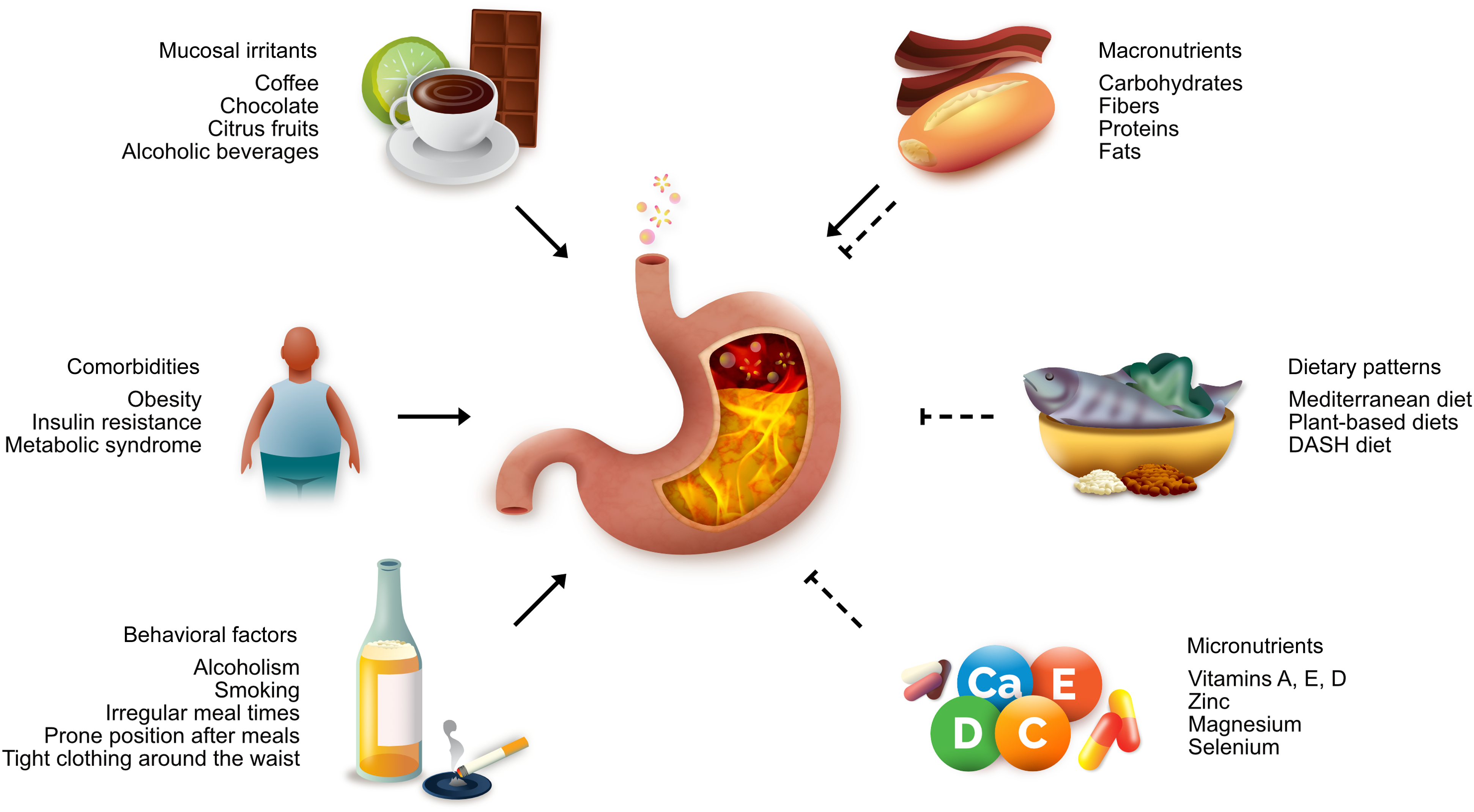
Gastroesophageal reflux disease (GERD) is a prevalent condition observed across various medical specialties, including gastroenterology, otorhinolaryngology, surgery and primary care. Despite the routine prescription of proton pump inhibitors, some patients fail to experience adequate symptom relief. This review delves into the multifactorial mechanisms of reflux, which extend beyond hydrochloric acid to include pepsin, bile acids and trypsin. These factors significantly contribute to mucosal injury in GERD and are influenced by dietary composition. Moreover, dietary patterns with anti-inflammatory properties, such as the Mediterranean and dietary approaches to stop hypertension diets, have shown potential in GERD managing, particularly in the context of obesity–an important risk factor.
Recommended dietary fibre consumption is rarely met in high-income countries. Detailed analysis of fibre consumption patterns is essential to identify strategies for increasing intake. This study investigated the timing and sources of fibre intake in Switzerland, using data from the Swiss Nutrition Survey, menuCH (n = 2057, 18–75 years). Dietary characteristics were summarised for the adult population and for subgroups stratified by absolute (< 15 g/day, 15-<30 g/day, and >=30 g/day) and relative (< 10 g/1000 kcal/day, 10-<14 g/1000 kcal/day, and >=14 g/1000 kcal/day) fibre intake. Mean fibre intake of both 24 HDRs for each individual and contribution of food groups and timing (before breakfast, breakfast, during the morning, lunch, during the afternoon, dinner, after dinner/at night) was calculated. Fibre was mainly consumed at breakfast (4.1 g/day), lunch (6.0 g/day), and dinner (6.4 g/day). Intake at breakfast differed between the lowest and highest fibre intake groups by 6.4 g/day (absolute) and 4.3 g/day (relative). Breakfast skipping was more frequent among low-fibre intake groups (29% for absolute intake, 19% for relative intake) than in the overall population (15%). The main sources of dietary fibre were grain products (35.6%), followed by vegetables (18.3%) and fruits (18.2%), with whole grains accounting for 17.5% of grain intake. Legumes contributed only to 1% of total fibre intake. Public health efforts encouraging regular breakfast consumption, and intake of whole grains and legumes are recommended to improve fibre intake.
This study investigates the effects of fat emulsion-based early parenteral nutrition in patients following hemihepatectomy, addressing a critical gap in clinical knowledge regarding parenteral nutrition after hemihepatectomy. We retrospectively analysed clinical data from 274 patients who received non-fat emulsion-based parenteral nutrition (non-fatty nutrition group) and 297 patients who received fat emulsion-based parenteral nutrition (fatty nutrition group) after hemihepatectomy. Fat emulsion-based early parenteral nutrition significantly reduced levels of post-operative aspartate aminotransferase, total bilirubin and direct bilirubin, while minor decreases in red blood cell and platelet counts were observed in the fatty nutrition group. Importantly, fat emulsion-based early parenteral nutrition shortened lengths of post-operative hospital stay and fasting duration, but did not affect the incidence of short-term post-operative complications. Subgroup analyses revealed that the supplement of n-3 fish oil emulsions was significantly associated with a reduced inflammatory response and risk of post-operative infections. These findings indicate that fat emulsion-based early parenteral nutrition enhances short-term post-operative recovery in patients undergoing hemihepatectomy.
Mandatory thresholds for the accuracy of reported energy on food and beverage product labels do not exist in many countries. Accurate nutrition information is essential for ensuring nutritional adequacy among hospital patients. The aim of this study was to compare direct measures of energy of nutritional fluids provided in hospitals to values determined via manufacturers’ specifications. Nutritional fluids were identified as any liquid provided to hospital patients orally, enterally or parenterally, to deliver nutrition. These were categorised into six groups aligned to food/medical standards, including (1) local recipes, (2) pre-packaged general fluids, (3) supplementary fluids, (4) prescribed nutrition fluids – thickened, (5) prescribed nutrition fluids – oral/enteral and (6) prescribed medical nutrition – intravenous (IV) and parenteral. An equivalence testing statistical approach (±10 % thresholds) was used to compare energy values derived directly via bomb calorimetry against those obtained from manufacturer specifications. A total of sixty-nine fluids were measured. One-fifth (n 14) exhibited non-equivalent energy values, with the majority of these (n 11; 79 %) likely to contain less energy than that calculated from reported values. Almost all (34/35; 97 %) prescribed nutrition fluids (oral/enteral (20/20; 100 %), IV and parenteral (7/7; 100 %) and thickened fluid (7/8; 88 %) products were equivalent. In contrast, only 21/34 (62 %) non-prescribed fluids (local recipes (2/11; 18 %), supplementary fluids (4/5; 80 %) and pre-packaged general fluid (15/18; 83 %) products) demonstrated equivalence. Energy content of nutritional fluids prescribed to hospital patients typically aligns with manufacturers’ values. Consumption of non-prescribed fluids may result in lower energy intakes than expected.
This study evaluated the effects of chenodeoxycholic acid (CDCA), a farnesoid X receptor (FXR) potential activator, on growth performance, antioxidant capacity, glucose metabolism and inflammation in largemouth bass (Micropterus salmoides) (initial body weight: 5·45 ± 0·02 g) fed a high-carbohydrate diet. Experimental diets included a positive control (5 % α-starch), a negative control (10 % α-starch) and two diets containing 10 % α-starch supplemented with either 0·05 % or 0·10 % CDCA. After 8 weeks, the high-carbohydrate diet reduced growth performance and increased hepatosomatic and viscerosomatic indexes, which were mitigated by 0·10 % CDCA supplementation. The high-carbohydrate diet also increased hepatic glycogen and crude lipid content, both of which were reduced by 0·10 % CDCA. Furthermore, the high-carbohydrate diet-induced oxidative stress, histopathological changes and reduced liver lysozyme activity, which were ameliorated by CDCA supplementation. Molecular analysis showed that the high-carbohydrate diet suppressed FXR and phosphorylated AKT1 (p-AKT1) protein expression in the liver, downregulated insulin signalling (ira, irs, pi3kr1 and akt1), gluconeogenesis (pepck and g6pc) and glycolysis genes (gk, pk and pfkl). CDCA supplementation upregulated fxr expression, activated shp, enhanced the expression of insulin signalling and glycolytic genes (gk, pk and pfkl) and inhibited gluconeogenesis. Additionally, CDCA reduced inflammatory markers (nf-κb and il-1β) and restored anti-inflammatory mediators (il-10, iκb and tgf-β). In conclusion, 0·10 % CDCA improved carbohydrate metabolism and alleviated liver inflammation in largemouth bass fed a high dietary carbohydrate, partially through FXR activation.
This study was designed to explore the mediating role of serum 25-hydroxyvitamin D (25(OH) D) in Triglyceride–glucose (TyG) index and hypertension (HTN). Study participants were selected from the 2001 to 2018 National Health and Nutrition Examination Survey. Firstly, we estimated the association between TyG index and serum 25(OH)D with HTN using a weighted multivariable logistic regression model and restricted cubic spline. Secondly, we used a generalised additive model to investigate the correlation between TyG index and serum 25(OH)D. Lastly, serum 25(OH)D was investigated as a mediator in the association between TyG index and HTN. There were 14 099 subjects in total. TyG index was positively and linearly associated with HTN risk, while serum 25(OH)D had a U-shaped relationship with the prevalence of HTN. When the serum 25(OH)D levels were lower than 57·464 mmol/l, the prevalence of HTN decreased with the increase of serum 25(OH)D levels. When serum 25(OH)D levels rise above 57·464 mmol/l, the risk of HTN increases rapidly. Based on the U-shaped curve, serum 25(OH)D concentrations were divided into two groups: < 57·464 and ≥57·464 mmol/l. According to the mediation analysis, when serum 25(OH)D levels reached < 57·464 mmol/l, the positive association between the TyG index and incident HTN was increased by 25(OH)D. When serum 25(OH)D levels reached ≥ 57·464 mmol/l, the negative association between the TyG index and incident HTN was increased by 25(OH)D. There was a mediation effect between the TyG index and HTN, which was mediated by 25(OH)D. Therefore, we found that the association between serum 25(OH)D levels and TyG index may influence the prevalence of HTN.
To simulate the impact of a price subsidy (price reduction) on purchases of healthy foods with suboptimal consumption.
Design:
We used data from the 2018 Mexican National Household Income and Expenditure Survey, a cross-sectional study. We estimated own- and cross-price elasticities of the demand for food groups using a Linear Approximation of an Almost Ideal Demand System. Using the estimated elasticities, we derived changes in purchases associated with a 10, 20 and 30 % price reduction in healthy food groups with suboptimal consumption. We also estimated price reductions for these food groups that would meet the recommendations of the Healthy Reference Diet (EAT-HRD) proposed by the EAT-Lancet commission.
Setting:
Mexico (country).
Participants:
A nationally representative sample of mexican households.
Results:
Price reductions were associated with increases in the quantity purchased, ranging from 9·4 to 28·3 % for vegetables, 7·9 to 23·8 % for fruits, 0·8 to 2·5 % for legumes and 6·0 to 18·0 % for fish. Higher reductions in prices would be needed to achieve the EAT-Lancet Commission’s recommendations for food groups with suboptimal consumption in Mexico: a 39·7 % reduction in prices for fruits, 20·0 % for vegetables and 118·7 % for legumes.
Conclusions:
Our study shows that reductions in prices can lead to increases in purchases of healthier food options. More research is needed to assess the most cost-effective strategy to deliver subsidies using either conditional cash transfers, vouchers or food baskets provided to families or direct subsidies to producers.
Weight misperception has been reported as a common problem in high-income countries, but there is a paucity of high-quality empirical evidence in low- and middle-income countries, especially among children and adolescents. This study estimates the prevalence of weight misperception and investigates changes over time among children and adolescents in China, as well as identifies factors that may affect this weight misperception.
Design:
The China Health and Nutrition Survey, which is a repeated, representative cross-sectional study employing multistage random cluster processes.
Setting:
A Chinese national survey across fifteen provinces and municipal cities.
Participants:
Data from children and adolescents aged 6–16 years from six consecutive waves between 2000 and 2015 were included.
Results:
The final sample totalled 7110 children and adolescents. The overall prevalence of weight misperception was largely stable between 2000 and 2015 (range: 34·1–37·3 %). Sex and age groups were associated with weight misperception, with boys and younger participants more likely to misperceive their weight status. In addition, dieting and being physically active or inactive were associated with increased rates of weight misperception.
Conclusions:
Weight misperception is common among youth in China and is unequally shared with several subpopulations at increased risk. Researchers and health promoters are called to recognise weight misperception when addressing overweight and obesity countermeasures, and more tailored public health initiatives are warranted to more effectively reach those with weight misperceptions.