To save content items to your account,
please confirm that you agree to abide by our usage policies.
If this is the first time you use this feature, you will be asked to authorise Cambridge Core to connect with your account.
Find out more about saving content to .
To save content items to your Kindle, first ensure no-reply@cambridge.org
is added to your Approved Personal Document E-mail List under your Personal Document Settings
on the Manage Your Content and Devices page of your Amazon account. Then enter the ‘name’ part
of your Kindle email address below.
Find out more about saving to your Kindle.
Note you can select to save to either the @free.kindle.com or @kindle.com variations.
‘@free.kindle.com’ emails are free but can only be saved to your device when it is connected to wi-fi.
‘@kindle.com’ emails can be delivered even when you are not connected to wi-fi, but note that service fees apply.
This study aims to identify fathers’ profiles integrating food parenting practices (FPP) and physical activity parenting practices (PAPP).
Design:
We analysed cross-sectional data. The fathers completed the reduced FPP and PAPP item banks and socio-demographic and family dynamics (co-parenting and household responsibility) questionnaires. We identified fathers’ profiles via latent profile analysis. We explored the influence of social determinants, child characteristics and family dynamics on fathers’ profiles using multinomial logistic regression.
Setting:
Online survey in the USA.
Participants:
Fathers of 5–11-year-old children.
Results:
We analysed data from 606 fathers (age = 38 ± 8·0; Hispanic = 37·5 %). Most fathers self-identified as White (57·9 %) or Black/African American (17·7 %), overweight (41·1 %) or obese (34·8 %); attended college (70 %); earned > $47 000 (62·7 %); worked 40 hrs/week (63·4 %) and were biological fathers (90·1 %). Most children (boys = 55·5 %) were 5–8 years old (65·2 %). We identified five fathers’ profiles combining FPP and PAPP: (1) Engaged Supporter Father (n 94 (15·5 %)); (2) Leveled Father (n 160 (26·4 %)); (3) Autonomy-Focused Father (n 117 (19·3 %)); (4) Uninvolved Father (n 113 (18·6 %)) and (5) Control-Focused Father (n 122 (20·1 %)). We observed significant associations with race, ethnicity, child characteristics, co-parenting and household responsibility but not with education level, annual income or employment status. We observed significant pairwise differences between profiles in co-parenting and household responsibility, with the Engaged Supporter Father presenting higher scores in both measures.
Conclusions:
Understanding how fathers’ FPP and PAPP interact can enhance assessments for a comprehensive understanding of fathers’ influences on children’s health. Recognising the characteristics and differences among fathers’ profiles may enable tailored interventions, potentially improving children’s health trajectories.
Studies on longitudinal associations between diet quality and lipid and amino acid metabolism in children and adolescents are limited. We studied associations between diet quality and serum markers of lipid and amino acid metabolism in the Physical Activity and Nutrition in Children (PANIC) study. These analyses included 403 children aged 6–9 years at baseline, 360 re-examined 2 years later at age 9–11 years and 219 eight years later at age 15–17 years. Food intake was recorded over 4 days, and diet quality was assessed using the Finnish Children Healthy Eating Index (FCHEI). Fasting serum fatty acids, amino acids, apolipoproteins and lipoprotein particle sizes were analysed via NMR spectroscopy. Linear mixed-effects models, adjusted for sex, age, body fat percentage, pubertal stage and physical activity were used to analyse the associations. Better diet quality was linked to increased serum PUFA and reduced saturated and MUFA, alanine and VLDL particle size. Consuming more vegetables, fruits, berries, vegetable oils and margarine with at least 60 % fat, fish and whole grains is associated with higher serum PUFA, lower SFA and smaller VLDL particles. Conversely, consuming higher-fat dairy products and sugary products is associated with higher saturated and MUFA, branched-chain and aromatic amino acids and larger VLDL particles. A diet rich in fruits, vegetables, unsaturated fats and fibre, with reduced sugar consumption, promotes favourable metabolic changes relevant to cardiometabolic health.
Green tea, a plant rich in bioactive compounds, has been highlighted for its beneficial effects. In the present systematic review and meta-analysis of randomised controlled trials (RCTs), the impact of green tea on inflammatory and oxidative markers is investigated. Using pre-defined keywords, online databases (PubMed, Scopus, Web of Science Core Collection, and Google Scholar) were searched for relevant articles, published from inception up to February 2024. The outcomes included C-reactive protein (CRP), tumour necrosis factor-α (TNF-α), interleukin-6 (IL-6), interleukin-1 beta (IL-1β), total antioxidant capacity (TAC), malondialdehyde (MDA), superoxide dismutase (SOD), and glutathione peroxidase (GPX). Analyses of subgroups, linear, and non-linear associations were also carried out. Out of 1264 records initially retrieved, 38 RCTs were included. Supplementation with green tea improved the following indicators: IL-1β (weighted mean difference (WMD): −0.10 pg/mL; 95% CI: −0.15, -0.06), MDA (WMD: −0.40 mcmol/L; 95 % CI: −0.63, −0.18), TAC (WMD: 0.09 mmol/L; 95% CI: 0.05, 0.13), SOD (WMD: 17.21 u/L; 95% CI: 3.24, 31.19), and GPX (WMD: 3.90 u/L; 95% CI: 1.85, 5.95); but failed to improve others, including CRP (WMD: 0.01 mg/L; 95% CI: −0.14, 0.15), IL-6 (WMD: −0.34 pg/mL; 95% CI:−0.94, 0.26), and TNF-α (WMD: −0.07 pg/mL; 95% CI: −0.42, 0.28). Supplementation with green tea can improve the body’s oxidative status. However, the results showed no significant effect of green tea on inflammatory markers, except for IL-1β. Further studies are needed to determine the effectiveness of green tea, particularly on inflammatory status.
Maternal health and nutrition in early pregnancy play a vital role in the growth and development of the foetus. During this time, macro and micronutrients contribute to nutritional programming, which helps form the foundations of the foetus’s life course health outcomes. This study aimed to investigate dietary habits, macro and micronutrient intake, micronutrient status, and folic acid supplement adherence among Emirati pregnant women in their first trimester. Data were collected according to the UAE-BCS study protocol, which was set up to investigate maternal nutrition, health, child growth, and developmental outcomes within the first 1000 days. Pregnant Emirati women with singleton pregnancies within their first trimester of pregnancy (between 8 and 12 weeks of gestation) were enrolled. The 24-hour food recall method was administered to collect dietary intake. The maternal mean average age was 29 years. Participants had high adherence to supplementation during pregnancy compared to preconception. The mean energy intake was 1345kcal, and 56% of participants consumed saturated fats above the acceptable macronutrient distribution ranges (AMDR), while 94% consumed below AMDR for total fibre. The consumption of micronutrients was below the recommended dietary allowance (RDA). Biochemical results show a high prevalence of low haemoglobin (74%) and deficiencies in vitamin D (39%) and vitamin E (96%). There is a need for research into dietary patterns and influences in pregnant women in the UAE. Furthermore, investigations of knowledge practices and attitudes towards supplementation and the factors contributing to folic acid supplement use are needed to inform government strategies and interventions.
Autism spectrum disorder (ASD) is a neurodevelopmental disorder with significant social, communicative, and behavioral challenges, and its prevalence is increasing globally at an alarming rate. Children with ASD often have nutritional imbalances, and multiple micronutrient deficiencies. Among these, zinc (Zn2+) deficiency is prominent and has gained extensive scientific interest over the past few years. Zn2+ supports numerous proteins, including enzymes and transcription factors, and controls neurogenesis and cell differentiation. It modulates synaptic transmission and plasticity by binding to receptors, ion channels, and transporters. These interactions are crucial, as changes in these processes may contribute to cognitive and behavioral abnormalities in neurodevelopmental disorders, including ASD. Notably, mutations in genes linked to ASD result in Zn2+ dyshomeostasis, altering pivotal biological processes. In addition, Zn2+ promotes gut health by maintaining gut wall integrity, preventing inflammation and leaky gut, preventing translocation of gut bacteria and their metabolites into systemic circulation, and supporting cognitive processes via the gut–brain axis. Zn2+ deficiency during pregnancy alters gut microbiota composition, induces pro-inflammatory cytokine production, may affect neuronal functioning, and is associated with ASD etiology in offspring, as well as the exacerbation of autistic traits in genetically predisposed children. This review focuses on Zn2+ dyshomeostasis, discussing various Zn2+-dependent dysfunctions underlying distinct autistic phenotypes and describing recent progress in the neurobiology of individuals with ASD and animal models.
This study examined the relationship between total body fat percentage (TBFP), trunk fat percentage (TFP), and urinary flow rate (UFR) using NHANES data (2011–2018) from 10 521 participants aged 18–59. Multivariable-adjusted regression models assessed associations between dual-energy X-ray absorptiometry-measured fat percentages and UFR. Results showed that increased TBFP and TFP were inversely associated with UFR (TBFP: β = −0·013, 95 % CI [–0·018, −0·007]; TFP: β = –0·014, 95 % CI [–0·018, −0·009]). Stratified analyses revealed gender differences: in males, higher TBFP and TFP correlated with lower UFR (TBFP: β = –0·011, 95 % CI [−0·019, −0·004]; TFP: β = –0·016, 95 % CI [−0·022, −0·009]), but this association was absent in males aged 18–35. In females, both TBFP and TFP were consistently linked to reduced UFR across all age groups (TBFP: β = −0·016, 95 % CI [−0·023, −0·008]; TFP: β = −0·012, 95 % CI [−0·019, −0·006]). These findings suggest that body and trunk fat accumulation negatively impact UFR, with stronger effects in females and age-dependent variations in males. Further research should explore mechanisms behind these disparities to guide targeted interventions.
Low vitamin D associated with high parathyroid hormone (PTH) is common in HIV infection. We determined the association between total 25(OH)D and PTH in adolescents living with HIV, in Zambia and Zimbabwe. Adolescents (11–19 years) perinatally infected with HIV and established on antiretroviral therapy for ≥ 6 months were recruited into a cross-sectional study. Socio-demographic and clinical characteristics were recorded, anthropometry measured and fasted serum concentrations of 1,25(OH)2D, total 25(OH)D and intact PTH measured. The association between total 25(OH)D and PTH was examined using natural cubic spline regression. 842 participants (female: 53·2%) with a median age of 15·5 (IQR: 13·2–17·9) years were enrolled. Median antiretroviral therapy duration was 9·8 (IQR: 6·3–12·3) years, and 165/841 had an HIV viral-load >60 copies/ml. Stunting (height-for-age z-score <–2) and underweight (weight-for-age z-score <–2) were observed in 29·9 and 30·0%, respectively. Three-quarters reported daily Ca intakes <150 mg/d. The mean (sd) concentrations of total 25(OH)D and 1,25(OH)2D were 66·1(16·5) nmol/l and 210·6 (70·4) pmol/l, respectively, and median PTH level was 4·3 (IQR: 3·3–5·5) pmol/l. There was an inverse non-linear relationship between total 25(OH)D and PTH, 25(OH)D levelling off at 74·6 nmol/l (95 % CI: 74·5, 75·2). Results were consistent in those taking tenofovir disoproxil fumarate and virally unsuppressed participants. In this population with extremely low habitual Ca intakes, the lack of association between 25(OH)D and PTH when 25(OH)D exceeded 75 nmol/l potentially suggests that levels of 25(OH)D >75 nmol/l may need to be achieved to improve bone health; investigation is needed in future research studies.
China has dedicated significant efforts to preventing obesity, but the rising prevalence of overweight and obesity remains a pressing public health issue. Therefore, unique solutions are required to address this challenge in China. As a research priority, the food environment plays a pivotal role in addressing overweight and obesity. However, research on this topic in China lags behind that in other developed countries, and the conflicting global evidence on the association between the food environment and obesity cannot be directly applied to policymaking and intervention in China. In addition, the rapid advancement of digital technology has introduced complexities and uncertainties in the food environment. To address these challenges, we propose an alternative research framework through (a) dissecting the challenges associated with defining and measuring the food environment, (b) reorganising the relationship chains between the food environment and human diet/health and (c) taking into consideration digital platforms as crucial monitoring tools for studying the food environment. Our framework aims to unlock the potential of food environment research in the digital age, ultimately striving to tackle the overweight and obesity issues in China.
There is a growing focus on understanding the complexity of dietary patterns and how they relate to health and other factors. Approaches that have not traditionally been applied to characterise dietary patterns, such as latent class analysis and machine learning algorithms, may offer opportunities to characterise dietary patterns in greater depth than previously considered. However, there has not been a formal examination of how this wide range of approaches has been applied to characterise dietary patterns. This scoping review synthesised literature from 2005 to 2022 applying methods not traditionally used to characterise dietary patterns, referred to as novel methods. MEDLINE, CINAHL and Scopus were searched using keywords including latent class analysis, machine learning and least absolute shrinkage and selection operator. Of 5274 records identified, 24 met the inclusion criteria. Twelve of twenty-four articles were published since 2020. Studies were conducted across seventeen countries. Nine studies used approaches with applications in machine learning, such as classification models, neural networks and probabilistic graphical models, to identify dietary patterns. The remaining studies applied methods such as latent class analysis, mutual information and treelet transform. Fourteen studies assessed associations between dietary patterns characterised using novel methods and health outcomes, including cancer, cardiovascular disease and asthma. There was wide variation in the methods applied to characterise dietary patterns and in how these methods were described. The extension of reporting guidelines and quality appraisal tools relevant to nutrition research to consider specific features of novel methods may facilitate consistent reporting and enable synthesis to inform policies and programs.
This study aimed to assess the concordance between different anthropometric indexes in the Global Leaders Initiated Malnutrition Standards (GLIM) and the geriatric risk index (GNRI) for evaluating muscle mass, while also exploring performance-based criteria for GLIM muscle content suitable for elderly patients with intermediate and advanced tumours. A total of 312 patients admitted to Shanghai Tenth People’s Hospital between September 2022 and June 2023 were retrospectively included. Nutritional assessments were conducted using the GLIM framework, employing grip strength, upper arm circumference and calf circumference as criteria for muscle content evaluation. The diagnostic value of these tools was compared against the GNRI as a reference standard. Among the participants, 127 (40·71 %) were diagnosed as malnourished by GNRI, while the GLIM assessments yielded 138 (44·23 %), 128 (41·03 %) and 162 (51·92 %) malnutrition diagnoses based on grip strength, calf circumference and upper arm circumference, respectively. Both GNRI and GLIM-grip strength were significantly associated with complications and length of hospital stays. Notably, using GNRI as a reference, GLIM-grip strength demonstrated good consistency in diagnosing malnutrition (K value = 0·692, P< 0·001), with calf circumference having the highest diagnostic value. In conclusion, grip strength is a practical and effective performance-based criterion within the GLIM standards and has the potential to enhance malnutrition diagnosis in elderly patients with advanced malignancies, highlighting its relevance in nutritional science.
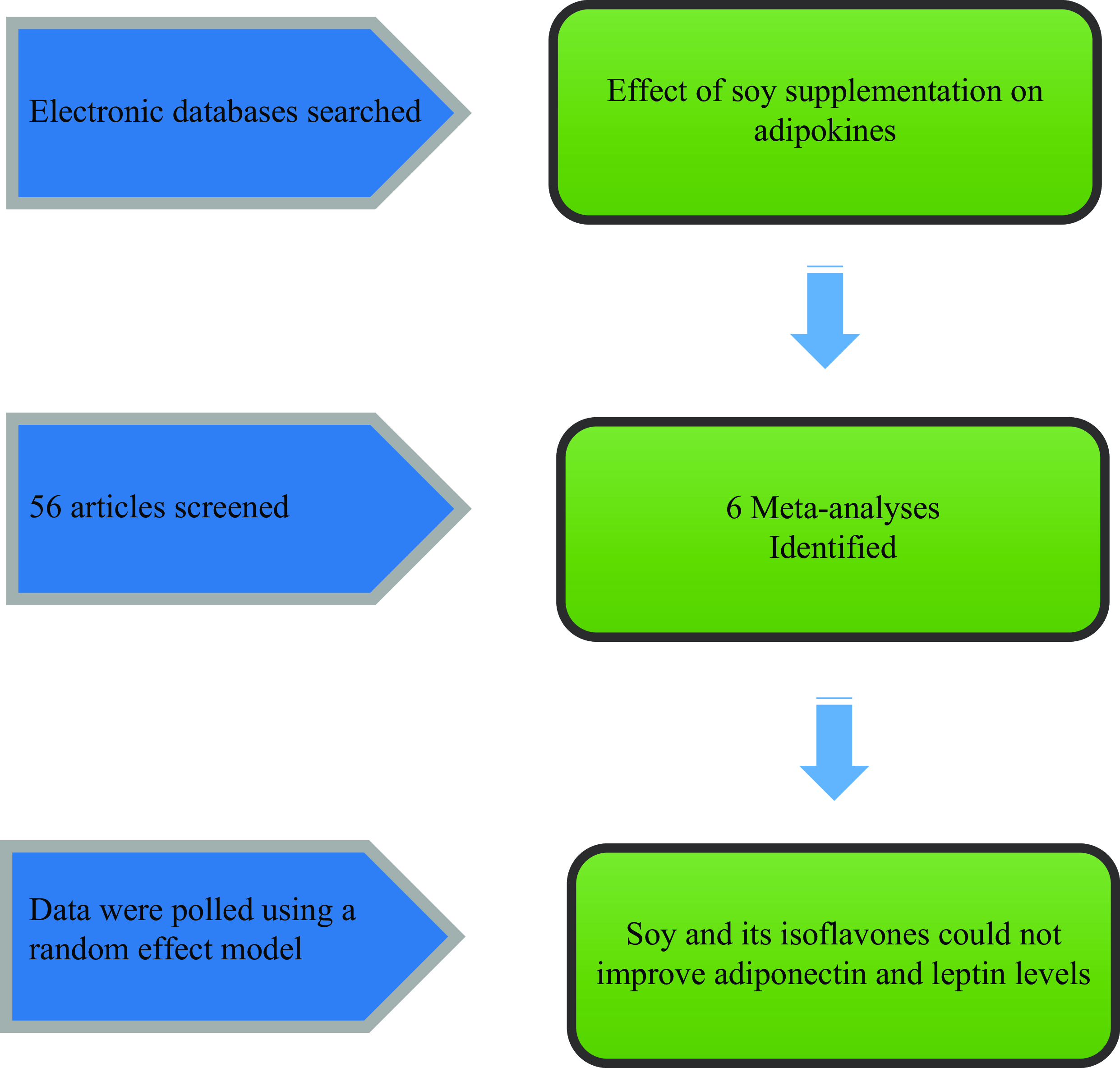
The therapeutic effects of soya consumption on adipokine concentrations have yielded inconsistent results in previous meta-analyses. This umbrella meta-analysis aims to investigate the impact of soya and its isoflavones on serum adiponectin and leptin levels in adults. We searched the Cochrane Central, Web of Science, PubMed and Scopus databases until October 10, 2024. The articles were restricted to those written in English. We included meta-analysis studies that evaluated the effects of soya and its isoflavones on levels of adiponectin and leptin and reported effect sizes (ES) and corresponding CI. Two independent reviewers screened all articles based on eligibility criteria and extracted the required data from the included meta-analyses. The meta-analysis was performed using a random-effects model in STATA software. Six meta-analyses of randomised controlled trials meeting the inclusion criteria were included in the current umbrella meta-analysis. The findings indicated that soya and its isoflavones did not have a significant effect on adiponectin (ES = 0·10; 95 % CI: −0·22, 0·41; P = 0·55; I2 = 51·8 %) and leptin (ES = −0·37; 95 % CI: −1·35, 0·61; P = 0·46; I2 = 71·2 %) concentrations. Subgroup analysis based on participants’ mean age, total sample size and duration was conducted. Results showed that the effect is not statistically significant in any of the subgroups. In conclusion, soya and its isoflavones could not improve the adipokines mentioned above. However, further high-quality research in different countries is required to substantiate these findings.
The primary causes of female mortality often involve diseases related to oxidative stress. Dietary total antioxidant capacity (TAC) evaluates its antioxidant content and potential health effects. This study, registered with PROSPERO (ID: CRD42024427784), explores the association between dietary TAC and women’s health outcomes, including endocrine conditions with gynaecological implications, obstetric outcomes, gynaecological conditions and oncological diseases related to the female reproductive system. We conducted a systematic search in MEDLINE (via PubMed), EMBASE, LILACS and CINAHL for observational studies published up to February 2024 that explored the relationship between dietary TAC and these health conditions. Data were analysed using RevMan 5·4 software. Nineteen studies met the eligibility criteria (sample sizes: 64–3209 women) and examined various conditions, including neoplasms (breast, endometrial and ovarian), bacterial vaginosis, menopause, polycystic ovary syndrome (PCOS), pre-eclampsia (PE), gestational diabetes mellitus (GDM), miscarriage, infertility and inflammation and oxidative stress markers. The meta-analysis identified a significant association between dietary TAC, measured in vitamin C equivalents, and breast cancer, revealing that women with the disease had a lower dietary TAC due to reduced antioxidant intake. Mixed results were found for endometrial cancer, while higher TAC levels were associated with a lower risk of PCOS and infertility. Among postmenopausal women, higher TAC correlated with fewer symptoms such as sleep issues and anxiety. In gestational conditions, higher dietary TAC was linked to a lower risk of miscarriage, GDM and PE. Twelve of the nineteen studies demonstrated significant associations between dietary TAC and the outcomes of interest.
The World Health Organization recommends countries adopt policies that encourage the creation of healthier food retail. In Australia, some organisations have created enforceable regulation for healthier food retail in settings under their contractual control. While progressive for public health, little evidence exists on the characteristics of individuals and organisations influencing sustainment of such initiatives. We explored the perspectives of those involved in a sustained (six year) real-world healthy vending initiative in a university setting in Melbourne, Australia. Qualitative interviews were undertaken with seven of the eight individuals involved in the initiative and informed by the Consolidated Framework for Implementation Research and the regulatory concept of social licence. Reflexive thematic analysis was used to generate themes on individual and organisational factors associated with sustainment. Two individual-level themes included participants enjoyment and skills for ‘getting the job done’ and working on innovative projects. Individual self-efficacy and enjoyment from working on innovative projects, combined with interviewees’ perception that their organisation had a role in leading social change, contributed to the initiative’s sustainment. Two organisation-level themes included the University leading innovation and having a responsibility to serve the needs of its community within the constraints of the need for ‘financial viability’ and the provision of ‘consumer choice’. This study brings to the fore evidence on the individual and organisational characteristics that contribute to the sustainment of a healthy food vending initiative from the perspective of those involved in implementation. Exploration of the importance of these characteristics to other food retail settings is required.
South Asians are among the fastest-growing immigrant population group in the United States (U.S.) with a unique disease risk profile. Due in part to immigration and acculturation factors, South Asians engage differently with behavioural risk factors (e.g. smoking, alcohol intake, physical activity, sedentary behaviour, and diet) for hypertension, which may be modified for the primary prevention of cardiovascular disease. Using data from the Mediators of Atherosclerosis in South Asians Living in America cohort, we conducted a cross-sectional analysis to evaluate the association between behavioural risk factors for cardiovascular disease and diet. We created a behavioural risk factor score based on smoking status, alcohol consumption, physical activity, and TV watching. We also calculated a Dietary Approaches to Stop Hypertension (DASH) dietary score based on inclusion of relevant dietary components. We used both scores to examine the association between engaging with risk factors for hypertension and the DASH diet among a cohort of South Asian adults. We found that participants with 3–4 behavioural risk factors had a DASH diet score that was 3 units lower than those with no behavioural risk factors (aβ: –3.25; 95% CI: –4.28, –2.21) and were 86% less likely to have a DASH diet score in the highest category compared to the lowest DASH diet score category (aOR: 0.14; 95% CI: 0.05, 0.37) in the fully adjusted models. These findings highlight the relationship between behavioural risk factors for hypertension among South Asians in the U.S.
While studies have highlighted a link between breakfast consumption and cognitive performance, evidence for how breakfast influences academic outcomes is mixed. This study explored the association between student breakfast skipping and academic achievement.
Design:
This cross-sectional investigation employed population data. Self-reported breakfast consumption was used to categorise students as never, sometimes and always breakfast skippers. Scores on five standardised literacy and numeracy tests were used to classify students to have low or high achievement according to national minimum standards. Poisson regression analyses estimated the relative risk (RR) of low academic achievement among students across breakfast skipping categories, adjusting for student, family and community-level confounding.
Setting:
Government schools in South Australia.
Participants:
Participants included 28 651 students in grades 5, 7 and 9 (aged 8–16 years).
Results:
Overall, 32·3 % of students reported never skipping breakfast, 57·6 % reported sometimes skipping and 10·1 % reported they always skip breakfast. Students who sometimes and always skipped breakfast had an increased risk of low achievement on all five tests, after adjustment for confounding. Greatest risk for low achievement was on numeracy (RR = 1·78, 95 % CI 1·64, 1·94) and reading (RR = 1·63, 95 % CI 1·49, 1·77) among students who always skipped breakfast. Students who sometimes skipped breakfast were also at increased risk for low achievement, though not as higher risk as that among students who reported skipping breakfast every day.
Conclusions:
Results suggest breakfast consumption plays an important role in academic success. Supports to promote regular student breakfast consumption may be one mechanism through which education stakeholders and policymakers can strengthen academic achievement.
High intake of dietary advanced glycation end products (AGE) could induce oxidative stress, inflammation and the gut microbiota dysbiosis processes that play a major role in the development of functional gastrointestinal disorders (FGID). There is limited data on the association between AGE intake and FGID. Therefore, this study aimed to examine the association of AGE with FGID in Iranian adults. In a cross-sectional analysis under the framework of the Isfahan functional disorders study, data on 1892 Iranian healthy adults aged 18–65 years were examined. Participants’ dietary intakes were collected using a validated dish-based, 106-item FFQ. Dietary AGE content of seventy-two food items was measured for all participants. FGID were assessed using Rome IV criteria. In total, 38 % of subjects had one of the most prevalent upper or lower FGID. The mean of AGE intake was 14690·10 (sd 8797·25) (kU/gr). In the fully adjusted model, being in the highest v. lowest tertile of AGE intake was associated with increased odds of FGID (OR = 1·78; 95 % CI: 1·01, 3·36). In stratified analysis by sex, males in the highest tertile of AGE intake showed higher odds of FGID than those in the lowest tertile (OR = 2·15; 95 % CI: 1·04, 4·45). However, in females, the AGE intake was not significantly associated with the risk of FGID in the fully adjusted model. Higher AGE intake was significantly associated with an increased risk of FGID, particularly in men. Further prospective studies are warranted to confirm these findings.
Measurement error undermines the accuracy of dietary intake data. The 24-h dietary recall (24HR) is the standard data collection method in nutrition surveillance. Several neurocognitive processes underpin the act of recall, and individuals differ in their performance of these processes. This study aimed to investigate whether variation in neurocognitive processes, measured using four cognitive tasks, was associated with variation in measurement error of 24HR. Participants (n 139) completed the Trail Making Test, the Wisconsin Card Sorting Test, the Visual Digit Span and the Vividness of Visual Imagery questionnaire. During a controlled feeding study, participants completed three technology-assisted 24HR: the Automated Self-Administered Dietary Assessment Tool, Intake24 and an Interviewer-Administered Image-Assisted 24HR (IA-24HR) 1 week apart. The percentage error between reported and true energy intakes was calculated. Using linear regression, the association between cognitive task scores and absolute percentage error in estimated energy intake was assessed. Longer time spent completing the Trail Making Test, an indicator of visual attention and executive functioning, was associated with greater error in energy intake estimation using ASA24 (B 0·13, 95 % CI 0·04, 0·21) and Intake24 (B 0·10, 95 % CI 0·02, 0·19). Regression models explained 13·6 % (ASA24) and 15·8 % (Intake24) of the variance in energy estimation error. No cognitive task scores were associated with error using IA-24HR. This study demonstrates that variation between individuals in neurocognitive processes explains some of the variation in 24HR error. Further investigation into the role of neurocognitive processes in 24HR and their role in the reliability of dietary intake data is warranted.