To save content items to your account,
please confirm that you agree to abide by our usage policies.
If this is the first time you use this feature, you will be asked to authorise Cambridge Core to connect with your account.
Find out more about saving content to .
To save content items to your Kindle, first ensure no-reply@cambridge.org
is added to your Approved Personal Document E-mail List under your Personal Document Settings
on the Manage Your Content and Devices page of your Amazon account. Then enter the ‘name’ part
of your Kindle email address below.
Find out more about saving to your Kindle.
Note you can select to save to either the @free.kindle.com or @kindle.com variations.
‘@free.kindle.com’ emails are free but can only be saved to your device when it is connected to wi-fi.
‘@kindle.com’ emails can be delivered even when you are not connected to wi-fi, but note that service fees apply.
The brittle stars of the family Ophiocomidae inhabit shallow waters and coral reefs of tropical regions. The species of Ophiocoma are difficult to identify due to high morphological variation, especially when different stages of development are observed. Here, based on morphological analyses, two Brazilian morphotypes of Ophiocoma were studied and characterized, Ophiocoma sp. NB (Northeastern Brazil) and Ophiocoma sp. TMV (Trindade and Martin Vaz Archipelago), and subsequently thoroughly analysed to confirm whether they were the same species or not. After the morphological studies, including external morphology, morphometry and microstructural characters, and analysis of molecular data, involving the 16S gene, it was concluded that Ophiocoma sp. NB and Ophiocoma sp. TMV do not correspond to the same species, the first being identified as Ophiocoma echinata (Lamarck, 1816) and the latter being a new species. This new species is characterized by two tentacle scales on the first arm segment and then one on all following segments, and the dorsalmost arm spines are robust and rounded, as wide as long or almost as wide as long.
The microzooplankton community structure (species abundance, biomass, diversity) was investigated at a coastal marine station on the South-West Atlantic Ocean (34°23′S–53°45′W, Uruguay). This is a hydrographically complex site within the Subtropical Convergence zone of the SW Atlantic where knowledge of the microzooplankton is particularly scant. The main goal was to perform a first characterization of that community and evaluate its association to environmental drivers along an annual cycle. Oceanographic variables (temperature, salinity, irradiance, nutrients, chlorophyll-a) and ciliates (aloricate and loricate), and dinoflagellates were recorded monthly from July 2019 to June 2020. Over 100 microzooplankton taxa belonging to approximately 30 families and 40 genera were identified, including several subtropical and subantarctic species. Community structure followed wide transitions at the seasonal scale – particularly between summer and winter as subtropical taxa alternated with euryhaline taxa from colder subantarctic waters. The core environmental variables (temperature, salinity and dissolved inorganic nitrogen [DIN]) explained overall variance in microzooplankton community assembly. During summer, high temperatures (20.3, 16.3–22.4°C) and low nutrients (DIN: 3.5, 0.7–6.7 μM; PO4: 1.0, 0.8–1.5 μM) benefited the development of aloricate ciliates. A nutrient pulse in winter posed favourable stoichiometric conditions and the numerical abundance was dominated by dinoflagellates and loricate ciliates in the following months, while diversity remained highest (taxonomic richness: 36 [22–46]; Shannon–Wiener index: 2.5 [1.9–2.8]). Results suggested that the microzooplankton community at the study site is mainly structured by hydrographic variability linked to the seasonal replacement of offshore water masses that differed in thermohaline properties and nutrient levels, and local processes.
Spix’s Macaw Cyanopsitta spixii is one of the most endangered Neotropical Psittacidae species. Extinct in the wild in the year 2000, in June 2022 the first cohort of C. spixii was reintroduced to its original habitat. For a successful reintroduction of the species, it is necessary to examine the viability of the population against natural and external threats and the environmental requirements for success. Thus, this paper presents a “Population Viability Analysis” (PVA) for Spix’s Macaw. It used the Vortex and RangeShiftR software, biological and environmental data from a bibliographic survey, and information provided by the field team responsible for the reintroduction of the species, and who work directly with the species in captivity. We found that the minimum viable population (MVP) for reintroduction of the species is 20 individuals. However, considering the impact of disease, drought, hunting, and illegal trafficking, this population can only persist if the release of individuals from captivity occurs annually over the next 20 years combined with the reforestation of natural habitat to support population growth.
The future of biodiversity lies not just in the strategies and mechanisms by which ecosystems and species are practically best protected from anthropogenic pressures. It lies also, and perhaps foremost, in the many billions of decisions that people make that, intentionally or otherwise, shape their impact on nature and the conservation policies and interventions that are implemented. Personalised ecology – the set of direct sensory interactions that each of us has with nature – is one important consideration in understanding the decisions that people make. Indeed, it has long been argued that people’s personalised ecologies have powerful implications, as captured in such concepts as biophilia, extinction of experience and shifting baselines. In this paper, we briefly review the connections between personalised ecology and the future of biodiversity, and the ways in which personalised ecologies might usefully be enhanced to improve that future.
Lutjanus malabaricus represents a widely distributed and intensively exploited snapper species. The present article is the first attempt to describe the life-history traits of L. malabaricus in Vietnamese waters and estimate their variability. The fish were collected at the landing sites of Nghe An and Ha Tinh provinces from June 2020 to May 2021. The standard length of fish ranged from 10 to 74 cm, weight varied between 18.53 and 8972.89 g, age ranged from 1 to 17 years and all three parameters were subjected to a significant seasonal variation. A similar seasonal pattern was observed in the variation of maturity and gonadosomatic index. We assume that the observed variation of the stock structure is the result of spawning migrations when large fish migrate inshore from the foraging grounds. Growth and weight gain of fish were described via the von Bertalanffy function, constants of the equations were as follows: L∞ = 76.2, K = −0.077, t0 = −2.26 in males and L∞ = 56.9, K = −0.176, t0 = −0.48 in females; W∞ = 6498, K = −0.100, t0 = −1.96 in males and W∞ = 8317, K = −0.100, t0 = −1.31 in females. The growth constants of the North Vietnamese stock of L. malabaricus are similar to the ones of the North-eastern Australian stock. A general tendency for the reduction of the growth rate and asymptotic size from equatorial waters to higher latitudes was observed.
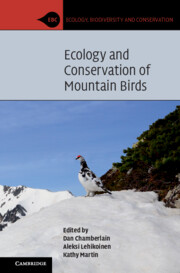
High mountain habitats are globally important for biodiversity. At least 12% of birds worldwide breed at or above the treeline, many of which are endemic species or species of conservation concern. However, due to the challenges of studying mountain birds in difficult-to-access habitats, little is known about their status and trends. This book provides the first global review of the ecology, evolution, life history and conservation of high mountain birds, including comprehensive coverage of their key habitats across global mountain regions, assessments of diversity patterns along elevation gradients, and adaptations for life in the alpine zone. The main threats to mountain bird populations are also identified, including climate change, human land use and recreational activities. Written for ecologists and naturalists, this book identifies key knowledge gaps and clearly establishes the research priorities needed to increase our understanding of the ecology of mountain birds and to aid in their conservation.
This is the fourth comprehensive assessment of the population status of all wild bird species in Europe. It identifies Species of European Conservation Concern (SPECs) so that action can be taken to improve their status. Species are categorised according to their global extinction risk, the size and trend of their European population and range, and Europe’s global responsibility for them. Of the 546 species assessed, 207 (38%) are SPECs: 74 (14%) of global concern (SPEC 1); 32 (6%) of European concern and concentrated in Europe (SPEC 2); and 101 (18%) of European concern but not concentrated in Europe (SPEC 3). The proportion of SPECs has remained similar (38–43%) across all four assessments since 1994, but the number of SPEC 1 species of global concern has trebled. The 44 species assessed as Non-SPECs in the third assessment (2017) but as SPECs here include multiple waders, raptors and passerines that breed in arctic, boreal or alpine regions, highlighting the growing importance of northern Europe and mountain ecosystems for bird conservation. Conversely, the 62 species assessed as SPECs in 2017 but as Non-SPECs here include various large waterbirds and raptors that are recovering due to conservation action. Since 1994, the number of specially protected species (listed on Annex I of the EU Birds Directive) qualifying as SPECs has fallen by 33%, while the number of huntable (Annex II) species qualifying as SPECs has risen by 56%. The broad patterns identified previously remain evident: 100 species have been classified as SPECs in all four assessments, including numerous farmland and steppe birds, ducks, waders, raptors, seabirds and long-distance migrants. Many of their populations are heavily depleted or continue to decline and/or contract in range. Europe still holds 3.4–5.4 billion breeding birds, but more action to halt and reverse losses is needed.
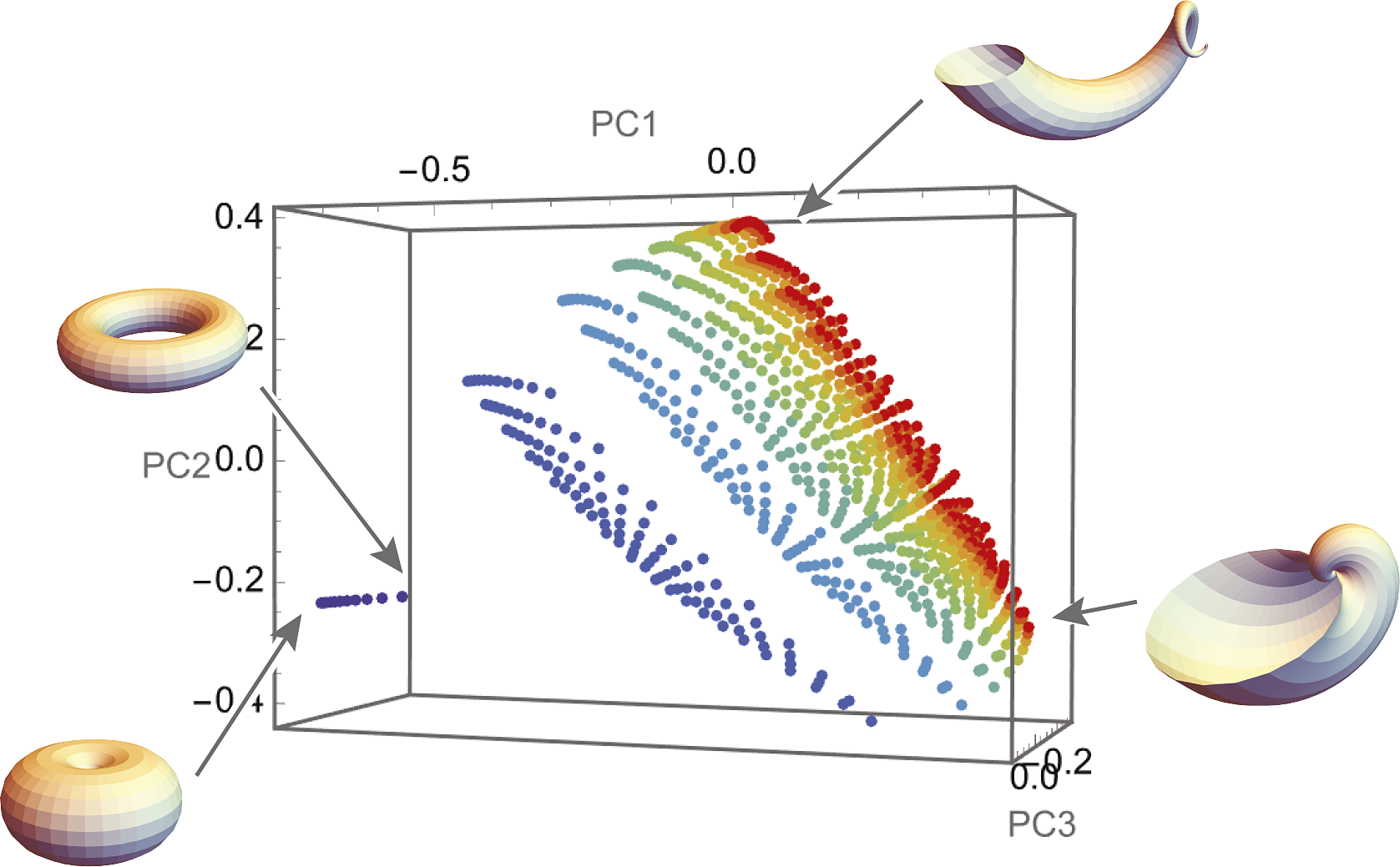
Processes of extinction, especially selectivity, can be studied using the distribution of species in morphospace. Random extinction reduces the number of species but has little effect on the range of morphologies or ecological roles in a fauna or flora. In contrast, selective extinction culls species based on their functional relationship to the altered environment and, therefore, to their position within a morphospace. Analysis of the distribution of extinctions within morphospaces can thus help understand whether the drivers of the extinction are linked to functional traits. Current approaches include measuring changes in disparity, mean morphology, or evenness between pre- and post-extinction morphologies. Not all measurements are straightforward, however, because morphospaces may be non-metric or non-linear in ways that can mislead interpretation. Dimension-reduction techniques like principal component analysis – commonly used with highly multivariate geometric morphometric data sets – have properties that can make the center of morphospace falsely appear to be densely populated, can make selective extinctions appear randomly distributed, or can make a group of non-specialized morphologies appear to be extreme outliers. Applying fully multivariate metrics and statistical tests will prevent most misinterpretations, as will making explicit functional connections between morphology and the underlying extinction processes.
We describe a new sea spider species, Pantopipetta hosodai sp. nov., based on one juvenile female collected from a submarine cave (‘Akumanoyakata’ Cave) in Shimojijima Island, Miyako Island Group, Ryukyu Islands, southwestern Japan. It was collected from the second slope zone of the cave, 80–100 m from the entrance, no light, low salinity and with rocky substrate. This is the first record globally of a Pantopipetta species from a submarine cave and anchialine environment. Pantopipetta hosodai sp. nov. resembles Pantopipetta auxiliata, Pantopipetta lenis and Pantopipetta oculata in having auxiliary claws, but differs from them in having a palp with three short distal articles, lateral processes without dorsodistal tubercles, coxae 1 and 3 of legs 1–3 each with one long dorsal tubercle and one dorsodistal tubercle bearing a seta on each femur. Features of the palp appear to delineate two species groups in Pantopipetta, i.e. (1) those having four small distal articles, and a small, basal palp article between the lateral cephalon process and longest palp article (eight-articulate palp) and (2) those having three small distal articles, and lacking the small basal article (six-articulate palp), but further detail examination of the described species is needed. We discuss the diagnostic characters separating Pantopipetta and Austrodecus and the generic affiliation of Austrodecus aconae. Few pycnogonids from marine or anchialine caves have been identified to species, and it is generally unknown whether cave-dwelling pycnogonids tend to be troglobites.
Understanding the distribution and extent of suitable habitats is critical for the conservation of endangered and endemic taxa. Such knowledge is limited for many Central African species, including the rare and globally threatened Grey-necked Picathartes Picathartes oreas, one of only two species in the family Picathartidae endemic to the forests of Central Africa. Despite growing concerns about land-use change resulting in fragmentation and loss of forest cover in the region, neither the extent of suitable habitat nor the potential species’ distribution is well known. We combine 339 (new and historical) occurrence records of Grey-necked Picathartes with environmental variables to model the potential global distribution. We used a Maximum Entropy modelling approach that accounted for sampling bias. Our model suggests that Grey-necked Picathartes distribution is strongly associated with steeper slopes and high levels of forest cover, while bioclimatic, vegetation health, and habitat condition variables were all excluded from the final model. We predicted 17,327 km2 of suitable habitat for the species, of which only 2,490 km2 (14.4%) are within protected areas where conservation designations are strictly enforced. These findings show a smaller global distribution of predicted suitable habitat forthe Grey-necked Picathartes than previously thought. This work provides evidence to inform a revision of the International Union for Conservation of Nature (IUCN) Red List status, and may warrant upgrading the status of the species from “Near Threatened” to “Vulnerable”.
Large-scale Ulva prolifera green tides have successively occurred for 16 years (2007–2022) in the Yellow Sea (YS), and the different life stages of U. prolifera play critical roles in regulating the occurrence and development of green tides. U. prolifera and microalgae have a similar niche in seawater, but their potential interactions are not yet clearly understood. In this study, we investigated the competition relationship between two microalgae and U. prolifera at five different development stages in controlled laboratory experiments. The results showed that one microalgae Alexandrium tamarense, can only inhibit U. prolifera gametes at the first settlement stage. Inversely, the germinated U. prolifera begin to show negative effects on microalgae in multiple ways at the subsequent four stages, and the growth inhibition rates among these stages ranged from 19 to 100%. The complex interactions may influence the formation of green tides. Meanwhile, the potential ecological consequences on phytoplankton, even the decreased occurrence of microalgal blooms in the YS need to be further evaluated.
Around the world, countries have introduced laws and policies designed to prevent species extinction. While there have been some success stories, overall, these laws and policies are routinely failing. Extinction rates continue to climb. However, the law is necessary to regulate the human-environment interactions that form the basis of the drivers of extinction and biodiversity loss, including land-clearing, the discharge of greenhouse gases and the introduction of invasive species. The purpose of this paper is to evaluate the literature specifically on biodiversity conservation law, to review and describe the commonalities in laws and legal systems that can be considered successful, or unsuccessful. Laws for the conservation of biodiversity form a critical component for minimising the drivers of extinction, with species extinction being an extreme outcome of biodiversity loss. We reviewed 128 publications from around the world to ascertain and synthesise best practices in law and policy that aim to protect and conserve biodiversity (herein termed ‘biodiversity conservation law’). The literature demonstrated that when it comes to biodiversity conservation law, the concept of ‘best practice’ is elusive, and does not necessarily equate to a reversal in species decline. Further, most western countries utilise the same legal mechanisms (also known as policy tools) for biodiversity conservation, although some countries implement these laws more effectively than others. In this paper, we explore and explain several common legal mechanisms discussed across the range of literature, including species listing and recovery plans, protected area regulation, stewardship, restoration, and offset and no net loss schemes. We also explore the necessity of biodiversity and climate mainstreaming across all laws and highlight the need to engage in genuine partnerships and collaborations with First Nations communities. This paper, and the principles explored herein, should assist law and policymakers to regulate more effectively and explain to those in the conservation sciences where research should be directed to improve the science-policy interface.
Participatory methods have become essential for research with Indigenous Arctic peoples. To understand how researchers use such methods, we conducted a scoping review of participatory action research (PAR)—a classic qualitative methodology—with Inuit communities. Although other systematic reviews exist on participatory methodologies in the Arctic, our scoping review is the only one focusing only on the Inuit.
We reviewed 11 empirical studies published between 2000 and 2019 in peer-reviewed journals. Most of them had been conducted with Canadian Inuit. Although the authors came from a variety of disciplines, the studies were mostly about the health and well-being of Inuit communities. The authors did not use the same definition of PAR, but their definitions did share some key components: Inuit participation, Inuit engagement and a goal of social change. There were also a variety of methodologies of research and forms of Inuit participation, although the photovoice method was frequent.
Scoping reviews are most often used in the natural sciences. This one was a challenge because we were using it in the social sciences and because it concerned PAR, an approach with different definitions and uses. A remaining question is how to assess such a method, either by peers or by other stakeholders.
The DIMA Network (Developing Innovative Multi-proxy Analyses – in Siberia and the Russian Far East (SRFE)) started from a small nucleus of palaeoenvironmental researchers in the UK and SRFE at a workshop in 2008 and currently includes researchers from over 25 institutions. The mutual interest in creating long-term records of environmental change was rekindled during workshops in Magadan (2018), Tomsk (2018) and Southampton (2019). These events were organised to connect researchers from the UK and SRFE with these aims: (1) provide training in new techniques and methods, (2) facilitate knowledge transfer about local sites and conditions, (3) stimulate large-scale collaborative projects across SRFE and (4) inspire a new generation of palaeoenvironmental researchers.
This article seeks to investigate the claim that South Georgia may have been first discovered in April 1675 by an English merchant called Antonio de la Roche. There are two unresolved questions: whether La Roche was the first to see the island, and whether the island that he saw was South Georgia. I introduce a third uncertainly by questioning whether Antonio de la Roche ever existed. He does not appear in the records of the French churches in London, and the sole source of his biography is the work of a fabricator, Francisco de Seyxas.
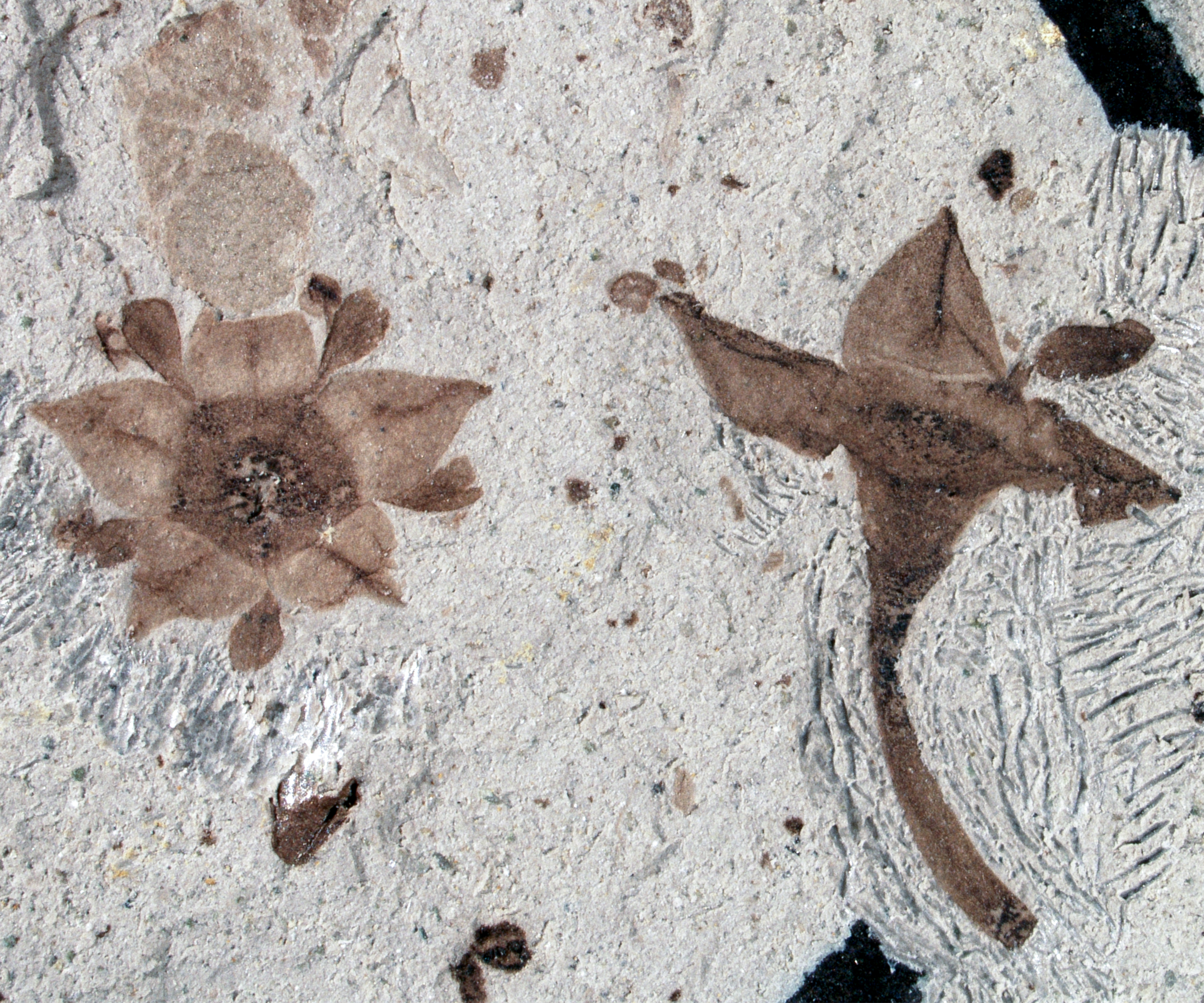
The Cretaceous–Paleogene (K–Pg) mass extinction was geologically instantaneous, causing the most drastic extinction rates in Earth’s History. The rapid species losses and environmental destruction from the Chicxulub impact at 66.02 Ma made the K–Pg the most comparable past event to today’s projected “sixth” mass extinction. The extinction famously eliminated major clades of animals and plankton. However, for land plants, losses primarily occurred among species observed in regional studies but left no global trace at the family or major-clade level, leading to questions about whether there was a significant K–Pg plant extinction. We review emerging paleobotanical data from the Americas and argue that the evidence strongly favors profound (generally >50%), geographically heterogeneous species losses and recovery consistent with mass extinction. The heterogeneity appears to reflect several factors, including distance from the impact site and marine and latitudinal buffering of the impact winter. The ensuing transformations have affected all land life, including true angiosperm dominance in the world’s forests, the birth of the hyperdiverse Neotropical rainforest biome, and evolutionary radiations leading to many crown angiosperm clades. Although the worst outcomes are still preventable, the sixth mass extinction could mirror the K–Pg event by eliminating comparable numbers of plant species in a geologic instant, impoverishing and eventually transforming terrestrial ecosystems while having little effect on global plant-family diversity.
Currently, 14 of the 50 species of Lysmata are known to possess a long accessory branch with more than two articles. Historically, Lysmata intermedia and Lysmata moorei were the only two ‘long-branch’ species inhabiting the southwestern Atlantic. Here we describe, based on morphological, molecular and colour pattern data, a new species of Lysmata possessing a long accessory branch from Pernambuco, northeastern Brazil. Our maximum-likelihood analysis recovered Lysmata elisa sp. n. as a sister species to Lysmata jundalini. Both species are closely related to Lysmata holthuisi and L. intermedia. The four aforementioned species comprise the L. intermedia species complex. The new species may be morphologically distinguished from the other closely related species by different sets of characters, which include details of the dorsolateral antennular flagellum, armature of ischium of the second pair of pereiopods, intraorbital process shape and relative proportions of pereiopods. Our results reinforce the importance of refining biodiversity data through the application of integrative taxonomic approaches to expand the knowledge of local and global biodiversity. The biodiversity of Lysmata deserves special attention, as they are intensively exploited in the aquarium trade.
Cetaceans in the eastern South Atlantic Ocean are poorly studied. We present results from a 2 week ship-based survey from Cape Town to Vema Seamount (980 km to the west) during October–November 2019, including visual and towed-hydrophone observations from the vessel, and 10 days of acoustic monitoring on the seamount. Fifty-two hours of visual surveys resulted in 39 encounters of whale groups including seven of humpback, six of fin and one sei whale, as well as four unidentified baleen whales, 18 unidentified balaenopterid whales and four unidentified odontocetes. Two humpback whales at the seamount were engaged in possible feeding behaviour. A large aggregation of mostly fin whales was observed near the continental shelf edge (22 encounters over a 70 × 50 km2 area, six fin, one sei whale, 15 not confirmed to species), an historic whaling ground for both fin and sei whales. Towed-hydrophone data (78.7 h) detected five groups of sperm whales, 45 of delphinids, one beaked whale and no Kogiids. Acoustic data from the seamount detected calls from several baleen whale species including humpback whale non-song calls, Antarctic minke ‘bioduck’ calls, sei whale down-sweep calls and a likely Bryde's whale call. Two call types could not be assigned to species, including the most detected – a simple frequency-modulated call with peak power around 130 Hz. This study contributes to an improved understanding of cetacean occurrence in the eastern South Atlantic Ocean and highlights the need for more research to improve identification of cetacean vocalizations in the region.
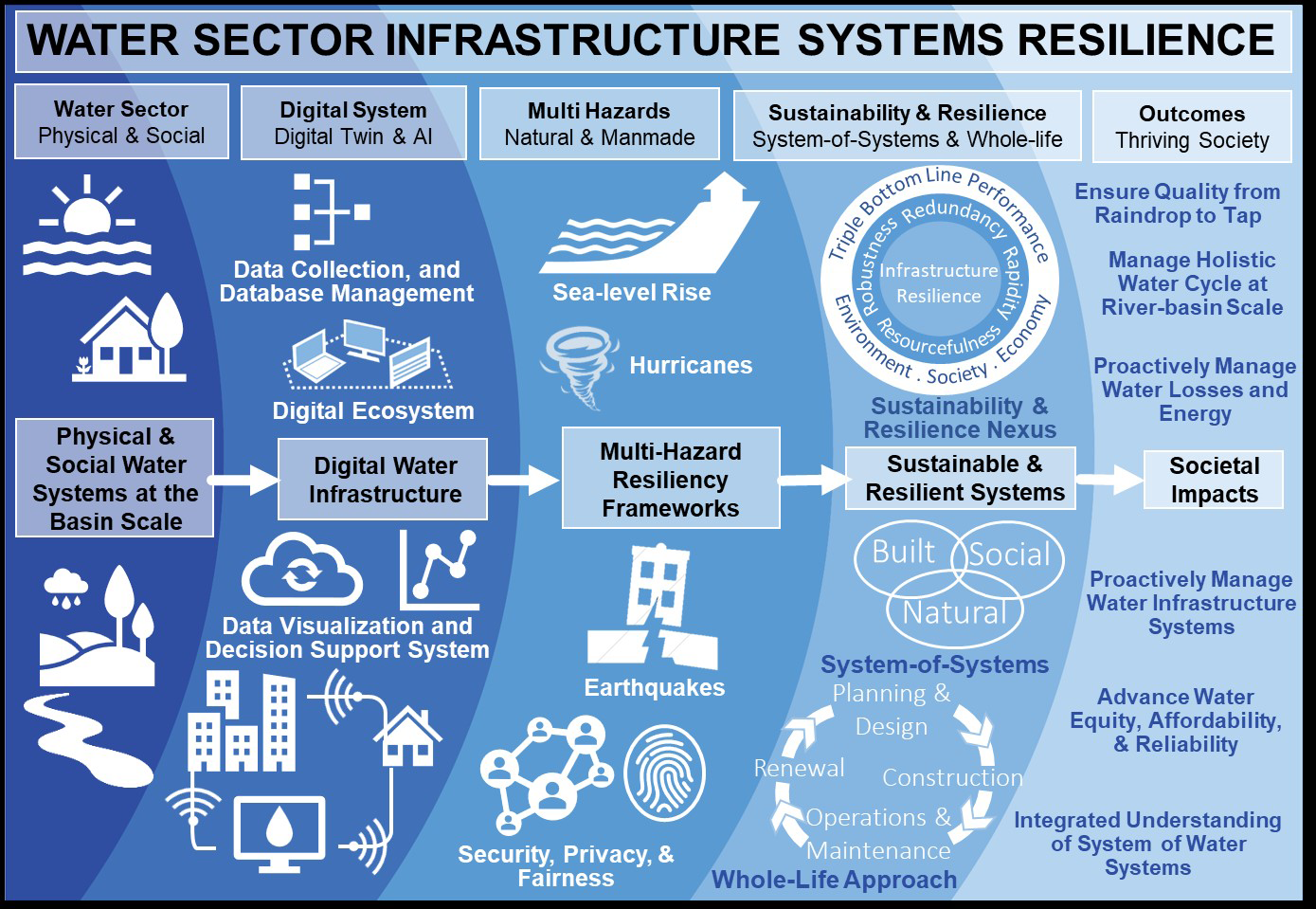
Water is often referred to as our most precious resource, and for a good reason – drinking water and wastewater services sustain core functions of the critical infrastructure, communities, and human life itself. Our water systems are threatened by aging infrastructure, floods, drought, storms, earthquakes, sea level rise, population growth, cyber-security breaches, and pollution, often in combination. Marginalized communities inevitably feel the worst impacts, and our response continues to be hampered by fragmented and antiquated governance and management practices. This paper focuses on the resilience of water sector (drinking water, wastewater, and stormwater [DWS]) to three major hazards (Sea-Level Rise, Earthquake, and Cyberattack). The purpose of this paper is to provide information useful for creating and maintaining resilient water system services. The term resilience describes the ability to adapt to changing conditions and to withstand and recover from disruptions. The resilience of DWS systems is of utmost importance to modern societies that are highly dependent on continued access to these water sector services. This review covers the terminology on water sector resilience and the assessment of a broad landscape of threats mapped with the proposed framework. A more detailed discussion on two areas of resilience is given: Physical Resilience, which is currently a major factor influencing disruptions and failures in DWS systems, and Digital Resilience, which is a rapidly increasing concern for modern infrastructure systems. The resilience of DWS systems should be considered holistically, inclusive of social, digital, and physical systems. The framework integrates various perspectives on water system threats by showcasing interactions between the parts of the DWS systems and their environment. While the challenges of change, shock and stresses are inevitable, embracing a social–ecological–technical system-of-systems and whole-life approach will allow us to better understand and operationalize resilience.
This chapter discusses the role of zoos in education. Zoos claim to have an educational function, but most of the studies that have been conducted in zoos have examined the educational value of single exhibits and have collected data from relatively small samples of visitors. Some studies have recorded changes in the knowledge or future behaviour of visitors following a zoo visit but others have not. Zoos in general tend to overemphasise their educational value based on very little scientific evidence. Some zoos engage in educational outreach work in schools and communities, and some of this work takes place in countries other than those where the zoos are located. Zoos make an important contribution to the training of future zoo professionals and veterinary staff. New technology is increasingly being used to enhance the visitor experience.