To save content items to your account,
please confirm that you agree to abide by our usage policies.
If this is the first time you use this feature, you will be asked to authorise Cambridge Core to connect with your account.
Find out more about saving content to .
To save content items to your Kindle, first ensure no-reply@cambridge.org
is added to your Approved Personal Document E-mail List under your Personal Document Settings
on the Manage Your Content and Devices page of your Amazon account. Then enter the ‘name’ part
of your Kindle email address below.
Find out more about saving to your Kindle.
Note you can select to save to either the @free.kindle.com or @kindle.com variations.
‘@free.kindle.com’ emails are free but can only be saved to your device when it is connected to wi-fi.
‘@kindle.com’ emails can be delivered even when you are not connected to wi-fi, but note that service fees apply.
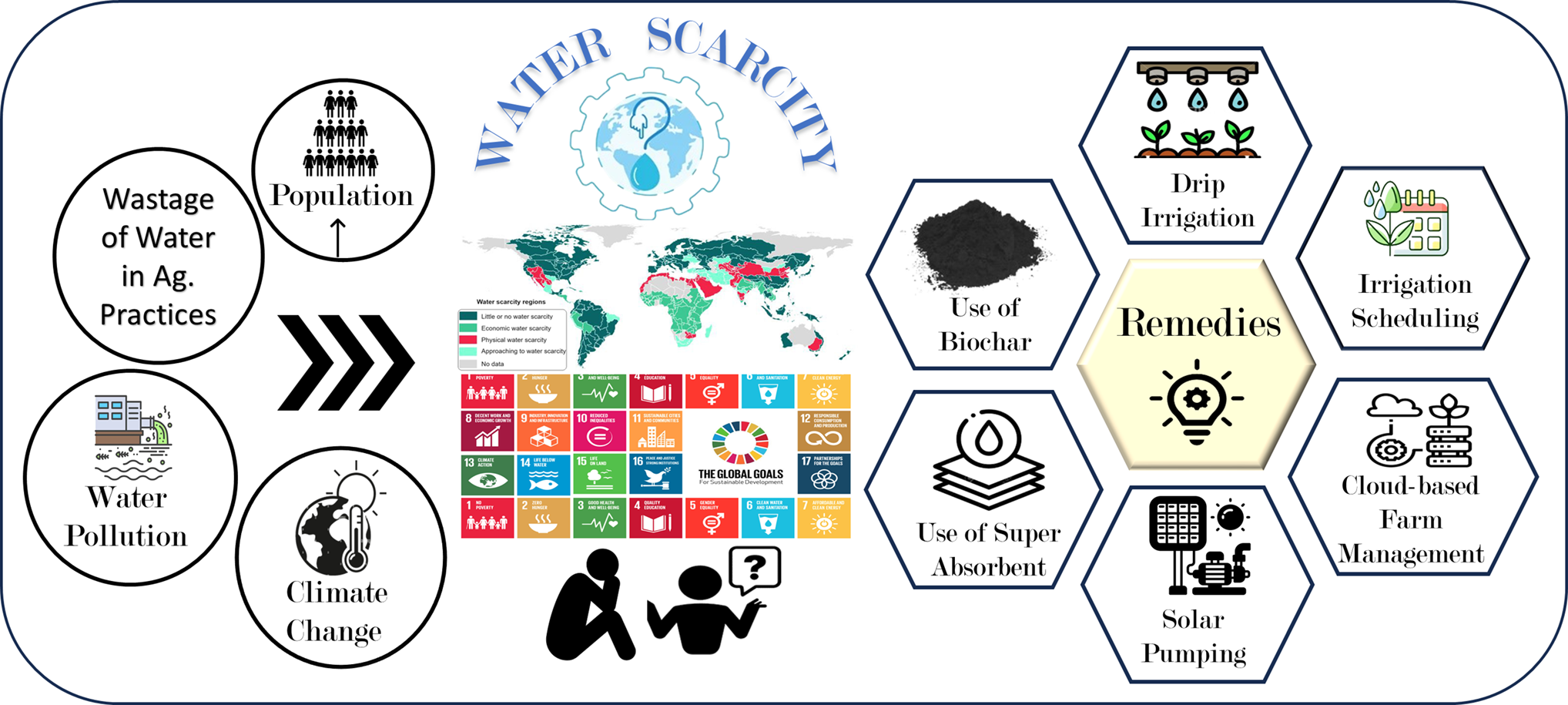
Water is essential for sustaining life and required for carrying out basic daily activities. Even though water covers the vast majority of the earth’s surface, the availability of fresh water, which is necessary to maintain human activities, is limited, making it a scarce resource. Climate change, overexploitation of groundwater, and population growth are all putting significant pressure on natural water sources, which pose a serious threat to various sectors of society, especially in agriculture. Future projections of freshwater availability indicate agriculture production will suffer a significant shock globally, including in India, leading to a threat to food security and sustainability. To ensure the sustainability of this vital resource, it is crucial to use water sensibly. Moreover, it is essential to adopt certain strategies to manage agricultural water use effectively. This includes adopting various water-efficient techniques such as ‘micro-irrigation’, ‘irrigation scheduling’, ‘conservation agriculture’, ‘crop switching’ and so on. In this review, firstly, we discuss water scarcity and its types, causes, crisis for water shortages and hindrance to sustainable development from a global perspective emphasizing the Indian scenario as a developing nation. Secondly, we elaborated our discussion on water scarcity in agriculture including the impacts of water scarcity on agricultural production and its connection to climate change, population growth, and overexploitation of natural resources globally focusing on the Indian scenario. In addition, innovative water management practices and adaptation strategies to manage agricultural water use, constraints, and the need for further research are also covered. It is anticipated that this review will benefit researchers and policymakers by providing useful information on the impacts of water limitation and adoption strategies.
The Antarctic Treaty System has put in place international agreements to provide comprehensive protection of the Antarctic environment. Despite this high degree of protection, human presence on the continent has resulted in environmental contamination, particularly at locations established prior to the development of the more stringent codes of conduct in recent decades. Rehabilitation of legacy contaminated sites is a priority for environmental management, and a framework for such efforts has been established. In this contribution, we re-evaluate the rehabilitation of the site of the former Vanda Station, a New Zealand outpost occupied from 1969 to 1991. We describe the design and implementation of the restoration, which included the removal of many tonnes of contaminated soils and groundwater, along with the post-action monitoring of the site. Our goal is to determine where challenges to the use of recent guidelines would have arisen. We found that while guidelines on clean-up of contaminated sites in Antarctica are valuable, challenges to implementation remain. These largely reflect a lack of understanding of the consequences of contamination on Antarctic ecosystems and the trajectory of natural rehabilitation. We present recommendations on how to address some of these challenges.
The Republic of Sakha (Yakutia) faces serious demographic challenges. One of the most important among them is the imbalance of population flows within internal migration. This paper examines the patterns of internal migration in the Republic, based on the distribution of municipal districts (uluses) by economic zones designated by the authorities for administrative purposes. The six most common indices characterising the intensity of migration of the population were used for the analysis. The homogeneity of Yakutia’s districts according to these indices was tested using the van der Waerden test. The article reveals that the intensity of migration in Yakutia has increased since 2011. The financial crisis of 2008–2009 and the COVID-19 pandemic had a significant but temporary impact on internal migration in Yakutia. Only Yakutsk has experienced population growth due to internal migration throughout the period studied. The intensity of migration in the Arctic uluses was not statistically different from central and eastern uluses, but differed from the most economically developed districts in southern and western Yakutia. The Republic was homogeneous with respect to the balance of migration inflows and outflows, but there was considerable heterogeneity in terms of the impact of migration on the size of the population.
This book addresses one of today's most urgent issues: the loss of wildlife and habitat. Combining conservation studies with a focus on animal rights, the chapters explore the successes and failures of the international treaties CITES and the BERN Convention.
Azooxanthellate corals of Rhizangiidae, with their distinctive morphological and ecological features, are widely distributed across global oceans but remain under-studied due to identification challenges. Comprehensive underwater surveys across diverse marine habitats such as rocky reefs and submerged shipwrecks were undertaken, and findings highlighted the exclusive presence of Culicia stellata in natural rocks, off the coast of Kaup for the first time in Indian EEZ. The study also records the presence of Cladangia exusta, nearly six decades after the first record from off Cochin, Laccadive Sea. This research presents a detailed study of the taxonomic description, distribution, and ecological preferences of Cladangia exusta and Culicia stellata in the Laccadive Sea. This study underscores the importance of accurate species identification for effective conservation strategies and enriching biodiversity records.
Morphological and molecular methods were used to describe a new species of Trapania Pruvot-Fol, 1931 from shallow water kelp forests on the north-central coast of Peru. The new species, Trapania huarmeyana sp. nov., is distinguished from other species along the Eastern Pacific by external morphological characters such as its translucent white body with brown stripes and small spots on the dorsum, blotches on the base of the extra-branchial processes, extra rhinophoral processes and gill branches. Internally, T. huarmeyana sp. nov. is distinguishable by several morphological characteristics of the radula, jaws and genital organs. Phylogenetic trees recovered using Bayesian Inference and Maximum Likelihood analysis of DNA sequences support its distinct status and clarify its relationship to other species from the Eastern Pacific. This new species constitutes the first record of Trapania from the Humboldt Current Ecosystem, contributing to our understanding of the distribution of the genus in the South-eastern Pacific.
Although nudibranchs are common and attractive animals, our understanding of these marine gastropods in Vietnam remains limited. Prior research has suggested that combining morphological examination with molecular analysis results in more accurate identification of nudibranchs. However, previous studies in Vietnam have typically relied solely on morphological methods for nudibranch identification. In this study, the nudibranch species Halgerda batangas was recorded in Vietnam for the first time based on both morphological and molecular approaches. Halgerda batangas was characterized by a network pattern consisting of orange lines, relatively low dorsal tubercles with red-orange caps and white basal rings, and an orange line along the foot margin. Molecular analysis corroborated the morphological findings. These results suggest that integrating morphological and molecular methods is an effective approach for identifying nudibranchs.
The yellownose skate (Dipturus chilensis) and roughskin skate (Dipturus trachyderma) are the only two elasmobranch species targeted by commercial fishing operations in Chile. Despite their importance, much of their biology and ecology remain poorly understood. This research aimed to evaluate the feasibility of tagging these species. In 2021, a pilot study was conducted at two locations, utilizing Petersen discs, acoustic transmitters, and pop-up satellite transmitters on both species. The results revealed a 6% recovery rate from the 50 skates tagged with Petersen discs, while 29.4% of those tagged with acoustic transmitters were successfully detected. Additionally, data from all ten satellite transmitters were successfully transmitted and recovered. The results revealed a maximum horizontal movement of 35.9 km, with the duration of liberty ranging from 8 to 275 days. Stocks of both species are currently depleted, and fishery management relies on closures and total allowable catches, where fishing effort is concentrated in short spatial and temporal windows. These particularities present significant challenges for implementing a national tagging programme, especially in terms of tag recovery. The main conclusion of this research is that the implementation of a tagging programme for both species is feasible. Satellite tagging provides the best results, but its higher implementation cost and limitations in use for relatively small skates could be mitigated by combining it with Petersen discs. Establishing a long-term tagging programme is essential for enhancing the understanding of distribution and migration patterns, which is crucial for enhancing conservation and management efforts for these skates in Chile.
While the giant anemone, Relicanthus daphneae, has been described as a characteristic inhabitant of the East Pacific Ocean since 1991, there are relatively few published occurrences worldwide. Here, we present the discovery and molecular verification of R. daphneae along the southern Central Indian Ridge, at the Rodriguez Triple Junction, and along the northern Southeast Indian Ridge within the BGR contract area for the exploration of marine massive sulphide deposits in the Indian Ocean. Individuals were solitary and attached exclusively to basalt hard substrates on the periphery of hydrothermal vent fields, at distances from active vents between 66 and 710 m. We report megafauna observed in close proximity to R. daphneae and, in one case, polychaetes on its tentacles and oral disc. For the first time, the giant anemone was observed capturing prey, a shrimp of the species Rimicaris kairei. Beyond this remark on the diet of these anemones, we also report other behavioural aspects for this species.
Hypereutrophic Grand Lake St Marys (GLSM) is a large (52 km2), shallow (mean depth ~ 1.5 m) reservoir in an agricultural watershed of western Ohio (USA). GLSM suffers from extensive cyanobacterial harmful algal blooms (cHABs) that persist much of the year, resulting in total microcystin concentrations that are often above safe contact levels. Over two summers (2020 and 2021), two phosphorus (P) binding agents (alum and lanthanum/bentonite clay Phoslock, respectively), in conjunction with a P-binding algaecide (SeClear) in 2021, were applied to a 3.24-ha enclosure to mitigate cHAB activity and create a ‘safe’ recreational space for the public. We evaluated these applications by comparing total phosphorus (TP), total microcystin, total chlorophyll, and phycocyanin concentrations within the enclosure and the adjacent lake. Some evidence for short-term reductions in TP, microcystin, chlorophyll, and phycocyanin concentrations were observed following each P binding treatment, but all parameters rapidly returned to or exceeded pre-application levels within 2–3 weeks after treatment. These results suggest that in-lake chemical treatments to mitigate cHABs are unlikely to provide long-lasting benefits in these semi-enclosed areas of large, shallow, hypereutrophic systems, and resources may be better applied toward reducing external nutrient loads (P and nitrogen) from the watershed.
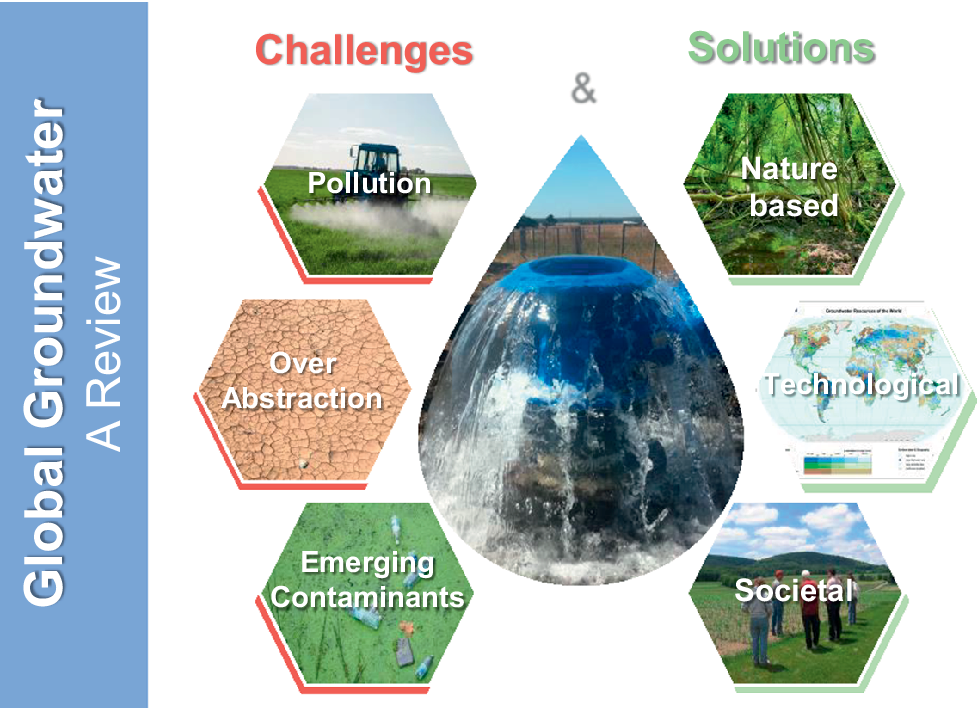
Through the provision of drinking and agricultural irrigation water, groundwater resources fundamentally underpin the existence of modern human society across large regions of the world. Despite this, decades of unsustainable exploitation have led to acute degradation of groundwater quantity and quality, creating pressing challenges that society must address if we are to maintain viable access to this crucial resource for future generations. Taking stock of the current situation, in this contribution we begin by reviewing some of the major global groundwater resource pressures, before exploring a range of technological, engineering, societal and nature-based solutions to address these challenges. We look at examples of emerging groundwater resource threats and potential innovative solutions to tackle them, before concluding with a forward look at future research opportunities that can ultimately enhance our management of this vital resource.
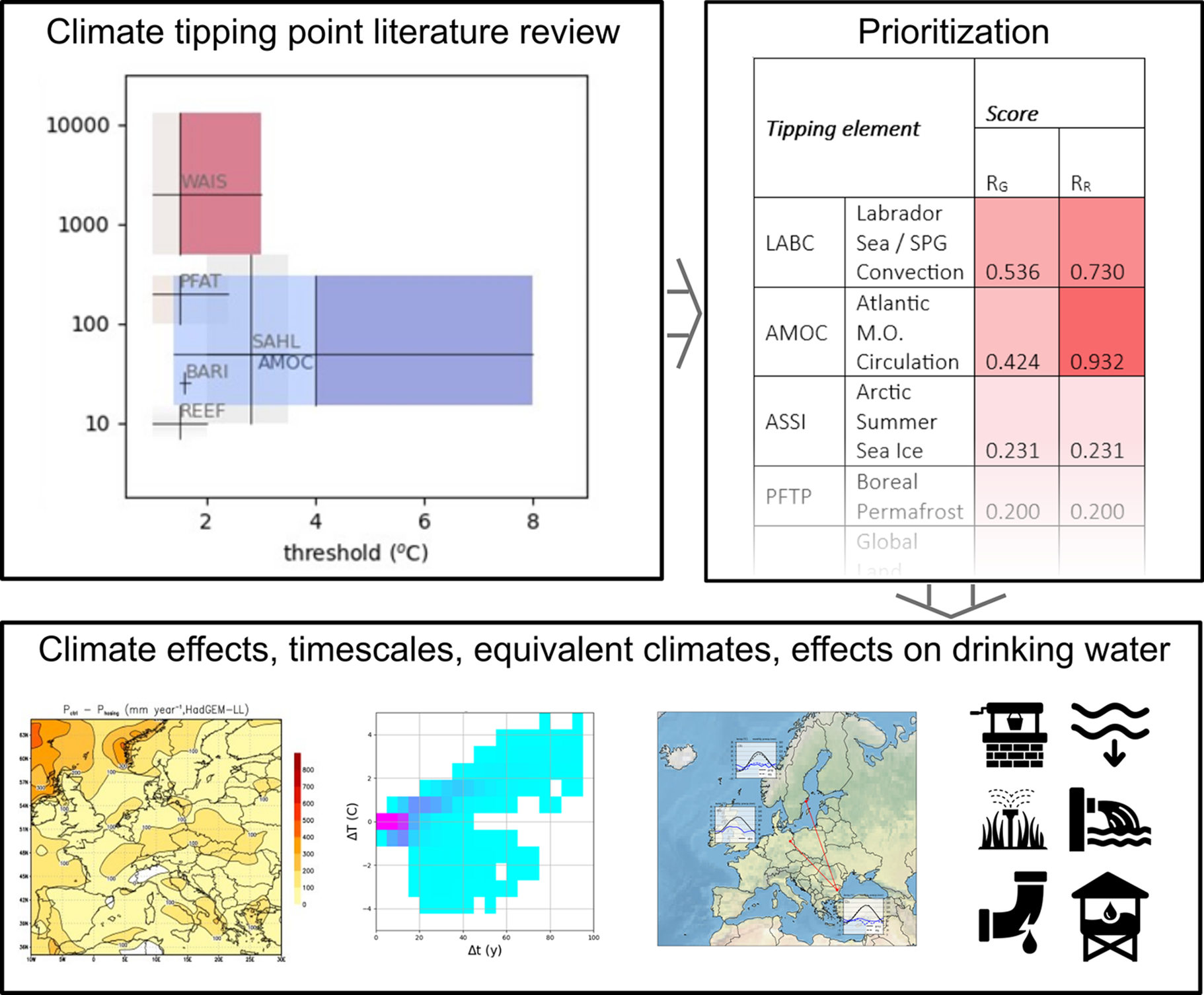
The current generation of climate models has proven very helpful in understanding and projecting anthropogenic climate change but has also shown to be insufficient for studying the interactions of tipping elements and their impact on overall climate stability. As a consequence, tipping elements are mostly absent from climate projections that are commonly used by the drinking water industry to test the resilience of their systems. There is, however, mounting evidence for the existence and potential (possibly even imminent) activation of some of these tipping elements. The drinking water sector is, by necessity, slow-moving as its infrastructure is meant to operate for many decades and in practice often does so even longer. The time scales of possible changes associated with tipping element activations may, however, be much shorter. We provide a review of the current understanding of climate tipping elements and present a simple model that investigates potential magnitudes and time scales of rapid climate change associated with tipping element activations. We study the potential consequences for drinking water supply systems, focusing on Europe, and argue that given the associated deep uncertainty and far-reaching consequences, it is essential to include tipping scenarios in the decision-making processes in the drinking water sector.
Oysters have unique life history strategies among molluscs and a long history in the fossil record. The Ostreid form, particularly species from the genus Crassostrea, facilitated the invasion into intertidal, estuarine habitats and reef formation. While there is general acknowledgement that oysters have highly variable growth, few studies have quantified variability in oyster allometry. This project aimed to (1) describe the proportional carbonate contributions from each valve and (2) examine length–weight relationships for shell and tissue across an estuarine gradient. We collected 1122 C. virginica from 48 reefs in eight tributaries and the main stem of the Virginia portion of the Chesapeake Bay. On average, the left valve was responsible for 56% of the total weight of the shell, which was relatively consistent across a size range (24.9–172 mm). Nonlinear mixed-effects models for oyster length–weight relationships suggest oysters exhibit allometric growth (b < 3) and substantial inter-reef variation, where upriver reefs in some tributaries appear to produce less shell and tissue biomass on average for a given size. We posit this variability may be due to differences in local conditions, particularly salinity, turbidity, and reef density. Allometric growth maximizes shell production and surface area for oyster settlement, both of which contribute to maintaining the underlying reef structure. Rapid growth and intraspecific plasticity in shell morphology enabled oysters to invade and establish reefs as estuaries moved in concert with changes in sea level over evolutionary time.
The global population and status of Snowy Owls Bubo scandiacus are particularly challenging to assess because individuals are irruptive and nomadic, and the breeding range is restricted to the remote circumpolar Arctic tundra. The International Union for Conservation of Nature (IUCN) uplisted the Snowy Owl to “Vulnerable” in 2017 because the suggested population estimates appeared considerably lower than historical estimates, and it recommended actions to clarify the population size, structure, and trends. Here we present a broad review and status assessment, an effort led by the International Snowy Owl Working Group (ISOWG) and researchers from around the world, to estimate population trends and the current global status of the Snowy Owl. We use long-term breeding data, genetic studies, satellite-GPS tracking, and survival estimates to assess current population trends at several monitoring sites in the Arctic and we review the ecology and threats throughout the Snowy Owl range. An assessment of the available data suggests that current estimates of a worldwide population of 14,000–28,000 breeding adults are plausible. Our assessment of population trends at five long-term monitoring sites suggests that breeding populations of Snowy Owls in the Arctic have decreased by more than 30% over the past three generations and the species should continue to be categorised as Vulnerable under the IUCN Red List Criterion A2. We offer research recommendations to improve our understanding of Snowy Owl biology and future population assessments in a changing world.
Amazon parrots stand out as one of the most illegally traded Psittacids in the neotropics. However, the lack of effective tools for determining the geographical origin of confiscated individuals has impeded the development of well-informed release programmes. In this study, we evaluated the efficacy of the cytochrome oxidase subunit I (COI) gene to identify phylogeographical groups and infer the origins of seized individuals across six Amazon parrot species. Through comprehensive genetic and phylogenetic analyses of 140 COI sequences from individuals with documented geographical origin, a genetic reference database was assembled. The most likely origin of 156 seized parrots was inferred by comparing their genotype to this database. Within the Yellow-headed Parrot Amazona ochrocephala species complex, our analyses revealed the presence of seven distinct phylogeographical groups, exposing a notable poaching impact in the Middle Magdalena’s river valley. For the Southern Mealy Amazon A. farinosa, three distinct genetic groups were identified, with seized individuals showing comparable proportions originating from both the Cis- and Trans-Andean regions. Noteworthy genetic differentiation was observed between individuals of Festive Amazon A. festiva from the Caquetá–Amazon Rivers and those from the Meta River, with two seized individuals assigned to the former. The Scaly-naped Amazon A. mercenaria exhibited genetic divergence between individuals from the central Andes and the Sierra Nevada de Santa Marta. In contrast, the Orange-winged Amazon A. amazonica and Red-lored Amazon A. autumnalis did not display significant phylogeographical structure. However, analyses of seized individuals of A. amazonica suggested a potential underestimation of its genetic diversity and structure. This study illustrates the utility of mitochondrial molecular markers in determining the most probable area of origin for confiscated Amazon parrots, aiding in release programmes and enhancing the monitoring of natural populations.
Elephants are a textbook example of slow-breeding megafauna, with extended periods of maternal investment and a long reproductive lifespan among both sexes. The unique reproductive physiology of females gives rise to the uniquely proboscidean phenomenon of “musth” among males, a rut-like breeding state. This chapter examines how female reproductive constraints and life histories impose constraints on males, who in turn must trade off the need to forage with the need to breed. These dueling motivational states give rise to tactics that vary at different life history stages. Tusks, another iconic feature of elephants, may be thought to offer competitive advantages, but the case is not so clear when one considers their liabilities. The chapter concludes by contrasting the demographic pressures on elephants due to habitat loss, conflict, and hunting, and the possible hidden costs that might influence the viability of elephant populations.
A bird’s eye view of the ancestral traits of proboscideans, both facilitated and constrained by their large body sizes. A sweeping journey starting with the origins of the extant elephants in Africa, their niche diversification and eventual genetic speciation owing to changes in climate, diet, and distributions. A deep dive into genetics takes us blow by blow into the fierce scientific debate concerning the species status of elephants in Africa as well as the extinct and extant species in Asia. The divergence between the Loxodonta and Elephas clades, today represented by just three living species, is thrown into relief against this long evolutionary story, with selective pressures imposed both by the environment and other species – including their most notable predators, humans. Multiple hypotheses offer competing explanations for the origins and maintenance of sociality in elephants, as well as the threats that brought about their extinction in the past and threaten to do so in the present.
Female gregariousness is a hallmark of elephants and many social mammals. This chapter examines the ecological and evolutionary explanations for sociality among elephants. Social life comes with costs (competition, subordination) and benefits (protection, knowledge) that differ across ecological contexts. The fundamental selective pressures and trade-offs represented by varied resource distributions and predation or hunting risks are discussed, taking pains to differentiate between species and populations. The influence of seasonality on resource availability, and in turn on fission-fusion dynamics and dominance interactions, provides a rich space of possible social interactions at multiple levels of organization and complexity. Disruptions to elephant societies, either because of deaths or management interventions, provide insights into both the fragilities and resilience of their social systems.