To save content items to your account,
please confirm that you agree to abide by our usage policies.
If this is the first time you use this feature, you will be asked to authorise Cambridge Core to connect with your account.
Find out more about saving content to .
To save content items to your Kindle, first ensure no-reply@cambridge.org
is added to your Approved Personal Document E-mail List under your Personal Document Settings
on the Manage Your Content and Devices page of your Amazon account. Then enter the ‘name’ part
of your Kindle email address below.
Find out more about saving to your Kindle.
Note you can select to save to either the @free.kindle.com or @kindle.com variations.
‘@free.kindle.com’ emails are free but can only be saved to your device when it is connected to wi-fi.
‘@kindle.com’ emails can be delivered even when you are not connected to wi-fi, but note that service fees apply.
In the present study species of the genus Byblis Boeck, 1871, found in India are discussed. Previously, two species of the genus Byblis: B. daleyi (Giles, 1890b) and B. lepta (Giles, 1890a) were recorded from India. The taxonomy and world distribution of the two previously reported species is discussed in the study. Additionally, a new species Byblis kachchhensissp. nov. is also described based on the specimens collected from Gujarat state, India. This new species is differentiated from its closely related species B. calisto Imbach, 1967 by having large eyes placed very close to each other and entire telson.
Arctic human settlements experience formidable challenges from accelerating climate change and environmental transformations. While these towns have demonstrated adaptive resilience, the looming threat of local climate extremes raises concerns about the results of adaptation and mitigation efforts. With the further development of Arctic settlements, it is necessary to consider changes in local climatic conditions, shifting the adaptation focus from regional to local scales. The local climate perspective in this literature synthesis study is built upon constraints from physical climatology, focused on the climate and environment within and around the town of Longyearbyen, Svalbard. The study provides insights into Longyearbyen’s local climate dynamics, including physical mechanisms, climate localisation, factors and trends, as well as their implications. Three model pathways for development are discussed, centred on (1) industrial development, (2) public services, and (3) tourism and conservation. This categorisation is introduced to distinguish development scenario sensitivity to the local climate effects. The synthesis indicates that any development concentrated spatially will amplify local warming and climate change, as positive climate feedback predominate. The study emphasises the need for a comprehensive understanding of the environmental factors sustaining local climatic anomalies.
A new diosaccin species, Paramphiascella aestuarii n. sp., was found in sediment samples from a shallow estuary in north-western Mexico. The morphological distinction between the new species and its congeners is discussed. The new species is morphologically close to P. calcarifer (Sewell, 1940) from the Maldivian Archipelago. However, P. calcarifer differs from the new species in the proximal and subdistal outer spiniform processes on the female second antennulary segment. Bayesian inference based upon molecular characterization (nuclear 18S ribosomal DNA and the mitochondrial cytochrome oxidase subunit I genes) places the new species within a large group of Diosaccinae Sars G.O., 1906, for which molecular sequences are available, composed of Typhlamphiascus typhlops (Sars G.O., 1906), Rhyncholagena cuspis Yeom and Lee, 2023, Robertgurneya jejuensis Yeom and Lee, 2022, and Amphiascoides Nicholls, 1941. The close relationship with Amphiascoides as its sister genus, only morphologically distinct in the structure of the second endopodal segment of the male second swimming leg, is also confirmed.
This volume compiles more than twenty years of behavioral research on the three living species of elephants in Africa and Asia (African Savannah, African Forest, and Asian elephant), together with their implications for conserving and managing wild elephant populations. The theoretical background, key terminology and findings are explained and presented in engaging language accessible to a wide range of non-specialists, from students to seasoned professionals. By viewing data from numerous studies through a comparative evolutionary perspective, the similarities and distinctions among species and populations come into clear relief, providing insight into the complexities of protecting these charismatic yet highly threatened mega-herbivores. Rather than mere exposition of what is known, readers are invited to reflect on the additional questions and puzzles that are still in need of answers, in the hope of inspiring a new generation of researchers and conservationists.
Recent increases in seawater temperature have been predicted to induce a poleward shift in the distribution of marine organisms. This study reports the first record of the winter appearance of green turtles (Chelonia mydas) in a habitat restricted to summer and autumn in northeast Japan. One individual was observed by a diver at Tomari-hama on the Oshika Peninsula (38°21′ N, 141°31′ E) on 28 December 2023. Another individual was incidentally captured in a fixed net near Tashiro-jima on the Oshika Peninsula (38°17′ N, 141°24′ E) on 18 April 2024 with a straight carapace length of 41.5 cm and body mass of 6.4 kg. Because previous bycatch surveys show that the earliest and latest appearances of green turtles in this area occurred in late June and late November, respectively, the occurrences reported in this study were two months earlier and one month later. The sea surface temperatures at the time of these observations were 15.9 and 16.0°C, respectively, which are 3.5 and 6.6°C higher than those of normal years. The unexpected winter appearance of green turtles implies an expansion of the habitable period for this species in response to climate change, and it, therefore, is emphasizes the need for continued monitoring surveys to collect additional sightings.
Sea anemones represent a highly abundant and diverse group within marine ecosystems, yet biodiversity analyses in Peru remain comparatively scarce. To enhance the inventory of biodiversity and its distribution, a comprehensive review of the available literature on species from Peruvian waters was performed. Only seven well-documented species (i.e. verified records) were found representing 31.8% of the total species reported in Peru (22 spp.) These seven species are Anthothoe chilensis, Phymactis papillosa (formerly reported as P. clematis), Phymanthea pluvia, Oulactis concinnata, Antholoba achates, Anemonia alicemartinae and Oulactis coliumensis. Overall, specimens were identified in 68 localities, the Actiniidae family exhibited the highest diversity with five species (71.4% of the total), whereas Actinostolidae and Sagartiidae each contributed one species (14.3%). The highest number of scientific publications (18) corresponds to the Lima region, with over twice as many studies as other regions, it is followed by Ica (8), Áncash (7), La Libertad (6), Tumbes (5), Piura (4), Arequipa (3), Tacna (2), Moquegua (1) and Lambayeque (1). However, the studied localities are unevenly distributed across regions. Rocky substrata (~55% of records) are the most reported habitat for sea anemones in Peru, including exposed vertical walls and sheltered crevices, caves and areas under rocks. Despite wide spatial distribution, our results indicate several under-researched regions. The growing interest in these benthic invertebrates over recent decades has revealed over 50% of reported biodiversity, yet many doubts about species described long ago remain. Potential biases in existing data require identification along with further analysis of environmental information.
The advent of integrative taxonomy in plankton research, employing molecular and morphology-based identification, promotes the discovery of new biodiversity records, especially of larval stages. The slipper lobster family Scyllaridae consists of planktonic phyllosoma larvae, persisting weeks to many months in the water column. High interspecific larval similarities and inconsistent delineation of stages have hindered the identification of scyllarid phyllosomata to the species level using morphological characteristics. Here we report the first record of the pygmy slipper lobster, Biarctus sordidus, in the Red Sea following the finding of its phyllosoma larva, extending its known distribution from the Persian Gulf to Australia and southern China. We identified the phyllosoma collected from the Northern Gulf of Aqaba as B. sordidus using the mitochondrial 16S and 18S rRNA genes, and described its morphology to determine the larval stage. We further discuss the potential factors contributing to the delayed detection of this species.
The research aims to reconstruct a transnational history of Finn Malmgren’s contribution to the exploration of the Arctic, with a specific focus on the polar air expeditions of Norge (1926) and Italia (1928). The analysis of archive sources consulted in Italy, Norway, and Sweden sheds light on some key aspects of these two expeditions. In particular, the study of numerous unpublished documents – from the correspondence with personalities such as Umberto Nobile and Anna Nordenskjöld to the contemporary testimonies of Adalberto Mariano and Filippo Zappi – offers new insights into issues such as the international meteorological cooperation during the preparation of the Norge expedition and the march on the pack of Malmgren, Mariano and Zappi.
Almost half of the global population lives with inadequate or unsafe water, sanitation or hygiene (WASH) services. The consequences of this situation include negative impacts on individual and public health, the environment and economic production. The WASH sector is linked with other international development sectors and is embedded within complex social, environmental and governance structures. This complexity led us to reflect on how WASH sector practitioners and researchers are applying systems thinking tools and techniques to progress an agenda of sustainable and universal WASH services. From this perspective, we then discuss the near- and long-term future needs of the sector in coming to a comprehensive understanding and application of systems thinking to progress the ultimate aim of universal access to safely managed, accessible and abundant water, sanitation and hygiene services.
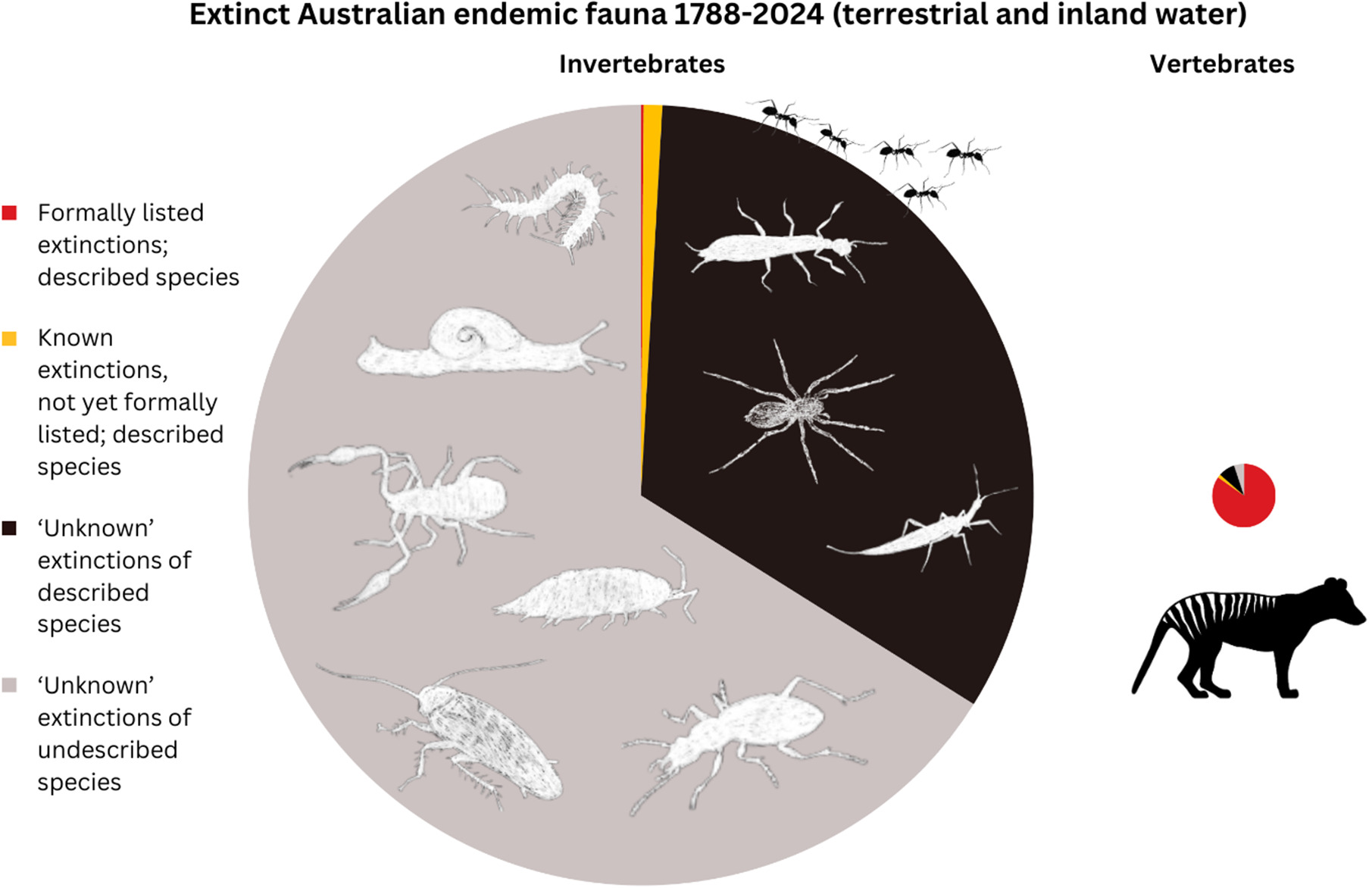
Biodiversity is in rapid decline, but the extent of loss is not well resolved for poorly known groups. We estimate the number of extinctions for Australian non-marine invertebrates since the European colonisation of the continent. Our analyses use a range of approaches, incorporate stated uncertainties and recognise explicit caveats. We use plausible bounds for the number of species, two approaches for estimating extinction rate, and Monte Carlo simulations to select combinations of projected distributions from these variables. We conclude that 9,111 (plausible bounds of 1,465 to 56,828) Australian species have become extinct over this 236-year period. These estimates dwarf the number of formally recognised extinctions of Australian invertebrates (10 species) and of the single invertebrate species listed as extinct under Australian legislation. We predict that 39–148 species will become extinct in 2024. This is inconsistent with a recent pledge by the Australian government to prevent all extinctions. This high rate of loss is largely a consequence of pervasive taxonomic biases in community concern and conservation investment. Those characteristics also make it challenging to reduce that rate of loss, as there is uncertainty about which invertebrate species are at the most risk. We outline conservation responses to reduce the likelihood of further extinctions.
Accurately predicting the vulnerabilities of species to climate change requires a more detailed understanding of the functional and life-history traits that make some species more susceptible to declines and extinctions in shifting climates. This is because existing trait-based correlates of extinction risk from climate and environmental disturbances vary widely, often being idiosyncratic and context dependent. A powerful solution is to analyse the growing volume of biological data on changes in species ranges and abundances using process-explicit ecological models that run at fine temporal and spatial scales and across large geographical extents. These simulation-based approaches can unpack complex interactions between species’ traits and climate and other threats. This enables species-responses to climatic change to be contextualised and integrated into future biodiversity projections and to be used to formulate and assess conservation policy goals. By providing a more complete understanding of the traits and contexts that regulate different responses of species to climate change, these process-driven approaches are likely to result in more certain predictions of the species that are most vulnerable to climate change.
The transition between the Paleocene and Eocene epochs (ca. 56 Ma) was marked by a period of rapid global warming of 5 °C to 8 °C following a carbon isotope excursion (CIE) lasting 200 ky or less referred to as the Paleocene-Eocene Thermal Maximum (PETM). The PETM precipitated a significant shift in the composition of North American floral communities and major mammalian turnover. We explored the ecological impacts of this phenomenon by analyzing 173 mammal species from the Bighorn Basin, Wyoming, USA, including their associated body alongside a database of 30 palynofloral localities as proxies for habitat. For each time bin, we calculated mean and median differences in body mass and habitat preference between significantly aggregated and segregated mammal species. Aggregated species showed significant similarity in habitat preference only prior to the PETM, after which habitat preference ceased to be a significant factor in community assembly. Our measures of differences in body mass space provide no evidence of a significant impact of competitive interactions on community assembly across the PETM, aligning with previous work. Our results indicate the persistence of a stable mammalian functional community structure despite taxonomic turnover, climate change and broadening habitat preferences.
The ocellated shrimp goby, Tomiyamichthys russus was recorded from peninsular India based on a single specimen from Royapuram Fishing Harbour (13°07′24.49′′ N; 80°17′52.20′′E), Chennai, Southeast coast of India. The specimen was identified as the ocellated shrimp goby, T. russus by identification characteristics such as crosswise rows of small orange spots surrounded by minute dull black circles in the post-orbital and pre-dorsal region; posterior area of the gill membrane orange; operculum with pale violet traces. The morphometric characteristics were compared with the previous reports of ocellated shrimp goby. The present finding is the documentation of rare ocellated shrimp goby from the peninsular Indian coast.
A case of hermaphrodism in a wild Pacific bluefin tuna Thunnus orientalis from the Sea of Japan is reported. Morphologically and macroscopically, the gonad seemed to have both ovarian and testicular surfaces. Histological analysis showed that the gonad consisted of only sexually mature testis in all the sections examined, suggesting that the individual was male. Genetic analysis, however, indicated that the tissue samples from this individual had no male-specific genome region, resulting in it being inferred as a female. The observed inconsistency between genetic and histological analysis could help future understanding of the sex development of tunas.
Poisonous birds are rare but on New Guinea, including Indonesia’s easternmost provinces, no less than nine poisonous species, eight pitohuis and one species of ifrita, are found. Pitohuis when handled can cause sneezing with numbness and burning of nasal tissue and nausea in humans. In the bird markets of western Indonesia novelty birds are traded at a premium and overexploitation of popular songbirds leads traders to find replacement species to meet demand. We conducted over 800 surveys in the bird markets of Sumatra, Java, Bali, Lombok, and Sulawesi between 1994 and 2023 and from 2015 onwards we assessed the online trade in pitohuis and Blue-capped Ifrit Ifrita kowaldi. We identified the species, recorded their prices and location, and the date when the birds were offered for sale. We analysed temporal trends, volumes, prices, and geographical origin of the sellers. Between 1994 and 2014 we did not encounter a single pitohui in the Indonesian bird markets. In the following years we recorded 113 pitohuis in 12 bird markets and we recorded 199 pitohuis for sale online; 248 were variable pitohuis and 54 were Hooded Pitohui Pitohui dichrous. No ifritas were recorded. Most pitohuis were recorded in eastern Java and Bali. Prices differed between eastern Java (mean of US$93) and western Java and Bali (US$185), possibly suggesting pitohuis arrive from West Papua in eastern Java and from there make their way to the outer markets. Pitohuis are marketed as “Papuan Straw-headed Bulbuls”; the Straw-headed Bulbul Pycnonotus zeylanicus is a very popular and expensive songbird from Southeast Asia, including western Indonesia, that has become rare both in the wild and in the markets due to overexploitation. Discussions about pitohuis on online forums rarely mention “poisonous” but when it is mentioned traders dismiss this as something not to worry about and they claim it to be dietary-dependent. Poisonous pitohuis are novelty, as well as master, birds in Indonesia, where they are marketed for their song ignoring any negative side-effects of them being poisonous. The trade in novelty species, when detected early, does allow for the authorities to intervene in a timely manner to ensure that this trade does not impede their conservation.
Panulirus stimpsoni is restricted to southern China, Vietnam, and Japan but has been rarely reported in tropical Gulf of Thailand. In Malaysia, only six species were previously reported. This study (1) reports the seventh Malaysian species – a new record of P. stimpsoni with morphological and genetic data; (2) establishes a checklist of Malaysian Panulirus species. Surveys from 2021 to 2022 sampled lobsters across Malaysia by SCUBA or from fishermen. Seven species were identified and a modified key of Malaysian species was constructed. The COI gene was used for genetic identification and phylogenetic tree reconstruction with maximum likelihood (ML). The best model was GTR + I + G. The ML tree comprised Clades I and II with sequences clustering by species and strong support. Most Peninsular Malaysian lobsters were P. polyphagus while P. versicolor dominated Sabah. Information on P. stimpsoni's full fishery potential, distribution, ecology, and biology is limited. Further research is needed to ensure conservation and management as data are only available for six previously reported species. Further studies are required to discover sustainable use approaches for all Panulirus species, particularly P. stimpsoni, given limited ecological understanding.
There are six species of flamingos in the world, all under pressure from human activities in their wetland habitats. Obtaining global population estimates for flamingos is challenging because of their broad geographical range, nomadic movements, capacity for long-distance flight, and the complexity of international monitoring. Two species, the Andean Flamingo Phoenicoparrus andinus and Puna Flamingo P. jamesi, during key parts of their life cycle, use wetlands in the Andes of South America, where they coexist at various sites. We compiled historical information on population estimates and ecology for these two species and integrated data collected on regional simultaneous censuses to describe population trends, current and emerging threats, and provide recommendations for conservation action. Long-term population trends have been difficult to establish given the unreliability of population estimates prior to the late 1990s. Systematic, regional censuses carried out regularly since 1997 have produced robust population estimates for the Andean and Puna flamingos (most recently, 78,000 and 154,000, respectively) and show populations of both species to be stable and increasing. Increasingly rapid changes in wetlands caused by human activities such as industrial-scale mining in breeding and foraging sites in the high Andes wetlands, and agro-industrial activities in their lowland wintering sites, focused on areas of the highest concentrations of flamingos pose threats to their survival and ability to reproduce. In addition, climate change is projected to reduce wetland habitats and some localised effects have already been detected. Continued research on the ecological drivers of flamingo abundance, movements, and population genetics to understand population structure and dynamics are necessary, as well as the identification of response variables to changing environmental conditions. Interdisciplinary and systems-level approaches in the context of international collaboration in monitoring and conservation planning among a diversity of stakeholders will be required to safeguard flamingo populations and wetland habitats.
Resource partitioning is a critical mechanism underlying the coexistence of close relative species that feed on similar resources. Based on foraging data, we built a plant–seedeater interaction network for three sympatric species of Neotropical seedeaters – namely Tropeiro Seedeater Sporophila beltoni, Black-bellied Seedeater Sporophila melanogaster, and Tawny-bellied Seedeater Sporophila hypoxantha, and tested to what extent the three species shared resources. The interaction network was non-nested and modular, forming three modules, each one comprising one seedeater species and their most consumed plants, indicating the existence of resource partitioning. Modules may result from multiple non-exclusive factors, including differences among seedeater species in habitat use, bill sizes, feeding habits, structure of vegetation for nesting, and abiotic factors that influence plant composition. Our results indicate that the effective conservation of these species requires the protection of areas that include the three distinct subsets of plants used by these birds during the breeding season and also indicates which plants may be used for the restoration of grasslands in the region.
Wilkins’s Finch Nesospiza wilkinsi is endemic to Nightingale Island (2.5 km2), Tristan da Cunha. It feeds on the woody fruits of the Island Tree Phylica arborea and in 2017 had a population of 120 breeding pairs. In 2021 it was uplisted from “Endangered” to “Critically Endangered” following damage to P. arborea woodland during severe storms in 2019. During a brief visit to Nightingale in February 2024, we confirmed that the finch population in the area of storm-damaged woodland has decreased by up to 75%, but the density in other areas was similar to that prior to 2019. Extrapolating from the 2017 survey, we estimated the current population to be 60–90 breeding pairs. Surveys of P. arborea structure in the storm-affected area indicated that some large trees had survived, despite being flattened, that recruitment of new trees is occurring, and that fruit loads on surviving trees are similar to those in 2017. Satellite imagery from 2005 showed similar woodland loss during another severe storm in 2001 to that experienced in 2019, indicating that the finch has survived similar events in the past. Coupled with the successful release of a biological control agent to limit the impact of the introduced brown soft scale Coccus hesperidum on Phylica fruit production, the future prospect for Wilkins’s Finch is less bleak than previously thought. However, the risk that global warming is increasing the frequency of severe storms remains a concern. Planting more woodland patches in sheltered areas would help to offset future storm damage.