To save content items to your account,
please confirm that you agree to abide by our usage policies.
If this is the first time you use this feature, you will be asked to authorise Cambridge Core to connect with your account.
Find out more about saving content to .
To save content items to your Kindle, first ensure no-reply@cambridge.org
is added to your Approved Personal Document E-mail List under your Personal Document Settings
on the Manage Your Content and Devices page of your Amazon account. Then enter the ‘name’ part
of your Kindle email address below.
Find out more about saving to your Kindle.
Note you can select to save to either the @free.kindle.com or @kindle.com variations.
‘@free.kindle.com’ emails are free but can only be saved to your device when it is connected to wi-fi.
‘@kindle.com’ emails can be delivered even when you are not connected to wi-fi, but note that service fees apply.
Bilinguals simultaneously activate both languages during word retrieval. False cognates, words overlapping in form but not meaning across languages, typically trigger crosslinguistic interference relative to non-cognates. Crosslinguistic interference resolution can be impaired in bilinguals with stroke-induced aphasia, yet little is known about the neural dynamics supporting these interference resolution processes. We recorded scalp electroencephalography in 21 age-matched controls and five bilinguals with aphasia participating in a picture-word interference paradigm eliciting crosslinguistic interference and a nonlinguistic spatial Stroop task. Bilinguals with aphasia showed lower performance than age-matched controls and crosslinguistic interference was present across both groups. A medial frontal component peaking around 400 ms post stimulus presentation was present in controls across tasks but was absent in the linguistic task in bilinguals with aphasia. This suggests that while bilinguals typically engage the medial frontal cortex to resolve crosslinguistic interference, this mechanism is disrupted in bilinguals with aphasia.
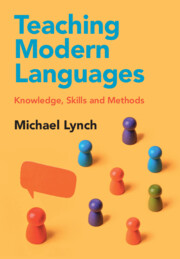
An essential resource for trainee teachers and graduate students, this textbook presents strategies and practical advice for preparing and planning lessons in a clear, step-by-step way and demonstrates how to inspire confidence and competence in language learners. Chapters cover many important aspects of initial teacher training including skills development; modes of teaching; unit and lesson planning; assessment; remote learning; digital literacy, and student and teacher wellbeing. Packed with pedagogical value, each chapter includes clear learning objectives, concise chapter summaries, defined key terms, interactive box features, reflective questions and further reading recommendations. Supplementary resources include templates for planning and assessment, feed-forward and feedback forms, extra tasks and activities, and sample answers. By connecting theory and practice, this authoritative guide provides trainee teachers with the necessary tools to develop the knowledge, skills and methods required to become an effective modern languages teacher in a contemporary world.
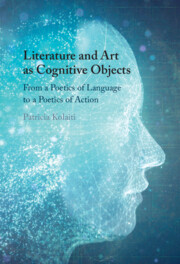
What makes literature and art the distinct kinds of entities they are? Previous attempts to prove that artworks and literary texts are formally and structurally distinguishable from other objects have been misinterpreted to mean that any distinction between art and non-art must be largely sociological. This book takes a radically new approach to this long-standing question. Shifting the focus from the artwork itself to art as a case of human agency, it sets out a groundbreaking theory of literature and art as a single cognitive and natural entity. It argues that literature and art is neither sociologically determined nor a body of artefacts, but a unique type of action enabled by art-specific processes in the mind-internal and body-internal reality of human agents. With wide implications for existing debates, this book is essential reading for researchers and students in linguistics, philosophy and the cognitive sciences.
The chapter provides an introduction to Systemic Functional Grammar, in the context of Systemic Functional Linguistics. It introduces the central concept of choice between language features and the use of networks to model that choice. One such choice lies between process types and this is explained as important to the concept of semantic field used in the book. Systemic Functional Grammar describes the relationship between lexis and grammar as a continuum; one challenge is to specify how the grammar and specific lexical items relate to one another. Three responses to this challenge are discussed: Hasan’s use of system networks to distinguish between the features of near-synonyms; Matthiessen’s use of Levin’s verb classes to add detail to the notion of process type, and the approach taken by the Cardiff grammar, specifically by Fawcett, Neale, and Chrispin.
The chapter summarises the study described in the book. It discusses the contribution of the study to Construction Grammar and the applications of this grammar to discourse analysis and to language teaching. The contribution of the study to Systemic Functional Grammar is then discussed, with a comparison between this study and proposals by Halliday and Matthiessen. The chapter concludes with a discussion of how the study might be extended in future work.
The chapter introduces the idea of using networks inspired by Systemic Functional Grammar to model the relationship between constructions that express a semantic field. The example used in the chapter is Causation. From the work described in chapter 3, 105 verb argument constructions are identified as expressing Causation. A preliminary division is made between causing an action, causing a state, and causing a change in thought or emotion. Finer distinctions within each are then identified, with these distinctions being explained and modelled in taxonomies or Meaning Networks. Finally, the features that contribute to those networks are identified and expressed as independent choice networks, referred to as Systemic Networks.
The chapter explains the process of building Meaning Networks and Systemic Networks, as described in chapter 6, for two semantic fields: Cognition and Communication. The identification of these fields is inspired by the Systemic Function Grammar processes: mental and verbal. The Cognition field is divided into Emotion (53 constructions), Perception (9 constructions) and Thought (92 constructions). Following an overview, the Communication field is divided into communication about a future action (Communication: Action) (21 constructions) and communication about information (Communication: Information) (82 constructions). For each semantic field, the constructions are described as they relate to one another. Their significant features are identified and expressed in Systemic Networks. The distinctions or choices between the constructions are modelled in taxonomies or Meaning Networks.
While much discussion has focused on what researchers do and should do in second language proficiency assessment, less attention has been given to why persistent trends continue. This study investigated second language acquisition (SLA) researchers’ beliefs, reported practices, and decision-making rationales regarding proficiency assessment. Using an online survey, we collected responses from 111 SLA researchers. Findings revealed that while researchers generally endorsed recommended methodological standards, practical constraints—such as time, accessibility, and ease of administration—frequently influenced their reported practices. A consistent belief–practice gap emerged across several key areas. Notably, reduced redundancy tests were rated favorably for both validity and practicality, reflecting a growing shift toward efficient, validated tools. These findings suggest that although methodological awareness is high, practical barriers continue to challenge the adoption of more rigorous proficiency assessment practices in SLA research.
The chapter explains the process of annotating constructions for semantic roles. Constructions expressing nine semantic fields have been annotated, with each noun phrase, adjective phrase, or clause in the construction given one of a finite set of labels. The process is compared with approaches to role identification taken in Corpus Pattern Analysis (Hanks), Systemic Functional Grammar (Halliday and Matthiessen), Local Grammar (Barnbrook, Su) and FrameNet (Fillmore). The role names used in this book, with their definitions, are listed for each of the nine semantic fields used as examples.
The chapter describes the process by which 50 verb complementation patterns have been reinterpreted as verb argument constructions, leading to the identification of 800 constructions. The chapter gives examples from seven patterns: V into n; V n, V n adj; V n to n; V after n; V n that and V n with n. The constructions derived from each pattern are arranged in networks inspired by those used in Systemic Functional Grammar. The networks show the similarities and differences between constructions. They can also be used to show constructions at broader and narrower levels of generality.
The chapter introduces the key concepts in the book. It explains corpus lexicography and the concept of Pattern Grammar, Construction Grammar and its relation to verb argumentation, and Systemic Function Grammar. It illustrates how the three can be brought together, unifying disparate approaches to the description of English. The chapter includes notes on the websites, corpora, and conventions used in the book.
This article investigates how parliamentary debate in the Dutch House of Representatives (“Tweede Kamer”) (1945–1995) narrowed as MPs turned into domain specialists. We call this narrowing epistemic capture: a few experts progressively bound what can be said. To detect epistemic capture, we deploy a three-layer computational pipeline. Latent-Dirichlet topic modeling converts 8.2 million sentences into 250 semantic themes; Pointwise Mutual Information networks connect themes within six-month windows; Louvain clustering traces the birth, drift and endurance of topical communities.
Capture appears on every scale. Macro-level: network modularity almost doubles after 1960 while density falls, marking compartmentalized debate. Meso-level: cabinet turnovers act as “reset switches”: topic-neighborhood similarity drops in the half-year after a new coalition forms, then anneals along partisan lines. Micro-level: enduring communities – foreign policy, agriculture and education – lock topics and MPs together for decades, yet resistance to capture is visible in distinct contentious topics.
These multiscale patterns show how 20th-century Dutch parliamentary debate saw a rise of technical specialism that significantly constrained the breadth of political debate. Methodologically, the study demonstrates the value of structural (network) distant reading over purely lexical counts and offers a transferable workflow for measuring how democratic discourse undergoes structural transformations.
The chapter explains the process of building Meaning Networks and Systemic Networks, as described in chapter 6, for four semantic fields inspired by the concept of material process and a further two semantic fields inspired by the concept of relational process. The fields are: Change, Creation, Location_change, Possession_transfer, Equivalence, Logical_relation. For each semantic field, the constructions are described as they relate to one another. Their significant features are identified and expressed in Systemic Networks. The distinctions or choices between the constructions are modelled in taxonomies or Meaning Networks.