To save content items to your account,
please confirm that you agree to abide by our usage policies.
If this is the first time you use this feature, you will be asked to authorise Cambridge Core to connect with your account.
Find out more about saving content to .
To save content items to your Kindle, first ensure no-reply@cambridge.org
is added to your Approved Personal Document E-mail List under your Personal Document Settings
on the Manage Your Content and Devices page of your Amazon account. Then enter the ‘name’ part
of your Kindle email address below.
Find out more about saving to your Kindle.
Note you can select to save to either the @free.kindle.com or @kindle.com variations.
‘@free.kindle.com’ emails are free but can only be saved to your device when it is connected to wi-fi.
‘@kindle.com’ emails can be delivered even when you are not connected to wi-fi, but note that service fees apply.
In a cross-sectional study of L2 Danish, we examined the production of correct verb-second (V2) word order. We tested the effect of (1) the learners’ language background, (2) test level and (3) the length of the sentence constituents. The texts were written by 217 students (3 test levels (A2-B1), 52 different L1s). Interrogative clauses had high accuracy, but 25% of the 491 declarative sentences with non-initial subjects had incorrect V3 word order. Our study shows that V2 is not difficult for all learners. Learners whose L1 is a V2 language had a significantly higher share of correct V2 word order, and they never overused V2. For non-V2 learners, the share of correct V2 significantly increased with proficiency level. For constituent length, accuracy decreased significantly with the length of the first constituent and for subjects consisting of multiple words.
There is evidence to suggest that the effects of bilingualism on executive functions (EFs) need to be examined along a continuum rather than a dichotomy. The present study addressed this need by examining the influence of different bilingual experiences on executive functioning using a Flanker and Stroop mouse-tracking task that taps into more dynamic cognitive processes than typical behavioral paradigms. We sampled 98 bilingual young adults and investigated conflict and sequential congruency effects (SCEs). We found that mouse-tracking metrics captured links that were not identified with overall reaction times. SCEs were more sensitive to detecting relations between L2 experiences and EF than simple conflict effects. Second-language age of acquisition and L1/L2 switching frequency consistently predicted EF outcomes. This association was moderated by the attentional demands of the task. These findings highlight the complexity of the effects of bilingualism on cognition, and the use of more sensitive measures to capture these effects.
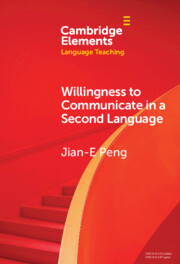
This Element offers a review of advancements in willingness to communicate (WTC) in a second language (L2) over the past twenty-five years. It begins with the origin of the concept of WTC in first language (L1) communication research and the seminal and novel conceptualizations of WTC in the L2 context. This Element then categorizes six key perspectives that have informed WTC research: social psychological, cultural, dynamic, ecological, multimodal, and digital. By analyzing representative studies, it elucidates insights gained from these perspectives. The Element then discusses key factors associated with WTC, including individual attributes, situational factors, and outcome factors. This is followed by an overview of and critical commentary on methodological approaches in WTC research. Implications for enhancing L2 learners' WTC in in-class, out-of-class, and digital contexts are discussed. The Element concludes by proposing important venues for future WTC research. This title is also available as Open Access on Cambridge Core.
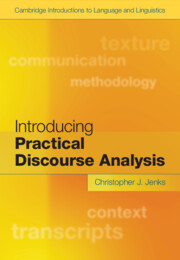
This introduction to discourse analysis provides students with an accessible, yet comprehensive, overview of the subject and all the skills and knowledge needed to become capable discourse analysts. Through practical coverage and advice, this book introduces discourse analysis as a set of analytical tools and perspectives that can be applied to an assignment, project, or thesis. Across seven chapters the book is divided according to practical themes and topics allowing students to establish a deeper understanding of discourse analysis. Students will be taught how to identify and categorise established theories and methodologies, including conversation analysis, critical discourse analysis and more. Through figures, examples, chapter summaries, and over thirty learning activities, this volume teaches students the foundational skills to approach the analytical process with more confidence and background knowledge, suitable for undergraduate and graduate students studying discourse analysis.
English as a second language (L2) has become the medium of instruction in numerous contexts even though many people may have difficulties to read and study in L2. According to the self-regulated framework, metacognitive strategies are essential to achieve successful learning, but they are resource-consuming and their use might be compromised in demanding contexts such as learning in L2. In Experiment 1, nonbalanced bilinguals read high- and low-cohesion texts in L1 and L2 and self-rated their learning using a judgment of learning (JOL). Then, they answered open-ended questions and responded a customized questionnaire regarding their strategies. In Experiment 2, we introduced two bilingual groups varying in L2 proficiency. Overall, participants could adjust their JOLs and detect the difficulty of the texts correctly in L1 and L2. However, results evidenced some nuances in learning strategies related to L2 proficiency. We discuss these findings within the context of the self-regulated learning.
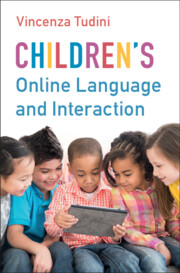
Children spend a significant amount of time interacting online rather than face-to-face. Yet we know very little about the language they use during interaction, whether they are gaming or texting. Drawing on cutting-edge research, this timely book applies Conversation Analysis (CA) techniques to investigate children's online language and interaction. Tudini provides a step-by-step analysis of authentic posts made by children on social media, messaging apps and gaming platforms, highlighting linguistic and interactional features. The book addresses the risks inherent in children's online interaction and the role of protective adults, yet also celebrates children's linguistic creativity and ability to adapt to new forms of communication. It also provides principled advice on how to support children in integrating online interaction into their lives productively and safely, to assist parents and teachers. Addressing a highly topical area, it is essential reading for students and researchers of applied linguistics, communication, education and sociology.
This Element focuses on extensive reading (ER), a language learning and teaching approach that encourages language learners to read a large amount of interesting and level-appropriate reading materials. Extensive reading has been adopted across educational spectrums, including higher, secondary, and elementary levels, and implemented in diverse language contexts such as English, Chinese, Italian, Spanish, and French. The primary objective of this Element is to offer comprehensive insights into the theoretical foundations of ER, analyze its multifaceted benefits to language learning, address the challenges encountered in its implementation, and propose effective strategies drawn from research for these challenges. The Element concludes with an overview of the latest trends and developments in ER.
This study investigates how L2 proficiency contributes to creativity in relation to personality among 205 young adolescent English-as-a-foreign-language learners from rural China. Participants completed the Cambridge A2 Key for Schools English Test to assess English proficiency, the Chinese Big Five Personality Inventory to evaluate personality traits, and the Evaluation of Potential Creativity to measure creativity, operationalized as divergent and convergent thinking in verbal and graphic domains. Pearson correlation analyses revealed that L2 proficiency was positively associated with both divergent and convergent thinking across verbal and graphic domains, while Openness to Experience and Extraversion were positively linked to creativity components, albeit partially depending on the domain. Conscientiousness, Agreeableness, and Neuroticism showed no significant associations with creativity. Structural equation modeling further demonstrated that L2 proficiency, Openness, and Extraversion directly co-predicted creativity components, excluding convergent thinking in the verbal domain.
Recent research has shown that music interventions involving body movements are beneficial for reinforcing music learning. Given the reported positive transfer between music training and phonological skills, we investigated, for the first time, the value of an embodied music training program for improving pronunciation skills. In a classroom experiment, 48 Chinese adolescent learners of English participated in three 40-minute sessions of either Dalcroze-inspired embodied music training or treatment-as-usual non-embodied music training. Participants in the embodied music group were involved in a series of activities designed to develop their rhythmic and melodic skills through bodily experiences. Participants in the non-embodied music group followed music lessons designed by their music teacher, appreciating music pieces and receiving music knowledge. Before and after training, participants were tested with a language imitation task using six unfamiliar languages and an oral reading task in second language English. Results show that the embodied music group significantly outperformed the non-embodied music group in both tasks. Overall, our findings suggest that an embodied music training program has beneficial effects on pronunciation skills, supporting an embodied-based language teaching approach.
This systematic review and meta-analysis explore the correlation between foreign language instruction and mathematical skills in young adolescents, highlighting the significance of high school mathematical education and the adaptability of the adolescent brain. Focused on students starting second language programs between ages 8 and 13, following PRISMA guidelines, this review included 25 studies (1978–2020) with 785,552 participants. Using a random-effects model, the overall effect size revealed a statistically significant relationship between our variables, indicating a threefold higher likelihood of passing or achieving higher grades in mathematical tests for language-learning students. Moderating variables analyses identified socioeconomic status (SES) and intervention length as influencers of observed heterogeneity, with SES being the primary factor. Sensitivity analyses, including adding potentially missing studies and removing outliers, confirmed the robustness of the overall effect. Nonetheless, additional research is needed to enhance global diversity and comprehensively understand the interplay between language learning and cognitive function.
The study explored the origin of the age of acquisition (AoA) effect in second language (L2) using ERPs technique. We simulated L2 AoA by manipulating the order at which English pseudowords entered into training. Chinese-English bilinguals (mean age 22.04, range 18–28) learned English pseudowords matched with Chinese (L1) words, investigating the order of acquisition (OoA) effect of English pseudowords and its relationship with the matched L1 words’ AoA. OoA effects were observed in lexical decision, naming and semantic judgment tasks on N170, P200 and N400. Furthermore, OoA effects were modulated by L1 AoA in the semantic judgment task. These results suggested that OoA effects were independent at orthographic and phonological levels but modulated by L1 AoA at the semantic level. The interpretation of L2 AoA effects requires not only the integration of Semantic and Arbitrary Mapping Hypotheses, as well as consideration of the representation and activation characteristics of L2 words.
Prediction is a crucial mechanism of language comprehension. Our research question asked whether learners of Spanish were capable of using word order cues to predict the semantic class of the upcoming verb, and how this ability develops with proficiency. To answer this question, we conducted a self-paced reading study with three L2 Spanish groups at different proficiency levels and one native control group. Among the advanced L2 learners and native speakers, we found that reading times increased after the verb appeared in a word order not strongly associated with its semantic class. Because the only cue to the sentences’ word order was the presence or absence of the object marker a before the first noun, we suggest that these groups use this morphosyntactic cue to anticipate the semantic class of the upcoming verb. However, this pattern of processing behavior was not detected in our less experienced L2 groups.
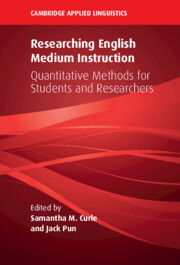
In the rapidly evolving landscape of English Medium Instruction (EMI), the need for comprehensive research methodologies has never been more pronounced. This pioneering guide offers an in-depth exploration into quantitative research methods tailored specifically for EMI. Going beyond the surface, the volume bridges the cultural divides of East and West, ensuring that insights are inclusive of diverse educational levels, settings, and backgrounds. Whether you're an academic researcher, a policy-maker, or an educator in the field, this book serves as an invaluable resource. Not only does it fill a notable gap in the literature, it also presents readers with practical, adaptable research strategies that can be employed globally, and is illustrated with a range of case studies that bring the methods to life. Understand the nuances of EMI across different contexts, and equip yourself with the tools needed to contribute meaningfully to the discourse on global EMI practices, challenges, and solutions.
How native (L1) and non-native (L2) readers utilise syntactic constraints on linguistic dependency resolution during language comprehension is debated, with previous research yielding mixed findings. To address this discrepancy, we report two large-scale studies, using self-paced reading and grammaticality judgements, investigating subject-verb agreement and reflexives in L1 English speakers and Arabic learners of L2 English. We manipulated sentence grammaticality and the properties of ‘distractor’ constituents (The key(s) to the cabinet(s) were rusty) in two studies testing number in agreement and gender/number in reflexives. Study 1 showed that L2ers’ performance largely patterned with L1ers’. Although grammaticality effects were smaller for agreement in L2ers than in L1ers, proficiency modulated L2 performance. Study 2 revealed no significant between-group differences. Contrasting some L1 studies, significant distractor effects were only detected for reflexives in Study 1. Together, these results imply that L2ers compute syntactic dependencies similarly to L1ers, and potential differences might be driven by L2 proficiency.
It has been suggested that the parents of heritage speakers (2nd generation immigrants), who are the main source of input to them, may exhibit first-language (L1) attrition in their language, thereby directly transmitting different structural properties or “errors” to the heritage speakers. Given the state of current knowledge of inconsistent input in L1 acquisition, age of acquisition effects in bilingualism, and how long it takes children to master different properties of their native language, it is highly unlikely that immigrant parents are directly transmitting patterns of language attrition to their heritage language children. The argument advanced in this article is that if the patterns evident in heritage speakers and first-generation immigrants are related, reverse transmission may be at play instead, when the heritage speakers might be influencing the language of the parents rather than the other way around. Theoretical and empirical evidence for this proposal may explain the emergence of the variety of Spanish spoken in the United States.
To communicate successfully, listeners must decode both the literal and intended meanings of a speaker’s message. This ability is especially crucial when processing indirect replies as intended meanings can differ significantly from what was said. How native and non-native speakers differ in this ability is an open question. The present study investigated differences in the time course of indirect reply processing in native and non-native Mandarin speakers. EEG signals were recorded while participants were presented with conversations that differed in their directness. For indirect replies, native speakers exhibited a larger left anterior N400 and posterior late positive component (LPC). Conversely, non-native speakers exhibited a larger left-distributed LPC and delayed LPC. Findings support that non-native speakers exhibit delayed processing of indirect replies, potentially because of cognitive resource limitations. Findings from the present study have implications for a broad range of investigations on human communication and second language processing.
Working memory encompasses the limited incoming information that can be held in mind for cognitive processing. To date, we have little information on the effects of bilingualism on working memory because, absent evidence, working memory tasks cannot be assumed to measure the same constructs across language groups. To garner evidence regarding the measurement equivalence in Spanish and English, we examined second-grade children with typical development, including 80 bilingual Spanish–English speakers and 167 monolingual English speakers in the United States, using a test battery for which structural equation models have been tested – the Comprehensive Assessment Battery for Children – Working Memory (CABC-WM). Results established measurement invariance across groups up to the level of scalar invariance.
Digital multimodal composing (DMC) has been valued as an engaging pedagogy in language teaching and learning in recent decades. Although research on DMC is flourishing and evidences its benefits for students' development as second language (L2) users and writers, there are some missing links between research findings and classroom practices. In this article, we examine three kinds of relationships between research and practice with regard to DMC: areas in which research findings have not been well applied, areas in which research findings have been reasonably well applied, and areas in which research findings have been usefully applied. As recent research–practice frameworks in education research emphasize a collaborative relationship between researchers and practitioners, we argue that L2 writing researchers' and teacher educators' reflections and experiences are crucial to facilitate the dialogue between DMC research and practice in writing contexts. We suggest that DMC should be incorporated into L2 teacher education programs so that instructors are equipped with the necessary knowledge and competence to design, implement, and assess students' DMC productions.
Network science was used to create and examine semantic networks of cue and response words from a word association task in learners of Kaqchikel (an endangered language indigenous to Guatemala) and monolingual English speakers. English speakers provided a wide range of responses indicative of creative language use, whereas the Kaqchikel learners provided straightforward and utilitarian responses. The observed differences in network structure in the English/Kaqchikel learners resembled the structural differences previously observed in more/less creative individuals, suggesting an alternative account of the “foreign language effect” based on the size and structure of the semantic network in the native/foreign language.