To save content items to your account,
please confirm that you agree to abide by our usage policies.
If this is the first time you use this feature, you will be asked to authorise Cambridge Core to connect with your account.
Find out more about saving content to .
To save content items to your Kindle, first ensure no-reply@cambridge.org
is added to your Approved Personal Document E-mail List under your Personal Document Settings
on the Manage Your Content and Devices page of your Amazon account. Then enter the ‘name’ part
of your Kindle email address below.
Find out more about saving to your Kindle.
Note you can select to save to either the @free.kindle.com or @kindle.com variations.
‘@free.kindle.com’ emails are free but can only be saved to your device when it is connected to wi-fi.
‘@kindle.com’ emails can be delivered even when you are not connected to wi-fi, but note that service fees apply.
Applied linguists' interests and values have expanded in synergy with evolving technologies over the past decades, and with the tools and concepts developed in other disciplines. This timely book explains applied linguists' interest in technology in connection with their study of language-related problems in the real world. The decades of history and intersections with other disciplines provide background for introducing 11 types of technology-mediated language learning activities, grounded in the research-practice interface characterizing applied linguistics. Examples of past research are interpreted through the lens of design-based research to examine how design principles are developed for language learning and language assessment. Concrete implications are outlined for language pedagogy and its evaluation, language teacher education, and technology studies in applied linguistics. These foundations of technology and language learning will animate a spirit of critical professional inquiry toward current and future digital technologies as they intersect with language learners.
A clear, practical introduction to the theory and practice of translanguaging, this book explores this innovative approach and shows how English language teachers can benefit from implementing multilingual pedagogy in the classroom. Whether you teach English as a foreign language (EFL), a second language (ESL), work in English medium instruction (EMI) or Content and Language Integrated Learning (CLIL), this engaging and accessible book will help you understand the key implications of translanguaging theory, and carry these over into practice in your classroom, whether this is in government-sponsored or private education, from primary to secondary, tertiary and adult contexts. As well as discussing important contextual differences, challenges and constraints that teachers frequently face across both the Global North and Global South, it includes many examples from real English language classrooms, exploring both teacher and learner translanguaging, and offering numerous suggestions, ideas and activities to evaluate critically for your own classroom practice.
Reconceptualising language as a dynamic, relational, and embodied practice, this book explores the concept of languaging. Moving beyond static, standardised, and purified understandings of languages, it traces how communication is lived, contested, and embodied across urban, rural and remote mobility, everyday encounters, classroom pedagogies, and digital platforms. Through critical analyses of First Knowledging and First Languaging, nomadic languaging and knowledging, racialised and AI-mediated communication, it highlights how languaging is both playful and precarious. It entails creativity and resistance, while also exposing language users to inequality and surveillance, and is deeply entangled with histories of colonialism, racial hierarchies and displacement. Concluding with the concept of pedagogical languaging, the book calls for a reimagining of education as interactional design, rather than the delivery of standardised curricula, with learning environments where diverse semiotic repertoires - linguistic, embodied, cultural, and digital - are recognised as epistemic resources rather than treated as deficits.
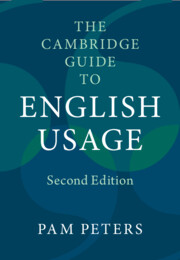
American and British English in the twenty-first century are still divided by a common language. Now in its second edition, this highly readable guide provides an authoritative reference to English usage, covering the differences, and some emerging similarities, between British, American and international English. It has been thoroughly updated and expanded to document hundreds of variable points of usage for the benefit of British and American readers, and for those seeking international forms of English for written communication, as first- or second-language users. It discusses the current status of each usage item with quantitative evidence from the NOW (News on the Web) corpus and contemporary research. Lively examples of usage are provided to capture aspects of twenty-first century culture world-wide. It also discusses issues in the use of personal names and ethnic naming practices, as well as sexist and homophobic words, and person-centred words for those living with a disability.
Now in its second edition, this handbook is a comprehensive and up-to-date resource that explores the applications of corpus-based research in linguistics. Since the first edition, corpus linguistics has evolved dramatically, and this edition has been fully updated to reflect these developments, with new chapters on emerging areas such as online language, legal discourse, and lexical complexity in learner language. Bringing together contributions from leading scholars, it critically evaluates methodologies, presents cutting-edge research, and includes empirical case studies that showcase corpus analysis in action. Each chapter surveys key studies, assesses methodological strengths and weaknesses, and highlights what corpus linguistics has uncovered about language variation and use. Covering topics ranging from phraseology to World Englishes, it serves as an essential reference for linguistics students, researchers, and educators. Whether you're new to corpus linguistics or an experienced scholar, this handbook provides valuable insights into the evolving role of corpora in linguistic research.
Now in its second edition, this Handbook is a current overview of Second Language (L2) research, providing state-of-the-art synopses of recent developments in each sub-area of the field, and bringing together contributions by emerging scholars and experts in Second Language Acquisition (SLA). Since the first edition, broad socio-political movements, alternative views of bilingualism, emergence of global markets, vast expansion of electronic resources, the development of social media, and the availability of big data have transformed the discipline, and this edition has been thoroughly updated to address these changes. It is divided into six main parts: Part I situates SLA in terms of research and practice; Part II explores individual cognitive, age-related and neurolinguistic similarities and differences; Part III outlines external, sociocultural, and interactive factors; Part IV presents profiles of bilinguals who take differing paths of acquisition; Part V describes interlanguage properties; and Part VI comprises clear models of L2 development.
This Element examines aviation English as a global lingua franca through the lens of communities of practice. Pilots and air traffic controllers involved in international operations belong to multiple communities, including local professional, broader local aviation, and international aviation communities. Their ongoing learning within these communities and the repertoire they develop – which influences their interactions – are explored. Against this framework, the inadequacy of the current internationally applicable language proficiency requirements is critically evaluated, alongside an analysis of four notable aircraft accidents that motivated these standards. The focus then shifts to analysing live radiotelephony discourse in abnormal situations, incorporating insights from domain specialists. Findings show that language-related aspects alone are insufficient; when combined with limited domain knowledge, it can lead to unsafe and ineffective communication. The Element highlights accommodation – both for linguistic and domain-specific – as a crucial skill in this intercultural communication context and recommends greater standardisation for handling abnormal situations.
'Transfiction' refers to the phenomenon of language mediators portrayed as characters in literature. Research investigating this phenomenon has developed through a long series of case studies. While providing in-depth analyses of different instances of transfiction, case studies have produced findings that are anchored to specific texts, consequently precluding theoretical observations at a higher level of abstraction. Thus, this Element constructs a concentrated profile of transfiction. It asks about the state of the art of this research area and its potential to inform other subfields of translation studies. By adopting a meta-analytical research style, the Element retraces the development of transfiction studies, identifying patterns and lacunae. It then goes on to thread transfiction together with previously disconnected research strands, such as translator studies, suggesting new research questions and methodologies. Ultimately, Charting Transfiction provides a reference point for future research in this area, as well as other subfields of translation studies.
This Element offers a critical exploration of institutional health communication in an era marked by information overload and uneven content quality. It examines how health institutions can navigate the challenges of false, misleading, and poor-quality health information while preserving public trust and scientific integrity. Drawing from disciplines such as health communication, behavioral science, media studies, and rhetoric, this Element promotes participatory models, transparent messaging, and critical health literacy. Through a series of thematic sections and practical examples, it addresses the role of science, politics, media, and digital influencers in shaping public understanding. Designed as both a conceptual guide and a strategic toolkit, this Element aims to support institutions in fostering informed, engaged, and resilient communities through communication that is clear, ethical, and responsive to the complexities of today's health discourse. This title is also available as Open Access on Cambridge Core.
This Element examines the origins, development, and prospects of forensic linguistics in Indonesia, drawing on a survey of 53 participants and a systematic review of studies from 2011 to 2023. Emerging from early language-related cases in the Old Order era and initially driven by scholars trained abroad, the field has grown through research, collaboration, and academic integration. Key topics include justice sector needs, linguistic diversity, standardization, and institutional strengthening. Despite limited capacity-building, training initiatives have enhanced the field's visibility. The Element outlines challenges and opportunities for advancing forensic linguistics' role in legal reform and fair justice, making it a valuable reference for scholars and practitioners.
This Element highlights the role of constraints in shaping multilingualism. It discusses their conceptualisation, starting from Michel de Certeau's view of action in everyday life, and operationalisation for the study of migrants. The results of the research conducted among Gambian migrants in Italy show not only constraints but also the tactics to inhabit them, as well as non-language related aspects, for example suffering, which are grouped into five clusters. These are (1) lack of support; (2) limited interaction in the 'local' language; (3) immigration status in conjunction with life events; (4) others' behaviour; and (5) other concerns and suffering. The conclusion presents a discussion on the wider significance of what incorporating constraints means for our understanding of multilingualism and migration, including policy implications, and for intercultural communication research.
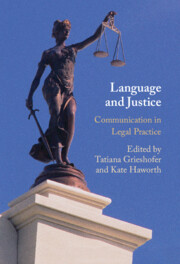
Bringing together cutting-edge research at the intersection of language, communication and legal practice, this volume challenges established processes and explores key questions arising from real cases, practices, or sites of contention, where tackling linguistic issues can help enhance access to justice. Directly addressing areas of genuine professional and institutional concern, the collection provides novel and groundbreaking insights into the multiple communication-related challenges the justice system and legal professionals have to navigate on a daily basis. The volume engages with a wide range of legal areas, including criminal law, family law, civil law, immigration, international law, and legal education. It has an international scope, with relevance across both adversarial and inquisitorial legal systems, international legal institutions, and multilingual jurisdictions. Collectively, the chapters highlight the immense benefits and opportunities which arise when legal and applied linguistic scholarship are harnessed together, especially for scrutinising the accountability, transparency and accessibility of the justice system.
Doxxing is the deliberate, unauthorized disclosure of personal information, often with malicious intent. Notably, it became a key method of public shaming and vigilantism during the 2019–2020 Hong Kong protests. This Element understands and examines doxxing as a discursive practice. Using critical discourse analysis (CDA), it analyzes online forum discussions and survey and interview data from Hong Kong university students. Findings are examined alongside institutional legal texts to show how doxxing is discursively constructed, legitimized, and contested by different social actors. The case study identifies linguistic strategies such as metaphor, euphemism, and irony, along with legitimation discourses framing doxxing as social justice, deterrence, or moral self-defense. The Element also problematizes legal ambiguities and ethical tensions surrounding doxxing practices. By foregrounding the interplay between grassroots and legal discourses, it contributes to forensic linguistics scholarship on digital harm, power, and morality in contemporary mediated environments.
Teacher emotion is a topic of increasing interest in the fields of applied linguistics and TESOL. Bringing together cutting-edge research from an international team of renowned scholars, this book provides a collection of studies that explore this fascinating topic from an extensive range of contexts and perspectives. The volume includes real case studies from educators around the world, providing a fully global overview of teacher emotions. Through linking emotions to personal experiences, identities, and the daily work of language teacher educators, the book provides unique and interesting insights into the professional life of teacher educators. Novel and engaging, this edited collection fosters further debate on the flourishing area of teacher emotion in language education. It is essential reading for researchers and teacher educators in the fields of TESOL and applied linguistics, as well as both early-career and experienced educators, who want to examine the emotional side of their professional work.
As globalization spreads, English has become a lingua franca. Emerging technologies (e.g., Artificial Intelligence) now make learning English more accessible, affordable, and tailored to each learner. Social media and digital platforms immerse users in English, offering interactive, personalized, and engaging experiences that fuel Informal Digital Learning of English (IDLE). Research spanning more than ten regions has found that IDLE brings a wide range of benefits, including greater motivation, higher academic achievement, and stronger speaking skills. Today, IDLE is being woven into schools and local communities through partnerships among teachers, NGOs, and industry leaders. This volume seeks to (a) showcase the latest research on IDLE, (b) highlight examples of IDLE in educational and community settings, and (c) chart future pathways for practice, research, and collaboration.
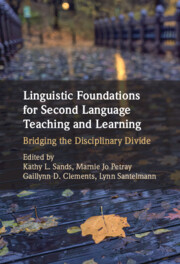
Bringing together an international team of scholars from various linguistic areas, theoretical viewpoints, and educational contexts, this book makes the case for strengthening the role of linguistics in second language (L2) teaching and learning. Seeing firsthand how the strengths and tools of the science of language contribute greatly to pedagogical effectiveness in the L2 classroom, the authors of each chapter lay out the strengths of linguistics for L2 teaching and learning with examples, case studies, research, anecdotal evidence, illustrations, and sample activities for the language classroom. The book argues as well for the place of L2 theory and data in linguistic inquiry and linguistics education. Bringing these disparate disciplines together around the shared reality of language itself has great promise of mutual benefit. Accessibly written with readers from both disciplines in mind, each chapter includes recommended readings and discussion questions intended to spark conversations across the disciplines.
Through conceptual and empirical means, this timely volume looks at how critical realism, a specific approach to the philosophy of science, helps uncover and refine assumptions about what constitutes valid knowledge in applied linguistics, how scholars can create it, and how applied linguistics can improve as an interdisciplinary strand of the social sciences. With contributions from leading and up-and-coming scholars in the field, the book covers a range of topics, from language, language learning and teaching, language curriculum and programmes, evaluation and assessment, academic writing, discourse, beliefs, values, truth, resilience, ethnicity, social class, as well as ideologies and systems of social inequality including anthropocentrism, racism, linguicism, sexism, patriarchy, and neoliberalism. Exploring the philosophical basis of applied linguistics research, it is essential reading for academic scholars and graduate students in applied linguistics, as well as social scientists interested in language-related issues and social issues in which language plays a central role.