To save content items to your account,
please confirm that you agree to abide by our usage policies.
If this is the first time you use this feature, you will be asked to authorise Cambridge Core to connect with your account.
Find out more about saving content to .
To save content items to your Kindle, first ensure no-reply@cambridge.org
is added to your Approved Personal Document E-mail List under your Personal Document Settings
on the Manage Your Content and Devices page of your Amazon account. Then enter the ‘name’ part
of your Kindle email address below.
Find out more about saving to your Kindle.
Note you can select to save to either the @free.kindle.com or @kindle.com variations.
‘@free.kindle.com’ emails are free but can only be saved to your device when it is connected to wi-fi.
‘@kindle.com’ emails can be delivered even when you are not connected to wi-fi, but note that service fees apply.
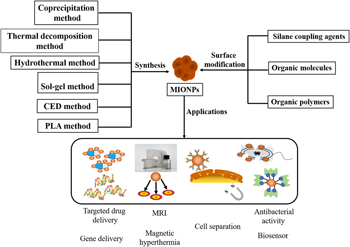
Magnetic iron oxide nanoparticles (MIONPs) are particularly attractive in biosensor, antibacterial activity, targeted drug delivery, cell separation, magnetic resonance imaging tumor magnetic hyperthermia, and so on because of their particular properties including superparamagnetic behavior, low toxicity, biocompatibility, etc. Although many methods had been developed to produce MIONPs, some challenges such as severe agglomeration, serious oxidation, and irregular size are still faced in the synthesis of MIONPs. Thus, various strategies had been developed for the surface modification of MIONPs to improve the characteristics of them and obtain multifunctional MIONPs, which will widen the applicational scopes of them. Therefore, the processes, mechanisms, advances, advantages, and disadvantages of six main approaches for the synthesis of MIONPs; surface modification of MIONPs with inorganic materials, organic molecules, and polymer molecules; applications of MIONPs or modified MIONPs; the technical challenges of synthesizing MIONPs; and their limitations in biomedical applications were described in this review to provide the theoretical and technological guidance for their future applications.
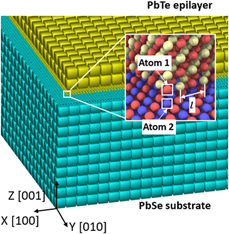
In this work, we investigate misfit dislocations in PbTe/PbSe heteroepitaxial systems using the concurrent atomistic–continuum (CAC) method. A potential model containing the long-range Coulombic interaction and short-range Buckingham potential is developed for the system. By considering the minimum potential energy of relaxed interface structures for various initial conditions and PbTe layer thicknesses, the equilibrium structure of misfit dislocations and the dislocation spacings in PbTe/PbSe(001) heteroepitaxial thin films are obtained as a function of the PbTe layer thicknesses grown on a PbSe substrate. The critical layer thickness above which misfit dislocations inevitably form, the structure of the misfit dislocations at the interfaces, and the dependence of average dislocation spacing on PbTe layer thickness are obtained and discussed. The simulation results provide an explanation for the narrowing of the spread of the distribution of misfit dislocation spacing as layer thickness increases in PbTe/PbSe(001) heteroepitaxy.
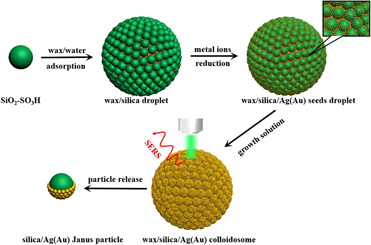
Noble metal (Ag, Au) nanoparticles (NPs) deposited on the surface of three-dimensional (3D) materials are promising 3D surface-enhanced Raman spectroscopy (SERS) substrates. In this work, the authors reported the preparation of 3D wax/silica/Ag(Au) colloidosomes by sulfonic acid group–terminated silica spheres (SiO2–SO3H) combined with a Pickering emulsion technique, as well as seed-mediated growth method of noble metal NPs. The presence of –SO3H group on the silica spheres not only improves significantly the quality of wax/silica colloidosomes (forming perfect silica shell around wax droplet) but also can adsorb metal precursor ions via electrostatic attraction for further growth of metal NPs. The size and coverage of Ag(Au) NPs on wax/silica droplets can be facilely tuned, and relevant wax/silica/Ag(Au) colloidosomes and silica/Ag(Au) Janus particles are obtained via this strategy. The obtained wax/silica/Ag colloidosomes as 3D SERS substrates exhibited excellent SERS enhancement ability and detection limit of 4-aminothiophenol reached 10−9 M.
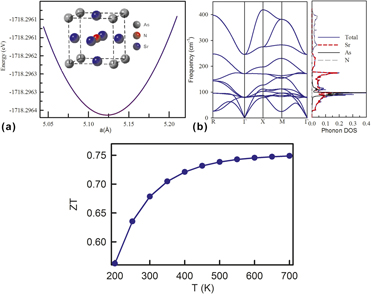
Antiperovskite materials are of high research interest because of their unusual physical properties and technological applications. Here, we report the structural stability and transport properties of Sr3AsN from first-principles study. The calculated equilibrium lattice parameters are in good agreement with the available data. We find that Sr3AsN is mechanically, energetically and dynamically stable at ambient conditions. Our calculated electronic structure indicates that it is a direct band gap semiconductor, with a band gap value ∼1.2 eV. Sr-4d and N-2p orbitals predominantly contribute to the formation of the direct band gap. The calculated Seebeck coefficient of Sr3AsN is high (298 μV/K at 300 K), while the lattice thermal conductivity is comparatively low (1.73 W/m K). The considerable mass difference between Sr, As, and N gives rise to an intense phonon scattering that results in such low lattice thermal conductivity. Our calculated maximum thermoelectric figure of merit (ZT) is 0.75 at 700 K, indicating that it is a potential material for thermoelectric device applications.
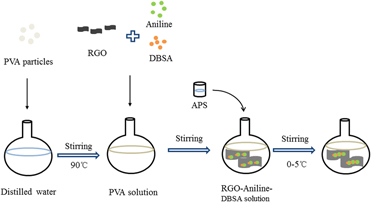
Wearable electrochromic devices are considered as the essential components for the development of smart clothing with the intelligent sensing, actuating, and displaying functions. In this study, the electrochromic composite flexible membranes of polyaniline (PANI) and reduced graphene oxide (RGO) were fabricated by in situ polymerization of aniline monomer in the presence of RGO dispersion. The effects of RGO concentration on the morphology, chemical structure, crystallinity, and electrochromic behavior of the composite membranes were studied. Our experimental results show that the conductivity of PANI/RGO composite membrane increases with the increasing of RGO concentration from 0.1 to 0.25 wt%, and the highest conductivity is 3.57 S/cm. An improved electrochemical performance with good electrochromic cycle characteristic of the PANI/RGO composite can be obtained, which shows a wide color range from green to black compared with the PANI membrane that ranging from green to dark blue. This research provides a systematical investigation of flexible PANI-based electrochromic membrane, which has the potential application in the field of wearable electrochromic devices in the future.
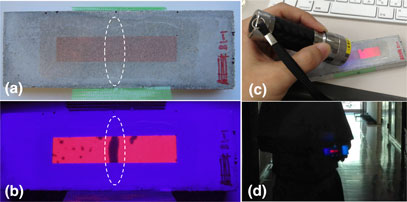
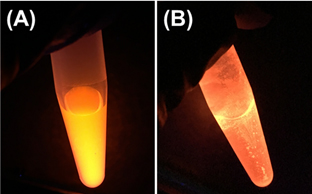
Luminescent oxygen sensor composed of platinum-porphyrin and a gas-permeable polymer binder was applied as an optical crack sensor paint for infrastructure. The sensor paints were designed as a three-layered structure in which the luminescent oxygen sensor layer was sandwiched between oxygen barrier layers. The sensor paints emitted intense luminescence under UV light irradiation, and the luminescence was efficiently quenched when a new crack formed on the concrete surface. Microcracks, which were <0.1 mm width and hardly visible to the naked eye, were clearly visualized under UV light irradiation due to the luminescent quenching caused by oxygen diffusion.
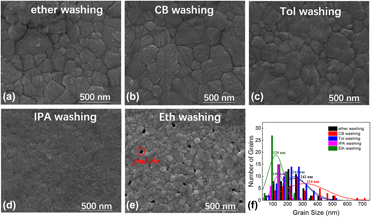
Anti-solvent treatment assisted crystallization is currently one of the most widely used methods to obtain high-quality perovskite films ascribed to its great operability. However, choosing a proper anti-solvent toward high-quality perovskite film for perovskite solar cells (PSCs) remains elusive. In this study, we qualitatively evaluate the impact of anti-solvent treatment on the grain growth and phase composition of perovskite by X-ray diffraction, scanning electron microscope, Fourier transform infrared spectrometer, and UV-vis absorption measurement, etc. The results demonstrate that the chemical groups in anti-solvents also affect the formation of perovskites, and anti-solvents with a low boiling point and good polarity contribute to the superior efficiency and reproducibility of PSCs. The device prepared using ether as an anti-solvent exhibits the best power conversion efficiency of 18.47%. The results indicate a new path toward selecting an ideal anti-solvent to improve the performance of PSCs.
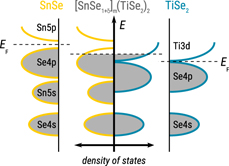
A series of ${\left\hbox[ {{{\left\hbox( {{\rm{SnSe}}} \right\hbox)}_{1 \hbox+ \delta }}} \right\hbox]_m}{\left\hbox[ {{\rm{TiS}}{{\rm{e}}_2}} \right\hbox]_2}$ heterostructure thin films built up from repeating units of m bilayers of SnSe and two layers of TiSe2 were synthesized from designed precursors. The electronic structure of the films was investigated using X-ray photoelectron spectroscopy for samples with m = 1, 2, 3, and 7 and compared to binary samples of TiSe2 and SnSe. The observed binding energies of core levels and valence bands of the heterostructures are largely independent of m. For the SnSe layers, we can observe a rigid band shift in the heterostructures compared to the binary, which can be explained by electron transfer from SnSe to TiSe2. The electronic structure of the TiSe2 layers shows a more complicated behavior, as a small shift can be observed in the valence band and Se3d spectra, but the Ti2p core level remains at a constant energy. Complementary UV photoemission spectroscopy measurements confirm a charge transfer mechanism where the SnSe layers donate electrons into empty Ti3d states at the Fermi energy.

Quantum dots (QDs) are increasingly employed in biologic imaging applications; however, anecdotal reports suggest difficulties in QD bioconjugation. Further, the stability of commercial QDs during bioconjugation has not been systematically evaluated. Thus, we examined fluorescence losses resulting from aggregation and declining photoluminescence quantum yield (QY) for commercial CdSe/ZnS QD products from four different vendors. QDs were most stable in the aqueous media in which they were supplied. The largest QY declines were observed during centrifugal filtration, whereas the largest declines in colloidal stability occurred in 2-(N-morpholino)ethanesulfonic acid (MES) buffer. These results enable optimization of bioconjugation protocols.
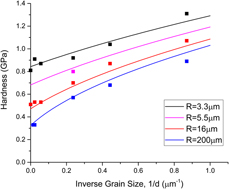
The measured hardness of a metal crystal depends on a variety of length scales. Microstructural features, such as grain size and precipitate spacing, determine the intrinsic material length scale. Extrinsic (test) length scales, such as the indentation depth, lead to the indentation size effect (ISE), whereby it is typically found that smaller is stronger. Nix and Gao [J. Mech. Phys. Solids46, 411 (1998)] developed a widely used model for interpreting the ISE based on forest hardening in single crystalline pure metals. This work extends that model to consider the hardness of polycrystals and alloys, as well as introducing a finite limit to the hardness at very small extrinsic length scales. The resulting expressions are validated against data from the literature. It is shown that a reasonable estimate of the intrinsic material length scale can be extracted from a suite of hardness tests conducted across a range of indentation depths using spherical indenters of various radii.
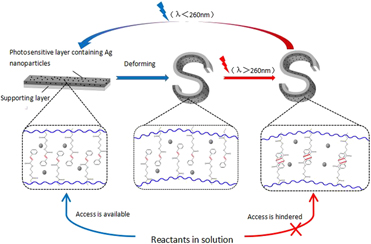
A photoresponsive double-layer hydrogel has been developed, in which light-sensitive cinnamic moieties are grafted onto a polyacrylamide network to produce a photoresponsive layer and pure polyacrylamide formed the supporting layer. Ag nanoparticles were dispersed using in situ reduction on the photoresponsive layer to act as the catalyst. The as-fabricated hydrogel exhibits a shape memory effect and controllable catalytic behavior under an external light stimulus. When exposed to ultraviolet (UV) light at λ > 260 nm, the resulting cycloaddition of cinnamic moieties not only fix the hydrogel’s temporary shape, but also greatly slow down the catalytic reaction rate. After irradiated with UV light at λ < 260 nm, however, the newly formed crosslinking points are reversibly cleaved. This results in the shape recovery of the hydrogel to its permanent shape. At the same time, the catalytic reaction was greatly accelerated because of the facile diffusion of the reactants into the hydrogel.
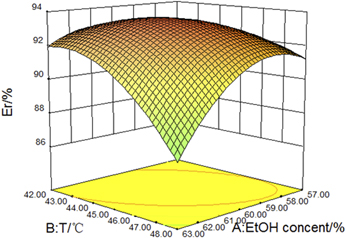
In this work, flavonoids in Polygonum cuspidatum Sieb. et Zucc. were extracted by ultrasound-assisted methodology and determined by ultraviolet–visible spectrophotometry. After that, extraction conditions were optimized by the single fact investigation, the central composite design, and response surface methodology (RSM) in turn. The results showed the optimal values of ethanol concentration, solid–liquid ratio, extraction temperature, extraction time, ultrasonic power, and number of extraction times were 60%, 1:20 (g/mL), 45 °C, 34 min; 80 W, and 5, respectively. The extraction ratio of flavonoids could be as high as 94.50%. The influence order of each factor was ultrasonic power > extraction time > extraction temperature > ethanol concentration. The results also showed that the experimental value was close to the predicted value (94.49%) of the established model by RSM, which proved that the established model was reasonable. The thermodynamic results showed that the extraction process was endothermic and could proceed spontaneously.
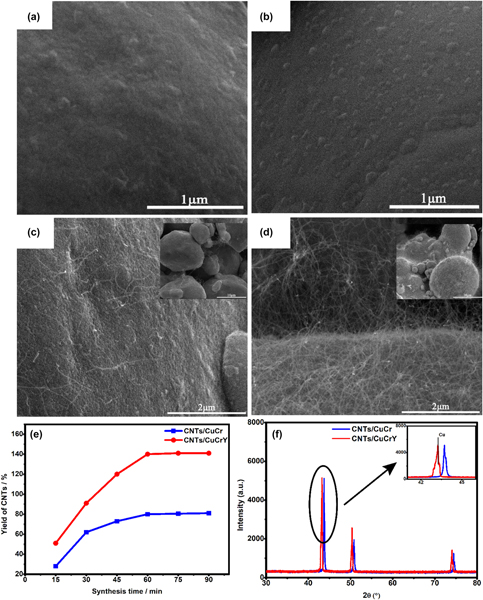
Addition of carbon nanotubes (CNTs) to copper materials significantly enhances their properties. However, the performance of CNTs/Cu composites is often not as good as expected mainly because of difficulties in controlling growth and uniform dispersion of CNTs in the matrix. Our study provides an effective way to prepare CNTs/CuCr and CNTs/CuCrY composites using chemical vapor deposition. The morphology and structure of these composites were characterized by scanning electron microscope, X-ray diffraction, X-ray photoelectron spectroscopy, and Raman spectroscopy to understand how Y incorporation affects properties of these composites. Our results showed that addition of 0.1 wt% Y enhances the catalytic properties of Cr and helps to obtain purer and pristine Cu substrate. We also studied tensile strength, electric conductivity, corrosion, and wear resistance of these composites. When Y was added, composite properties improved significantly. Tensile strength and corrosion resistance increased by 35.21 and 53.28%, respectively. Electric conductivity increased to 90.9% International Annealed Copper Standard and the coefficient of friction reduced to 0.3.
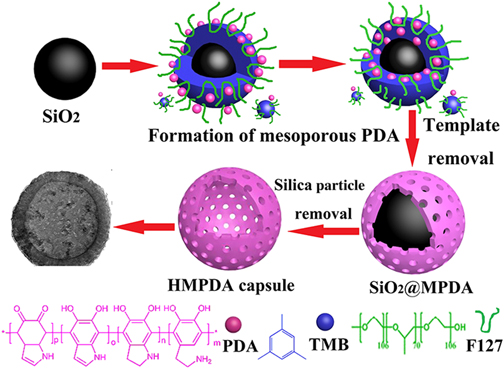
Hollow mesoporous polydopamine (HMPDA) microcapsules were prepared by a template method using silica nanoparticles as the templates. The template method was also used for the formation of mesoporous polydopamine (PDA), which is driven by π–π interactions of trimethylbenzene and PDA, in which the PDA wall with mesoporous structure can be obtained after template removal by extraction. Because of its surface mesoporous structure and large central cavity structure, HMPDA microcapsules have unique adsorption properties. Compared with other porous materials, PDA has better biosafety because dopamine itself is a bionic material. The above properties are of great significance for the application of HMPDA microcapsules in the field of biologic medicine, especially in drug carriers.
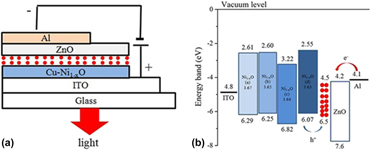
Fabrication and characterization of solution-processed, all-inorganic quantum dots (QDs) light-emitting diodes (QLEDs) incorporating colloidal CdSe/ZnS QDs are presented. Using a simple solvothermal process, Cu-doped NiO nanocrystals were fabricated and applied as a hole transport layer in all inorganic QLEDs. Cu-doped NiO nanocrystals are ascribed to bunsenite cubic structure. The transmittance of the film is more than 81%. The hole-only devices of Au/QDs/Cu–NiO/ITO structures showed that 5% mol Cu doped NiO film obtained the largest hole current. The resulting devices show pure QD electroluminescent emissions with a maximum electroluminescence brightness of 2258 cd/m2 after doping 5% mol Cu in NiO, which is almost 4-fold compared with that of intrinsic NiO due to the enhanced carrier concentration and conductivity. The current efficiency and EQE of the assembled all-inorganic QLED exhibited the maximum values of 1.18 cd/A and 1.223%, respectively.
The General Structure Analysis System (GSAS)-II software package is a fully developed, open source, crystallographic data analysis system written almost entirely in Python. For powder diffraction, it encompasses the entire data analysis process beginning with 2-dimensonal image integration, peak selection, fitting and indexing, followed by intensity extraction, structure solution and ultimately Rietveld refinement, all driven by an intuitive graphical interface. Significant functionality of GSAS-II also can be scripted to allow it to be integrated into workflows or other software. For protein studies, it includes restraints on bond distances, angles, torsions, chiral volumes and coupled torsions (e.g. Ramachandran Φ/Ψ angles) each with graphical displays allowing visual validation. Each amino acid residue (and any ligands) can be represented by flexible rigid bodies with refinable internal torsions and optionally fully described TLS thermal motion. The least-squares algorithm invokes a Levenberg-Marquart minimization of a normalized double precision full matrix via Singular Value Decomposition providing fast convergence and high stability even for a large number of parameters. This paper will focus on the description of the flexible rigid body model of the protein and the details of the refinement algorithm.
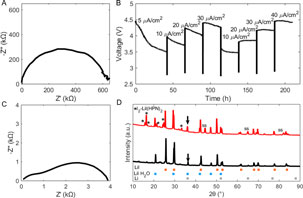
Solid state batteries are an emerging alternative to traditional liquid electrolyte cells that provide potential for safe and high-energy density power sources. This report describes a self-forming, solid state battery based on the Li/I2 couple using an LiI-rich LiI(3-hydroxypropionitrile)2 electrolyte (LiI–LiI(HPN)2). As the negative and positive active materials are generated in situ, the solid electrolyte–current collector interfaces play a critical role in determining the electrochemical response of the battery. Herein, we report the investigation of solid electrolyte–current collector interfaces with a self-forming LiI–LiI(HPN)2 solid electrolyte and the role of varying interface design in reducing resistance during cycling.
One of the critical components of energy savings in buildings is thermal insulation, especially for windows in cold climates. The conventional approach mainly relies on a double-pane design. In this study, a new concept of “Green Window” has been designed for single-pane applications that lower the U-factor. The “Green Window” is structurally and simply composed of a thin film window coating of chlorophyll that exhibits pronounced photothermal effect, while remaining highly transparent. We demonstrate a new concept in “thermal insulation” via optical means instead of solely through thermal insulators or spectral selectivity. This concept lifts the dependence on insulating materials making single-pane window highly possible.