To save content items to your account,
please confirm that you agree to abide by our usage policies.
If this is the first time you use this feature, you will be asked to authorise Cambridge Core to connect with your account.
Find out more about saving content to .
To save content items to your Kindle, first ensure no-reply@cambridge.org
is added to your Approved Personal Document E-mail List under your Personal Document Settings
on the Manage Your Content and Devices page of your Amazon account. Then enter the ‘name’ part
of your Kindle email address below.
Find out more about saving to your Kindle.
Note you can select to save to either the @free.kindle.com or @kindle.com variations.
‘@free.kindle.com’ emails are free but can only be saved to your device when it is connected to wi-fi.
‘@kindle.com’ emails can be delivered even when you are not connected to wi-fi, but note that service fees apply.
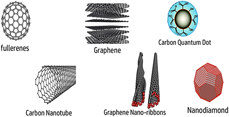
One of the most promising nanoscale materials which fascinated researchers for the last few decades owing to its unique optoelectronics and physicochemical properties are carbon-based nanomaterials (CBNs). Various forms of CBNs have been developed such as single and multi-walled carbon nanotubes, graphene, fullerenes, nanodiamonds, and fluorescent carbon quantum dots (C-Dots) whereas each form is having its own exceptional properties owing to its dimensionalities and architectures. The advent of these unique classes of nanoscale materials opens up a spectrum of new opportunities and possibilities in employing these in emerging areas of biomedical. However, successful biomedical applications greatly rely on the likelihood of the comprehensive understanding of physicochemical interactions and biological responses of CBNs. Herein, we have tried to explore the ‘blood-CBNs’ interface by including the findings of recent studies. The role of surface modifications and functionalization in order to mitigate the adverse outcomes has also been incorporated.
This paper reports the molecular organization and mechanical properties of electrospun, post-drawn polyacrylonitrile (PAN) nanofibers. Without post-drawing, the polymer chain was kinked and oriented in hexagonal crystalline structures. Immediate post-drawing in the semi-solid state disrupted the crystal structures and chain kink at maximum draw ratio. Structural re-orientation at maximum draw resulted in a 500% increase in Young's modulus and a 100% increase in ultimate tensile strength. By applying post-drawing to electrospinning it may be possible to obtain PAN fibers and PAN-derived carbon fibers with enhanced mechanical properties compared to available fabrication technologies.
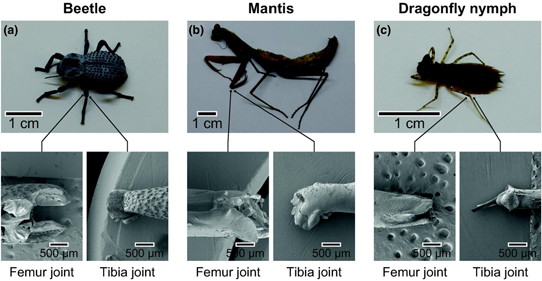
Insects have more than a million described species and represent more than half of all known living organisms. However, little is known about the operation and functions of the insect body, particularly their remarkable leg joints. This study is focused on partly filling this knowledge gap by using nanoindentation instruments to characterize the mechanical properties of leg joints from three different insects: a beetle, a mantis, and a dragonfly nymph. For all insect species, the tibia joint had the largest effective elastic moduli, followed by the femur joint, while the exocuticle had the smallest values.
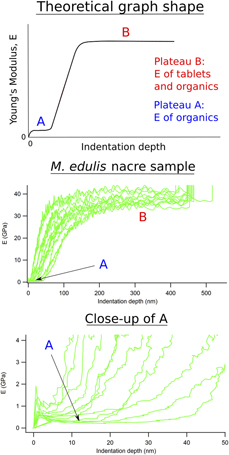
A new protocol has been devised for determining elastic properties of natural biocomposites in the form of bivalve shells under wet and dry conditions. Four-point bending on shell slices of Mytilus edulis, Ensis siliqua, and Pecten maximus give generally lower and more reliable values of Young’s modulus, E, than those in the literature from three-point bending, due to the more even distribution of strain. Finite element analysis of the prismatic microstructure of Pinna nobilis, obtained by X-ray tomography, shows that values of E ≈ 20 GPa can be understood in terms of the real microstructure containing a small proportion of organic matrix phase with E ≈ 1 GPa and a dominant proportion of calcite with E ≈ 90 GPa. Higher values of E obtained by nanoindentation give results which are biased toward the properties of the carbonate phase rather than of the biocomposite as a whole.
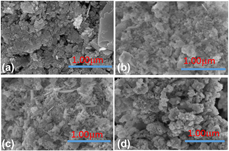
A kind of n–p (SnO2)1.3/(α ∼ Bi2O3)x/(β ∼ Bi2O3)1−x nanocomposite (SB-15) was synthesized with polyvinyl alcohol (PVA) as a template by solid state synthesis. XRD and HR-TEM confirmed the formation of n–p (SnO2)1.3/(α ∼ Bi2O3)x/(β ∼ Bi2O3)1−x. Particle size is found to be about 18 nm from HR-TEM images. FE-SEM clearly detected the boundary between SnO2 nanoparticles and Bi2O3 polyhedron particles. The special morphology and coexisting of α-Bi2O3 and β-Bi2O3 in SB-15 make it have a stronger visible light absorption range as far as 725 nm. PL and photocurrent test shows that the SB-15 has the best photocarriers separation capability. About 99% decolorization ratio of Rh.B was achieved in only 5 min. About 70% Cr6+ was degraded within 20 min and it is about 60% for tetracycline in the coexisting system (Te with Cr6+ solution), introducing it as a promising photocatalytic material. This work has addressed the method of phase-selective synthesis of n–p SnO2/α ∼ Bi2O3/β ∼ Bi2O3 by convenient solid state synthesis, which should be useful for the studies of other composites.
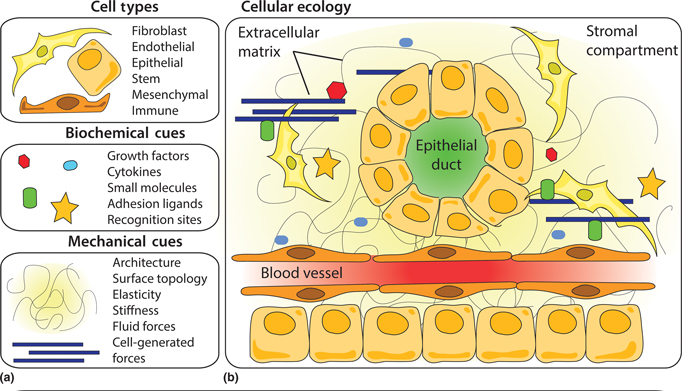
Synthetic biology combines engineering and biology to produce artificial systems with programmable features. Specifically, engineered microenvironments have advanced immensely over the past few decades, owing in part to the merging of materials with biologic mimetic structures. In this review, the authors adapt a traditional definition of community ecology to describe “cellular ecology,” or the study of the distribution of cell populations and interactions within their microenvironment. The authors discuss two exemplar hydrogel platforms: (1) self-assembling peptide hydrogels and (2) poly(ethylene) glycol hydrogels and describe future opportunities for merging smart material design and synthetic biology within the scope of multicellular platforms.
Aluminum-doped zinc oxide (AZO) is one of the most promising transparent conductive oxide materials for a front electrode in solar cells. In this work, we roughened substrate surface and sputtered AZO films, where the effect of roughness on various AZO properties was investigated. The haze values were largely enhanced, retaining other important properties such as conductivity and transparency. The optical band gap exhibits a clear blue shift because of the roughness. The possible cause of this shift may be variation in the Al content due to the different deposition and post-annealing mechanisms of AZO films on the roughened surface.
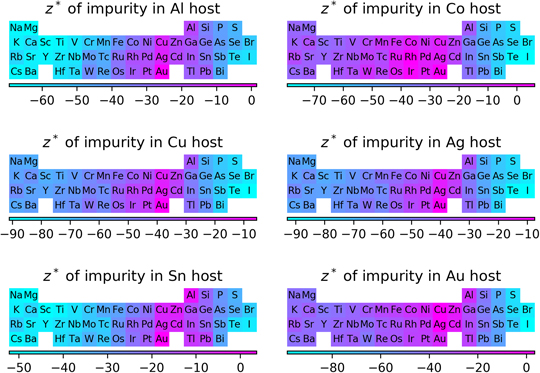
The effective charge of an element is a parameter characterizing the electromigration effect, which can determine the reliability of interconnection in electronic technologies. In this work, machine learning approaches were employed to model the effective charge (z*) as a linear function of physically meaningful elemental properties. Average fivefold (leave-out-alloy-group) cross-validation yielded root-mean-square-error divided by whole data set standard deviation (RMSE/σ) values of 0.37 ± 0.01 (0.22 ± 0.18), respectively, and R2 values of 0.86. Extrapolation to z* of totally new alloys showed limited but potentially useful predictive ability. The model was used in predicting z* for technologically relevant host–impurity pairs.
Gelatin–chitosan–based scaffolds using different bioactive nano-ceramic phase such as hydroxyapatite (HAp), beta tri calcium phosphate (β-TCP) and 58 s bioactive glass (58 s BG) were fabricated at a fixed 30 wt% of bioceramic phase content. From FTIR spectrum of the composite scaffold, a red shift in amide I and amide II bonds from 1595 to 1545 cm−1 and a new absorption peak due to electrostatic interaction between Ca2+ and COO− were observed. Average pore size in all the composite scaffolds was in the range between 100 and 300 μm, significantly smaller than the average pore size of pure gelatin–chitosan scaffold. Gelatin–chitosan-58 s BG (GCB30) scaffold exhibited the highest amount of protein absorption of 23 mg/cm2 among all the prepared scaffolds after 36 h of incubation in bovine serum albumin (BSA) solution. Mesenchymal stem cell’s (MSC’s) proliferation onto GCB30 scaffold was significantly higher as compared to other prepared scaffolds up to 7 days of cell culture. Expression of both early marker (RUNX2) and late marker (Osteocalcin) of differentiation was higher in MSCs cultured onto GCB30 scaffold as compared to other prepared scaffolds.
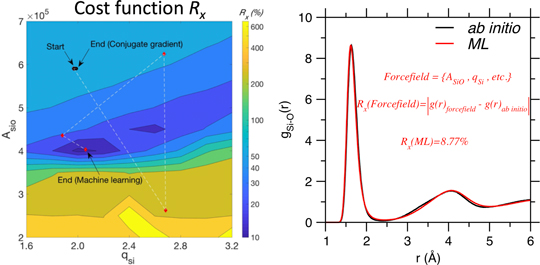
The development of reliable, yet computationally efficient interatomic forcefields is key to facilitate the modeling of glasses. However, the parameterization of novel forcefields is challenging as the high number of parameters renders traditional optimization methods inefficient or subject to bias. Here, we present a new parameterization method based on machine learning, which combines ab initio molecular dynamics simulations and Bayesian optimization. By taking the example of glassy silica, we show that our method yields a new interatomic forcefield that offers an unprecedented agreement with ab initio simulations. This method offers a new route to efficiently parameterize new interatomic forcefields for disordered solids in a non-biased fashion.
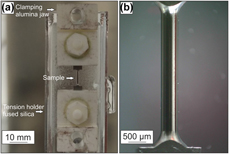
Bond coats are essential in gas turbine technology for oxidation protection. Freestanding MCrAlY (M = Ni, Co) bond coats were investigated with respect to their creep strength at elevated temperatures. Three types of MCrAlY, a Ni-based bond coat Amdry 386, a Co-based bond coat Amdry 9954 and Amdry 9954 + 2 wt% Al2O3 (ODS = oxide dispersion strengthened) produced by low pressure plasma spraying, were analyzed. The two phase microstructure of the bond coats consists of a fcc γ-Ni solid solution and a B2 β-NiAl phase. Constant load experiments were performed in a thermomechanical analyzer at temperatures between 900 and 950 °C. Microtensile test specimens with a diameter of 450 µm were produced by a high-precision grinding and polishing process. Creep rupture was mainly due to void nucleation along the β–γ interfaces and grain boundaries. The time to failure is larger in Ni-based Amdry 386 compared to that in Co-based Amdry 9954 due to a higher fraction of the high-strength β-NiAl phase at test temperatures. The addition of ODS-particles in the Co-based bond coat Amdry 9954 resulted in a better creep resistance but lower ductility in comparison to ODS-particle-free Amdry 9954.
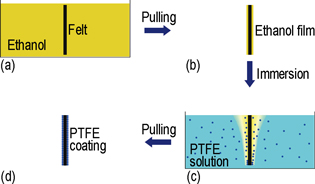
A facile and low-cost method based for tension gradient self-assembly was developed to prepare polytetrafluoroethylene (PTFE) nanofiber coatings on stainless-steel fiber felts. The PTFE particles were used as building blocks and the self-assembly process was analyzed thoroughly. After being sintered, the PTFE particles were transformed into PTFE nanofibers. The felts coated with the PTFE nanofibers exhibited superhydrophobicity and superoleophilicity, and could separate a series of oil–water mixtures with high efficiency and good reusability. The coated felts also presented excellent chemical and thermal stabilities. Over all, this approach could easily fabricate ultra-robust oil–water separation materials suitable for industrial applications.
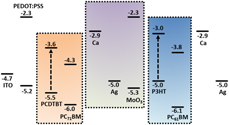
Tandem organic solar cells with two stacked cells were fabricated using semiconducting polymers and fullerene derivatives. A thin intermediate multilayer of calcium, silver, and molybdenum oxide connects the front and the back cells. Bulk heterojunction (BHJ) films of the low band gap (BG) polymer, poly[N-9″-heptadecanyl-2,7-carbazole-alt-5,5-(4′,7′-di-2-thienyl-2′,1′,3′-benzothiadiazole)] (PCDTBT), and [6,6]-phenyl C71-butyric acid methyl ester (PC71BM) are used for the front cell. As for the back cell of the tandem structure, the same PCDTBT:PC71BM BHJ (T1) or the high BG polymer poly(3-hexylthiophene) (P3HT) blended with [6,6]-phenyl-C61-butyric acid methyl ester (PC61BM) BHJ (T2) are used. The critical role of interlayer properties on the photovoltaic performance of devices are investigated. The observed open-circuit potential for the tandem cell approaches the sum of the potentials of the two respective subcells, demonstrating the potential for increasing the voltage of the solar cell using the tandem structure even with same or lower band gap polymer in the front.
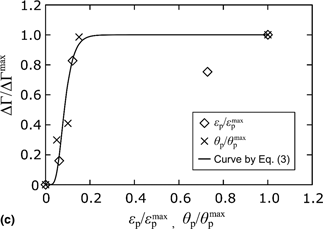
This study investigated the effect of plastic deformation on anodic dissolution in electrochemical migration (ECM) through the growth of deposits. The morphology of deposits synthesized by ECM was analyzed using scanning electron microscopy, where sponge-shaped deposits were observed on the cathode electrode. The mechanism of anodic dissolution was examined by experimentally measuring the variation in the mass of electrodes. The increase and saturation of anodic dissolution in ECM with plastic deformation were observed and were empirically formulated in terms of the change in activation energy. Thus, plastic deformation is proposed as a promising parameter that contributes to controlling ECM.
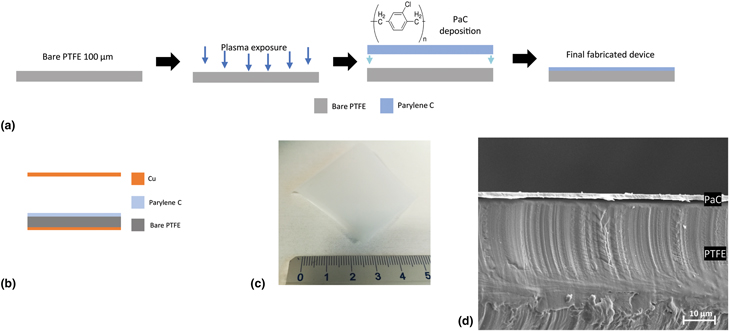
Powering autonomous electronic devices is a key challenge toward the development of smart sensor networks. In this work, a state-of-the-art triboelectric nanogenerator is devised to enhance the output performance with an effective surface charge density of 70.2 µC/m2, which is 140 times higher than the initial results. Thin film Parylene-C material is deposited to increase charge accumulation by allowing the acceptance of more charges and enhance output performance by a factor of 10. By considering the merit of simple fabrication, we believe the effective charge inclusion layer will be an ideal energy source for low-power portable electronics.
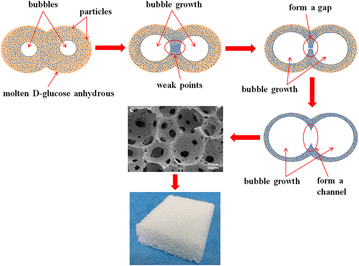
Cordierite foams were prepared by thermo-foaming of alumina–microsilica–talc powder dispersions in molten D-glucose anhydrous followed by reaction sintering at 1400 °C, which exhibited an interconnected cellular morphology and three-dimensional porous cell walls. The cordierite foam had a porosity of up to 96%, and its corresponding thermal conductivity was as low as 0.057 W/(m·K). The foam structures showed a great promise for gas filtration and gas catalytic support. The formation of interconnected cellular morphology, the variations of cell wall thickness, and cell size were explained from the perspective of viscosity and weak points in this paper. The linear shrinkage of cordierite foams having a density of 0.102–0.226 g/cm3 was in the range of 13.0–6.9%. And the compressive strength (0.05–0.28 MPa) was determined by the large cell size (1.1–1.3 mm), ultra-high porosity (91–96%), and characteristic of cordierite.
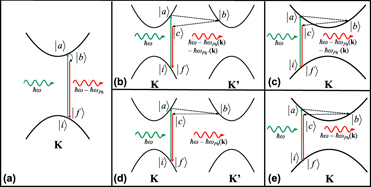
Raman spectroscopy is a fundamental tool for the characterization of two-dimensional materials. It provides insights into the electronic and vibrational properties of these materials and is particularly rich in features when the incident laser energy approaches the electronic energy transition of the material. Among these features, the double resonance Raman process provides important information on the electron, phonon, and electron–phonon properties. It was on the study of carbon-related materials that the double resonance bands sparkled showing their potential and, since then, have been deeply searched in the study of novel 2D materials. Here, the authors review the double resonance Raman process in 2D materials focusing on graphene and semiconducting MoS2 highlighting the origin of the bands mediated by the two-phonon and phonon–defect processes. The authors discuss the observed properties of the double resonance bands and compare the processes for graphene and MoS2 to find guiding principles for the appearance of double resonance bands. The authors also discuss the new findings of the intervalley scattering process in transition metal dichalcogenides. A brief discussion of the defect-induced bands in both materials is also presented.
The new double perovskite oxides Sr2Mn1−xNixTeO6 with x = 0.25, 0.5 and 0.75 have been synthesized in polycrystalline form by a conventional solid-state reactions process at 1180 °C, in the air. The structural and vibrational properties of these materials were studied by means XRPD, Raman, and IR spectroscopy. It has been proven that all the materials show typical double perovskite structures with a monoclinic symmetry, but with two different space group, P21/n for the compositions (x = 0.25 and 0.5), while the composition (x = 0.75) crystallizes in the space group I2/m. The lattice parameters obtained are in agreement with those of the two pure extremes Sr2MnTeO6 and Sr2NiTeO6. The monoclinic structural distortion involves long range ordering between Te6+ (in 2b site) and a random mixture (Mn2+/Ni2+) (in 2a site) for the two compositions (x = 0.25 and 0.5) that crystallize in P21/n. For the material (x = 0.75) with I2/m, similar distortion, ordering and mixing occur at the B and B’ double perovskite sites. It was observed that Vegard Law is satisfied, taking into account the cell parameters of both extremes. The effect of the partial substitution of Mn by Ni was also seen in Raman and IR data where a significant mode shift was observed with nickel content increase.