Refine search
Actions for selected content:
212083 results in Engineering
9 - Neural networks and deep learning
-
- Book:
- Financial Data Science
- Published online:
- 17 December 2025
- Print publication:
- 17 July 2025, pp 215-244
-
- Chapter
- Export citation
7 - Linear classifiers
-
- Book:
- Financial Data Science
- Published online:
- 17 December 2025
- Print publication:
- 17 July 2025, pp 165-192
-
- Chapter
- Export citation
Copyright page
-
- Book:
- Financial Data Science
- Published online:
- 17 December 2025
- Print publication:
- 17 July 2025, pp iv-iv
-
- Chapter
- Export citation

Fundamentals of Electrical Engineering
-
- Published online:
- 16 July 2025
- Print publication:
- 10 November 2016
-
- Textbook
- Export citation
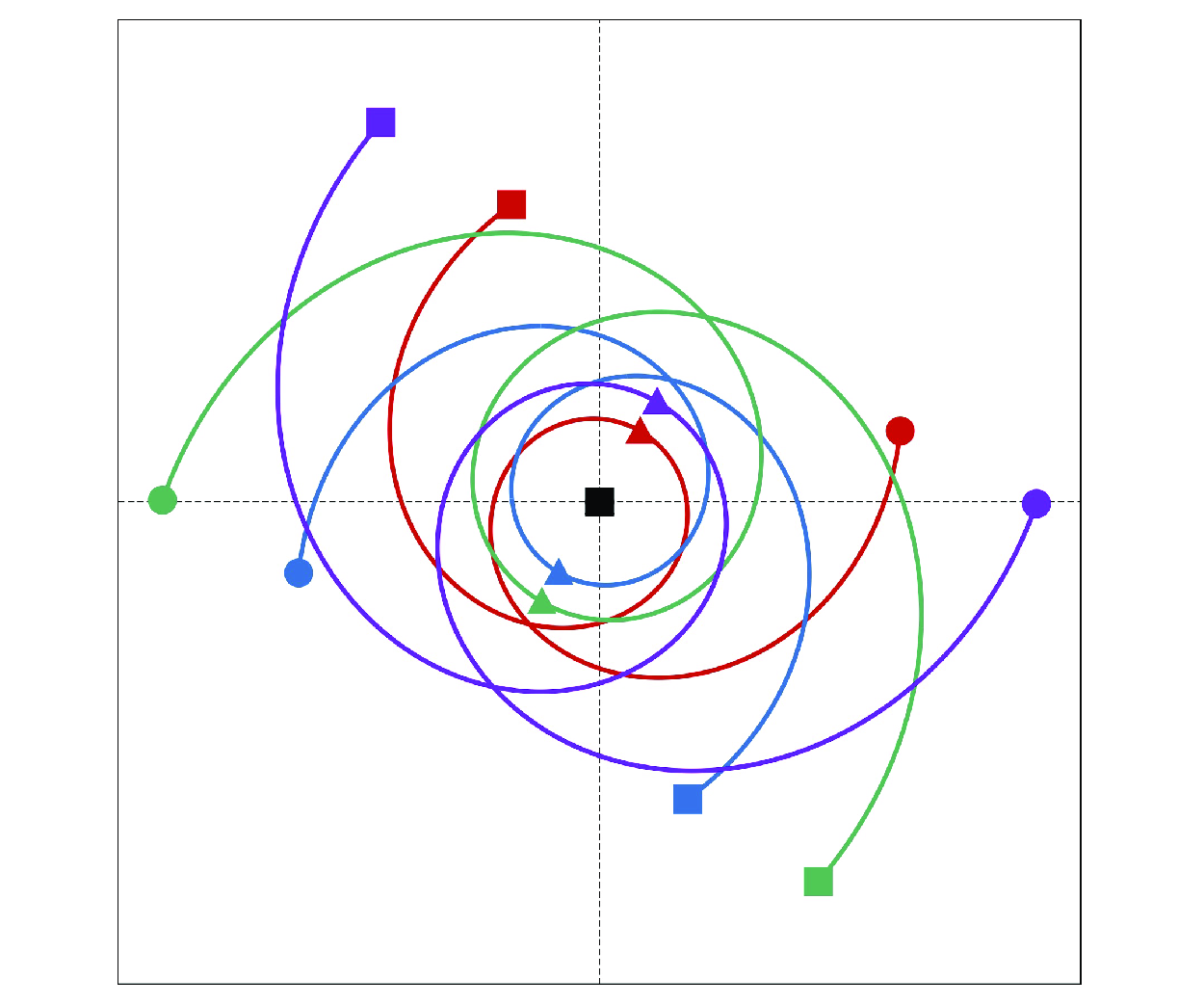
Enstrophy variations in the collapsing process of point vortices
-
- Journal:
- Journal of Fluid Mechanics / Volume 1015 / 25 July 2025
- Published online by Cambridge University Press:
- 16 July 2025, A14
-
- Article
-
- You have access
- Open access
- HTML
- Export citation
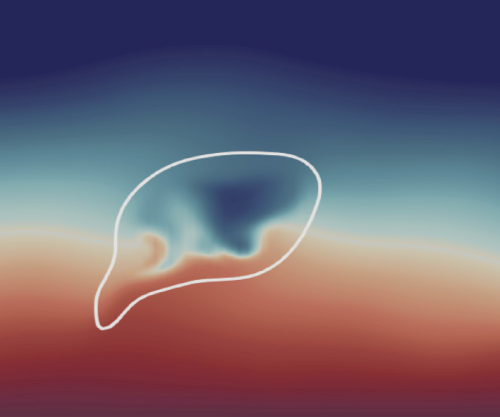
Heat transfer in drop-laden low-Prandtl-number channel turbulence
-
- Journal:
- Journal of Fluid Mechanics / Volume 1015 / 25 July 2025
- Published online by Cambridge University Press:
- 16 July 2025, A19
-
- Article
-
- You have access
- Open access
- HTML
- Export citation
-
In this work, we numerically investigate heat transfer in low-Prandtl-number drop-laden wall-bounded turbulence. These flows are characteristic of nuclear and fusion technologies, where liquid metals – known for their high thermal conductivity – are laden with drops or bubbles of another liquid or pressurised gas. To this end, we consider forced convection turbulence between two differentially heated parallel plates. The carrier phase (i.e. liquid metal) is characterised by a low Prandtl number $Pr_c=0.013$, while for the dispersed phase, we explore a range of Prandtl numbers from $Pr_d=0.013$ (matched case) to $Pr_d=7$ (super-unitary Prandtl number in the dispersed phase). Simulations are conducted at constant friction Reynolds number $Re_\tau =300$, and for each dispersed phase Prandtl number, two volume fractions are examined: $\alpha =5.4\,\%$ and $\alpha =10.6\,\%$. The simulation framework relies on direct numerical simulation of the Navier–Stokes equations, coupled with a phase-field method and the energy equation. Results show that an increase of the dispersed phase Prandtl number reduces heat transfer, leading to a lower Nusselt number for both volume fractions. To explain this behaviour, we analyse how the drops modify the temperature field, and demonstrate that the heat transfer reduction stems from a decreased diffusive heat flux within the dispersed phase. Finally, we propose a phenomenological model to predict the Nusselt number as a function of both the dispersed phase volume fraction and Prandtl number.


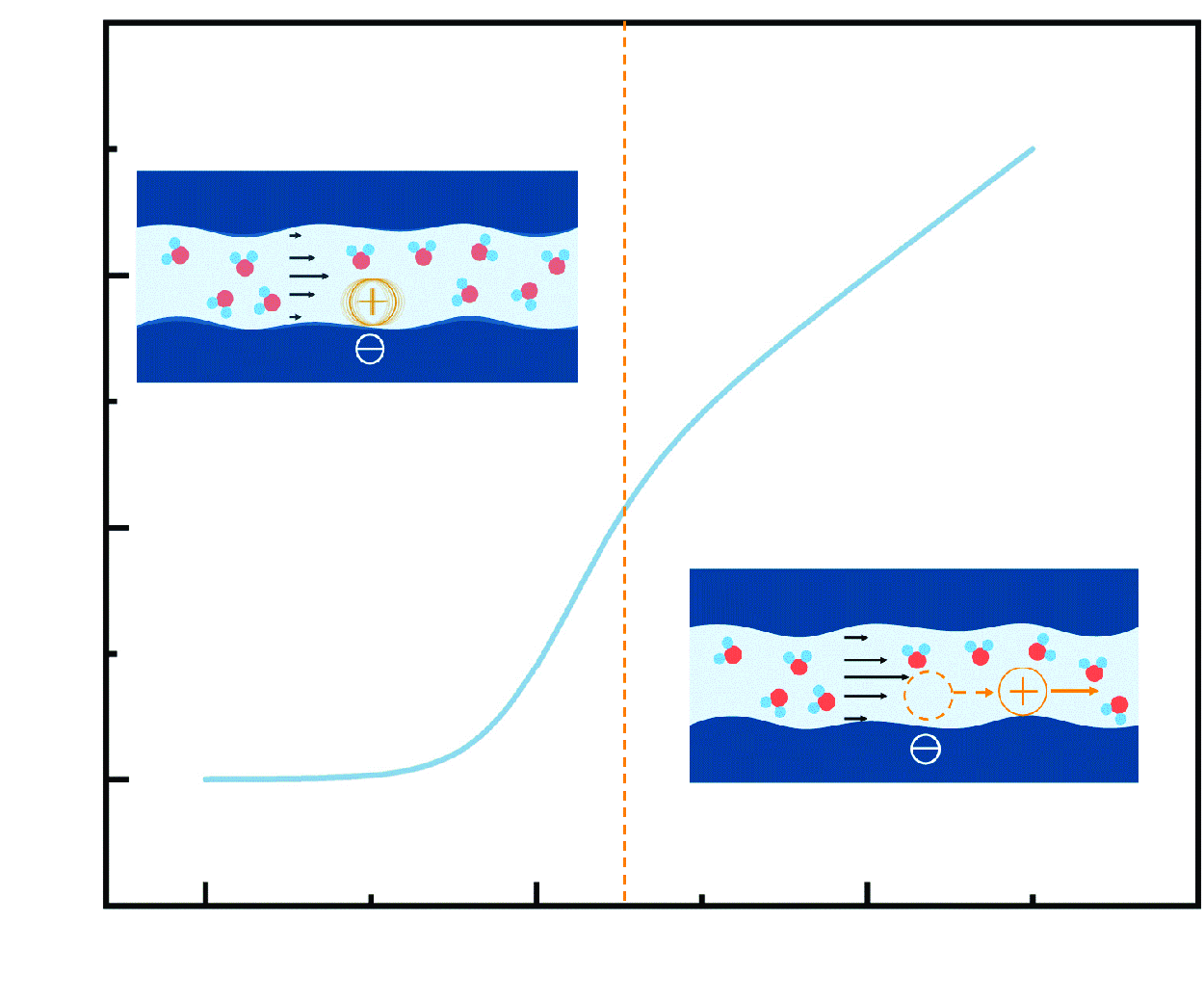
Angstrom-scale ionic streaming when the electrical double-layer concept fails
-
- Journal:
- Journal of Fluid Mechanics / Volume 1015 / 25 July 2025
- Published online by Cambridge University Press:
- 16 July 2025, A13
-
- Article
- Export citation
-
A knowledge gap exists for flows and transport phenomena at the angstrom scale when the Poisson–Nernst–Planck equation based on the concept of the electrical double layer fails. We discovered that streaming conductance becomes pressure-dependent in angstrom channels using latent-track membranes. The streaming current emerges only when the applied pressure exceeds a threshold value, which is inconsistent with the existing knowledge as a constant. With increasing channel size, we found that the pressure-dependent streaming conductance phenomenon weakens and vanishes into a constant streaming conductance regime when the mean channel radius exceeds $\sim$2 nm. The effective surface potential derived from the streaming conductance that divides conduction anomalously increases as the channel narrows. We suspect that the pressure-dependent streaming current is due to the reinforced Coulomb interaction between counterions and deprotonated carboxyl groups at the surface, which is close to the ion channel but different from that of electrified two-dimensional materials. The streaming current emerged due to hydrodynamic friction when the counterions were released from the surface. We approximated the stochastic process of counterion dissociation by a one-dimensional Kramer escape theory framework and defined the Damk $\ddot {\mathrm{o}}$hler number to describe the transition from the nonlinear streaming conductance regime to the linear regime as functions of applied pressure and channel radius and well explained the enhanced effective surface potential in confinement.


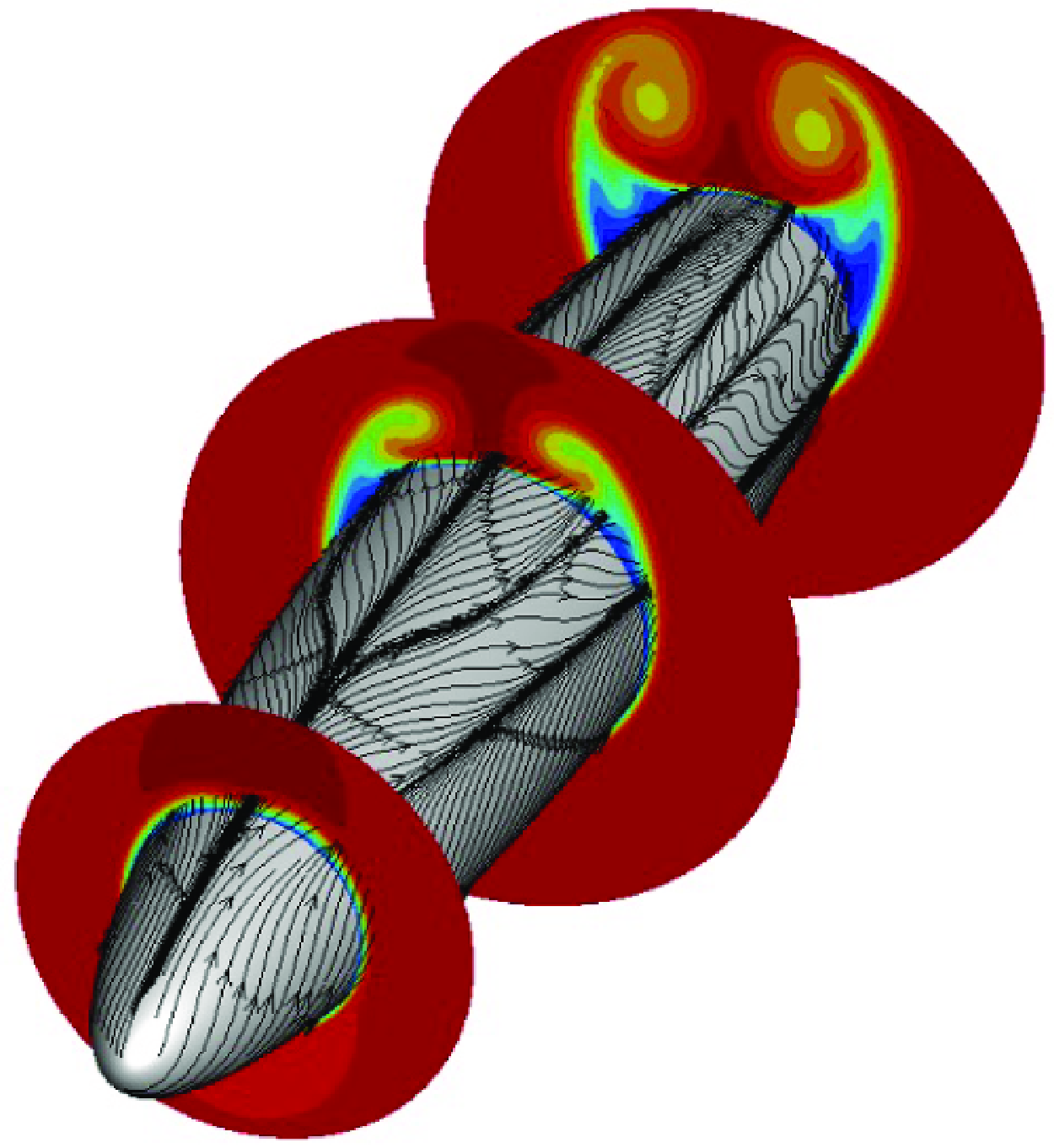
Vorticity dynamics and drag for flows over a sphere and a prolate spheroid
-
- Journal:
- Journal of Fluid Mechanics / Volume 1015 / 25 July 2025
- Published online by Cambridge University Press:
- 16 July 2025, A9
-
- Article
-
- You have access
- Open access
- HTML
- Export citation
-
The connection between the drag and vorticity dynamics for viscous flow over a bluff body is explored using the Josephson–Anderson (J–A) relation for classical fluids. The instantaneous rate of work on the fluid, associated with the drag force, is related to the vorticity flux across the streamlines of a background potential flow. The vorticity transport itself is examined by aid of the Huggins vorticity-flux tensor. The analysis is performed for three flows: flow over a sphere at Reynolds numbers $Re=200,3700$, and flow over a prolate spheroid at $Re=3000$ and $20^{\circ }$ incidence. In these flows, the vorticity transport shifts the flow away from and towards the ideal potential flow, with a net balance towards the former effect thus making an appreciable contribution to the drag. The J–A relation is first demonstrated for the flow over a sphere at $Re=200$. The drag power injection is related to the viscous flux of azimuthal vorticity from the wall into the fluid, and the advection of vorticity by the detached shear layer. In the wake, the azimuthal vorticity is advected towards the wake centreline and is annihilated by viscous effects, which contributes a reduction in drag. The analysis of the flow over a sphere at $Re=3700$ is reported for the impulsively started and stationary stages, with emphasis on the effects of unsteady two-dimensional separation and turbulent transport in the transitional wake. The turbulent flux in the wake enhances the transport of mean azimuthal vorticity towards the wake centreline, and is the main driver of the recovery of enthalpy between the rear point of the sphere and far downstream. The rate of work on the fluid by the drag force for a prolate spheroid is mostly due to the transport of vorticity along the separated boundary layers. Primary and secondary separation contribute oppositely to the power injection by the drag force, while the large-scale vortices only re-distribute vorticity without a net contribution. A mechanism for secondary separation is proposed based on the theory of vortex-induced separation.


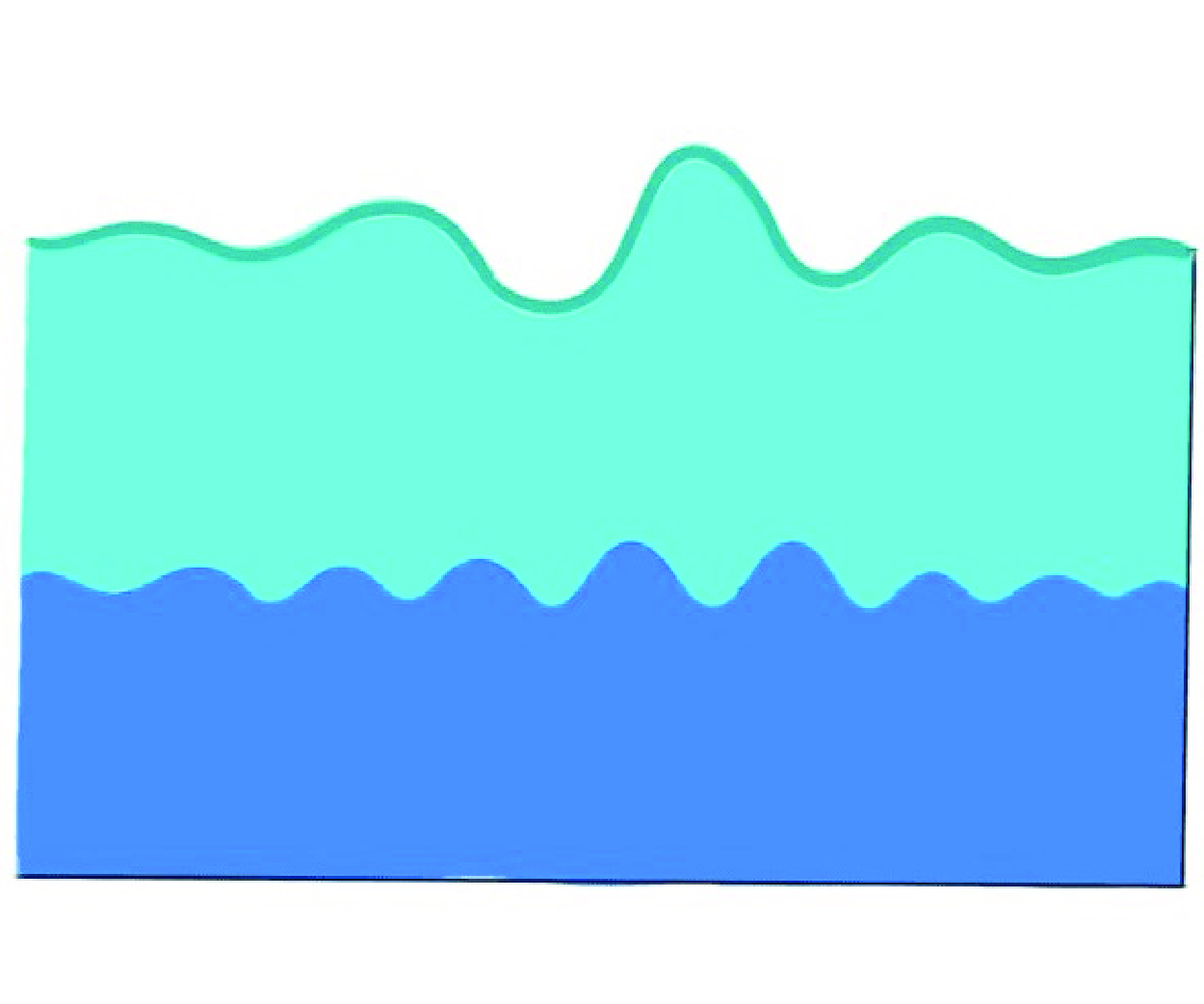
Interactions of flexural-gravity and interfacial waves in a two-layer fluid with a discontinuous background mean flow
-
- Journal:
- Journal of Fluid Mechanics / Volume 1015 / 25 July 2025
- Published online by Cambridge University Press:
- 16 July 2025, A22
-
- Article
- Export citation
Flow-induced vibration of a cylinder subjected to proximity interference by a downstream-cylinder
-
- Journal:
- Journal of Fluid Mechanics / Volume 1015 / 25 July 2025
- Published online by Cambridge University Press:
- 16 July 2025, A16
-
- Article
- Export citation
-
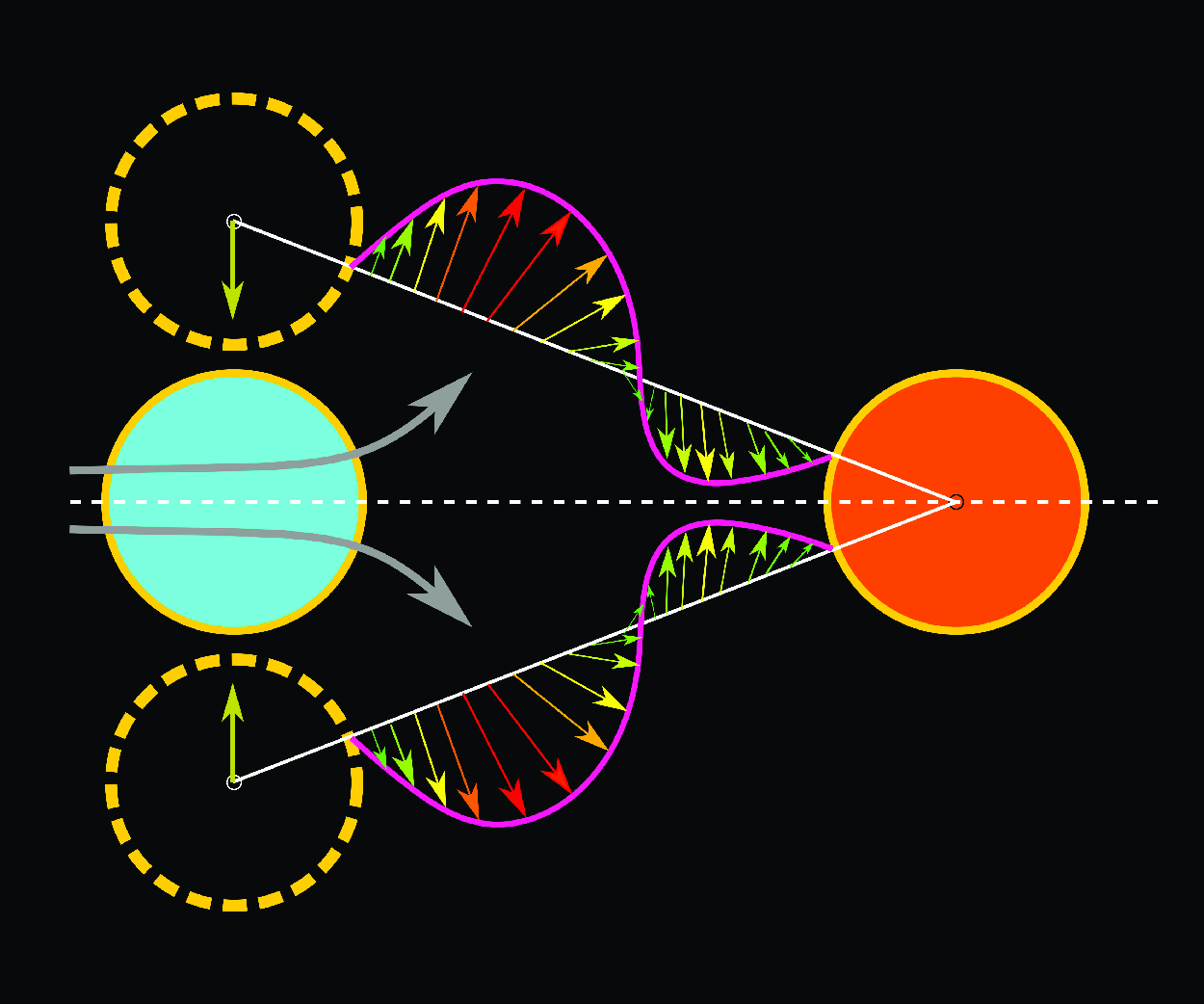
A numerical study is presented on flow-induced vibration of a circular cylinder, under the effect of a downstream stationary cylinder-induced proximity interference. The interference-induced various types of gap-flow regimes and characteristics of vibration and gap-flow rate $Q^*_g$ are presented, by considering various non-dimensional gaps $G^* = 0.1{-}2.5$ and reduced velocities $U^* = 3{-}20$ at a constant Reynolds number $Re = 100$, mass ratio $m^*= 2$ and damping ratio $\zeta = 0.005$. Decreasing $G^*$ or increasing proximity leads to the four gap-flow regimes: bi-directional gap flow at $G^* \geqslant 1.0$, uni-directional non-orthogonal gap flow at $G^* = 1.5{-}1.0$, uni-directional orthogonal gap flow at $G^* \leqslant 0.5$ and uni-directional one-sided gap flow at $G^* \leqslant 0.3$. Further, the respective regimes at larger $U^*$ are associated with proximity-induced modified vortex-induced vibration (PImVIV), proximity-induced galloping (PIG), transitional PImVIV–PIG, and proximity-induced staggered vibration (PISV). Quantitative presentation of maximum gap-flow rate $Q^*_{{g,max}}$, phase $ \phi _g$ (between $Q^*_{g}$ and displacement $y^*$) and phase portraits ( $Q^*_{g}$ versus $y^*$) provides clear demarcation between the various gap-flow regimes. Flow mechanisms are presented for the PImVIV, PIG and PISV responses. For the PIG, the mechanism is presented for the first time on generation of galloping instability, asymptotically increasing $A^*$ and existence of optimum gap $G^* = 0.5$ for the maximum amplitude. This work is significant as it provides new insights into the proximity interference-induced gap-flow dynamics between two cylinders, associated flow mechanism for both vibration mitigation and enhancement and promising potential applications for energy harvesting.


Modified design of sub-reflector with dielectric cylindrical keeper to enhance gain in axially displaced ellipse reflector with dual polarization
-
- Journal:
- International Journal of Microwave and Wireless Technologies / Volume 17 / Issue 4 / May 2025
- Published online by Cambridge University Press:
- 16 July 2025, pp. 613-619
-
- Article
- Export citation
How large-scale flow structures affect particle transport in wall turbulence
-
- Journal:
- Journal of Fluid Mechanics / Volume 1015 / 25 July 2025
- Published online by Cambridge University Press:
- 16 July 2025, A23
-
- Article
- Export citation
-
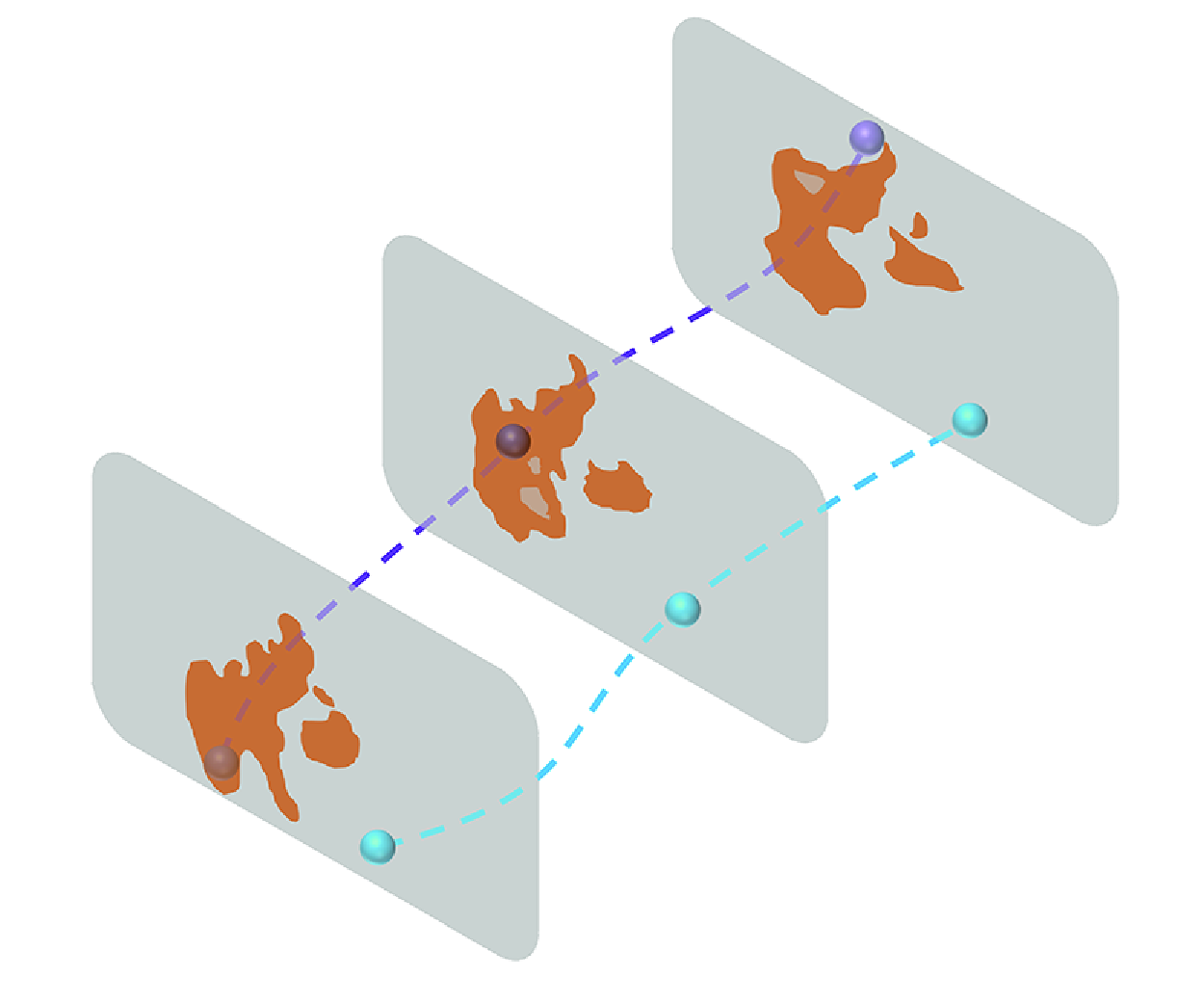
This study investigates the transport of particles in turbulent channel flow with friction Reynolds number $Re_\tau = 1000$ by direct numerical simulation. We focus on how large-scale flow structures, namely the $Qs$ structures (Lozano-Durán et al. 2012, J. Fluid Mech., vol. 694, pp. 100–130), affect the wall-normal transport of particles. Despite occupying less than $10\,\%$ of the physical domain, our results highlight the critical role played by $Qs$ structures in the particle transport, namely that the particle number and momentum flux inside the $Qs$ structures are substantially higher than outside. The fraction of particle wall-normal momentum flux inside $Qs$ structures is considerably larger than their volume fraction, suggesting highly efficient transport inside the $Qs$ structures. This prominent role played by $Qs$ structures in the transport of inertial particles is more effective by diminishing the inertia of particles. Notably, the long-distance transport of particles in the wall-normal direction is driven primarily by the continuous effect of $Qs$ structures. In summary, our findings advance the understanding of the effects of $Qs$ structures on particle transport, and demonstrate their significant role in the process.


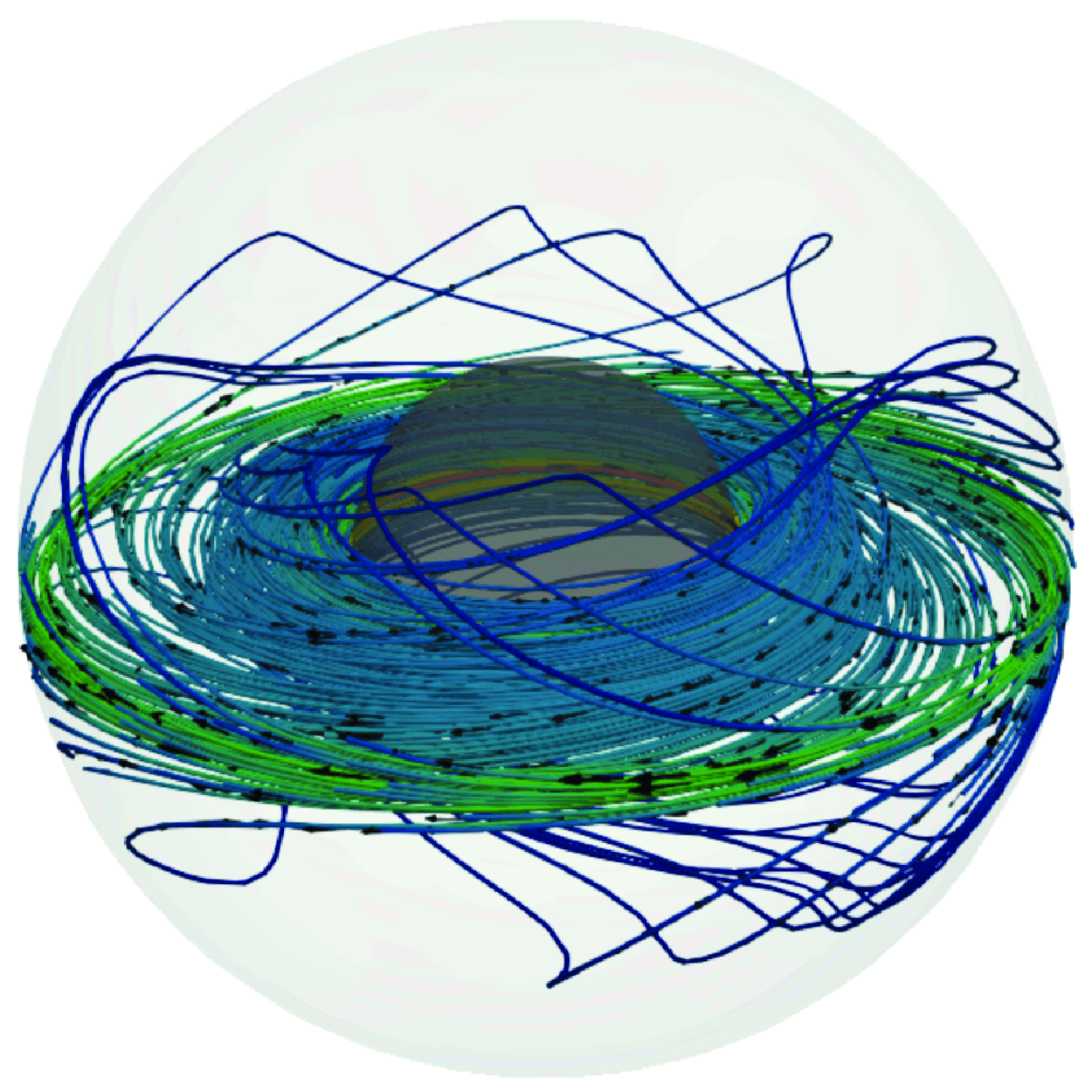
Electromagnetically driven magnetized spherical Couette flow
-
- Journal:
- Journal of Fluid Mechanics / Volume 1015 / 25 July 2025
- Published online by Cambridge University Press:
- 16 July 2025, A25
-
- Article
- Export citation
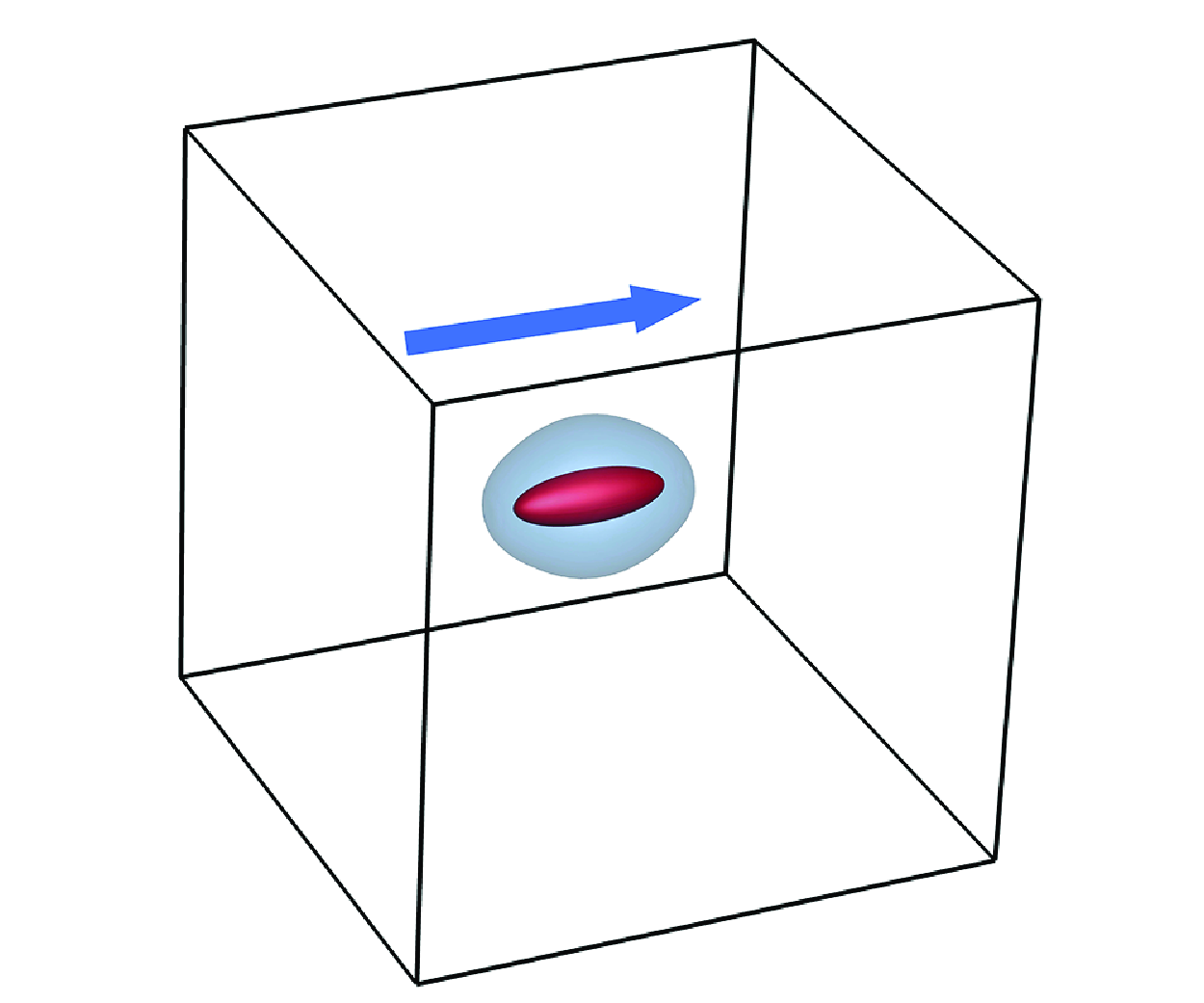
Swimming and mixing of an ellipsoidal squirmer in a viscoplastic fluid
-
- Journal:
- Journal of Fluid Mechanics / Volume 1015 / 25 July 2025
- Published online by Cambridge University Press:
- 16 July 2025, A12
-
- Article
-
- You have access
- Open access
- HTML
- Export citation
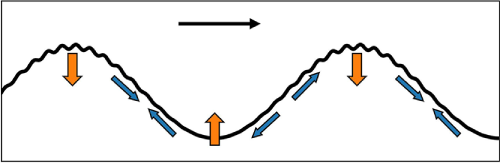
Revisiting the hydrodynamic modulation of short surface waves by longer waves
-
- Journal:
- Journal of Fluid Mechanics / Volume 1015 / 25 July 2025
- Published online by Cambridge University Press:
- 16 July 2025, A20
-
- Article
-
- You have access
- Open access
- HTML
- Export citation
-
Hydrodynamic modulation of short ocean surface waves by longer ambient waves significantly influences remote sensing, interpretation of in situ wave measurements and numerical wave forecasting. This paper revisits the wave crest and action conservation laws and derives steady, nonlinear, analytical solutions for the change of short-wave wavenumber, action and gravitational acceleration due to the presence of longer waves. We validate the analytical solutions with numerical solutions of the full crest and action conservation equations. The nonlinear analytical solutions of short-wave wavenumber, amplitude and steepness modulation significantly deviate from the linear analytical solutions of Longuet-Higgins & Stewart (1960 J. Fluid Mech. vol. 8, no. 4, pp. 565–583) and are similar to the nonlinear numerical solutions by Longuet-Higgins (1987 J. Fluid Mech. vol. 177, pp. 293–306) and Zhang & Melville (1990 J. Fluid Mech. vol. 214, pp. 321–346). The short-wave steepness modulation is attributed 5/8 to wavenumber, 1/4 due to wave action and 1/8 due to effective gravity. Examining the homogeneity and stationarity requirements for the conservation of wave action reveals that stationarity is a stronger requirement and is generally not satisfied for very steep long waves. We examine the results of Peureux et al. (2021 J. Geophys. Res.: Oceans vol. 126, no. 1, e2020JC016735) who found through numerical simulations that the short-wave modulation grows unsteadily with each long-wave passage. We show that this unsteady growth only occurs for homogeneous initial conditions as a special case and not generally. The proposed steady solutions are a good approximation of the nonlinear crest-action conservation solutions in long-wave steepness $\lesssim 0.2$. Except for a subset of initial conditions, the solutions to the nonlinearised crest-action conservation equations are mostly steady in the reference frame of the long waves.

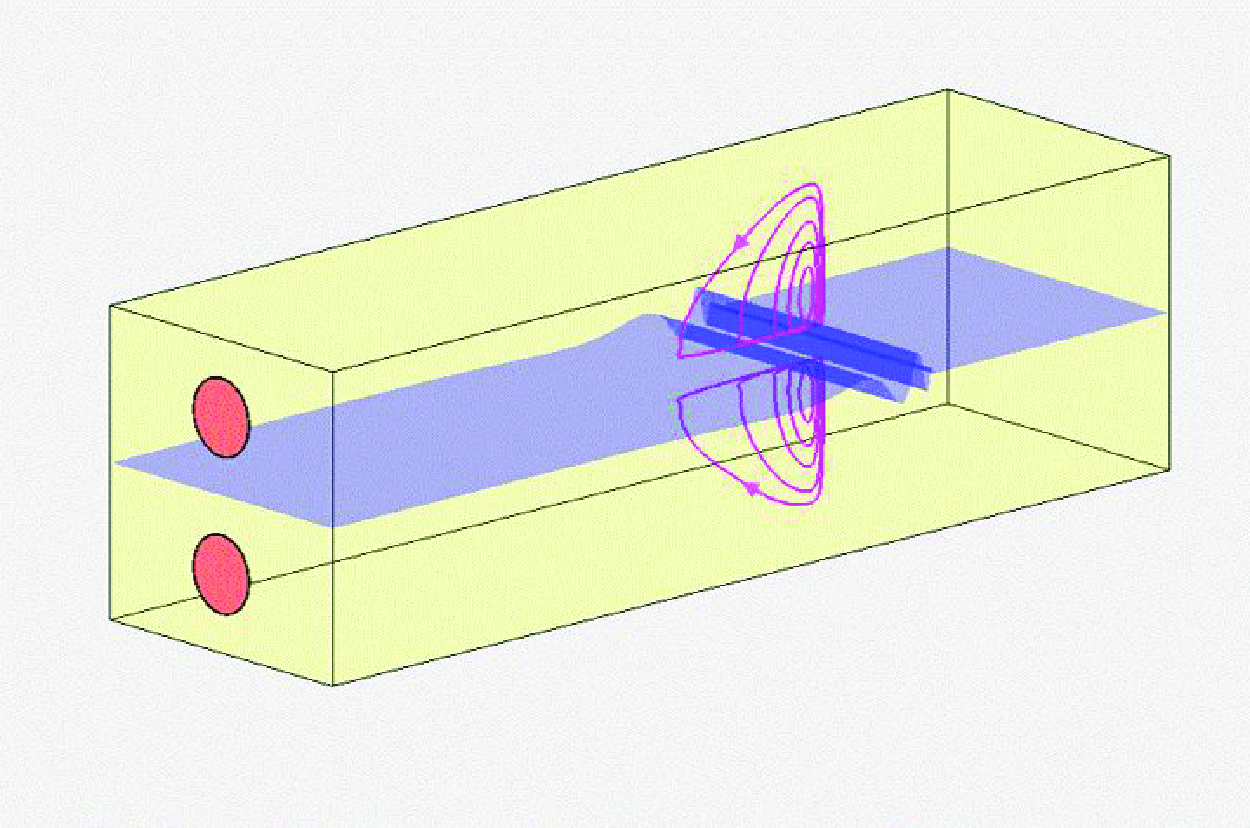
Streaming and diffusion in the cochlea
-
- Journal:
- Journal of Fluid Mechanics / Volume 1015 / 25 July 2025
- Published online by Cambridge University Press:
- 16 July 2025, A15
-
- Article
- Export citation
A soft 3-DOF interaction force measurement system for estimating the biomechanical effects of a soft wearable robot on the human joint
-
- Journal:
- Wearable Technologies / Volume 6 / 2025
- Published online by Cambridge University Press:
- 15 July 2025, e32
-
- Article
-
- You have access
- Open access
- HTML
- Export citation
Mechanisms underlying the generation and generalisation of the surface layer – ERRATUM
-
- Journal:
- Journal of Fluid Mechanics / Volume 1014 / 10 July 2025
- Published online by Cambridge University Press:
- 15 July 2025, E3
-
- Article
-
- You have access
- Open access
- HTML
- Export citation
Ka-band thin-film compact cascaded reflective-type phase shifter exploiting CVD-grown-graphene diode
-
- Journal:
- International Journal of Microwave and Wireless Technologies , First View
- Published online by Cambridge University Press:
- 15 July 2025, pp. 1-9
-
- Article
- Export citation
-
This paper presents the design, implementation, and characterization of a compact two-stage analog phase-shifter for the Ka-band, based on thin-film technology. The design utilizes a reflective-type configuration, employing four metal-insulator-graphene diodes as reflective loads. The fabricated prototype is realized on an 8-µ m-thick flexible polyimide substrate and occupies less than 0.7 mm2 of chip area including the contact pads. Performance evaluation of the fabricated circuit reveals an S11 of better than −13 dB and an S21 of −3.3 dB with a tolerance of ± 0.5 dB across the frequency band from 28 to 36 GHz, along with a tunable phase difference ( $\Delta\phi$) exceeding 70∘. The introduced flexible thin-film technology promotes the realization of flexible cost-effective beam steering for smart surfaces implementations for communication and biomedical applications.

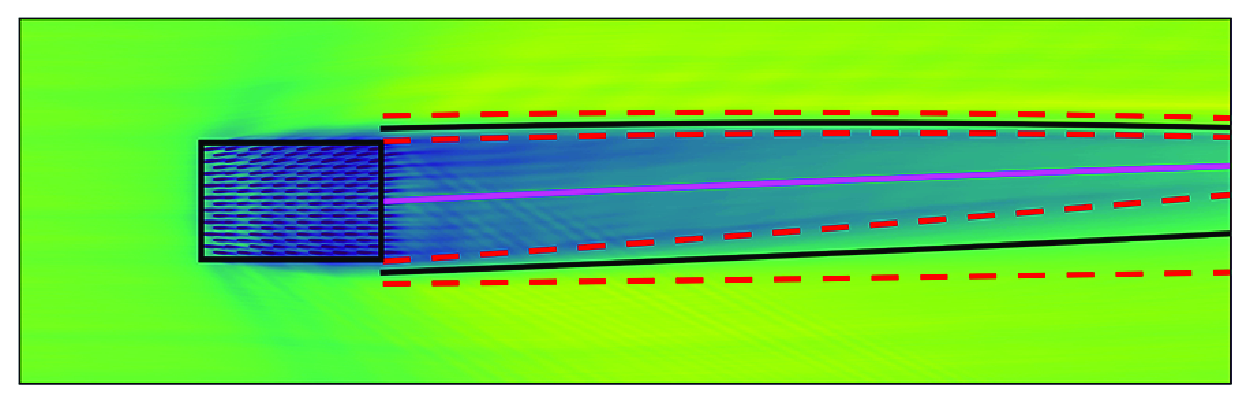
Wind-farm wake recovery mechanisms in conventionally neutral boundary layers
-
- Journal:
- Journal of Fluid Mechanics / Volume 1015 / 25 July 2025
- Published online by Cambridge University Press:
- 15 July 2025, A5
-
- Article
- Export citation
-
Synthetic-aperture radar images and mesoscale models show that wind-farm wakes differ from single-turbine wakes. For instance, wind-farm wakes often narrow and do not disperse over long distances, contrasting the broader and more dissipating wakes of individual turbines. In this work, we aim to better understand the mechanisms that govern wind-farm wake behaviour and recovery. Hence we study the wake properties of a $1.6$ GW wind farm operating in conventionally neutral boundary layers with capping-inversion heights $203$, $319$, $507$ and $1001$ m. In shallow boundary layers, we find strong flow decelerations that reduce the Coriolis force magnitude, leading to an anticlockwise wake deflection in the Northern Hemisphere. In deep boundary layers, the vertical turbulent entrainment of momentum adds clockwise-turning flow from aloft into the wake region, leading to a faster recovery rate and a clockwise wake deflection. To estimate the wake properties, we propose a simple function to fit the velocity magnitude profiles along the spanwise direction. In the vertical direction, the wake spreads up to the capping-inversion height, which significantly limits vertical wake development in shallow-boundary-layer cases. In the horizontal direction and for shallow boundary layers, the wake behaves as two distinct mixing layers located at the lateral wake edges, which expand and turn towards their low-velocity side, causing the wake to narrow along the streamwise direction. A detailed analysis of the momentum budget reveals that in deep boundary layers, the wake is predominantly replenished through turbulent vertical entrainment. Conversely, in shallow boundary layers, wakes are mostly replenished by mean flow advection in the spanwise direction.


