To save content items to your account,
please confirm that you agree to abide by our usage policies.
If this is the first time you use this feature, you will be asked to authorise Cambridge Core to connect with your account.
Find out more about saving content to .
To save content items to your Kindle, first ensure no-reply@cambridge.org
is added to your Approved Personal Document E-mail List under your Personal Document Settings
on the Manage Your Content and Devices page of your Amazon account. Then enter the ‘name’ part
of your Kindle email address below.
Find out more about saving to your Kindle.
Note you can select to save to either the @free.kindle.com or @kindle.com variations.
‘@free.kindle.com’ emails are free but can only be saved to your device when it is connected to wi-fi.
‘@kindle.com’ emails can be delivered even when you are not connected to wi-fi, but note that service fees apply.
Bromley and Santos make a cultural argument that situates nonprofit organizations within the broader context of organization itself. Due to the ascendancy of organization as an emergent category of social structure, the authors suggest that all types of organizations (government, business, nonprofit) are becoming increasingly similar. As the divisions between them (e.g., for-profit organization vs. nonprofit organization, etc.) become less prominent, the sector in need of explanation is the organizational one, writ large. Thus, rather than explaining the nonprofit sector, per se, the authors argue that the nonprofit sector is just one manifestation of organization and that it is organization that deserves our attention. In this sense, sector theory as traditionally understood (as narrow attention to the nonprofit sector in comparison to other sectors) diverts attention from more fundamental sociocultural developments. The authors argue that one can only understand nonprofit organizations vis-à-vis government and for-profit organizations by first understanding this broader context.
In Chapter 4, we examine the supply of dogs to the U.S. market. We first explain two potential sources of social inefficiency in the market: information asymmetry and negative externality. We then explore the heterogeneous nature of the sources of supply. Based on organizational form, we distinguish between commercial and so-called backyard breeders. Based on the ethics of practice, we distinguish between ethical breeders who provide high-quality care and unethical breeders who do not. We relate our six resulting categories of supply, including puppy mills and shelters, to the information asymmetry, negative externality, and a third potential market failure, the public good nature of the problem of protecting dogs from cruelty. Finally, we argue that serious market failures provide justification for government intervention to increase efficiency. However, the current patchwork of regulations and lack of resources invested in enforcement allow puppy mills and black-market breeders to impose costs on others and harm dogs.
Edited by
Scott L. Greer, University of Michigan,Michelle Falkenbach, European Observatory on Health Systems and Policies,Josep Figueras, European Observatory on Health Systems and Policies,Matthias Wismar, European Observatory on Health Systems and Policies
The logic of co-benefits produces many theoretically interesting ideas, but to become convincing, it must be paired with competent policy analysis and evaluation. This chapter focuses on the many examples of co-benefits in practice and research literature in order to demonstrate that many policies have effects, intended or unintended, beyond their main targets.
Edited by
Scott L. Greer, University of Michigan,Michelle Falkenbach, European Observatory on Health Systems and Policies,Josep Figueras, European Observatory on Health Systems and Policies,Matthias Wismar, European Observatory on Health Systems and Policies
This chapter explores the linkages between Sustainable Development Goal (SDG) 3 ‘Health’ and SDG 5 ‘Achieve gender equality and empower all women and girls’. We argue that health equity and gender equality are ‘twin forces’ that are historically connected and cannot be separated, creating either strong co-benefits or a ‘double jeopardy’ scenario for health and gender equality. Developments at the cross-roads of SDG 3 and SDG 5 are never ‘gender neutral’ and need attention for two reasons: to strengthen the health policy co-benefits and to prevent and mitigate adverse effects if gender equality is ignored. We introduce a conceptual model of researching co-benefits that expands the focus on macro-level co-benefits towards more complex governance processes and outcomes, including gender mainstreaming approaches. Selected empirical case studies consider major targets of SDG 5 and related SDG 3 sub-goals, illustrating different scenarios of implementation of health and gender co-benefits in a range of policy and governance contexts. The empirical cases illustrate that governance actions and intersectoral structures/institutional pathways shape the ‘windows of opportunity’ for co-benefits, yet co-benefits remain contested and must be re-assured, a lesson most recently learned from the COVID−19 pandemic.
This chapter discloses the functions of the nonprofit sector in non-Western democratic national contexts and argues that a state’s political regime is related to the hierarchy of functions performed by the nonprofit sector in that state. The authors focus on the function of legitimacy and the ways the nonprofit sector performs it in a non-democratic context, with Russia as an example. They construct a theoretical model that explains why nonprofits instead of other organizations fulfill certain functions in nondemocratic regimes. The chapter concludes with a discussion on the model’s relevance to other nondemocratic contexts.
In Chapter 1, we set out the big question that this book seeks to answer: How does economics help us understand the various relationships between human beings and dogs? We label our effort to answer this big question and the many related economic questions and issues as “dogonomics.” To frame the question, we introduce two somewhat differing economic perspectives: neoclassical economics, which assumes individual rationality, and behavioral economics, which argues that people act irrationally in predictable ways. We make the case that, although many dogs are bought and sold in markets, they are unlike other commodities and most other animals. Dog exceptionalism is real. Indeed, they often have a dual nature as both commodity and family member.
The theory of the nonprofit institutional form introduced by Henry Hansmann more than 40 years ago proposed that informational problems, specifically information asymmetry, explains the essential defining feature of the nonprofit organization – the so-called nondistribution constraint. While the conventional argument holds that an asymmetry of information arises due to intrinsic, hard-to-measure attributes of nonprofit outputs, this chapter argues instead that informational problems arise because private purchasers fail to sufficiently value the positive externalities of information. In short, information is a social good, rather than a private good, and neither purchasers (donors) nor producers (nonprofits) have sufficiently strong incentives to systematically incur the costs and risks associated with generating information. The undervaluing of information by private parties results in a symmetry of ignorance that may lead to “benefit failure” in the form of foregone social impact. This type of failure is induced by transaction, allocative, and production inefficiencies resulting from the symmetry of ignorance.
Edited by
Scott L. Greer, University of Michigan,Michelle Falkenbach, European Observatory on Health Systems and Policies,Josep Figueras, European Observatory on Health Systems and Policies,Matthias Wismar, European Observatory on Health Systems and Policies
This finally introductory chapter emphasises the goal of the book: Rather than reinvent the idea of HiAP, we propose that it simply needs to be expanded. Instead of just offering the one-directional relationship that HiAP proposes (other sectors è health), an expansion of thought is required to make this offer two-dimensional. Health for all policies posits that other sectors help the health sector, and that the health sector helps other sectors. This new relationship highlights what health can do for other sectors while simultaneously attaining co-benefits for its own sector.
Castillo argues that one reason for the standstill in sector theorizing may be that theory-building has been too focused on anthropocentric constructs, for example, economic, organizational, and symbolic aspects of firms and societies. Instead, the author suggests moving from an egocentric to an ecocentric conceptualization of organizing by drawing from principles from biology and ecology to develop a framework to explain prosocial organizing. By shifting the analytical focus from economizing to ecologizing, the chapter offers a conceptual foundation for how a relational approach to exchange can reconcile sustainability tensions between now and later, individual and collective, and social and financial returns. The chapter concludes with a discussion of implications for research, policy, and practice, suggesting relational biology as a plausible theoretical framework to move nonprofit theory beyond description toward concrete mathematical models.
Edited by
Scott L. Greer, University of Michigan,Michelle Falkenbach, European Observatory on Health Systems and Policies,Josep Figueras, European Observatory on Health Systems and Policies,Matthias Wismar, European Observatory on Health Systems and Policies
To what extent are contemporary scholars using the ten explanations of the nonprofit sector described in Chapter 2? The authors use scholarship, or published academic articles, as data to answer this question. They find that the ten nonprofit-sector theories continue to be an important foundation for nonprofit studies research. The most commonly used sector theories are associationalism, contract failure, nonprofit/government interdependence, and social origins. However, their analysis suggests that use of the nonprofit-sector theories is merely ceremonial. Nonprofit scholars could do much more to question, develop, and refine the existing sector theories – or to develop new ones. This research highlights the importance of a book like this one to encourage scholars to discuss and question existing sector theories and pose new sector-theory contributions to better understand the nonprofit sector.
Edited by
Scott L. Greer, University of Michigan,Michelle Falkenbach, European Observatory on Health Systems and Policies,Josep Figueras, European Observatory on Health Systems and Policies,Matthias Wismar, European Observatory on Health Systems and Policies
This chapter explores the links between Sustainable Development Goal (SDG) 3 (specifically targets 3.3, 3.8, and 3.b, which address the need to fight communicable diseases, achieve universal health coverage, and invest in research and development of vaccines and medicines, respectively) and SDG 9, which calls for the development of industry, innovation, and infrastructure in low- and middle-income countries (LMICs). By discussing two case studies, i.e., Brazil’s technology transfer strategy for the human papillomavirus (HPV) vaccine through a public–private partnership and the implementation of the Mozambican Pharmaceutical Ltd., a Brazil-Mozambique South-South cooperation (SSC) project, it argues that initiatives such as technology transfer and local production of pharmaceuticals in LMICs can be a means to promote industrial and innovation goals while meeting health needs. With significant variations between them, the two case studies illustrate the dynamic interaction between SDG 3 and SDG 9, helping to elucidate the co-benefits between health policy and measures to promote scientific and technological development. The chapter calls for further research to better understand which channels, governance arrangements, and mechanisms can promote effective coordination between healthcare and industrial development.
This chapter explores the nature of nonprofit-sector theory. To do this, we first examine what we theory, and what we mean by nonprofit-sector theory. We also propose a framework for evaluating what makes good nonprofit-sector theory, based on the function of theory (define, describe, explain, prescribe, predict, and evaluate) and the theory's depth, breadth, and relevance. For this volume, we have taken a broad and inclusive approach to nonprofit-sector theory, defining it as answering the questions, “What is the nonprofit sector?” and “Why does the nonprofit sector exist?”
Edited by
Scott L. Greer, University of Michigan,Michelle Falkenbach, European Observatory on Health Systems and Policies,Josep Figueras, European Observatory on Health Systems and Policies,Matthias Wismar, European Observatory on Health Systems and Policies
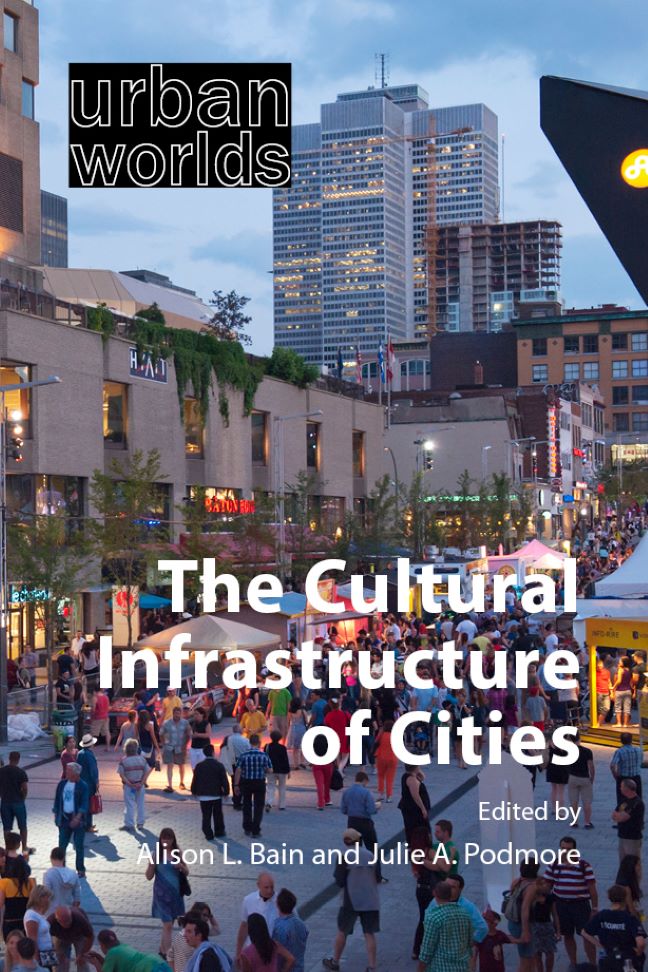
Cities are synonymous with the production and consumption of culture. It is their material and human cultural infrastructure that also makes them archives and works of art. The Cultural Infrastructure of Cities critically re-examines the relationship between the urban and its cultures. It expands our understanding of the concept of urban cultural infrastructure and highlights the foundational role of culture to the materiality and sociality of urban life and the governance of cities.
The book begins with a theoretical overview of the cultural and infrastructural turns in urban studies scholarship. It then explores definitions of cultural infrastructure and its 'hard' and 'soft' dimensions before critically considering the vulnerabilities generated in the cultural sector by the Covid-19 pandemic. Chapters are organised in four thematic sections focusing on aspects of producing, performing, consuming and collecting culture, which feature detailed case studies from 17 cities across the global North and South.
This book will be of interest not only to students and scholars of urban studies, but also to policy-makers planning and creating cultural infrastructures as well as those working in cultural institutions and creative industries.
In this timely book, Ed Atkins asks: are we getting decarbonisation right? And how could it be made better for people and communities? In doing so, this book proposes a different type of energy transition. One that prioritises and takes opportunities to do better - to provide better jobs, community ownership and improve people's homes and lives.
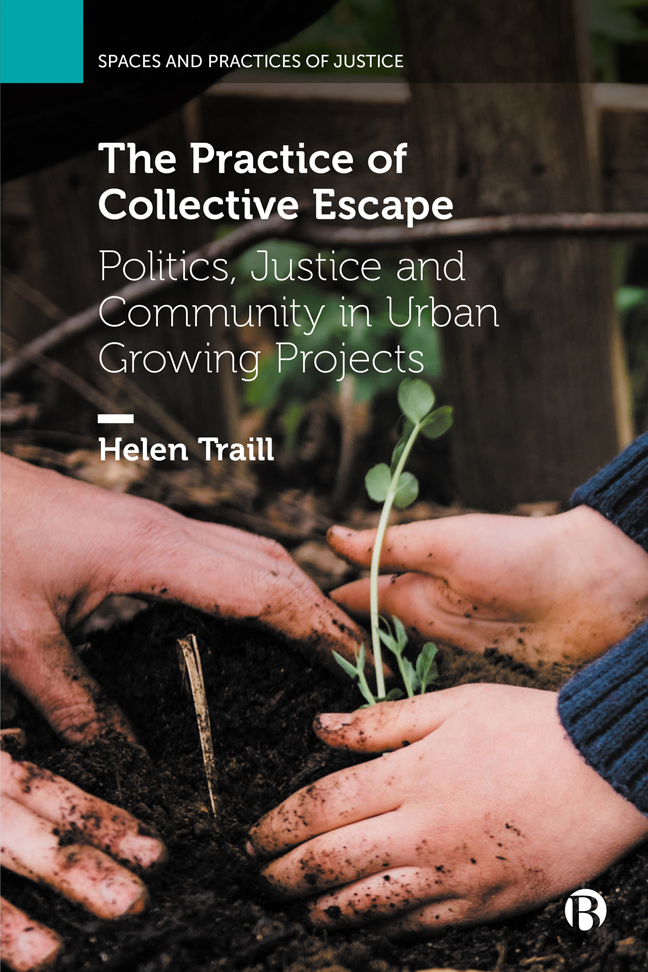
Drawing on ethnographic research in urban growing projects in Glasgow, this book explores community dynamics and asks who benefits from such projects. A timely consideration of localism and community empowerment, the book sheds light on key issues of urban land use, the right to the city and the value of social connection.