To save content items to your account,
please confirm that you agree to abide by our usage policies.
If this is the first time you use this feature, you will be asked to authorise Cambridge Core to connect with your account.
Find out more about saving content to .
To save content items to your Kindle, first ensure no-reply@cambridge.org
is added to your Approved Personal Document E-mail List under your Personal Document Settings
on the Manage Your Content and Devices page of your Amazon account. Then enter the ‘name’ part
of your Kindle email address below.
Find out more about saving to your Kindle.
Note you can select to save to either the @free.kindle.com or @kindle.com variations.
‘@free.kindle.com’ emails are free but can only be saved to your device when it is connected to wi-fi.
‘@kindle.com’ emails can be delivered even when you are not connected to wi-fi, but note that service fees apply.
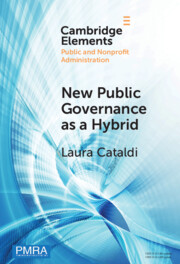
This Element focuses on New Public Governance as one of the major administrative narratives of our times. It offers a critical interpretation of NPG as a hybrid tool for management, governance, and reform, arguing that NPG coexists with and is likely to gradually merge into New Public Management. Several arguments support the 'continuity and hybridization' hypothesis, whereby the transition from NPM to NPG occurred through the retention of key elements and a layering and sedimentation process. These arguments challenge the “linear substitution” hypothesis, accounting for NPM's persistence and dominance. The Element develops a new interpretation of NPG and discusses the challenges that NPG poses. Finally, it shows that exploring hybridity is critical for evaluating the potential of NPG in terms of a shift in public administration and understanding governance trajectories and reform scenarios.
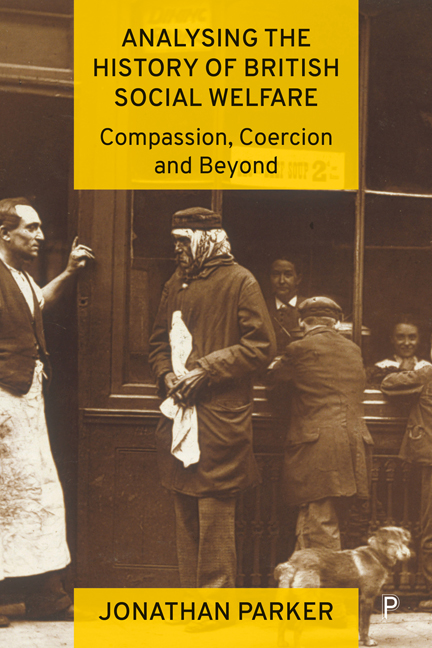
This book offers insights into the development of social welfare policies in Britain. By identifying continuities in welfare policy, practice and thought throughout history, it offers the potential for the development of new thinking, policy making and practice.
The European welfare systems, established after the Second World War, have been under sustained attack since the late 1970s from the neoliberal drive towards a small state and from the market as the foremost instrument for the efficient allocation of scarce resources. After the 2008 financial crash, Europe's high tax and generous benefits welfare states were, once again, blamed for economic stagnation and political immobilism. If anything, however, the long decade of the Great Recession proved that the welfare state remained a fundamental asset in hard times, stabilizing the economy, protecting households and individuals from poverty, reconciling gendered work and family life, while improving the skills and competences needed in Europe's knowledge economy and ageing society. Finally, the spread of the Covid-19 pandemic has, unsurprisingly, brought back into the limelight the productive role of welfare systems in guaranteeing basic security, human capabilities, economic opportunities, and democratic freedoms.
In this important contribution, Anton Hemerijck and Robin Huguenot-Noël examine the nature of European welfare provision and the untruths that surround it. They evaluate the impact of the austerity measures that followed the Great Recession, and consider its future design to better equip European societies to face social change, from global competition to accelerated demographic ageing, the digitalization of work and climate change.
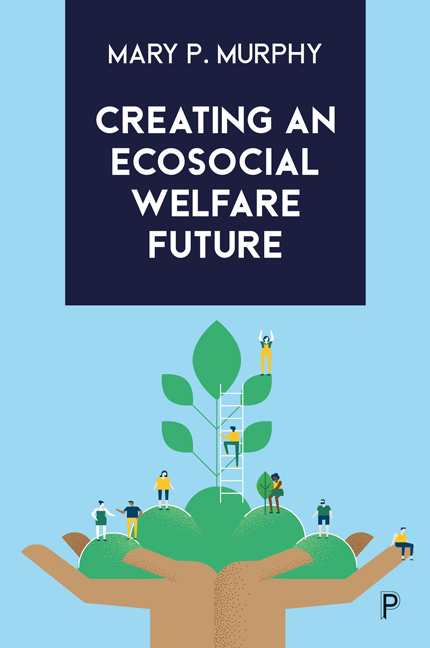
A uniquely hybrid approach to welfare state policy, ecological sustainability and social transformation, this book explores transformative models of welfare change. Using Ireland as a case study, it addresses the institutional adaptations needed to move towards a sustainable welfare state.
The Belt and Road Initiative (BRI) is one of the most talked about yet little understood policy initiatives of the People's Republic of China. This book offers a comprehensive, balanced and policy-oriented assessment of the BRI's first ten years and what it has meant for the world's businesses, polities and societies. The authors explore China's role as a globally significant source of development finance and investment capital, and examine the political, economic, normative, environmental and social implications of its increased presence in the world.
Aimed at researchers and academics, business professionals and policy analysts, as well as informed readers, the book seeks to answer some of the most pressing questions that China's rising economic presence in global markets poses: how is the BRI organized? Is it China's grand strategy? Is it green, is it corrupt, and what are its social effects? Is there even a future for the BRI in a world beset by new uncertainties? The book offers a sober analysis of the most prevalent narratives that cast China as a 'threat' and as an 'opportunity' and considers the specific challenges that it presents for the liberal international order.
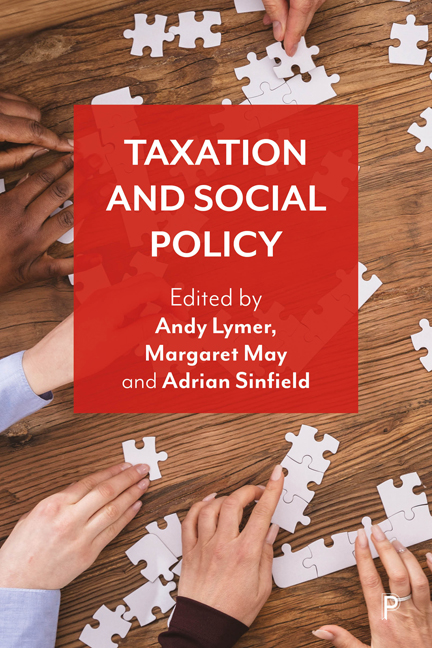
This book explores tax and social policy and how they interact with each other. It covers key interactions, debates and challenges of tax and social policy and examines how analyses might be combined and policy options developed for effective delivery in both areas.
Forced to embrace a post-carbon future, or risk serious damage to the planet, we have begun a race for alternatives to the scarce resources that previous generations relied on. In this book, Jonathan Moses and Anne Brigham consider how best we might negotiate the world's scarce pool of natural resources, and avoid the pitfalls of the past.
In order to shift the world's consumption from one set of scarce natural resources to another, they show the need for management regimes that are both politically, as well as environmentally, sustainable. They propose an alternative way to think about resource management for the future, one based on the collective ownership of (stewardship over) nature, and one where the rents resulting from this ownership, like the resources that produce them, belong to the people. Using case studies from particular markets, they demonstrate how such a management model might work to protect our common heritage and allow communities to secure the benefits we can and should expect from scarce resources - our natural dividend.
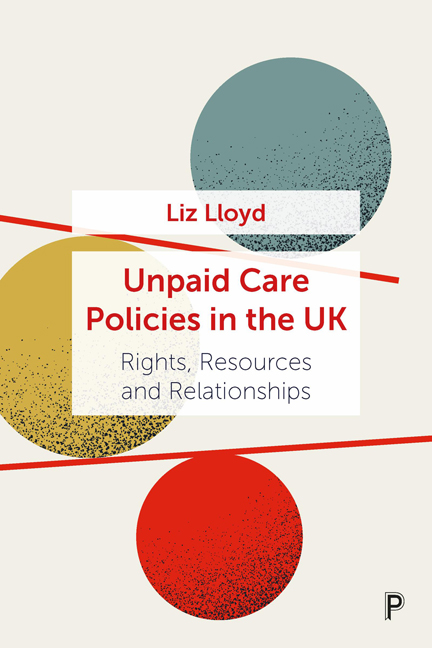
This book examines policies on unpaid care in the UK since the 1990 NHS and Community Care Act, questioning why, after decades of policies and strategies, unpaid care remains in a marginal position in the social care system and in society more broadly, as demonstrated during the COVID-19 pandemic.
Well-designed industrial policies can improve a nation's economic performance. Using a range of tools, such as subsidies, tax incentives, infrastructure development, protective regulations, and R&D support, governments are able to support specific industries or economic activities.
Steve Coulter examines the patterns of industrial policymaking across late capitalist societies. Drawing on case studies from a range of countries, each with different growth models, national capabilities, policy traditions, and political/welfare state regimes, he is able to offer a nuanced comparative assessment of states' responses to specific economic challenges. The book draws broad conclusions about the trajectories of industrial policy and highlights key technical and political drivers that policymakers consider when addressing whether best practice should centre on general or nationally-specific approaches. The book also focuses on fresh challenges and opportunities for industrial policy and questions the sustainability of current policy practice.
This book analyses fresh empirical evidence which demonstrates the gendered impacts of the new conditionality regime within Universal Credit. Drawing on in-depth interviews with mothers, it offers a compelling narrative and policy recommendations to make the social citizenship framework in the UK more inclusive of women.
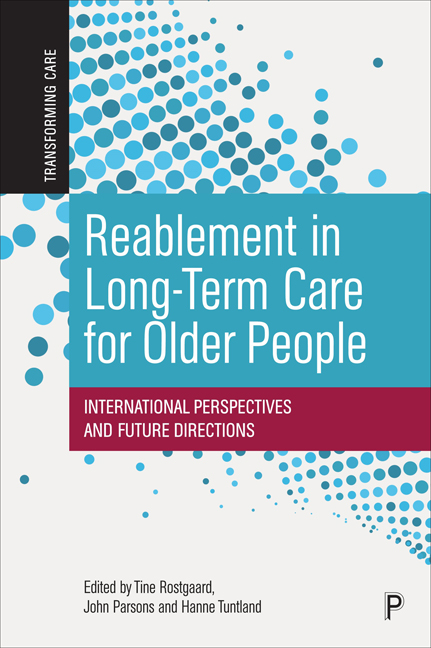
This book introduces reablement, a radical new integrated care approach which seeks to empower older people to regain and maintain functioning and independence.
Agri-food systems in the Global North are experiencing a wave of technological innovation in food production and ways of eating. This book is the first to analyse technological and socio-economic change in leading food sectors and it concludes that despite innovation, the food industry is adapting too slowly to the challenges of climate change.
This paper analyzes the use of unconventional policy instruments in New Keynesian setups in which the “divine coincidence” breaks down. The paper discusses the role of a second instrument that, in addition to the effect of conventional interest rate policy, may enter the Phillips curve, the investment–saving (IS) curve, and the welfare function, thus influencing inflation and output. The paper presents theoretical results on equilibrium determinacy, the inflation bias, the stabilization bias, and the optimal central banker’s preferences when both instruments are available. We show that the use of an unconventional instrument reduces the zone of equilibrium indeterminacy and may reduce the volatility of the economy. However, in some circumstances, committing to not use the second instrument may be welfare-improving (a result akin to Rogoff (Journal of International Economics 18(3-4), 199–217, 1985) example of counterproductive coordination). We also show that the optimal central banker should be both aggressive against inflation and interventionist in using the unconventional policy instrument, and we analyze the optimal central banker’s preferences when social preferences would yield equilibrium indeterminacy.
The book uses the two key findings of the extant literature-the need to empower urban local governments and to employ a variety of local revenue sources-to advance the field of local government finance by studying an important fee-based revenue source - development charges. It begins by situating development charges in the larger ecosystem of local public finance and identifying factors to be considered while designing and implementing a development charge program. Next, it reviews the use of development charges globally, especially in Australia, South Africa, and the US. After that, through a comparative analysis of development charge programs in India and the US, and simulations, the book shows how development charges are inadequate for urban India's and the Global South's infrastructure needs. Finally, it suggests ways to levy development charges that are legally sound, transparent, equitable, and politically and administratively feasible while providing a robust revenue stream.
Using monthly data from 1978:M1 to 2019:M9, this paper provides empirical evidence concerning the role that monetary policy plays in the US housing market. We first show that shocks to short-run interest rates have significant impacts on house prices and that these effects are persistent. Our findings also provide evidence supporting the claim that too-low-for-too-long interest rates are responsible for the 2002–2006 US housing boom. We further investigate the different channels through which an easing monetary policy fuels the house price boom and find that faster sales and lower inventory levels in the housing market most amplify the policy effects. Lastly, we provide compelling evidence of the asymmetric effects of contractionary and expansionary monetary policies on house prices.
This paper analyses the effects of disease and war on the accumulation of human and physical capital. We employ an overlapping generation framework in which young adults, motivated by old-age provision and possibly altruism, make decisions about investments in schooling and capital. A poverty trap exists for a wide range of constant war losses and premature adult mortality. If parents are altruistic and the sub-utility function for own consumption is more concave than that for their evaluation of their children’s full income in adulthood, the only possible steady-state growth path involves full education. Otherwise, steady-state paths with incompletely educated children may exist. When mortality and destruction rates are stochastic, the initial boundary conditions and agents’ beliefs have a strong influence on the paths generated by a sequence of shocks. Calibrating the model to Kenya, simulations for stochastic settings yield the finding that a trap exists and is always avoided, but the chances of a slow recovery are substantial.
What is the nonprofit sector and why does it exist? Collecting the writing of some of the most creative minds in the field of nonprofit studies, this book challenges our traditional understanding of the role and purpose of the nonprofit sector. It reflects on the ways in which new cultural and economic shifts bring existing assumptions into question and offers new conceptualizations of the nonprofit sector that will inform, provoke, and inspire. Nonprofit organization and activity is an enormously important part of social, cultural, and economic life around the world, but our conceptualization of their place in modern society is far from complete. Reimagining Nonprofits provides fresh insights that are necessary for understanding nonprofit organizations and sectors in the 21st century.
Factors outside of healthcare services determine our health and this involves many different sectors. Health for All Policies changes the argument about inter-sectoral action, from one focusing on health and the health sector to one based on co-benefits – a 'Health for All Policies' approach. It uses the Sustainable Development Goals as the framework for identifying goals across sectors and summarizes evidence along two causal axes. One is the impact of improved health status on other SDGs, e.g. better educational and employment results. The other is the impact of health systems and policies on other sectors. The 'Health for All Policies' approach advocated in this book is thus a call to improve health to achieve goals beyond health and for the health sector itself to do better in understanding and directing its impact on the world beyond the healthcare it provides. This title is also available as Open Access on Cambridge Core.
Archaeologists, anthropologists, and evolutionary biologists study the origins of our relationship with dogs and how it has evolved over time. Sociologists and legal scholars study the roles of dogs in the modern family. Veterinarian researchers address the relationship in the context of professional practice, yet economists have produced scant scholarship on the relationship between humans and dogs. Dog Economics applies economic concepts to relationships between people and dogs to inform our understanding of their domestication. It interprets their contemporary role as both property and family members and explores factors that affect the demand for dogs as well as market failures of the American puppy market. Offering economic perspectives on our varied relationships with dogs, this book assesses mortality risks and addresses end-of-life issues that commonly arise. It develops a framework for classifying canine occupations, considers the impact of pet insurance on euthanasia, and assesses the social value of guide dogs.
A key focus of the discipline of Social Policy is the economic and social inequalities that people face. A report by the House of Commons, Women's Equality Committee (2019: 3) found that Gypsy Roma Travellers (GRT) experience ‘the worst outcomes of any ethnic group across a huge range of areas, including education, health, employment, criminal justice and hate crime’. The report concluded that successive governments had comprehensively failed GRT communities. This chapter provides a comprehensive overview of the inequalities experienced by this community – from difficulties accessing their preferred mode of housing to employment and health disparities, as well as their experience of the COVID-19 pandemic. It will also discuss the Police, Crime, Sentencing and Courts Act 2022 – a dense piece of legislation with worrying consequences for Gypsy Travellers. The chapter then focuses on welfare, as in wellness – two concepts that focus on one's standard of living in material ways. The next section highlights the hate crime, racism and discrimination faced by this community. The chapter ends with two broad recommendations for tackling the inequalities faced by GRT.
Definition
The number of GRT willing to disclose their ethnicity in the decennial UK census has risen by 111,069; from 57,680 in 2011 to 168,749 in 2021 (Traveller Movement, 2022). However, the UK government estimates that the true size of the UK's Gypsy Traveller population may be as high as 300,000 (HM Government, 2022a), and independent research from the University of Salford estimates it may be over 500,000 (Brown et al, 2014). GRT is a collective term that encompasses a range of groups with different histories, cultures and beliefs that include: Romany Gypsies, Welsh Kale Gypsies, Scottish Gypsy Travellers and Irish Travellers. There are also Traveller groups which are generally regarded as ‘cultural’ rather than ‘ethnic’ Travellers. These include ‘New’ (Age) Travellers and occupational travellers, such as showmen and waterway travellers (Cromarty, 2019). No umbrella term can satisfactorily describe the complexities of GRT, as their multiple identities reflect diverse aspects of geography, age, gender and religious belief. These groups do, however, have two characteristics in common: one is a cultural tradition of nomadism, even if they no longer travel; the other is experiences of stigma, discrimination and social exclusion (McFadden et al, 2018: 76).