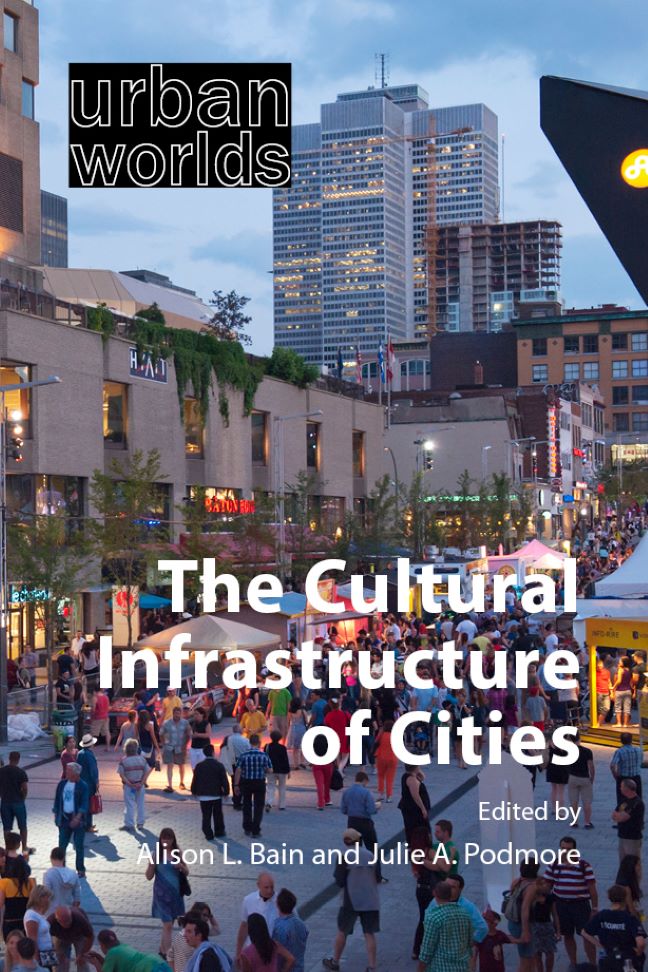

Cities are synonymous with the production and consumption of culture. It is their material and human cultural infrastructure that also makes them archives and works of art. The Cultural Infrastructure of Cities critically re-examines the relationship between the urban and its cultures. It expands our understanding of the concept of urban cultural infrastructure and highlights the foundational role of culture to the materiality and sociality of urban life and the governance of cities.
The book begins with a theoretical overview of the cultural and infrastructural turns in urban studies scholarship. It then explores definitions of cultural infrastructure and its 'hard' and 'soft' dimensions before critically considering the vulnerabilities generated in the cultural sector by the Covid-19 pandemic. Chapters are organised in four thematic sections focusing on aspects of producing, performing, consuming and collecting culture, which feature detailed case studies from 17 cities across the global North and South.
This book will be of interest not only to students and scholars of urban studies, but also to policy-makers planning and creating cultural infrastructures as well as those working in cultural institutions and creative industries.
Loading metrics...
* Views captured on Cambridge Core between #date#. This data will be updated every 24 hours.
Usage data cannot currently be displayed.
This section outlines the accessibility features of this content - including support for screen readers, full keyboard navigation and high-contrast display options. This may not be relevant for you.
Accessibility compliance for the PDF of this book is currently unknown and may be updated in the future.
