Refine search
Actions for selected content:
11366 results in Ancient philosophy
Chapter 10 - Reincarnation and Karma
- from Part C - Unified Self, Monism and Cosmic Cycle in India
-
- Book:
- The Origins of Philosophy in Ancient Greece and Ancient India
- Published online:
- 14 November 2019
- Print publication:
- 05 December 2019, pp 193-216
-
- Chapter
- Export citation
Chapter 1 - Summary
- from Part A - Introductory
-
- Book:
- The Origins of Philosophy in Ancient Greece and Ancient India
- Published online:
- 14 November 2019
- Print publication:
- 05 December 2019, pp 3-6
-
- Chapter
- Export citation
Chapter 4 - Self, Society and Universe in the Earliest Texts
- from Part B - The Earliest Texts
-
- Book:
- The Origins of Philosophy in Ancient Greece and Ancient India
- Published online:
- 14 November 2019
- Print publication:
- 05 December 2019, pp 49-70
-
- Chapter
- Export citation
Part A - Introductory
-
- Book:
- The Origins of Philosophy in Ancient Greece and Ancient India
- Published online:
- 14 November 2019
- Print publication:
- 05 December 2019, pp 1-38
-
- Chapter
- Export citation
Part D - Unified Self, Monism and Cosmic Cycle in Greece
-
- Book:
- The Origins of Philosophy in Ancient Greece and Ancient India
- Published online:
- 14 November 2019
- Print publication:
- 05 December 2019, pp 217-314
-
- Chapter
- Export citation
Chapter 14 - Community and Individual
- from Part D - Unified Self, Monism and Cosmic Cycle in Greece
-
- Book:
- The Origins of Philosophy in Ancient Greece and Ancient India
- Published online:
- 14 November 2019
- Print publication:
- 05 December 2019, pp 271-293
-
- Chapter
- Export citation
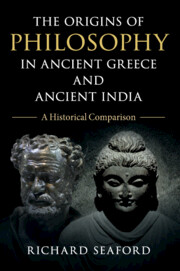
The Origins of Philosophy in Ancient Greece and Ancient India
- A Historical Comparison
-
- Published online:
- 14 November 2019
- Print publication:
- 05 December 2019
Aristotle on Matter, Form, and Moving Causes
- The Hylomorphic Theory of Substantial Generation
-
- Published online:
- 14 November 2019
- Print publication:
- 05 December 2019
Aristoxenus of Tarentum: The Pythagorean Precepts (How to Live a Pythagorean Life)
- An Edition of and Commentary on the Fragments with an Introduction
-
- Published online:
- 31 October 2019
- Print publication:
- 31 October 2019
7 - The Influence of the Pythagorean Precepts on the Later Pythagorean Tradition
- from Part I - Introduction
-
- Book:
- Aristoxenus of Tarentum: <I>The Pythagorean Precepts (How to Live a Pythagorean Life)</I>
- Published online:
- 31 October 2019
- Print publication:
- 31 October 2019, pp 52-73
-
- Chapter
- Export citation
5 - A Comparison of Stobaeus’ and Iamblichus’ Evidence for the Pythagorean Precepts
- from Part I - Introduction
-
- Book:
- Aristoxenus of Tarentum: <I>The Pythagorean Precepts (How to Live a Pythagorean Life)</I>
- Published online:
- 31 October 2019
- Print publication:
- 31 October 2019, pp 16-38
-
- Chapter
- Export citation
11 - The Pythagorean Precepts: A Reconstructed Text in English
- from Part II - Fragments with Translation and Commentary
-
- Book:
- Aristoxenus of Tarentum: <I>The Pythagorean Precepts (How to Live a Pythagorean Life)</I>
- Published online:
- 31 October 2019
- Print publication:
- 31 October 2019, pp 151-163
-
- Chapter
- Export citation
Part II - Fragments with Translation and Commentary
-
- Book:
- Aristoxenus of Tarentum: <I>The Pythagorean Precepts (How to Live a Pythagorean Life)</I>
- Published online:
- 31 October 2019
- Print publication:
- 31 October 2019, pp 149-558
-
- Chapter
- Export citation
2 - The Title and Nature of the Work
- from Part I - Introduction
-
- Book:
- Aristoxenus of Tarentum: <I>The Pythagorean Precepts (How to Live a Pythagorean Life)</I>
- Published online:
- 31 October 2019
- Print publication:
- 31 October 2019, pp 5-7
-
- Chapter
- Export citation
8 - History of Scholarship on the Pythagorean Precepts
- from Part I - Introduction
-
- Book:
- Aristoxenus of Tarentum: <I>The Pythagorean Precepts (How to Live a Pythagorean Life)</I>
- Published online:
- 31 October 2019
- Print publication:
- 31 October 2019, pp 74-81
-
- Chapter
- Export citation
6 - The Relationship of the Pythagorean Precepts to Aristoxenus’ Other Works on the Pythagoreans
- from Part I - Introduction
-
- Book:
- Aristoxenus of Tarentum: <I>The Pythagorean Precepts (How to Live a Pythagorean Life)</I>
- Published online:
- 31 October 2019
- Print publication:
- 31 October 2019, pp 39-51
-
- Chapter
- Export citation
4 - Fragments of the Pythagorean Precepts Preserved in Iamblichus’ On the Pythagorean Way of Life
- from Part I - Introduction
-
- Book:
- Aristoxenus of Tarentum: <I>The Pythagorean Precepts (How to Live a Pythagorean Life)</I>
- Published online:
- 31 October 2019
- Print publication:
- 31 October 2019, pp 14-15
-
- Chapter
- Export citation
Appendix 1 - Subsidiary Precepts 1: Avoid Crowds in the Morning, and 2: Avoid Hunting (S1 and S2)
- from Appendices
-
- Book:
- Aristoxenus of Tarentum: <I>The Pythagorean Precepts (How to Live a Pythagorean Life)</I>
- Published online:
- 31 October 2019
- Print publication:
- 31 October 2019, pp 561-577
-
- Chapter
- Export citation
1 - Evidence for the Work: the Excerpts Preserved in Stobaeus
- from Part I - Introduction
-
- Book:
- Aristoxenus of Tarentum: <I>The Pythagorean Precepts (How to Live a Pythagorean Life)</I>
- Published online:
- 31 October 2019
- Print publication:
- 31 October 2019, pp 3-4
-
- Chapter
- Export citation
17 - Fragment 6: Learning Must be Willing (36 W)
- from Part II - Fragments with Translation and Commentary
-
- Book:
- Aristoxenus of Tarentum: <I>The Pythagorean Precepts (How to Live a Pythagorean Life)</I>
- Published online:
- 31 October 2019
- Print publication:
- 31 October 2019, pp 233-237
-
- Chapter
- Export citation
