To save content items to your account,
please confirm that you agree to abide by our usage policies.
If this is the first time you use this feature, you will be asked to authorise Cambridge Core to connect with your account.
Find out more about saving content to .
To save content items to your Kindle, first ensure no-reply@cambridge.org
is added to your Approved Personal Document E-mail List under your Personal Document Settings
on the Manage Your Content and Devices page of your Amazon account. Then enter the ‘name’ part
of your Kindle email address below.
Find out more about saving to your Kindle.
Note you can select to save to either the @free.kindle.com or @kindle.com variations.
‘@free.kindle.com’ emails are free but can only be saved to your device when it is connected to wi-fi.
‘@kindle.com’ emails can be delivered even when you are not connected to wi-fi, but note that service fees apply.
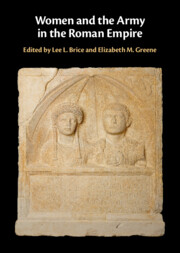
The presence of women in Roman military contexts has been established beyond doubt by scholars in recent decades. Nevertheless, very little sustained attention has been paid to who these women were, how they fit into the fabric of settlements, and what their contributions were to these communities. This volume offers new insights into the associations, activities, and social roles of women in the context of the Roman army, emphasizing the tangible evidence for the lived realities of women and families at different social levels. The various chapters adopt dynamic perspectives and shed new light on archaeological and historical evidence to provide novel conclusions about women's lives in antiquity. Histories of the Roman army can no longer ignore the women who lived and worked in its midst and histories of Roman women must acknowledge their important military role.
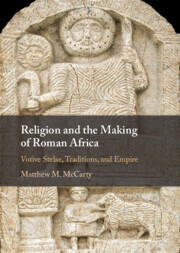
This book fundamentally rewrites the cultural and religious history of North Africa under the Roman Empire, focalized through rituals related to child sacrifice and the carved-stone monuments associated with such offerings. Earlier colonial archaeologies have stressed the failure of the empire to 'Romanize' Indigenous and Punic settler populations, mobilizing inscriptions and sculpture to mirror and explain modern European colonial failures as the result of ethnic African permanence. Instead, this book uses postcolonial theory, pragmatic semiotics, material epistemologies, and relational ontologies to develop a new account of how Roman hegemony transformed and was reproduced through signifying practices in even a seemingly traditional, 'un-Roman' rite such as child sacrifice. In doing so, the book offers a model for understanding the Roman Empire, the peoples who lived across its provinces, and their material worlds.
This chapter traces the origin of the Romanization framework: that is, how the discourse on Romanization sprang up and has taken root in early twentieth century scholarship. Professionalization of the discipline mixed with the deep-rooted gentlemanly tradition stirred new dynamics. Views on Roman imperialism ranged from those of British imperial civil servants to those of American professional academics; approaches varied from the old gentlemanly tradition of exemplary history to new professional academics’ critical history; and evaluations diverged from admiration to disapproval. Despite wide-ranging differences, none escaped from their own social, economic, and political surroundings shaped by European and American imperialism. The comparisons between the ancient Roman Empire and the contemporary British, French, and American empires, either overtly or covertly, underpinned the works of the time.
Where do we go from here? In practical terms with regard to the history of Roman Empire, how can we rewrite it? How do we use postcolonial thought to rewrite the narrative of Roman imperialism and to reframe Romanization? And what value does it hold? Does it matter to the contemporary audience? Can it make intellectual and moral interventions, and if so, what kinds of intervention? To make historical interventions on Romanization, to write a projective past of Roman imperialism, and to narrate repressed histories of the colonized and migrants can interrupt the present and negotiate a different future. Historical intervention on Roman imperialism, I believe, can revise the current sense of ownership of classical antiquity and can provide a better and wider structural lens on how on how to link the ancient past with the present.
Does postcolonial studies present a theoretical framework appropriate to Romanization studies? Does Romanization studies have evidence appropriate for postcolonial theories? Even though postcolonial theories did not stem from ancient Roman imperialism per se, they provide a heuristical tool to destabilize the discourse that has sustained imperial systems through history. They help Roman historians and archaeologists to reach a deeper understanding of the dynamic process of imperial discourses and to deconstruct the imperial discourses built through the complex layers of histories. This chapter does not deliver an exhaustive analysis or a landscape overview of postcolonial studies according to a certain order of significance or thematic categorization as is the common practice in the discipline, for example, along the triad of Said-Bhabha-Spivak or along the axis of theoretical and materialist approaches. Instead, here I explore postcolonial ideas which have influenced and reoriented Romanization studies.
The discourse on Romanization took a turn. Influential thoughts from Marxism, the Annales school, and the cliometrics revolution to poststructuralism and postcolonialism travelled and infiltrated Romanization studies. This not only helped to enrich the discourse, but it allowed the posing of meaningful questions. Applying contemporary studies on social structures, economic forces, and cultural politics, historians and archaeologists were able to gradually raise questions concerning the traditional models of parallel discourse, defensive imperialism, and civilizing Romanization. This chapter discusses key works of the Early Adopters, from Dyson, Finley, and Harris to Millett and Woolf to trace the course of postcolonial ideas that travelled to the Romanization discourse. It illustrates how the postwar generation of historians and archaeologists has enriched the Romanization discourse with social, economic, and cultural histories and started to question the imperialist epistemology upon which the discourse on Romanization was built.
The framework of ‘Romanization’ developed by Haverfield in 1905 - that Romans ‘civilized’ their imperial subjects, particularly those in ‘barbarian’ western provinces - remains hegemonic, notwithstanding multiple revisionist attempts. It has been reasserted, rejected, or modified, but still frames the debate. Yet, the postcolonial project to decolonize the production of historical knowledge has prompted some scholars to seek fresh approaches and to rewrite the history of Roman imperialism. This book asks: what is the value of postcolonialism in the discourse on Romanization? How has it influenced the discourse on Romanization thus far? Can postcolonialism move the discourse on Romanization forward? Borrowing Said’s concept of travelling ideas, this book undertakes a comparative study between the point of departure and the point(s) of arrival of travelling ideas of postcolonialism to understand their path and impact in the discourse on Roman imperialism and Romanization.
In the multi-ethnic and multi-cultural fabric of major cities in the post-colonial world, postcolonialism presented fresh possibilities for new history. It allowed Roman historians and archaeologists to reflect upon and break through the imperialist historiography of Roman history and to reach out to the intellectual discourse of the postcolonial age. Three prominent scholars who reoriented Romanization studies in the twenty-first century, Webster, Hingley, and Mattingly, turned their attention to the lower strata of the colonial power structure, the colonized and silent Other outside the hegemonic system of power and knowledge/truth – that is, the subaltern – and presented their alternative paradigms in postcolonialist vocabulary: creolization, globalization, and discrepant experiences, respectively. Pushing epistemological boundaries to the subaltern Other in the Roman Empire, they exposed Romano-centric and Eurocentric epistemologies underlying the paradigm of Romanization itself.
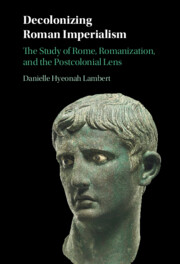
The framework of 'Romanization' developed by Haverfield in 1905 - that Romans 'civilized' their imperial subjects, particularly those in the 'barbarian' western provinces - remains hegemonic, notwithstanding multiple attempts at revisionism. It has been reasserted, rejected, or modified, but still frames the debate. Decolonizing Roman Imperialism investigates how the postcolonial challenge to decolonize the production of historical knowledge has motivated Roman scholars to question the paradigm of Romanization: to review its historiography, to seek fresh approaches, and to rewrite it. The book provides an intellectual genealogy of the debate valuable for every student of the Roman Empire and of Roman Britain, and invites them to rethink the legacy of ancient Roman imperialism.
Neither Hannibal nor Scipio participated at the Metaurus (207), but it was the war’s turning point: Ennius thought Juno was now at last reconciled with Rome, and Livy presented Rome’s victory over Hannibal’s brother Hasdrubal as revenge for Cannae. Things looked bad for Rome after both consuls of 208, Marcellus and Crispinus, died in battle. Roman success was made possible by another reconciliation, between two old enemies the consuls Salinator and Nero. Nero’s forced march up Italy was enthusiastically greeted and fed en route. He returned south and threw Hasdrubal’s head before Hannibal’s camp. Appendix 8.1 concludes that Salinator was not a senior decemuir (priest) in 236. Appendix 8.2 discusses Roman battle vows and asks why Livy omitted Salinator’s Metaurus vow in his battle narrative. Appendix 8.3 examines the unusual joint triumph of Salinator and Nero. Appendix 8.4 shows another name (Sena) for Metaurus was current before Horace immortalized it.
Military comparison between Hannibal and Scipio began early, with their conversation at Ephesus, 193. First rule of generalship was: stay alive as ‘battle manager’; this had to be balanced by felt need for heroic leadership. Both learned warlike skills from relatives (Scipio grew up with three consular uncles and a consular father), but the biggest lesson was to avoid these men’s premature battle deaths. Army reforms are reviewed; Scipio’s are better attested. In logistics, both faced similar problems, but Hannibal’s isolation meant his challenges were greater. For weaponry, Hannibal had to improvise and recycle. Hannibal’s tactics were superior to Roman at the outset, but Scipio learned from his enemy. Both practised ‘Punic’ deception. Neither shone at siege or naval warfare. Hannibal’s struggle for Italian hearts and minds conflicted with his need to extract supplies. On man management, Scipio’s handling of Pleminius was a blemish. Unlike Scipio, Hannibal never faced a mutiny.