To save content items to your account,
please confirm that you agree to abide by our usage policies.
If this is the first time you use this feature, you will be asked to authorise Cambridge Core to connect with your account.
Find out more about saving content to .
To save content items to your Kindle, first ensure no-reply@cambridge.org
is added to your Approved Personal Document E-mail List under your Personal Document Settings
on the Manage Your Content and Devices page of your Amazon account. Then enter the ‘name’ part
of your Kindle email address below.
Find out more about saving to your Kindle.
Note you can select to save to either the @free.kindle.com or @kindle.com variations.
‘@free.kindle.com’ emails are free but can only be saved to your device when it is connected to wi-fi.
‘@kindle.com’ emails can be delivered even when you are not connected to wi-fi, but note that service fees apply.
Ancient communications were slow and precarious, so overseas commanders enjoyed/suffered from partial absence of control by home authorities. Isolation should not be overdone. Literary sources mention official letters home only when remarkable for some reason. Requests to the senate for supplies from Rome were made routinely. Equally, some messages and orders arrived from Carthage. ‘Peripheral imperialism’, far-reaching decisions by men on the spot, are a feature of Roman operations in Iberia. Publius Scipio (father)’s decision to fight the war there is a good example. Other examples are reviewed. Hannibal’s treaty with Philip was co-signed by Carthaginian advisers. Appointment of good subordinates is an important indicator of the quality of a commander’s personal initiatives. Italian Locri is taken as a case study because Hannibal and Scipio both made decisions affecting it. Hannibal’s appointee Hamilcar was guilty of long-term arrogance but was perhaps not as bad as Scipio’s scandalous lieutenant Quintus Pleminius.
The Hannibal of this book is Hannibal surnamed Barca. Scipio is Publius Cornelius Scipio Africanus. The final extra name (‘the African’) was given to him in recognition of his victory over Hannibal in north Africa. The Prologue explains that the model for this joint biograohy of Hannibal and Scipio is not so much Plutarch’s series of parallel Greek and Roman lives, as Alan Bullock’s Hitler and Stalin: Parallel Lives. Ancient, Renaissance, and modern explorations of the parallels between the two men are discussed, and a separate section sketches the career and approach of Bullock as a classically trained modern historian and biographer. Another section sets out programmatically the view of Roman and Carthaginian imperialism to be adopted in the book. The limitations of the evidence available to biographers of individuals from the ancient world are candidly acknowledged, and the use of the ‘past presumptive’ tense (so-and so- ‘will have’ done, known, or thought this or that) is renounced.
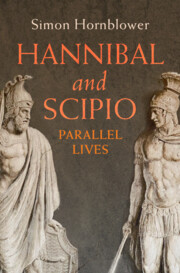
The Second Punic War between Carthage and Rome began in 218 BCE and ended in 202 with the dramatic defeat at the Battle of Zama of Carthage's commander Hannibal by his adversary, the Roman Scipio. The two men were born about a decade apart but died in the same year, 183, following brilliant but ultimately unhappy careers. In this absorbing joint biography, celebrated historian Simon Hornblower reveals how the trajectory of each general illuminates his counterpart. Their individual journeys help us comprehend the momentous historical period which they shared, and which in distinct but interconnected ways they helped to shape. Hornblower interweaves his central military and political narrative with lively treatments of high politics, religious motivations and manipulations, overseas commands, hellenisation, and his subjects' ancient and modern reception. This gripping portrait of a momentous rivalry will delight readers of biography and military history and scholars and students of antiquity alike.
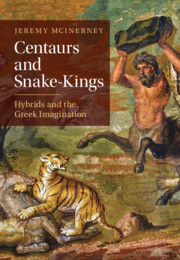
Griffins, centaurs and gorgons: the Greek imagination teems with wondrous, yet often monstrous, hybrids. Jeremy McInerney discusses how these composite creatures arise from the entanglement of humans and animals. Overlaying such enmeshment is the rich cultural exchange experienced by Greeks across the Mediterranean. Hybrids, the author reveals, capture the anxiety of cross-cultural encounter, where similarity and incongruity were conjoined. Hybridity likewise expresses instability of identity. The ancient sea, that most changeable ancient domain, was viewed as home to monsters like Skylla; while on land the centaur might be hypersexual yet also hypercivilized, like Cheiron. Medusa may be destructive, yet also alluring. Wherever conventional values or behaviours are challenged, there the hybrid gives that threat a face. This absorbing work unveils a mercurial world of shifting categories that offer an alternative to conventional certainties. Transforming disorder into images of wonder, Greek hybrids – McInerney suggests – finally suggest other ways of being human.
Horse hybrids reveal a wide range of meanings. Since riding requires control of an animal much more powerful than the rider, it was a psychologically charged experience that found expression in hybrid figures of riders fused to their horses. Pegasos, the horse with wings, is the hero Bellerophon’s companion and makes it possible for him to slay another hybrid, Chimaira. The best-known horse hybrid is the centaur, but centaurs come in different varieties. Some are human to their toes, with a horse’s rear end jutting out of the middle of the creature’s human back. Others exhibit a human head and torso rising from the horse’s withers. Since the centaur is frequently used as a symbol of unrestrained lust, the change in form forces the viewer to consider uncomfortable questions regarding sexuality and animality. Yet centaurs are more than the embodiment of rampant sex drives, since the opposite of licentious behaviour is embodied by another centaur: Cheiron, the tutor of heroes. The centaur expresses the kaleidoscopic nature of being and identity in the Archaic Greek world.
Human/snake hybrids played a significant role in the Athenian imagination: the snake’s connections with the earth expressed the Athenian claim to autochthony. This claim was complicated. For some aristocratic gene, autochthony marked them as superior to more recent arrivals, but the foundational myth of Athens, involving Hephaistos’ attempted rape of Athena, was tinged with incest and pollution, indicating some ambivalence towards autochthony. Traditions of snake-bodied kings reflected a conception of the past that was conceptually both near and far from the present. The hybridity of the snake-figured ancestor connected them to a deep past but also bridged the gap that separated the present and connected past from the plupast. This was a particular concern in the sixth century, as new notions of Athenian identity were taking shape. Bluebeard, the famous pedimental sculpture from the Archaic Akropolis, embodies this. Bluebeard can be identified as the Tritopatores, ancestral deities of the Athenians. These hybrids signify the continuous irruption of the deep past into the current world, a condition that produced a creative tension between order and chaos.
This chapter provides a discussion of the anxieties within (conventionally cisgendered) communities faced with the complex realities of transgender identities, sexual binarism and dysphoria. Ancient discourse tended to reduce this to a simple binary according to which conventional constructions of cisgendered bodies contrasted with a single representation of anomaly: the hermaphrodite. The story of Hermaphroditos, however, reveals that sexual hybridity and ethnic categorization (Karians and Greeks) operated in tandem and recursively: one group’s culture hero (as founder of marriage) become another’s intersex monstrosity. Hermaphroditos is only one example of a body undergoing sexual transformation, and other figures, such as Teiresias, Kaineus and even cross-dressing Achilles, illustrate that there existed a space for imagining alternatives to conventional categories. But an imaginative space is not a manifesto, and sexual anomaly (as it appears in ancient thinking) illustrates a trajectory of Greek culture: hybrids and anomalous bodies become partly decorative and, in literary works, interesting paradoxes, while their power to shock was largely relegated to the sphere of magic.
Chapter 5 begins with griffins and gorgons, exploring the connections between wondrous objects and hybrids. Gorgons also prompt a discussion of gender and hybridity. This chapter juxtaposes the gorgon and other female demons who threaten mothers and children with the satyr, an exaggerated figure of the man identified by and with his penis. These matched exaggerations, by turns horrific and comic, illustrate the function of the hybrid as a projection of certain human anxieties: what if the man were no more than his erection? What if the woman were as dangerous as she is beautiful? What if a mother devoured her children instead of protecting them? Each caricature exists as a counterpoint to the ordinary men and women encountered in our daily lives, but in recognizing these alternatives the Greeks are also using the contrafactual to ask what exactly it means to be human. For this reason, transformation is a recurring theme in early Greek culture, with a wide range of applications from the stage to ritual initiation. Here too the cosmos is a space of entanglement. If a human shares some characteristic with an animal, does the divine also partake of this mutability?
Hybrids were integral to the classificatory schemes that organized knowledge in the wake of Alexander’s conquests. Texts produced by Hanno, Ktesias and Megasthenes reveal the slippage whereby ethnographic description created hierarchies of territories and cultures exemplified by hybrid animals and exotic humans. In literary texts India played an especially significant role. It was a mirror image of the Mediterranean, yet far enough away to also generate anomalous wonders on its borders. It was not merely the exotic animals of distant lands, such as camels, leopards, and giraffes, that astonished the Greek subjects of Hellenistic kings, but also the descriptions of anomalous humans, such as Blemmyes, Dog-Heads and Skiapods, that confirmed an orderly Mediterranean world of properly recognizable humanity, the edges of which were populated by the monstrous, the ugly and the deformed. Ethnography and paradoxography were therefore highly conservative genres that provided hierarchies structured on normality and anomaly to reinforce order.
The sphinx is a good test case illustrating the complexities of studying Greek hybrids. The pronounced sexuality of modern sphinxes (notably those of Moreau and Ingres) sets them apart from Greek examples, which themselves are very different from the sphinxes of Egypt and the Ancient Near East. Common to all is the blurring of human/animal boundaries, a phenomenon going back to the Palaeolithic. Modern comparisons from New Guinea and Africa confirm that there is an animal dimension at the heart of being human. Hybrids, born of this mixing, are polymorphous, polysemic and polyvalent. Around the hybrid there lurks a host of questions: what bits have been mixed, how exactly are the parts combined, and is the mixture taxonomically fitting or anomalous? Each of these questions shapes our response to a hybrid, affirming the power of hybridity to challenge (or affirm) categories and taxonomies. And since taxonomies are the proof of our comprehending the world by classifying phenomena, hybridity represents a culture’s uneasiness with the limits of its epistemology. If such things exist, even if only in our stories and imagination, how certain is certainty?
This chapter addresses the need for clarity of definition and identifies the various fields in which hybridity operated in the Greek world. Recent work in monster theory emphasizes the role of monsters in policing the borders of what is normative. Monsters have repeatedly been interpreted as threats to the order created by classification. Hybrids are better understood not as threats to order, but as expressions of anomaly. As a mode of cultural production hybrids are a means of coping with that which defies neat classification. This may veer towards the monstrous, as in the case of the demonic female figure, the gorgon, but equally it can tend towards the curious and the wondrous, like Pegasos alighting at the Peirene Fountain in Corinth or the horses of Achilles grieving for the death of Patroklos. In trying to understand how and why the Greeks generated hybrids in their mythology it may seem that we are putting the Greeks on the psychiatrist’s couch, but Freud’s conception of the Uncanny sheds some light on how hybrids function. They represent the challenge of the anomalous.
The Greeks created a culture that seemed secure and well ordered, in which status, gender and identity appeared to be if not fixed, then at least clear cut. A free man knew his place and his privileges, a foreigner was aware of their disabilities, an enslaved woman had a fair idea of her lot, a worker in the mines of Laureion even more so. Yet, lived experience was precarious. The rich man could lose his fortune, the highborn girl could become shipwrecked and enslaved. These are not just the plot devices of Hellenistic novels; they are the potential experiences of men and women for whom vulnerability and impermanence were as real as wealth and good fortune. These conditions favoured expressions – stories and images in particular – that made change and anomaly part of the cultural repertoire of the Greeks. This is perhaps why the vivid, vibrant hybrids of the Greek imagination attracted so much attention from Christian writers. By imagining other ways of engaging with the world and offering alternatives to the settled convention, hybrids would always be a threat to those attempting to impose their order. Hybrids became demons to be slain.