To save content items to your account,
please confirm that you agree to abide by our usage policies.
If this is the first time you use this feature, you will be asked to authorise Cambridge Core to connect with your account.
Find out more about saving content to .
To save content items to your Kindle, first ensure no-reply@cambridge.org
is added to your Approved Personal Document E-mail List under your Personal Document Settings
on the Manage Your Content and Devices page of your Amazon account. Then enter the ‘name’ part
of your Kindle email address below.
Find out more about saving to your Kindle.
Note you can select to save to either the @free.kindle.com or @kindle.com variations.
‘@free.kindle.com’ emails are free but can only be saved to your device when it is connected to wi-fi.
‘@kindle.com’ emails can be delivered even when you are not connected to wi-fi, but note that service fees apply.
The mischievous quote making up this article's title comes from the Humayunnamah, a chronicle written around 1587 in Persian by Gulbadan Begum (1523–1603). Gulbadan was a Mughal princess of Timurid heritage and the daughter of the founder of the Mughal dynasty, Zahir al-Din Muhammad Babur (1483–1530).1 In the Humayunnamah, Gulbadan recounts the response Hamidah Begum (1542–1605) gives upon being chastised by her future mother-in-law, Dildar Begum:
“Look whether you like it or not, in the end, you are going to be married to somebody. Who could be better than the Emperor?”
“Yes, you are right. But I'd rather marry someone whose collar my hand can reach.”2
By applying narrative inquiry and cartographic reconfiguration of two significantly transformed neighborhoods, Qasr and Heshmatieh, in Tehran, in this study we analyze the practice of remembering within the context of memory politics. We aim to critically examine how residents of these neighborhoods, situated near major state security and military facilities, alter their recollections of the past. Inspired by de Certeau's concepts of strategy and tactics, the analysis seeks to identify the narrative tactics employed by interviewees to interpret the often imposed transformations of the area. Our findings underscore the process of “disremembering” as a hallmark of the transformation, perpetuated through constant “replacements.” Furthermore, they highlight four layers of transformation in the area, discussed within the framework of significant literature on Tehran's spatial transformation.
The reign of Tammarītu is one of the most enigmatic parts of Neo-Elamite history because documents have attested that two individuals with that name but two different titles, “king of Ḫidalu” and “king of Elam,” played significant roles in the historical events. The lack of dates in many documents complicates establishing a secure chronology and attributing events to Tammarītu, king of Ḫidalu, or Tammarītu II/Tammarītu, king of Elam. Scholars generally agree that the documents in which Tammarītu is called “king of Elam” cannot be attributed to Tammarītu, king of Ḫidalu. However, a comparison of Ashurbanipal's annals with other available documents does not support this viewpoint.
This article analyzes Turkish foreign policy during the Iranian oil crisis of 1951–1953 and argues that Turkey shaped its policy based on Cold War politics. While Turkey cared less for Iran’s nationalization of oil, it was more concerned about the political implications of the crisis. At the beginning of the crisis, Turkey was focused on guaranteeing its own NATO membership. After joining NATO in 1952, the country assumed a more active role in the crisis. As the coalition behind Premier Dr Mohammad Mosaddegh dissolved, Turkey became more concerned about both the internal situation in Iran and the broader Middle Eastern context following the July 21, 1952 events in Iran and the 1952 Egyptian coup. The strongest opposition to Mosaddegh came from Ayatollah Abul Qassim Kashani who was both an important religious figure and the speaker of the Majlis. Turkey was concerned about Kashani’s politics of a “third bloc” and supported Mosaddegh’s pro-American position. Keeping Mosaddegh in power was in line with Turkey’s general Middle Eastern policy which aimed at forming a Western-oriented regional defense organization. This article will analyze the shaping of Turkish foreign policy towards the Iranian oil crisis within the context of this regional rivalry.
Turkey’s Europeanization process provides a particularly interesting case study of the extra-jurisdictional impact of European Union (EU) law, both through policy convergence and through the so-called Brussels effect. Formally, Turkey must adopt certain EU rules due to its status as an EU candidate country, but its candidacy process has been lengthy and uncertain, resulting in partial and uneven adoption of EU rules. Nevertheless, EU-style policymaking has persisted in various policy areas, including environmental and climate policy. This paper aims to analyze the convergence of climate change policies between the EU and Turkey by employing multidimensional scaling, a method that enables the visualization and examination of the connectivity and intensity of cooperation between states. For the period from 2007 to 2023, our comparative analysis demonstrates that policy divergence occurs when the EU’s share of Turkey’s total trade decreases and when political challenges are experienced. On the other hand, periods of policy convergence coincide with periods of increased trade volume and expanded trade opportunities. The results suggest that through its market size and regulatory capacity, the EU exerts soft power which forces Turkey to align its climate policies with the EU to protect and maintain its competitiveness in the European marketplace.
This interdisciplinary study contributes to the understanding of the use of raw materials and pottery production techniques in Late Punic–Late Republican Malta, focusing on the Tas-Silġ sanctuary and the Żejtun Villa. Plates, bowls and cooking vessels were described typologically, and their fabrics were characterised using polarised light microscopy and Energy Dispersive X-Ray Fluorescence. The aims were to classify these vessels into integrated and coherent fabric groups based on all analyses, to better understand the local production of vessels and to assess a possible local provenance.
Four integrated fabric groups were identified and represent local productions using distinct raw materials or production techniques. These groups can be distinguished typologically, macroscopically, petrographically and chemically. Multivariate techniques, including the chemical analysis of Maltese clays, were produced to enhance the fabric classification and discuss their raw materials. The raw materials identified are consistent with what is known in Maltese geology. One group is distinctive, and the results suggest the possible use of a previously unidentified raw material, Terra Rossa, found over the Upper Coralline Limestone. This new classification provides the basis for further studies of Late Punic–Roman sites in the Maltese islands and the future identification of imports and exports from the Maltese islands.
Although Greek was the dominant epigraphic language in Cyrenaica throughout the Classical period, Latin was introduced by Roman merchants and administrators at the time of the formation of the province of Crete and Cyrene c. 67 BC, and remained in use, albeit by a constant minority, until at least the fourth century AD, with the last well-dated Latin inscription dating from the Valentinian dynasty. The aim of this article is to provide an overview of Latin inscriptions in the region, based on the IR Cyrenaica 2020 corpus, which brings together hitherto scattered documents and also includes many texts published for the first time. After a general overview of the corpus in terms of geographical, typological and chronological distribution, we will look at the linguistic landscape of ancient Cyrenaica, focusing on the multilingualism of the region, the literacy of the populations, the borrowings from one language to another (Latinisms), and the influences of the western provinces on the Latin of the region, among other topics. Lastly, a series of Latin funerary inscriptions allow us to examine the multiple identities claimed by the populations, as well as the cultural influences between Greek-, Latin- and Libyan-speaking populations.
This article brings to light a previously unedited short treatise, the Masʾalatān (Two Questions), attributed to Avicenna (d. 1037). While the earliest witness to the text is the Ayasofya 4853 manuscript, containing a substantial portion of Avicenna's Nachlass, some of which is integrated into the Mubāḥaṯāt and Taʿlīqāt, the Masʾalatān has remained a standalone work with limited circulation. Consequently, the primary concern revolves around the verification of its authenticity and its feasibility given the available data. This article presents a critical edition of the text alongside a parallel translation but it also serves as a case study on the possibilities of authorship verification. It also compiles information from codicology, nevertheless, it primarily focuses on the commentary that analyses and compares the arguments to Avicenna's unquestionably authentic solutions. The first question addresses whether every existent is spatially located, while the second explores the impossibility of an actual infinite body. The commentary endeavors to interpret the text against the cultural and theological background that may have inspired such inquiries, meanwhile also seeks to address its later influence. In addition to unveiling a hitherto unseen text to the scholarly community for further research, it also offers an insight into the limitations of authorship attribution.
Ibn Sīnā famously opens The Metaphysics (Al-ilāhiyyāt) of The Healing (Al-šifāʾ) with a discussion of what constitutes the subject matter of that science. Several candidates are introduced and subsequently dismissed, before “the existent qua existent” is identified as its subject matter. Among the candidates dismissed, he mentions “the ultimate causes for all existents, the four of them” (which are, however, things investigated [maṭālib] in this science). Here, Ibn Sīnā comes to problematise the notion of causality itself. He is adamant that “the existence of causes for things which are effects” is not self-evident, but needs to be proven by the metaphysician by means of a “demonstrative clarification” (bayān burhānī). He explains why sensation (ḥiss) and experience (taǧriba) cannot prove causality, before turning to its metaphysical proof. In this article, I investigate what Ibn Sīnā thought this “demonstrative clarification” of causality is. I present an analysis of his train of thought and a commentary on the various points he makes, leading up to his proof of causality. These points touch on problems of psychology, scientific method, and scientific proof, and can be unpacked by taking into account explanations he offers elsewhere.
Depuis son édition par Heiberg au XIXe s., on savait que le texte grec de La mesure du cercle d'Archimède qui nous est parvenu est fautif, altéré par l'intervention d'un compilateur. Pour certaines de ses parties au moins, il est donc d'une authenticité douteuse. Plus récemment, l'examen de la traduction latine (au IXe siècle) de la traduction arabe de ce texte a permis de conclure que le manuscrit grec traduit appartient à une tradition textuelle meilleure et plus ancienne que le texte édité par Heiberg. Dans cette étude, on trouve l'editio princeps de la traduction arabe de La mesure du cercle, sa première traduction et une analyse historique et mathématique. Les nombreuses lectures de cette traduction faites au cours des siècles ont inspiré plusieurs « rédactions ». Trois d'entre elles seront éditées, traduites et examinées dans une prochaine étude.
This paper aims to introduce and discuss al-Fārābī's (d. 950–1 CE) fallacy from transfer and substitution in his little-studied “On Deceptive Topoi” (Kitāb al-amkina al-muġalliṭa) and the criticism leveled at him by Averroes (d. 1198 CE) for violating Aristotle's claim of the exhaustiveness of his list of fallacies. The first and larger half of this paper introduces al-Fārābī's treatise and its innovations upon Aristotle's Sophistici elenchi. The second half focuses on Averroes’ criticism in his so-called middle commentary (talḫīṣ) on Aristotle's SE and discusses the validity of his arguments against al-Fārābī. As the final analysis will show, Averroes’ criticism does not sufficiently take into account the independence of al-Fārābī's treatise from Aristotle's SE, its disregard for the study of dialectical deception and counter-deception, and its particular focus on the demonstrative sciences. In light of al-Fārābī's innovation his “On Deceptive Topoi” turns out to be a work of great originality drawing on a broad range of source texts.
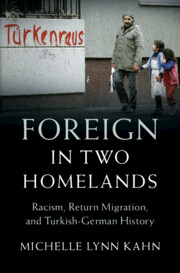
What happens when migrants are rejected by the host society that first invited them? How do they return to a homeland that considers them outsiders? Foreign in Two Homelands explores the transnational history of Turkish migrants, Germany's largest ethnic minority, who arrived as 'guest-workers' (Gastarbeiter) between 1961 and 1973. By the 1980s, amid rising racism, neo-Nazis and ordinary Germans blamed Turks for unemployment, criticized their Muslim faith, and argued they could never integrate. In 1983, policymakers enacted a controversial law: paying Turks to leave. Thus commenced one of modern Europe's largest and fastest waves of remigration: within one year, 15% of the migrants—250,000 men, women, and children—returned to Turkey. Their homeland, however, ostracized them as culturally estranged 'Germanized Turks' (Almancı). Through archival research and oral history interviews in both countries and languages, Michelle Lynn Kahn highlights migrants' personal stories and reveals how many felt foreign in two homelands. This title is also available as Open Access on Cambridge Core.