To save content items to your account,
please confirm that you agree to abide by our usage policies.
If this is the first time you use this feature, you will be asked to authorise Cambridge Core to connect with your account.
Find out more about saving content to .
To save content items to your Kindle, first ensure no-reply@cambridge.org
is added to your Approved Personal Document E-mail List under your Personal Document Settings
on the Manage Your Content and Devices page of your Amazon account. Then enter the ‘name’ part
of your Kindle email address below.
Find out more about saving to your Kindle.
Note you can select to save to either the @free.kindle.com or @kindle.com variations.
‘@free.kindle.com’ emails are free but can only be saved to your device when it is connected to wi-fi.
‘@kindle.com’ emails can be delivered even when you are not connected to wi-fi, but note that service fees apply.
This chapter explores how the Declaration of Independence was drafted and ratified. Congress created and assigned the task of drafting a declaration of independence to a committee of lawyers. When the draft went to the Congress, lawyers like Edward Rutledge had their chance to weigh in. The draft document and the final version was a legal document designed to place rebellion on a legal foundation. Jefferson later recalled that his draft of the Declaration of Independence merely recombined ideas that had long been discussed, and terminology long adopted, by Congress. The Declaration assumed independence, otherwise it would have had no foundation. Following this logic, as the members did, surely Jefferson among them, the Declaration was simply stating the reasons – a justification like the Declaratory Act of 1766, by which Parliament explained its authority over the colonies – for an event already transpired. The ringing elaboration of the rights of mankind, various borrowings from John Locke, echoes of natural law, and the language of prior resolves and declarations were not really pertinent to a declaration for the independence of a continent, but make sense in the more limited framework of Virginia constitutional change.
This chapter situates the Declaration of Independence in relation to another founding document of the United States, the federal Constitution. It assesses the Declaration’s role in debates over the Constitution, first during the latter’s framing in 1787, then in the struggle for ratification, and then later as political actors sought to interpret each document in light of the other. From the outset, debate over the Constitution highlighted the Declaration’s multivalence as well as its rhetorical power. Both defenders and opponents of the Constitution have sought to show how their cause best aligned with the ideals and aspirations expressed in the Declaration. Anti-federalists and their successors constructed a powerful narrative which juxtaposed the Declaration’s call to liberty with the Constitution’s blueprint for authority. Yet there was from the beginning an equally strong tradition that saw the Constitution as a consummation of the Declaration’s promise. Either way, this chapter argues, the Declaration continues to help shape the meaning of the Constitution – and to have its own meaning remolded in turn.
Sylvia Plath and the Supernatural brings a fresh and interdisciplinary perspective to the reading of Plath. Following recently published new material, this book offers a novel approach to the re-examination and celebration of supernatural themes in Plath's writings. It expands Plath studies by establishing Plath's creative and intellectual interests in early modern literature about witches and demonology, knowledge of the legacies of the Salem witch trials during McCarthyism, and her depth of understanding of the complex relationship between gender and magical powers. The book also demonstrates how Plath and her contemporaries responded to post-war American and British politics through employing and repurposing supernatural concepts while engaging with popular culture, atomic warfare, and colonialism. This book provides a systematic overview of Plath's materials, from draft manuscripts to The Bell Jar, and a unique analysis of post-war literature and culture through the lens of the supernatural.
In the decades after Reconstruction, African Americans were systematically removed from the electorate in the American South using tools such as poll taxes and literacy tests. Stolen Representation draws on significant amounts of new historical data to explore how these tools of Black disfranchisement shaped state legislative politics in the American South. The book draws on contemporary scholarship to develop theoretical arguments for how disfranchisement plausibly affected roll-call voting, committee assignments, and policymaking activity in southern state legislatures, and uses rich data on each of these areas to demonstrate disfranchisement's profound effects. By analyzing state legislative data and drawing on historical sources to help characterize the nature of politics in each state in the period around disfranchisement, Olson offers a nuanced, context-driven exploration of disfranchisement's effects, making a major contribution to our understanding of the relationship between racial discrimination at the ballot box and public policymaking in the United States.
This is a book about the encounters that contemporary North American fiction stages with distinct strands of self-help. Its central argument is that the varied practices of ever-expanding and diversifying self-help cultures are generatively elastic sites of inspiration as well as antagonism for contemporary authors: spaces where they can explore what it means to be better on personal, ethical, and societal terms. It offers new perspectives on the work of nine very different writers by exploring how they play different forms of self-help off against one another. This book shows how in the clashes between practices ranging from commencement speeches and grassroots communitarian self-help to time-management productivity manuals, trauma recovery theories, pop-neuroscience, and makeover cultures, contemporary writers try to find ways of reimagining authority and agency beyond individualism, asking how - and if - it is possible to live and write 'better' in our compromised neoliberal world.
In Black Voices in the Halls of Power, authors Jennifer R. Garcia, Christopher T. Stout, and Katherine Tate explore how US lawmakers use racial rhetoric to elevate the voice of Black communities, influence policy, and shape voter trust. Through a combination of data-driven research and accessible storytelling, the book uncovers the strategic ways politicians speak about race, revealing how rhetoric impacts policymaking and representation and offering fresh insights into race and power in American politics. The book explores how politicians craft messages to appeal to diverse audiences and use political communication to advance legislative priorities. It also examines how legislators' engagement in racial outreach affects voter attitudes. Given the increasingly important role of race on the national political stage in the US, the book provides a critical yet engaging examination of race, rhetoric, and representation in Congress.
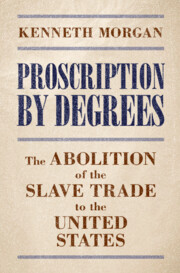
In this book, Kenneth Morgan provides the most comprehensive account of the abolition of the slave trade to the United States since W. E. B. Du Bois's 1896 The Suppression of the African Slave Trade to the United States of America, 1638–1870. Utilising a wider range of resources and exploring the economic, social, moral and political considerations, Morgan creates a multi-layered account that explains whyabolition was a protracted affair that proceeded by degrees over nearly half a century. He appraises the role of abolitionist individuals, groups and societies in bringing abolition to the forefront of public discussion across North America, and the decisive role of the US Constitution and the Constitutional Convention that eventually led to proscription in 1808, which made abolition constitutionally possible.
The Cambridge Companion to the Declaration of Independence offers a wide-ranging and accessible anthology of essays for understanding the Declaration's intellectual and social context, connection to the American Revolution, and influence in the United States and throughout the world. The volume places the document in the context of ideas during the Enlightenment and examines the language and structure to assess its effect and appeal throughout the centuries and across countries. Here are contributions from law, history, and political science, considering such matters as the philosophical foundations of the Declaration, the role of religion, critics of its role in American political development, and whether 'Jefferson's handiwork' is still relevant in the twenty-first century. Written by distinguished and emerging scholars, the Companion provides new and diverse perspectives on the most important statement of American political commitments.
So far, this book has focused on the power of the President to act. However, the President and the Executive Branch make up just one of the three branches of the federal government, Congress and the federal courts composing the other two. In this chapter we will focus on the relationship between the power of Congress to make laws and the President’s power to sign into law a bill Congress has passed, the power to veto a law, and the power to issue statements of interpretation on a bill the President signs into law.
Transplant teams often reject organs offered to their patients for a variety of reasons, including the assessment that the qualities of the organs are too low. Rejections add to cold ischemic time, which makes low-quality organs even less desirable and thus increases the risk of nonuse. Recent changes by the Centers for Medicare & Medicaid Services (CMS) in the way it assesses organ procurement organizations (OPOs) and the more credible threat these changes pose to their local monopolies have incentivized the recovery of more low-quality organs. A change in the organizational report card for transplant centers has incentivized lower-volume transplant centers to reject more low-quality organs despite risk adjustment. The OPTN has developed several policies, such as offer filters, that attempt to reduce the number of organ offers transplant centers receive that they are unlikely to accept. The increasing rates of organ nonuse and the recognition that continuous distribution (CD) could help address it or make it worse led to the Expeditious Task Force and the postponement of the finalization of CD proposals for kidneys and pancreases.
Article II, Section 2 of the Constitution empowers the President to “grant Reprieves and Pardons for Offences against the United States, except in Cases of Impeachment.” The seemingly simple language of this clause in the Constitution obscures a number of complicated questions about the scope and nature of this presidential power. For example – may Congress play a role in a president’s decision on pardons? Can the President grant a pardon for both state and federal crimes? Is the President required to fully pardon someone, or may he place conditions on the pardon? And, can a president pardon himself?
It’s one thing to say a sitting president can be civilly sued for personal capacity conduct, as the Court held in Clinton v. Jones. It’s quite another to say that a sitting president can be indicted for a crime. Or are they so different? The courts have never addressed this question. The Department of Justice (DOJ) in three Office of Legal Counsel memos (1974, 2000, and 2019) answered in the negative. Other lawyers and legal scholars disagree.
In addition to the more debated presidential powers discussed in the previous chapters of this book, the President can also exercise several less controversial powers. Among these powers are the power to seek the opinions of executive officers, the power to appoint ambassadors, federal judges, and other officers of the United States, and the right to provide Congress information on the state of the union.
When considering presidential power, presidential “ethics” concerns also are relevant. Here we address two aspects of this problem – financial and political conflicts of interest of the President.
Corruption is an ancient problem. Edmund Burke, as a member of the English Parliament, denounced the corrupt influence on government by corporations, particularly the East India Company. After the 1773 Tea Act granted that company a monopoly on sale of tea in America, colonists dumped their tea into the Boston harbor, an event that became known as the Boston Tea Party. Americans in the past and now are deeply concerned with being governed by money.