To save content items to your account,
please confirm that you agree to abide by our usage policies.
If this is the first time you use this feature, you will be asked to authorise Cambridge Core to connect with your account.
Find out more about saving content to .
To save content items to your Kindle, first ensure no-reply@cambridge.org
is added to your Approved Personal Document E-mail List under your Personal Document Settings
on the Manage Your Content and Devices page of your Amazon account. Then enter the ‘name’ part
of your Kindle email address below.
Find out more about saving to your Kindle.
Note you can select to save to either the @free.kindle.com or @kindle.com variations.
‘@free.kindle.com’ emails are free but can only be saved to your device when it is connected to wi-fi.
‘@kindle.com’ emails can be delivered even when you are not connected to wi-fi, but note that service fees apply.
Medieval elite culture is often difficult to grasp among archaeological records from settlement sites. A silver-gilt amethyst setting, probably part of a brooch, from the moat of Castle Kolno in Poland represents an unusual high-status find from a context related to everyday activity.
A museum should be a place where cultures, dialogue, and social relations are enhanced. Given the renewed public interest in the topic, the author poses the question: Is there a need and a possibility to decolonize ethnographic museums? Should we have common and shared practices? In an attempt to eliminate colonial vestiges in museums, an analysis of literature and practices leads the author to analyze five European ethnographic museums in order to understand their merits and shortcomings. The subjectivity of these institutions and the diversity with which colonization can be presented makes the proposal of a single generalized solution not preferable. An objective analysis, based on actions and variables, drives the author to determine, however, that in order to revitalize museum practices, there is a need to create a sharable framework. The design of minimum standards can help museums set clear and measurable goals to achieve a higher level of decolonization.
Macro- and microbotanical remains recovered from post-Teotihuacan occupations in quarry tunnels east of the Sun Pyramid, Teotihuacan, contribute to understanding lifeways in the surrounding valley after the partial abandonment of the city. Plant remains associated with domestic and ritual contexts from the excavations directed by Linda Manzanilla (1993–1996) are relevant to subsistence questions, aspects of surrounding vegetation, landscape exploitation, and the possibility of less-intensive agricultural production during the Epiclassic and Early Postclassic occupations.
In terms of the grand narrative of Upper Egypt’s expansion into, and unification with, Lower Egypt in the second half of the fourth millennium BC, substantial debate surrounds the processes of state formation. Referring to a recently discovered engraving near Aswan, the author argues that rock art has much to contribute to these discussions. Typological and comparative analyses of the engraving, which is interpreted as a processional boat bearing a seated human figure, are used to suggest that it was created at the dawn of the First Dynasty, thus adding to the limited corpus of political authority expressed in Protodynastic rock art.
This article is an introduction and guide to investigating past relationships between climate and human behavior. Improving understanding of these relationships is essential as humanity confronts the challenges of our warming world. However, how to investigate potential climatic influences on human behavior in the past is rarely presented or discussed as a distinct mode of inquiry. This article aims to fill this gap by providing a practical tool kit for students, archaeologists, anthropologists, and other historically focused social scientists. It is structured as a series of seven key steps to creating a research design for a climate and human behavior study, from identifying research questions to presenting results. Most of the conceptual models, methods, data, and examples provided have worldwide relevance and are informed by the long history of climate and human behavior studies in the North American Southwest. By expanding competence in this domain, we can enrich documentation and interpretations of the past and insights will emerge that will contribute to preparing for and responding to our warming world.
This work presents a methodological alternative to the traditional study of objects arranged inside funerary bundles, with the aim of preserving the integrity of the bundle and optimizing the material resources and costs derived from the storage and unwrapping processes. The research employs computerized tomographic scans to study the metal artifacts chosen to accompany the individuals arranged inside funerary bundles. It is the first systematic characterization of funerary treatment to focus on the presence of metal objects as part of burial offerings and their relationship with the body of the deceased individuals in the Andean area. Analyzing a total of 85 funerary bundles from the central coast of Peru, the study identified 26 bundles, dating to between AD 1100 and 1532, that contained at least one metal object. The objects were recorded to identify their use, decoration, measurements, location within the bundle, and the presence of any other objects associated with the individual, which made it possible to discern metal objects present in bundles corresponding to female, male, and nonadult individuals. The research concludes that the presence of metal artifacts in a funerary bundle is an indicator of elevated status, although the choice of specific artifacts is determined by elements of an individual’s identity.
The logistics, costs, and capacity needed to complete extensive archaeological pedestrian surveys to inventory cultural resources present challenges to public land managers. To address these issues, we developed a workflow combining lidar-derived imagery and deep learning (DL) models tailored for cultural resource management (CRM) programs on public lands. It combines Python scripts that fine-tune models to recognize archaeological features in lidar-derived imagery with denoising QGIS steps that improve the predictions’ performance and applicability. We present this workflow through an applied case study focused on detecting historic agricultural terraces in the Piedmont National Wildlife Refuge, Georgia, USA. For this project, we fine-tuned pretrained U-Net models to teach them to recognize agricultural terraces in imagery, identified the parameter settings that led to the highest recall for detecting terraces, and used those settings to train models on incremental dataset sizes, which allowed us to identify the minimum training size necessary to obtain satisfying models. Results present effective models that can detect most terraces even when trained on small datasets. This study provides a robust methodology that requires basic proficiencies in Python coding but expands DL applications in federal CRM by advancing methods in lidar and machine learning for archaeological inventorying, monitoring, and preservation.
Excavations at the Infantas complex in Chillón Valley, Perú, revealed a U-shaped monumental centre with a central mound, clay staircase and columned atrium. Aligned with structures from the Rímac and Lurín valleys, these complexes anchored ritual-political power, serving as hubs for ideological integration and territorial organisation in early Andean societies.
As with the peopling of the Pacific Islands, the monumental ritual architecture of East Polynesia is presumed to have spread from West Polynesia. By re-examining the wealth of absolute dates available from ritual contexts across these diverse islands, the authors challenge this generalisation in Polynesian ideological materialisation, identifying three phases of development. They argue that initial west-to-east migration spread the concept of ritual spaces marked by stone uprights c. AD 1000–1300, then the formalisation of monuments diffused in the opposite direction c. AD 1300–1600, before megastructures emerged from localised hierarchisation, perhaps earliest on Rapa Nui c. AD 1350–1500.
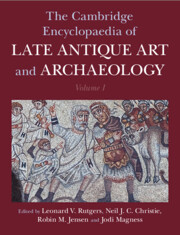
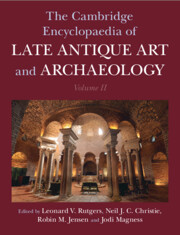
Late Antiquity marked one of the most significant transitions in European history-one that saw the rise of Christianity and the transformation of the classical Mediterranean world of ancient Rome. The richness of its art and the wealth of its archaeological remains have increasingly been recognised in recent decades and new discoveries and ongoing research are currently altering the ways in which we perceive the period. These two volumes provide a wide-ranging guide to the art and archaeology of the period 300-700 CE. Key monuments and artifact-types are discussed and placed in their historical contexts, but significant attention is also paid to the main cities, regions and peoples playing a prominent role in the history of the period as well as to some key issues and debates in its study. The chapters are written by leading experts and will be invaluable for any student or scholar interested in the period.
Measurements of the radiocarbon (14C) content of subannual wood cellulose samples over the 1963 bomb spike have revealed an apparent delay between the increase in atmospheric radiocarbon content and that of wood cellulose. This delay is apparent in both coniferous and deciduous tree species and is of a magnitude of approximately 4 weeks. The delay in wood cellulose 14C change as measured in a Sitka spruce from Washington state, USA, was previously used to estimate the relative influence of tree physiological effects contra environmental effects. We repeated the measurements with the increased measurement precision of today’s AMS systems and compare the new results to the ones of a Scots pine tree from Trondheim, central Norway and a white oak from Oregon state, USA. The results challenge the assumption that the 14C tree ring records directly show the atmospheric 14C concentration of a homogeneous, zonally well-mixed atmosphere. Instead, the apparent 1963 delay reflects local influences of the ecosystem and tree physiology. The 1963/1964 data allows for exploratory modeling of the effects of biospheric decay CO2 and local environmental influences assuming the absence of stored photosynthates from the previous year. Compared to the 10–30% contribution from biospheric CO2, the effects of delayed incorporation of carbon into the wood cellulose and the effect of stored photosynthate are small in the conifers. Highly detailed 14C records of stem cellulose can, in combination with stable isotope studies, contribute to our understanding of variability of the local carbon cycle, climate, and the environment.
This is a study of religion and cult in Hellenistic temples and sanctuaries with special reference to the incorporation of the Roman Imperial cult in Anatolian temples.
This is a chapter on the architectural analysis and comparison of the Artemis Temple of Sardis and other Hellenistic temples with special reference to their architectonic qualities explicated through the philosophies of Jonathan Kepler and Louis I. Kahn.