To save content items to your account,
please confirm that you agree to abide by our usage policies.
If this is the first time you use this feature, you will be asked to authorise Cambridge Core to connect with your account.
Find out more about saving content to .
To save content items to your Kindle, first ensure no-reply@cambridge.org
is added to your Approved Personal Document E-mail List under your Personal Document Settings
on the Manage Your Content and Devices page of your Amazon account. Then enter the ‘name’ part
of your Kindle email address below.
Find out more about saving to your Kindle.
Note you can select to save to either the @free.kindle.com or @kindle.com variations.
‘@free.kindle.com’ emails are free but can only be saved to your device when it is connected to wi-fi.
‘@kindle.com’ emails can be delivered even when you are not connected to wi-fi, but note that service fees apply.
In ‘Humanist Missteps’, Matthew Greer makes the pointed observation that non-anthropocentric frameworks, including symmetrical, object-oriented and posthuman feminist archaeologies, have primarily focused on deconstructing the human–non-human binary while failing to problematize humanist assumptions about who counts as Human. At the core of Greer's argument is the matter of citational practice: which social theorists are archaeologists referencing in their efforts to craft relational approaches to humans, things, animals and plants? In answering this question, the author points to a notable lack of Black Studies theorists, particularly the work of Sylvia Wynter, Zakkiyah Jackson and Tiffany King, in posthumanist archaeologies. While I agree with Greer's critiques, his essay stops short of explaining this citational silence. In this brief commentary, I suggest that this absence of Black Studies scholarship reflects the fact that the discipline of archaeology remains a ‘white public space’ (Brodkin et al.2011: 545) and maintains an artificial division between analysis and activism.
Does non-anthropocentrism necessitate a turn away from marginalized people? This is a crucial question, asked lately by a growing number of archaeologists. Some see a turn toward things as a turn away from people, while others take a more nuanced view. Greer falls into the latter group, exploring this question by highlighting important contributions and corrections from Black Studies. Although the paper is framed as a challenge to posthumanism, I read it as a broad critique of non-anthropocentric approaches; after reflecting on these relationships over the last few years, I no longer draw strong associations between posthumanism and symmetrical archaeology, entanglement theory, or even ANT; for me, posthumanism involves a relatively greater degree of social and political concern than the others.
Posthumanist archaeologies have attempted to move beyond humanist conceptions of the human for over a decade. But they have done so by primarily focusing on the ontological split between humans and non-human things. This only addresses one part of humanism, as Black studies scholars have long argued that it also equates humanity writ large with white, economically privileged, cis-gendered, heterosexual men, thereby excluding everyone else from the category of the human. They further argue that the violence and oppression inflicted on those excluded from humanism's definition of the human allows this ontological category to come into being. This article introduces Black studies’ critiques of humanism and applies them to posthumanist archaeologies. Ultimately, it argues that by not attending to the critiques raised by Black studies scholars, posthumanist archaeologies have inadvertently made humanist missteps wherein they continue using elements of humanism's definition of the human in their attempts to move beyond humanism.
The capacity of northern European gentlemen scholars educated in the love of wisdom, human dignity, friendship and rationality to treat their fellow human beings with irreconcilable prejudice and hold to ghastly beliefs of racial superiority, which legitimated violence, exploitation and extermination elsewhere, is one of the great tragedies of humanism. That the images of the human cultivated in texts were at variance with the lived experience of those who were treated as other than human was rarely noted in the books they read. I appreciate Matthew Greer's efforts to bring these concerns to the fore. I am grateful for the opportunity to read Sylvia Wynter, among others, and to think about their work in counter-humanism. I stand with Greer who reminds us that, as archaeologists, we must do more than critique ideologies, fight for inclusion, and engage in dialogue as demanded by a radical pluralism (Shanks & Tilley 1992, 246). Equity, social justice, openness, and decolonization demand the sustained effort of us all, both in our capacity as archaeologists and as readers of texts.
Matthew Greer offers us a powerful, refreshing and thought-provoking critique of posthumanist approaches in archaeology as he sees them through the lens of Black Studies. He asks us to leave aside—temporarily—concerns with anthropocentrism to concentrate instead on the human side of the equation, while nonetheless positioning himself in line with posthumanist efforts to dismantle the human–non-human divide. The crux of Greer's arguments is that posthumanist approaches do not go far enough in distancing themselves from humanism for two reasons. First, humanity remains (tacitly) equated with white, heterosexual, economically well-off men, a single group that forms the scale against which all other people are measured. Second, posthumanist approaches do not acknowledge that racism and related forms of oppression were integral to the emergence of humanism and not a by-product of it.
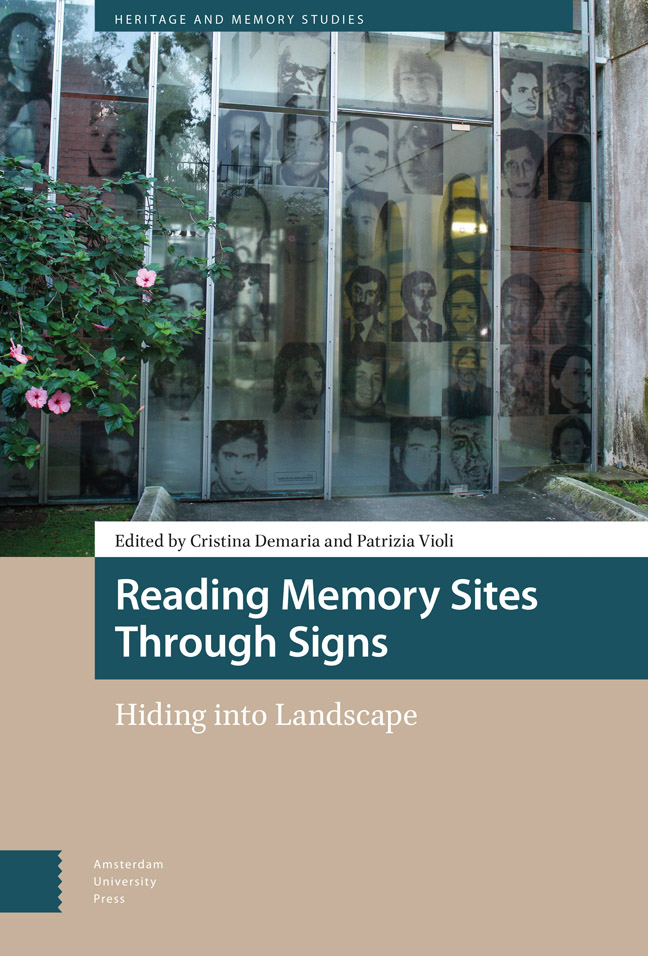
What can space tell us about our past? Which stories do memory sites narrate? Which memories do they transmit? And, more importantly, how can we read their meanings? Semiotics can provide us with a homogeneous, shareable and theoretically sound methodology to analyse space within a comparable and common frame of reference for scholars of memory studies and traumatic heritage, as well as for historians, architects and museum curators. The book describes in clear and understandable language the main semiotic concepts that can be used to analyse space, illustrating them with carefully chosen case studies of memory spaces - monuments, museums, post-war urban restoration, filmed and virtual space - in order to show the applicability and efficacy of a semiotic methodology.
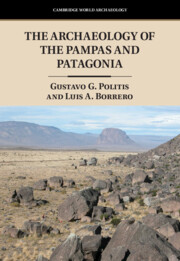
In this book, Gustavo G. Politis and Luis A. Borrero explore the archaeology and ethnography of the indigenous people who inhabited Argentina's Pampas and the Patagonia region from the end of the Pleistocene until the 20th century. Offering a history of the nomadic foragers living in the harsh habitats of the South America's Southern Cone, they provide detailed account of human adaptations to a range of environmental and social conditions. The authors show how the region's earliest inhabitants interacted with now-extinct animals as they explored and settled the vast open prairies and steppes of the region until they occupied most of its available habitats. They also trace technological advances, including the development of pottery, the use of bows and arrows, and horticulture. Making new research and data available for the first time, Politis and Borrero's volume demonstrates how geographical variation in the Southern Cone generated diverse adaptation strategies.
Chapter 1 introduces the fundamental tenets of perspectivism, its main characteristics and principles and the problems and challenges it poses for archaeology. A brief account of the genesis of perspectivism as a theory is provided, drawing principally on Viveiros de Castro’s writings and comparing it to other ontologies, particularly animism. The key perspectivist characteristics shared by many Amerindian populations are detailed. These include the quality internal to many entities of possessing a human soul, the importance of the body as the distinctive mark of subjects, seeing the world from a human point of view and predation as the model for human relationships. These fundamental cosmological premises derive from a set of underlying metaphysical principles with consequences for social practices, all of which are relevant for thinking about the archaeological record.
Chapter 7 takes up themes developed throughout the book and summarizes how focusing on the logic of perspectivism, an Amerindian ontology, enables the archaeological record to be read differently. Perspectivism, or any other ontology taken seriously as a theory, can challenge our conceptions of objects, things and human agency. Finally, having argued that the principal challenge presented by Perspectivism in Archaeology is to find ways to understand and think about particular archaeological records in the light of a local ontology, the chapter explores how perspectivism as theory can ultimately be seen as an experiment in decolonizing archaeological thinking and situating its practices.
Chapter 3 describes perspectivism’s world of objects and its concept of materiality, including the material implications of its notion of reality and the practices in which the material plays a key role. Assumptions about materiality in archaeology are revised by taking the conception of matter in perspectivism and putting it in dialogue with theories of matter in material culture studies. The critical question of material agency in perspectivism, including the possibility of object agency, is taken up. Objects and materiality, under certain circumstances and in specific relational contexts in perspectivism, affect humans and non-humans through a capacity that belongs to them. Two other agencies concerning objects can be identified: the first, proper to objects as things, is their capacity as intermediaries between humans and non-humans; the second is the agency of things as non-human objects rather than as inert things. Lacking a native concept of materiality proper to a case of study in the southern Andes, perspectivism provides a stand-in; its concept of objects as possessing their qualities, and instances in which they are in active relations with humans and other non-humans, enables the analysis of the ontological status of objects in the past.
Perspectivism as an anthropological theory on a par with academic theories is the subject of Chapter 2. The implications for archaeologyn are developed through a type of ‘thought experiment’, conceived as the thoughtful access to the experience of others. This thought experiment starts from a different way of encountering things: objects, after all, may be subjects, according to perspectivism. The consequences of such an experiment for understanding and interpreting the archaeological record are played through.
The chapter provides an overview of the manifestation of perspectivism in areas beyond the Amazon and archaeological cases from various times and places of the world, which exemplify how research has used perspectivism – from understanding it as a native ontology to using only some of its principles to understand the archaeological record or applying it as an anthropological theory to interpret the past from a locally situated approach. Two methodological issues become apparent in the chapter, how to translate other ontologies into our terms and how such a thought experiment can be put into practice when interpreting the archaeological record, whether perspectivist, animist, totemic or other.
Chapter 4 tests the theory through a perspectivist approach to the archaeological record of an Andean society of northern Argentina, the Aguada culture (600–1100 CE). The analysis focuses on the relationships of humans with animals, both domestic and wild, and with a particular class of ceramic objects from Aguada society. The evidence points to modes of relationship that bring into play constructions of otherness and an understanding of the world that accords with a perspectivist ontology. The capacity for transformation of animals and people expressed in ambiguous figures of wild felines and humans reinforces the idea of an unstable world where all is subject to movement, change and metamorphosis. In particular, the relationship between humans and domestic animals, especially the llama, is analysed in domestic contexts and cave paintings. An object-centred case study analyses ceramic models of human and animal heads and bodies made analogously; again, they are treated equally and include human attributes as if they were all entities of the same class. The ceramic evidence further supports the possibility that other species may also have been considered endowed with subjectivity, that is, non-human persons.