To save content items to your account,
please confirm that you agree to abide by our usage policies.
If this is the first time you use this feature, you will be asked to authorise Cambridge Core to connect with your account.
Find out more about saving content to .
To save content items to your Kindle, first ensure no-reply@cambridge.org
is added to your Approved Personal Document E-mail List under your Personal Document Settings
on the Manage Your Content and Devices page of your Amazon account. Then enter the ‘name’ part
of your Kindle email address below.
Find out more about saving to your Kindle.
Note you can select to save to either the @free.kindle.com or @kindle.com variations.
‘@free.kindle.com’ emails are free but can only be saved to your device when it is connected to wi-fi.
‘@kindle.com’ emails can be delivered even when you are not connected to wi-fi, but note that service fees apply.
This paper presents an approach to the study of European Iron Age ethnicity, a core topic for several decades which has begun to lose interest in the last years. A review of some of the uncertainties involved in the archaeology of ethnicity, focused on several key issues, is proposed. Moreover, some relevant topics that are usually undermined are suggested in order to address new challenges in the discipline: the introduction of political identity as a major focus of study, the reassessment of the etic perspective as an inner part of processes of collective differentiation, or the need for a holistic approach to join and combine different forms of expression. Finally, these approaches will be explored in a case study based on the northwest of the Iberian peninsula. This region has been chosen because of the feasibility of combining the results of different studies about social and political organizsation with relevant textual evidence to extract information about their ethnic dynamics.
Scholars of the past frame the ‘origins’ or evolution of inequality, usually using archaeological or anthropological evidence as a basis for their arguments, as an intentional, inevitable, important step towards the development of states, implicitly framed as the pinnacle of human political and economic achievement. Anarchist archaeologies reject the idea of hierarchy as a positive or inevitable evolutionary outcome underlying the path to civilization. We argue instead for a radical reorientation towards archaeologies of equality. We propose a prefigurative archaeology that celebrates the myriad ways that human beings have actively undermined and resisted hierarchical social arrangements. We aim to reorient archaeology's focus towards societies that purposefully prevented or constrained the emergence of inequality. To demonstrate the potential of archaeologies of equality we present case examples from Oceania, Britain, West Asia and the American Southwest. Highlighting the accomplishments of societies of equals in the past demonstrates the contingency and problematic nature of present forms of inequality. It allows us to explore a different set of pasts and thus enact different presents as we imagine different futures.
Around 120 years ago, a burial was discovered in the Argaric settlement of San Antón, 60 km southeast of Alicante (Spain). Although it was similar to many others recorded during more than a century of research, some gold objects found made this burial exceptional in the Iberian Bronze Age funerary record. Based on the most recent archaeological data, this article reviews both the context and the whole set of grave goods. It also explores the intersocial relationships that these gold ornaments suggest, which directly or indirectly seem to point towards both eastern Mediterranean Europe as well as to the Carpathian Basin.
Since cultivation was late and marginal and there were no domestic animals (except the dog) in the Pampas and Patagonia, indigenous people in both regions depended almost exclusively on wild animals, both terrestrial and aquatic, and undomesticated plants. At the same time, stones were also crucial for making the tools to kill and butcher the prey and to process the plant products. As we will show, bone technology was secondary in most of the Pampas and significant only among coastal, both maritime and riverine, and Paraná Delta people. Therefore, wild natural resources were the key elements for human subsistence in the Pampas and Patagonian and, in some way, shaped their adaptive patterns.
The chapters presented before showed diverse historical trajectories, different adaptive patterns, and continuous human occupation of the Pampas and Patagonia since the end of the Pleistocene. Both regions were probably among the last continental lands, except Antarctica, colonized by Homo sapiens after their dispersal from Africa. The first outcome of this review of the archaeology of the Pampas and Patagonia is that it does not support a pre-15,000 cal BP human occupation of the Southern Cone. Putting this in the global discussion means that the Pampas-Patagonia peopling holds up a pre-13,000 cal BP (the so-called pre-Clovis Model) but post–Late Glacial Maximum human arrival at the continent, which is in agreement with current archaeological, ancient DNA, and paleoclimatic models (Llamas et al. 2016; Pitblado 2011; Posth et al. 2018; Prates et al. 2020; Sutter 2021; Waters and Stafford 2013). Moreover, most of the paleoclimatic evidence supports the hypothesis that the earliest human arrivals at the Pampas and Patagonia took place under cold climatic conditions in semiarid to arid environments (Borrero and Martin 2018; Prado et al. 2021) during the cooling period known as the Antarctic Cold Reversal (14,700–13,000 cal BP).
In this chapter, the historical background of the archaeology in the Pampas and Patagonia is discussed and summarized. It encompasses a period of about 100 years, between the 1870s when the first archaeological investigations took place in the Pampas and Patagonia (Ameghino 1880–1881; Holmberg 1884; Moreno 1874; Moseley 1892; Zeballos and Pico 1878) and the late 1970s when there was a theoretical and methodological shift in the archaeology of both regions, which gave rise to modern research. The current regional models in the Pampas and Patagonia are a product of this last period’s research, first with a processual orientation and then adding other theoretical approaches (evolutionary, processual-plus/neo-processualism, post-processualism, etc.). However, some of the data and ideas generated in this first 100 years of investigation are still present in contemporary debates, as shown in the following chapters of this book.
The Middle Holocene was a time of change in both the Pampas and Patagonia. In some way, these changes were the prelude to the demographic expansion, regional diversification, economic intensification, and social complexity that characterized the following period, the Late Holocene. During the Middle Holocene times, archaeological evidence in the Pampas was scarce until a decade ago or so, but recent research increased information significantly (e.g., Ávila 2011; Ávila et al. 2011; Bonomo et al. 2013; Donadei Corada 2020; Gutiérrez et al. 2010; Mazzanti et al. 2015; Messineo et al. 2019a, b, c; Politis et al. 2012; Scheifler 2019). This period is characterized by global warming, known as the Hypsitermal or Holocene Thermal Maximum (Renssen et al. 2012). As a result, in the Pampas, the sea level raised above the current level at around 7000 BP. However, there is no agreement about the magnitude of this raising (between 2.2 to 6 masl depending on the author) and the chronology of the maximum ingression (see revisions in Aguirre and Whatley 1995; Melo et al. 2003). For Isla and Espinosa (1995), it began at the onset of the Holocene, reaching its maximum height (around 2 masl) around 6500–6000 BP. This resulted in the coast having sometimes a transgressive position, such as in the east of the Salado Depression and the Paraná Delta (Cavallotto et al. 2004, 2005; Iriondo and Kröhling 2008), while in other cases, it was very close to the present according to the variations of the littoral morphology.
During the Late Holocene time, regional differentiation, which became visible during the Middle Holocene, produced a wide variety of historical trajectories and adaptive patterns in the Pampas and Patagonia. It is clear that around 4000 BP human populations were selectively using all the diverse, available habitats. In this period, the archaeological visibility increased significantly, a fact that also suggests a rise in the population density of both regions (see discussion in Chapter 7).
This book summarizes the current archaeological and ethnographic knowledge regarding the indigenous people who inhabited the South American Southern Cone since the end of the Pleistocene (Figure 1.1). This land, roughly between 32° and 56° S latitude, comprises the Pampas and Patagonia. Since the beginning of the European conquest in the sixteenth century, both regions have attracted the attention of conquerors and explorers even though there were no precious rocks or metals within them, nor were they inhabited by indigenous populations who could be easily exploited or subjugated to slavery or encomiendas. This is not to say that there were no fabulations – notably, the legend of the Ciudad de Los Césares, or Trapalanda, where supposedly fabulous riches could be found. This legend originated around the sixteenth century when stories after the inland trip by Francisco César, a captain from the Sebastian Gaboto expedition, began to circulate. Also, the castaways from the shipwreck of one of Francisco Camargo’s expeditions fueled these legends. The sad reality was that no evidence existed about the fate of those castaways.
As we show in Chapter 2, there has been a long tradition of the archaeological research in both the Pampas and Patagonia since the end of the nineteenth century. From the very beginning of the investigations, the Late Pleistocene human occupation was at the top of the research agenda in both regions. Giant ground sloth skins from Cueva del Milodón and human skulls supposedly found in very ancient (Tertiary) layers in the Pampas seashore ignited the imagination of scientists of those times, and fieldwork looking for spectacular findings as well as reckless interpretations abounded. Since then, the first human occupation has been the main focus of the archaeological investigation in both regions. This chapter summarizes and discusses the results of this almost continuous, intense, and fertile archaeological research.
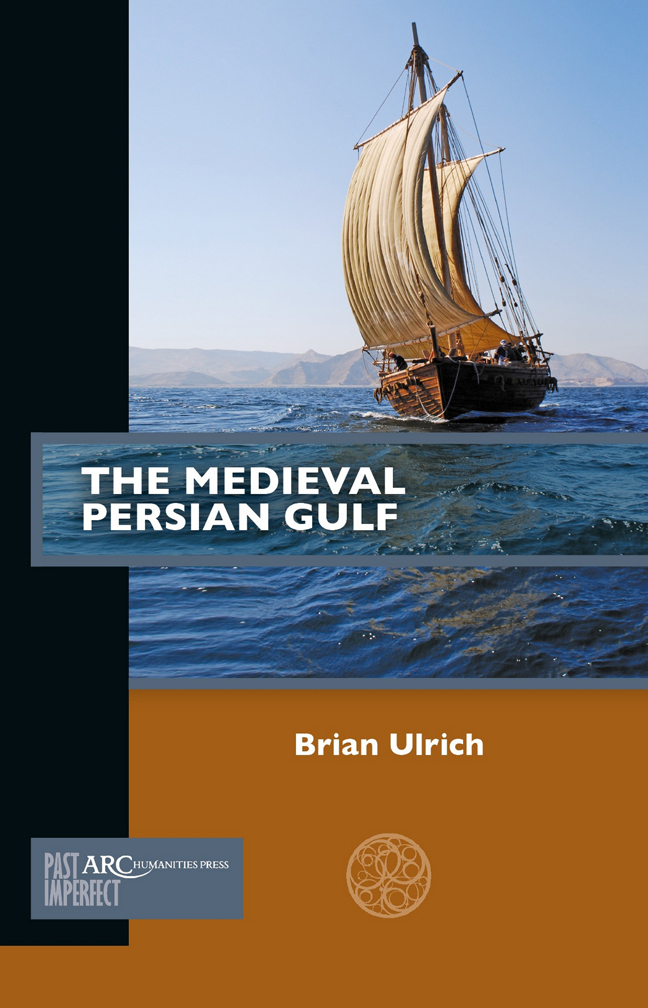
The Persian Gulf today is home to multiple cosmopolitan urban hubs of globalization. This did not start with the discovery of oil. This book tells of the Gulf from the rise of Islam until the coming of the Portuguese, when port cities such as Siraf, Sohar, and Hormuz were entrepots for trading pearls, horses, spices, and other products across much of Asia and eastern Africa. Indeed, products traded there became a key part of the material culture of medieval Islamic civilization, and the Gulf region itself was a crucial membrane between the Middle East and the world of the broader Indian Ocean. The book also highlights the long-term presence of communities of South Asian and African ancestry, as well as patterns of religious change among Jews, Christians, Zoroastrians, and Muslims that belie the image of a region long polarized between Arabs and Persians and Sunnis and Shi'ites.
I want to begin by thanking Craig Cipolla, Lindsay Montgomery, Susan Pollock, Kathleen Sterling and Christopher Witmore for their responses. I am honoured to be in conversation with such thoughtful and insightful scholars. In my reading, two main themes emerged from their comments—citational politics and what the future of posthumanist archaeologies might look like. To conclude our discussion of archaeology, Black studies and posthumanism, I will address each in turn.
Greer offers an excellent primer on some Black Studies scholars’ critiques of humanism, for which he uses the label ‘counter-humanism’ after Erasmus (2020), distinguishing these approaches from ‘posthumanism.’ He identifies two primary strains of posthumanism relevant to archaeological interpretation, symmetrical archaeology and posthuman feminism, though examples of the latter are drawn from a broader body of academic literature and are subject to less critique. Posthumanists are shown to prioritize dismantling a human–object divide, while counter-humanists critique the human–non-human split. This may appear to be more or less the same project, but the framing of ‘A/not-A’ rather than ‘A–B’ emphasizes the hegemonic relationships between these categories, the continuity within, and makes more explicit the fact that people are included in both the non-human and object categories.