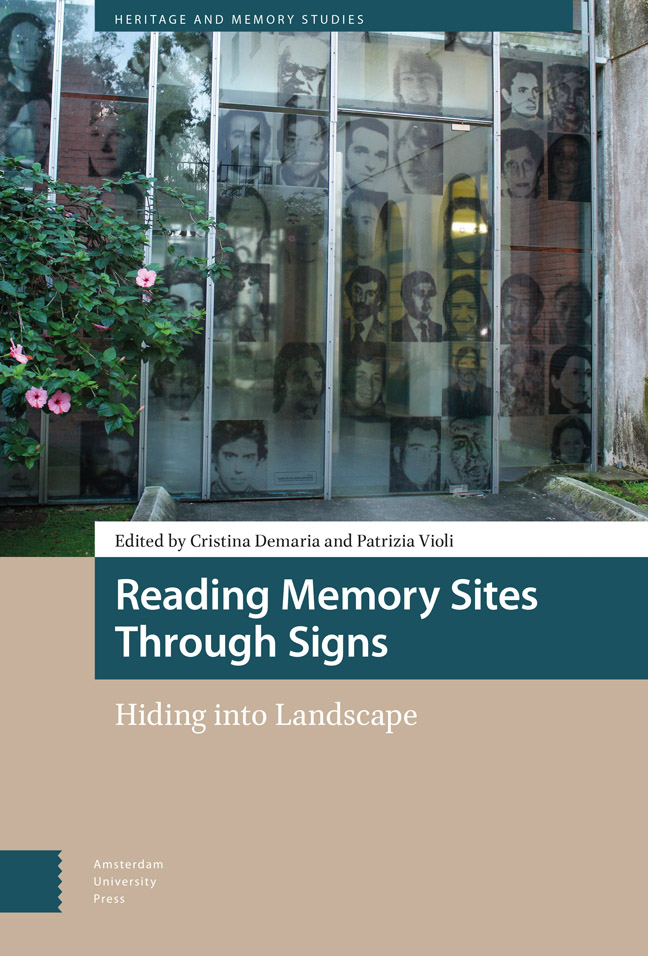

What can space tell us about our past? Which stories do memory sites narrate? Which memories do they transmit? And, more importantly, how can we read their meanings? Semiotics can provide us with a homogeneous, shareable and theoretically sound methodology to analyse space within a comparable and common frame of reference for scholars of memory studies and traumatic heritage, as well as for historians, architects and museum curators. The book describes in clear and understandable language the main semiotic concepts that can be used to analyse space, illustrating them with carefully chosen case studies of memory spaces - monuments, museums, post-war urban restoration, filmed and virtual space - in order to show the applicability and efficacy of a semiotic methodology.
Loading metrics...
* Views captured on Cambridge Core between #date#. This data will be updated every 24 hours.
Usage data cannot currently be displayed.
This section outlines the accessibility features of this content - including support for screen readers, full keyboard navigation and high-contrast display options. This may not be relevant for you.
Accessibility compliance for the PDF of this book is currently unknown and may be updated in the future.
