To save content items to your account,
please confirm that you agree to abide by our usage policies.
If this is the first time you use this feature, you will be asked to authorise Cambridge Core to connect with your account.
Find out more about saving content to .
To save content items to your Kindle, first ensure no-reply@cambridge.org
is added to your Approved Personal Document E-mail List under your Personal Document Settings
on the Manage Your Content and Devices page of your Amazon account. Then enter the ‘name’ part
of your Kindle email address below.
Find out more about saving to your Kindle.
Note you can select to save to either the @free.kindle.com or @kindle.com variations.
‘@free.kindle.com’ emails are free but can only be saved to your device when it is connected to wi-fi.
‘@kindle.com’ emails can be delivered even when you are not connected to wi-fi, but note that service fees apply.
The metatheoretic formal semantics that we gave in Chapter 12 was rife with talk of functions, like the semantic valuation function for assigning extensions to formulae of . Functions again took center stage in Chapter 19, which discussed intensions as functions from possible worlds onto extensions. Functions, functions, functions.
In the epilogue, we reflect on some of the major themes linked to the questions driving research in second language acquisition and return to the question that started the field in the 1970s: Are L1 and L2 acquisition similar or different?
can be thought of as the logic of truth functions. The connectives of are introduced with characteristic truth tables because they all express truth functions – each is used to produce complex sentences the truth values of which are completely determined by the truth values of the component subsentence(s).
As has hopefully become increasingly clear throughout this text, the task of logical theory construction is a difficult one – one that’s full of choices. These choices have ramifications that aren’t always easily foreseen. Frege thought that he was on his way to reducing all of mathematics to classical logic when Russell pointed out that seeds of contradiction had been built into the foundations of Frege’s system.
In this chapter we address the question of whether or not language acquisition is largely implicit in nature. After reviewing key constructs (e.g., explicit and implicit knowledge, explicit and implicit processing/learning, intentional and unintentional learning), we discuss the major positions currently under scrutiny in the field: (1) Explicit learning is necessary; (2) explicit learning is beneficial; (3) explicit learning does little to nothing (i.e., acquisition is largely if not exclusively implicit in nature). A key issue in this chapter is how one defines “language” and how one construes “input processing.” We will review how definitions of these constructs color the researcher’s perspective on the issues.
The prophet to whom Paul was referring was Epimenides of Knossos, a strange sixth- or seventh-century BC Greek philosopher–prophet who was known for his cryptic tattoos and an ability to separate himself from his body (once leaving it sleeping in a cave for 57 years – probably to provide himself with an excuse for missing departmental meetings). He was put to death by those who wanted more favorable prophesies from him. When his body was discovered to be covered in tattoos, his skin was put on display in Sparta. A touching tribute.
The extensions of more complex structures were a systemic function of the extensions of their components. Gottlob Frege, one of the pioneers of this kind of compositional semantics, discerned a tension between the extensionality of the formal theory and the apparent non-extensionality of ordinary natural language. An examination of Frege’s worry will lead us to consider the notion of intension.
In this chapter we review the competing perspectives on the role of language transfer, namely, the role that a first language plays in the acquisition of a second language. Do learners begin with the L1 and transfer all properties and processes into L2 acquisition? Or is transfer partial and selective at the outset? Or do L2 learners not transfer any aspects of the L1 and begin with universal properties of language and universal processes for acquiring language? As such, we review such key hypotheses as Full Access, Full Transfer/Full Access, and important constructs such as minimal trees, input processing, and processability. We also touch on the notion of third and subsequent language acquisition and competing perspectives on what languages get transferred if any (and how).
In Chapter 2, when we were introducing the Boolean connectives, we had occasion to observe that there are some apparent disconnects between the English operators ‘and’, ‘or’, and ‘not’ and their counterparts. In the present chapter, we’ll take a closer look at a few of these disconnects and see if a pragmatic theory (a theory about how language is used and interpreted in context) can help bring the two back into line with each other.
In this chapter, we will explore the problem of vagueness and the paradoxes that it seems to engender. Nonclassical logics that try to address these issues by parting ways with the assumption of bivalence will be introduced and evaluated. The most promising of these (from the standpoint of addressing the problem of vagueness) is infinite-valued logic.
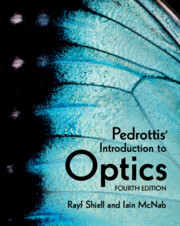
The fourth edition of Pedrottis' Introduction to Optics is a comprehensive revision of a classic guide to the fascinating properties of light, now with new authors. Ideally suited for undergraduate optics courses in physics and electrical/electronic engineering departments, this edition adopts a distinctive phenomenological approach, bringing the underlying science to life through interactive simulations and beautifully revised figures. The modular structure and succinct style of previous editions has been maintained, while the content has been modernized, new topics have been added, and a greater consistency of terminology attained. For even more effective learning, a recurring theme of student engagement runs throughout the text, supported by a multifaceted pedagogical package that reinforces key concepts, develops a clear understanding of optical technologies and applications, and connects to students' experiences and observations from everyday life.
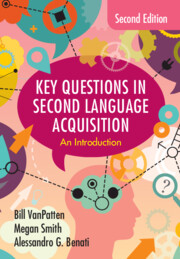
Now in its second edition, this highly accessible introductory textbook establishes the fundamentals driving the field of second language (L2) acquisition research, including its historical foundations. Intended for the novice in the field with no background in linguistics or psycholinguistics, it explains important linguistic concepts, and how and why they are relevant to second language acquisition. Topics are presented via a 'key questions' structure that enables the reader to understand how these questions have motivated research in the field, and the problems to which researchers are seeking solutions. This edition has been fully updated to incorporate new research, with a new chapter focusing on language transfer, and new sections on the growing field of third and subsequent language acquisition, and how the acquisition of phonology reflects the key questions. With discussion questions and project ideas as well as a glossary, this is a complete package for an introductory course on second language acquisition.
This chapter provides a tour of several additional forms of human language communication apart from spoken language. Visual speech (which also contributes to audiovisual speech) requires not only visual cortex, but regions such as posterior temporal sulcus which may help integrate signals across modality. Nonverbal communication, including productions such as crying or laughter, relate to activity in the superior temporal lobes but also in other regions including the cingulate cortex and insula. Reading and the ability to decode written language highlights portions of the visual system, including the ventral occipitotemporal cortex (often referred to as the visual word form area, or VWFA). Learning to read is a complex process that involves written language, knowledge of speech sounds, and motivation. Co-speech gestures are present in children’s language development and can convey semantic information alongside spoken language; integration of such semantic gestures involves left inferior frontal gyrus and premotor cortex.
This chapter covers how the human brain combines meaning across words (compositional semantics), beginning with pairs of words and working up to sentence processing. Concepts that are easy to combine – such as a “red apple” – appear to rely on the lateral anterior temporal lobe and the angular gyrus. Understanding sentences introduces additional demands during comprehension and is often associated with recruitment of left inferior frontal cortex. Additional regions come in to play for specific types of language challenge. When words are associated with multiple meanings, the correct interpretation must be selected based on the surrounding context. This process of semantic disambiguation is associated with additional activity in posterior temporal cortex and left prefrontal cortex. Compared to simpler sentences, understanding sentences with complex syntactic constructions also engages additional regions of posterior superior temporal gyrus and inferior frontal cortex. Finally, ongoing oscillatory activity, especially in the theta range, has been suggested to play key roles in parsing and understanding connected speech.