To save content items to your account,
please confirm that you agree to abide by our usage policies.
If this is the first time you use this feature, you will be asked to authorise Cambridge Core to connect with your account.
Find out more about saving content to .
To save content items to your Kindle, first ensure no-reply@cambridge.org
is added to your Approved Personal Document E-mail List under your Personal Document Settings
on the Manage Your Content and Devices page of your Amazon account. Then enter the ‘name’ part
of your Kindle email address below.
Find out more about saving to your Kindle.
Note you can select to save to either the @free.kindle.com or @kindle.com variations.
‘@free.kindle.com’ emails are free but can only be saved to your device when it is connected to wi-fi.
‘@kindle.com’ emails can be delivered even when you are not connected to wi-fi, but note that service fees apply.
Agricultural products are one of Vietnam's most important exports, contributing considerably to the overall export turnover of the country. Vietnam's agricultural exports are easily affected by external factors. It is overly dependent on the Chinese market, and its agricultural products do not as yet meet strict global standards. Challenges facing Vietnam's export of fruits and vegetables to the Chinese market include technical barriers, long risk assessment periods, restrictions on products exported through official quotas to the Chinese market, and frequent changes in China's policy on border crossings. The ongoing COVID-19 pandemic has underscored the importance of market diversification to this sector. To further develop its agricultural export sector, Vietnam needs to gather and consolidate information on import standards and guide its farmers on product quality requirements. Besides, efforts to gradually diversify its markets are essential for it to avoid being dependent on a small number of partners and markets. Vietnam's participation in international organizations such as ASEAN, APEC, WTO, and AEC exemplifies its increasingly active efforts at seeking new development opportunities. The seventeen bilateral and multilateral free trade agreements which have been signed by Vietnam partly demonstrates efforts at achieving market diversification.
To Singapore's immediate south, Indonesia's Riau Islands has a population of 2 million and a land area of 8,200 sq kilometres scattered across some 2,000 islands. The better-known islands include: Batam, the province's economic motor; Bintan, the area's cultural heartland and site of the provincial capital, Tanjungpinang; and Karimun, a ship-building hub strategically located near the Straits of Malacca. Leveraging on its proximity to Singapore, the Riau Islands—and particularly Batam—have been a key part of Indonesia's strategy to develop its manufacturing sector since the 1990s. In addition to generating a large number of formal sector jobs and earning foreign exchange, this reorientation opened the way for a number of far-reaching political and social developments. Key among them has been: large-scale migration from other parts of the country; the secession of the Riau Islands from the larger Riau Province; and the creation of a new provincial government. Building on earlier work by the ISEAS – Yusof Ishak Institute on the SIJORI Cross-Border Region, spanning Singapore, the Malaysian state of Johor, and the Riau Islands, and a second volume looking specifically at Johor, the third volume in this series explores the key challenges facing this fledgling Indonesian province. Adopting a multidisciplinary framework, this book explores three issues: what have been the social, political, and environmental effects of the rapid economic change set in motion in the Riau Islands; to what extent can or should the province seek to reconfigure its manufacturing-based economy; and how have the decentralization reforms implemented across Indonesia affected the Riau Islands.
Over the last 40 years, the ISEAS – Yusof Ishak Institute has been honoured to partner with the Singapore government in hosting 44 Singapore Lectures. The Singapore Lecture series is a unique public platform for world leaders and experts visiting Singapore that reflects the city-state's role as a global hub of ideas and diplomacy. The 21 lectures chosen for this 40th anniversary volume chart the fundamental changes in the global economy and the inter-state system that Southeast Asia and Singapore have successfully navigated over these four momentous decades.
Beginning in December 2019, the coronavirus swept quickly through all regions of the world. COVID 19 has wreaked social, political and economic havoc everywhere and has shown few signs of entirely abating. The recent development and approval of new vaccines against the virus, however, now provides some hope that we may be coming to the beginning of the end of the pandemic. This volume collects papers from a conference titled Economic Dimensions of COVID 19 in Indonesia: Responding to the Crisis, organised by the Australian National University's Indonesia Project and held online 7–10 September 2020. Collectively, the chapters in this volume focus for the most part on the economic elements of COVID 19 in Indonesia. The volume considers both macro- and micro-economic effects across a variety of dimensions, and short- and long-term impacts as well. It constitutes the first comprehensive analysis of Indonesia's initial response to the crisis from an economic perspective.
Now in its forty-eighth edition, Southeast Asian Affairs offers an indispensable guide to this fascinating region. Lively, analytical, authoritative, and accessible, there is nothing comparable in quality or range to this series. It is a must read for academics, government officials, the business community, the media, and anybody with an interest in contemporary Southeast Asia. Drawing on its unparalleled network of researchers and commentators, ISEAS is to be congratulated for producing this major contribution to our understanding of this diverse and fast-changing region, to a consistently high standard and in a timely manner.Hal Hill, H.W. Arndt Professor of Southeast Asian Economies, Australian National University
Stuart Robson's expert English translation of the Tantu Panggelaran gives his readers ready access to this important work, which provides insight into how the author and his contemporary Javanese readers imagined the realities of the world in which they lived. We learn how they conceived the creation of this world and understood the relationship between the gods and men. Importantly, we learn also how they conceived a history of the foundation and spread of Bhairava Śivaite hermitages, shrines and temples. The work traces the history of this network from its origins in the vicinity of the Dieng plateau and the northern plains of Batang and Pekalongan to its subsequent expansion to the Tengger and Hyang Massifs of eastern Java. Hadi Sidomulyo's impressive commentary, an amalgam of textual analysis and the survey of archaeological sites, is a model for the way in which further research of this sort might be conducted and underlines the urgent need for further archaeological surveys and the future excavation of archaeological sites.—Professor Emeritus Peter Worsley, Indonesian Studies, University of Sydney
Since 2011 Myanmar has experienced many changes to its social, political and economic landscape. The formation of a new government in 2016, led by the National League for Democracy, was a crucially important milestone in the country's transition to a more inclusive form of governance. And yet, for many people everyday struggles remain unchanged, and have often worsened in recent years. Key economic, social and political reforms are stalled, conflict persists and longstanding issues of citizenship and belonging remain. The wide-ranging, myriad and multiple challenges of Living with Myanmar is the subject of this volume. Following the Myanmar Update series tradition, each of the authors offers a different perspective on the sociopolitical and economic mutations occurring in the country and the challenges that still remain. The book is divided into six sections and covers critical issues ranging from gender equality and identity politics, to agrarian reform and the representative role of parliament. Collectively, these voices raise key questions concerning the institutional legacies of military rule and their ongoing role in subverting the country's reform process. However, they also offer insights into the creative and productive ways that Myanmar's activists, civil society, parliamentarians, bureaucrats and everyday people attempt to engage with and reform those legacies.
There exist numerous free-standing figurative sculptures produced in Java between the eighth and fifteenth centuries whose dress display detailed textile patterns. This surviving body of sculpture, carved in stone and cast in metal, varying in both size and condition, remains in archaeological sites and museums in Indonesia and worldwide. The equatorial climate of Java has precluded any textiles from this period surviving. Therefore this book argues the textiles represented on these sculptures offer a unique insight into the patterned splendour of the textiles in circulation during this period. This volume contributes to our knowledge of the textiles in circulation at that time by including the first comprehensive record of this body of sculpture, together with the textile patterns classified into a typology of styles within each chapter.
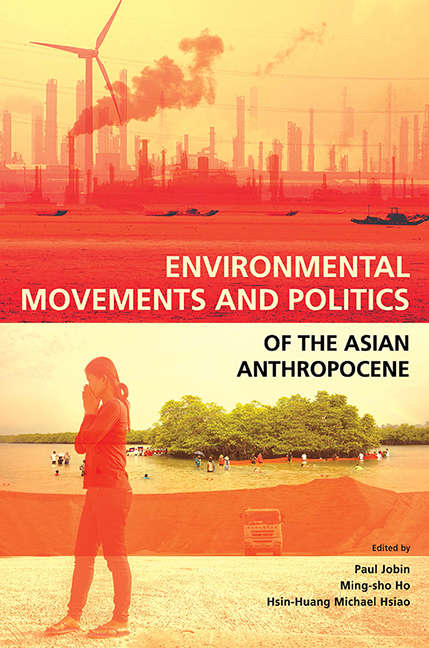
This important book reflects the challenges and questions currently foremost in scholars', activists' and policy-makers' minds—the Anthropocene, environmental justice, China's Belt and Road Initiative, and post-politics—all addressed through the lens of environmental movements in Asia.—Jonathan Rigg, Professor at the School of Geographical Sciences, University of Bristol
The year 2021 marks the thirtieth anniversary of the signing of the Cambodian Peace Agreements which ended the Cambodian conflict and the Cold War in Southeast Asia. Communism was a perennial concern in Singapore and Malaya (later Malaysia) from 1948 into the 1980s -- a concern which younger generations may not appreciate. The threat came largely from the Communist Party of Malaya (CPM) supported by China, and from Vietnam. The CPM waged a guerrilla war in Malaya. They were defeated by 1960 but tried to revive the insurgency in the 1970s. In Singapore they attempted to attain political power through a united front with the People's Action Party during the 1950s. The victory of the communists in the Vietnam War in 1975 alarmed non-communist Southeast Asia. The concern was aggravated by Vietnam's invasion of Cambodia in 1978. ASEAN states strongly opposed Vietnam's action on the grounds that the invasion and occupation of a sovereign country violated a fundamental principle of international law. Successive UN General Assembly resolutions supported the ASEAN position with significant majorities. Thailand was pivotal to the security of the rest of non-communist Southeast Asia. Had it succumbed to Vietnam's pressures and reached an accommodation with Hanoi, the security of the rest of Southeast Asia would have been endangered. Thailand stood firm. Had it not done so, the people of Southeast Asia would be living in a different world today.
The Comprehensive and Progressive Agreement for Trans-Pacific Partnership (CPTPP) is a free trade agreement involving major countries across the Asia Pacific region. The trade pact, which entered into force on 30 December 2018, is considered by many to be the 'gold standard', given its ambitious scope and depth. This volume offers multi-dimensional insights into the CPTPP and its impact on Southeast Asia. It begins with broad analyses covering the historical, economic and geopolitical aspects of the CPTPP. Subsequent chapters focus on the nature and implications of three key path-breaking provisions in the trade agreement, namely investor-state dispute settlement, intellectual property rights and state-owned enterprises. The effect of the CPTPP on Southeast Asia in terms of regional production networks is also examined from the perspective of Japanese multinational enterprises. The potential economic impact of the agreement is analysed for member countries (Vietnam and Malaysia) as well as countries that aspire to join the CPTPP in the future (Indonesia and Thailand). The world trading system is in disarray: the World Trade Organization has been weakened, perhaps terminally; the world's two economic superpowers are locked in deep, politicized disputes; the forces of populism and nationalism are everywhere complicating the return to a more liberal, rules-based order. These trends are challenging one of the building blocks of ASEAN economic development, namely these countries' outward-looking trade and investment policies. With impeccable timing this important volume by a group of eminent authors assesses these issues with reference to the Comprehensive and Progressive Agreement for Trans-Pacific Partnership. The CPTPP excludes the three largest traders—China, the EU and the US—but it is a welcome second-best initiative that may have broader, positive ripple effects.
How have authoritarianism, democratization and political change affected environmentalism in East and Southeast Asia? How have environmental mobilization and demands for environmental justice at the grassroots influenced politics there? These are among the vital questions answered by this insightful and well-crafted volume.—Paul G. Harris, Chair Professor of Global and Environmental Studies, Education University of Hong Kong
This book reflects on the role of social media in the past two decades in Southeast Asia. It traces the emergence of social media discourse in Southeast Asia, and its potential as a 'liberation technology' in both democratizing and authoritarian states. It explains the growing decline in internet freedom and increasingly repressive and manipulative use of social media tools by governments, and argues that social media is now an essential platform for control. The contributors detail the increasing role of 'disinformation' and 'fake news' production in Southeast Asia, and how national governments are creating laws which attempt to address this trend, but which often exacerbate the situation of state control. From Grassroots Activism to Disinformation explores three main questions: How did social media begin as a vibrant space for grassroots activism to becoming a tool for disinformation? Who were the main actors in this transition: governments, citizens or the platforms themselves? Can reformists 'reclaim' the digital public sphere? And if so, how?
As an increasingly conservative wave of Islam engulfs the globe, literalist Salafi interpretations of the faith have become prevalent in Malaysia. While there are several Islamic schools of thought in the country, including those deemed 'deviant', the loudest voices are always the more extreme. Over the past year, there has been increasing recognition of women's roles as recruiters, financiers and influencers for radical Islamic groups. More women have been arrested for their support for and involvement in the Islamic State (IS), but much of the focus has been on their desire to marry a jihadi soldier or channel funds to the cause. In Malaysia, these women (including returnees from IS) are seen to be followers, not decision-makers or active agents in extremist action. While Malay-Muslim women were both economically and socially active prior to colonization, patriarchal norms are now commonplace because of Islamic and Western conventions, as well as increasing conservatism in society. Women do have agency in the home, however, and exercise this power and centrality within the private sphere by wielding religion as a tool to exert influence over their spouse and children. More attention needs to be paid to mothers as potential nurturers of extremist interpretations of Islam. Their actions in active support of non-violent extremism and intolerant exclusivity could have far-reaching effects given their unrivalled influence in the home. Their need to achieve social recognition through religion, coupled with increasing Salafi infiltration into mainstream Malaysian society and Islam, could be highly detrimental in multi-faith Malaysia. At the very least, these women may not report family members who intend to participate in terror; at the worst, they may encourage it and sanction jihadi theology and action.
Transboundary haze has been a recurring problem in the Southeast Asian region since at least 1982. Why does this toxic form of air pollution still persist? Helena Varkkey, a Malaysian political scientist, has been studying this multifaceted problem for more than fifteen years. This book provides an ideal collection for those who want a clear but concise introduction to this complex issue. Its commentaries explore how often sensitive matters of ASEAN diplomacy, national interest or political patronage continue to stand in the way of clear skies in the region.
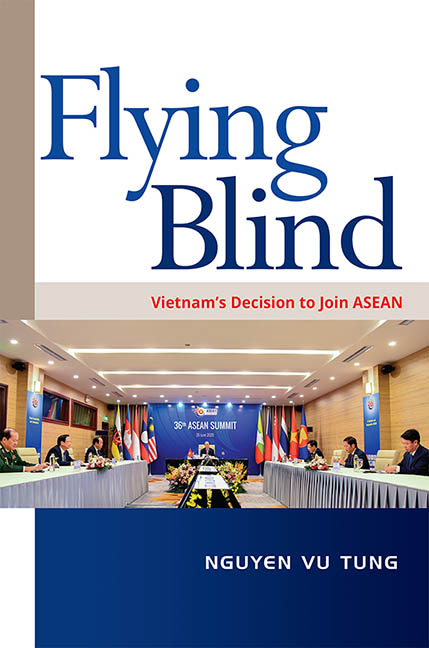
This book discusses Vietnam's relations with ASEAN in the period from the early 1970s to mid-1990s. It focuses on the evolution of Hanoi's view on ASEAN, from denial to integration in the organization. Further, it reveals the reasons behind Hanoi's decision to join ASEAN in 1995 in the context of the transformation of the overall Vietnam's foreign policy when the Cold War ended. Relaxation of the Cold War conditions allowed Hanoi to improve understanding of ASEAN that resulted in better Vietnam-ASEAN relations and subsequent Vietnam's membership in ASEAN. The author has had access to documents and interviewees that few other researchers can rival. And the richness of the empirical evidence of this book makes a significant contribution to the studies of Vietnam foreign relations in specific and Southeast Asian international relations in general.
The Islamic Party of Malaysia (PAS) is no stranger to coalition politics. It has a long history of working with others, both in government and in opposition. Up until 2018, it used the framework of tahaluf siyasi as the guide to forming coalitions. Under the pretext of tahaluf siyasi or political coalition, PAS joined the Barisan Nasional (BN) government in 1974. It was also a key player in the Angkatan Perpaduan Ummah (APU), Barisan Alternatif (BA) and Pakatan Rakyat (PR) opposition coalitions. But in the lead up to GE14, PAS decided to form the Gagasan Sejahtera coalition with much smaller parties—Berjasa and Ikatan. It dominated this coalition and the two partners were largely insignificant. After GE14, PAS decided to partner with UMNO in Muafakat Nasional, under the pretext of a new strategy called ta'awun siyasi or political cooperation. This is a looser partnership arrangement, in which the partners are not strictly bound to each other. The formation of Muafakat Nasional is a historic development, as it brings together the two biggest and oldest Malay political parties for the time in an exclusive manner. Bersatu joined the pact in 2020, making Muafakat Nasional the biggest Malay political force in Malaysia today. PAS sees its role as a unifier of the Muslim ummah, holding and keeping the peace between UMNO and Bersatu. For PAS, creating Malay Muslim unity is not just an effective political strategy but also a religious obligation.