To save content items to your account,
please confirm that you agree to abide by our usage policies.
If this is the first time you use this feature, you will be asked to authorise Cambridge Core to connect with your account.
Find out more about saving content to .
To save content items to your Kindle, first ensure no-reply@cambridge.org
is added to your Approved Personal Document E-mail List under your Personal Document Settings
on the Manage Your Content and Devices page of your Amazon account. Then enter the ‘name’ part
of your Kindle email address below.
Find out more about saving to your Kindle.
Note you can select to save to either the @free.kindle.com or @kindle.com variations.
‘@free.kindle.com’ emails are free but can only be saved to your device when it is connected to wi-fi.
‘@kindle.com’ emails can be delivered even when you are not connected to wi-fi, but note that service fees apply.
The Orang Rimba (literally, ‘People of the Jungle’) are one of many indigenous communities in Indonesia. They are described as ‘indigenous’ (asli) not so much in the international sense of being the ‘original inhabitants’ or ‘first peoples’ of a particular region whose presence predates that of the main or subsequently dominant communities, but rather because they are isolated from, or peripheral to, mainstream Indonesian society. The Orang Rimba live predominantly in heavily forested and remote parts of Jambi province, Sumatra, where they have carefully guarded their distinctive traditional beliefs and way of life and deliberately limited their contact with the surrounding society and the state.
Over the past few decades, the Orang Rimba have come under increasing pressure from the national government and local governments, as well as from outside civil society groups, to integrate into Jambi society. This has included efforts to convert them to one of Indonesia's six staterecognised religions, especially Islam, to change the way they dress and to persuade them to allow access to state health and education services as well as housing and agricultural projects. State schooling is particularly controversial, with some fearing that it will detach Orang Rimba students from their traditional systems of knowledge and land use and create identity conflicts. Moreover, changes to the state's management of national parks and conservation zones have impacted heavily on the mobility and lifestyles of the Orang Rimba.
The place of, and policies towards, the Orang Rimba and other indigenous communities raises important and difficult issues for government and broader society. Indonesia prides itself on having an ethos of ‘Unity in Diversity’ (Bhinneka Tunggal Ika) and on valuing and accommodating the immense cultural differences that exist across the archipelago. But indigenous communities test the limits of this putative embracing of diversity more severely than most of the other minorities discussed in this volume, such as the Chinese, Indians and Arabs. There are two reasons for this. First, the Orang Rimba do not seek to be part of mainstream society, and self-consciously assert their separateness. In this sense, their sense of ‘belonging’ to Indonesia is markedly different from that of most other minorities.
After the Coup brings together the work of a group of leading Thai intellectuals of several generations to equip readers to anticipate and understand the developments that lie ahead for Thailand. Contributors offer findings and perspectives both on the disorienting period following the Thai coup of May 2014 and on fundamental challenges to the country and its institutions. Chapters address regionalism and decentralization, the monarchy and the military, the media, demography and the economy, the long-running violence in Southern Thailand, and a number of surprising social and political trends certain to shape the future of Thailand. The volume will serve as a valuable resource for all those concerned with that future.
Since its independence in 1945, Indonesia has experienced decades of rapid social change that have affected every area of life and have reached even the most remote parts of the country. The impact on the experience of the population has been equally significant, especially for those individuals who are over the age of 60 today and have lived through much of this period. This book concerns older members of the Minangkabau ethnic group, one of Indonesia's many local cultures. The Minangkabau have an ancient matrilineal social structure that is embodied in their local law and customs (adat) and that, in the view of many Minangkabau, is under increasing pressure in the modern context. Today's older Minangkabau are deeply affected by these challenges to the traditional way of life which relate to fundamental social patterns, such as the nature of the long-established tradition of leaving their region of origin to work elsewhere (marantau) and the structure of relationships within the extended family, as well as the potential value of traditional practices in modern society. The gap between their expectations that were formed early in their life and the realities of life in modern Indonesia often create serious problems of cultural consonance that represent a personal challenge for which there is no precedent and no established strategy to address. This book is based on a long-term study of older Minangkabau in modern Indonesia with a focus on cultural consonance. It profiles the members of one family from a village in the highlands of West Sumatra whose members now live in cities across Indonesia as well as in their village of origin. The challenges but also the opportunities experienced by these individuals, and members of the older Minangkabau population in general, are characteristic of similar social change experienced across Indonesia in recent decades and illustrate the nature of culture shift in the rapidly urbanizing and modernizing context of modern Indonesia.
By any indicator, Indonesia, the fourth most populous nation on earth, is a development success story. Yet 20 years after a deep economic and political crisis, it is still in some respects an economy in transition. The country recovered from the 1997-98 crisis and navigated the path from authoritarian to democratic rule surprisingly quickly and smoothly. It survived the 2008-09 global financial crisis and the end of the China-driven commodity super boom in 2014 with little difficulty. It is now embarking on its fifth round of credible national elections in the democratic era. It is in the process of graduating to the upper middle-income ranks. But, as the 25 contributors to this comprehensive and compelling volume document, Indonesia also faces many daunting challenges -- how to achieve faster economic growth along with more attention to environment sustainability, how to achieve more equitable development outcomes, how to develop and nurture stronger institutional foundations, and much else.
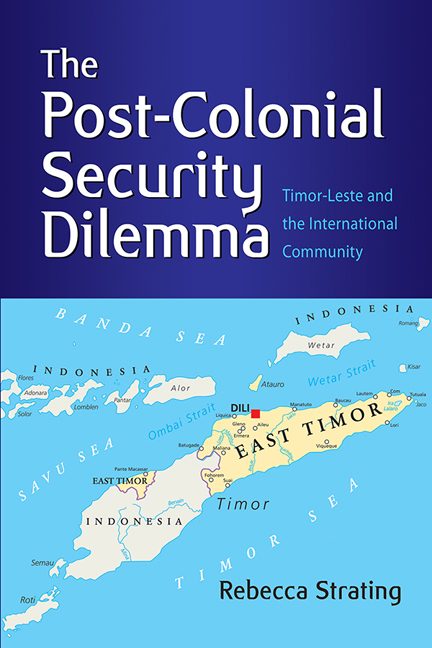
This book examines the development of Timor-Leste's foreign policy since achieving political independence in 2002. It considers the influence of Timor-Leste's historical experiences with foreign intervention on how the small, new state has pursued security. The book argues that efforts to secure the Timorese state have been motivated by a desire to reduce foreign intervention and dependence upon other actors within the international community. Timor-Leste's desire for 'real' independence -- characterized by the absence of foreign interference -- permeates all spheres of its international political, cultural and economic relations and foreign policy discourse. Securing the state entails projecting a legitimate identity in the international community to protect and guarantee political recognition of sovereign status, an imperative that gives rise to Timor-Leste's aspirational foreign policy. The book examines Timor-Leste's key bilateral and multilateral diplomatic relations, its engagement with the global normative order, and its place within the changing Asia-Pacific region.
At the end of August 2018, as this book was about to go to press, the United Nations Human Rights Council (UNHRC) released its report summarizing the main findings and recommendations of its Independent International Fact-Finding Mission on Myanmar. The report outlines serious human rights violations and abuses in Kachin, Shan and Rakhine States. It recommends that six senior military figures be investigated for genocide against the Rohingya, including Myanmar's armed forces commander-in-chief Senior General Min Aung Hlaing, and that the case be taken up by the International Criminal Court (ICC), or alternatively that an ad hoc international criminal tribunal be created (Human Rights Council 2018). The report notes that “The role of social media is significant. Facebook has been a useful instrument for those seeking to spread hate, in a context where for most users Facebook is the internet. Although improved in recent months, Facebook's response has been slow and ineffective” (p. 74). Facebook quickly responded to the report's release by removing the accounts of eighteen high-profile army figures in Myanmar, including Senior General Min Aung Hlaing, and fifty-two Facebook pages, which had a combined total following of close to twelve million users (Facebook 2018).
A few days later, two Reuters journalists, Wa Lone and Kyaw Soe Oo, were sentenced to seven years in prison under the Official Secrets Act over accusations of holding secret government documents that they intended to share with international media and the ethnic armed group Arakan Army (Sithu Aung Myint 2018). The two were arrested in December 2017 after investigating a massacre of Rohingya men and boys in the coastal town of Inn Din in northern Rakhine State. After responding to a call from police officers, who met them in a restaurant and handed them documents, the journalists were arrested for having the documents in their possession. As they were being taken away from the court after the sentencing, Wa Lone was quoted as saying, “We know we did nothing wrong. I have no fear. I believe in justice, democracy and freedom” (Shoon Naing and Aye Min Thant 2018, ¶22). The arrest and subsequent sentencing were met with national and international condemnation, as was the rejection of their appeal in early 2019.
“If the people get the right information about the army they will understand us.… They'll see the military is defending the interests of the people and implementing the interests of the people and defending against threats to the country.”
—Senior General Min Aung Hlaing
“We can say that we are free. But the problem is that we are not safe.”
—Blogger and activist turned politician Nay Phone Latt
“I attracted people to express their opinions and attitudes on my Facebook wall. Sometimes I feel upset and disappointed about the profane language used in writing on my wall. But, since the benefits outweigh the disadvantages, I shall continue to maintain this page.”
—Former Information Minister Ye Htut
The opening of online spaces and the rapid dissemination of mobile phones since the beginning of the political transition have made possible a forum for discussion unlike any before in Myanmar's history. Yet shocking examples of online hate speech have dominated international media headlines. Facebook, especially, has been identified as a significant forum for inciting the brutalities perpetrated against the Rohingya Muslims in Rakhine state. In March 2018, the chairman of the UN Independent International Fact-Finding Mission on Myanmar, Marzuki Darusman, told reporters that Facebook had played a “determining role” in the conflict. In April, Facebook's CEO Mark Zuckerberg testified in front of the U.S. Congress about his company's response to these accusations. And in August, a UN-mandated factfinding mission released its report calling for Myanmar's top military leaders to be investigated and prosecuted on charges of genocide, crimes against humanity and war crimes, and highlighting Facebook's role as a tool for those intending to spread hate. The release of this report sparked Facebook's decision the following day to remove eighteen Facebook accounts, one Instagram account and fifty-two Facebook pages affiliated with the military, including the official pages of Senior General Min Aung Hlaing, commander-in-chief of the armed forces, and the military's Myawaddy television network (Facebook 2018b).
Facebook's role in hate speech and the resultant waves of violence have dominated discussions and are detailed in the introductory chapter and the chapter by Sarah Oh in this volume. Yet the ways in which social media are bringing more hopeful new or hybrid forms of communication and expression are also important to highlight.
In December 2016, I made my twenty-fifth reporting trip to Rakhine State in western Myanmar. More than any other state, and any other conflict, Rakhine has changed me and my understanding of my country.
Even though my family is a mix of four ethnicities, I grew up as a Burman Buddhist. That gave me a double majority status and privilege, both religious and ethnic. Living in the capital Yangon, my life was coloured by propaganda from the military government. In our school history books we could only read about the Great Burmese empire. The histories of the minorities were left out. From the state-controlled newspapers we learned that the ethnic armed struggle was an insurgent, rebel movement created by people who wanted to destabilize the country. No one mentioned that the Burman-led military had unjustly taken control of the ethnic lands. All I knew about minority ethnic groups was their traditional costumes and dances. I did not know why they were fighting, or how their lives were affected by conflict. I grew up in ignorance.
In this chapter I explore the challenge of gaining access, and remaining independent, in an ethnic state where you are expected to be on one side of the conflict or on the other. For decades the military junta restricted access to information and wielded a powerful propaganda strategy. This has had a long-lasting impact. There is a massive communication gap between the Burman lowlands and the ethnic states, characterized by historic misunderstandings and misinformation, especially now that social media platforms are the primary way to share information. This has both caused and perpetuated intercommunal conflict between Rakhine Buddhists and Rohingya Muslims. Information is a power and a weapon, with all sides distorting and exaggerating it. It is hard to trust what people say and to do accurate media coverage. Even the words you use to describe northern Rakhine and the Rohingya are highly sensitive. The fact that the military has closed off a large area in the north of the state where the Rohingya historically lived makes access and understanding all the more difficult. In this chapter I use my own experiences doing fieldwork, conducting interviews and building trust to explore identity and language politics in Rakhine State and to explain the challenges of getting to the truth.
In editing a collection such as this one, we are faced with the issue of what to call the country: Burma or Myanmar, or both? Using which criteria? This issue has long been contentious, and any discussion of the transition period must in some way address the concerns that continue to be raised about the country's name and how it should be historically referenced.
The country became the Union of Burma upon its independence from the British in 1948. Shortly following the massive and violently suppressed uprisings of 1988, the military regime, the State Law and Order Restoration Council (SLORC), enacted the 1989 Adaptation of Expressions Law, changing the name of the country to the Union of Myanmar and many place names to reflect their Burmese-language pronunciation rather than the anglicized spellings prescribed by British colonial authorities. Rangoon, for example, became Yangon. Although the SLORC argued that the switch to Myanmar was more inclusive of ethnic minority groups, the name change was met with stiff resistance by opposition activists pushing for democratic change, who argued that it was made by an illegitimate, unelected regime without the people's approval through a national referendum. Many of those who sympathized with the opposition felt the name Burma was more inclusive than Myanmar. As a result, the use of one name over the other was, and remains for some, an indication of one's political position with respect to the military regime (Rogers 2012). The reaction of ethnic minority groups in the country has been mixed, but many feel that both names lack a sense of inclusion because they refer to the country's dominant ethnic group (Dittmer 2014).
International news outlets and governments around the world have taken different positions on this issue. The name change was recognized during military rule by the United Nations and by the governments of Japan and France, for example, but was not recognized by the United States, United Kingdom, Australia or Canada, which continued to refer to the country as Burma. The British Broadcasting Corporation (BBC) also referred to the country as Burma during the period of military rule, which they argued was due to the familiarity of the name rather than politically motivated (BBC 2007). The policy of the U.S. National Public Radio (NPR) network was to use Myanmar but to then reference the fact that the country was once called Burma (Memmott 2011).
In September 2017, editors from the ethnic media network Burma News International (BNI) gathered for a closed-door meeting in Hpa-An, Kayin State to discuss the fresh outbreak of violence in northern Rakhine and the impact on its network. Its Rakhine Buddhist member Narinjara News attended the meeting. Its Rohingya Muslim member Kaladan Press did not. One year later, in September 2018, there are no stories by Kaladan Press on BNI's website. In the current environment, being the only network in Myanmar with a Rohingya member is challenging and contentious.
The Rakhine crisis presents one of the most complex dilemmas BNI has faced during its fifteen-year history. Tensions surfaced with the first wave of anti-Muslim violence in June 2012, in the early days of the political transition. BNI's editor-in-charge, a Buddhist from Rakhine State, decided to stop posting stories from Kaladan Press on the network's news site. This unilateral move silenced the voice of the Rohingya member at a vital time and ensured that only the Rakhine member was heard. This was an abrupt wake-up call for the BNI leadership, already struggling to comprehend the political changes unfolding inside the country. To mitigate a potentially volatile internal crisis — and to create breathing space to evaluate the network's coverage of the anti-Muslim violence — a moratorium was placed on stories from both members.
The tensions did not stop there. In 2016, at BNI's annual ethnic media conference — held for the very first time in Rakhine State, in the historic town of Mrauk Oo — the Rohingya camps and the conflict were the elephant in the room, absent from the conference agenda. Kaladan Press was also absent. A group of Rakhine media outlets had made it clear that they would boycott the conference if BNI's Rohingya member attended, and there were concerns that the Rohingya editor would not be safe if he tried to cross the border from Bangladesh. One of the local Rakhine outlets, Root Investigative Agency — known for its coverage of the Rohingya plight — was also absent.
In August 2017, when violence again flared in northern Rakhine, BNI was once more confronted by its internal membership struggles. Once again, the leadership placed a moratorium on stories from its Rakhine and Rohingya members and endeavoured to calm tensions.
We need more films about strong topics, such as about violence against women.… If I make a film like that, I will not portray women as victims only. Some women are powerful, brave to speak up. Other women can learn from those women and that can be empowering for them.
—Hnin Ei Hlaing, independent filmmaker
Local filmmaking has played a crucial role in Burmese society since the first Burmese feature film hit the silver screen in 1920. Even during the decades of supposed economic stagnation and political isolation, Burmese film studios continued to produce feature-length movies that entertained audiences in the hundreds of cinemas throughout the country. Numerous black and white Burmese motion picture classics continue to be shown on Myanmar television, and, from the 1990s, aspiring filmmakers have increasingly made use of digital production and distribution. With changing technologies, the establishment of the Yangon Film School and the momentum of international film festivals, a new generation of filmmakers in Myanmar have been using film to point to formerly taboo topics, and they have been engaging film communities in the international arena with their works.
In a context in which creative expression inside the country was heavily stifled by a stringent government censor board, what happens when international filmmakers and political documentarians are suddenly allowed to mix with local filmmakers? How has the atmosphere changed for the motion picture industry during the political transition of this decade? In her book on political transition and Brazilian women's filmmaking, Leslie Marsh observed that political aperturism in the country coincided with technological advances in film and video, which set the ground for greater alternative video production (Marsh 2013, p. 32). Although Marsh's study coincided with the transition in video production from celluloid to video, we can also consider the ways in which entirely digital video production, and even smartphone video cameras, have affected the ways in which people document social worlds and produce and distribute motion pictures about them.
Following a summary of secondary and primary sources on the subject of film production in Burma, I will present an overview of the history of the Burmese film industry, from the British colonial period, to independence, to the years of the Burmese Socialist Program Party, and then the SLORC/SPDC years of strict censorship.
By
Susan Banki, political, institutional and legal contexts that explain the roots of and solutions to international human rights violations.,
Ja Seng Ing, advocate for the rights of internally displaced people (IDPs), vulnerable migrants and victims of trafficking.
In the mid-2000s, journalists from Burma working in exile in neighbouring countries faced constant safety challenges, be it intimidation from local police or surveillance by the Burmese military intelligence. In 2017, journalists from these same publications, now back in the country, faced new challenges: intimidation by government officials and arrests within the country. Given the uneven pace and patterns of change in Myanmar (see the introductory chapter to this volume) and the importance of media in covering these developments, it is useful to investigate how collecting and reporting news about Myanmar have evolved in line with the promises of that change.
In this chapter we use the twin concepts of precarity and mobilization to explore the tensions associated with media reporting about Myanmar over time, analysing the reporting of the (formerly) exiled media publication The Irrawaddy. The chapter explores coverage through an examination of the sources utilized and the substantive content and tone of the articles. We begin by reviewing The Irrawaddy's history and then position it through the lenses of mobility and precarity. After a discussion of methods, we compare the coverage in The Irrawaddy of three natural disasters, in both the English and Burmese editions, and supplement our analysis with interviews with members of staff. Our findings indicate that risks associated with reporting have lessened considerably, but tension remains as The Irrawaddy is hamstrung by conflicting goals that influence its coverage.
The Irrawaddy: Outside-In
The story of Myanmar's incomplete reforms would itself be incomplete without a discussion of The Irrawaddy, whose role as a publisher, in turn, of a monthly magazine, weekly print journal, video content, and now digital media has secured its place in the country's media history. Founded in exile in 1993 by Aung Zaw and other exiled journalists, The Irrawaddy went from an “amateurish, four-page newsletter” (Cochrane 2006, p. 87) to a website that reaches millions. Operating as exiled media from Thailand for its first two decades, The Irrawaddy's position — simultaneously out-of-reach from Myanmar's restrictive government but proximate to events in Myanmar at a time, prior to the internet, when information was not as easy to share across restrictive borders — allowed it to offer credible counter-narratives to official government sources. Its readership has included people both inside and outside the country, both English and Burmese speakers, and both military and opposition leaders (the latter while in prison), as well as other stakeholders.