To save content items to your account,
please confirm that you agree to abide by our usage policies.
If this is the first time you use this feature, you will be asked to authorise Cambridge Core to connect with your account.
Find out more about saving content to .
To save content items to your Kindle, first ensure no-reply@cambridge.org
is added to your Approved Personal Document E-mail List under your Personal Document Settings
on the Manage Your Content and Devices page of your Amazon account. Then enter the ‘name’ part
of your Kindle email address below.
Find out more about saving to your Kindle.
Note you can select to save to either the @free.kindle.com or @kindle.com variations.
‘@free.kindle.com’ emails are free but can only be saved to your device when it is connected to wi-fi.
‘@kindle.com’ emails can be delivered even when you are not connected to wi-fi, but note that service fees apply.
This chapter examines the Philippines’ government policy towards the South China Sea (SCS) dispute since 1995 in the context of bilateral relations with China as well as membership in the Association of Southeast Asian Nations (ASEAN). Specifically, it looks at how the country has managed its maritime dispute with China since the Mischief Reef incident in 1995 and the implications of the international court's ruling in July 2016 for its bilateral ties with China and ASEAN regional diplomacy, as well as its external defence posture. Using a neoclassical realist perspective, I argue that—despite the favourable ruling of the international court—the Philippines under the new administration of President Duterte still faces a number of challenges in managing its maritime conflict with China. These challenges include: difficulties in renormalization of relations with Beijing; the push for a regional Code of Conduct (COC) between China and the ASEAN in the SCS; and the dismal state of the Philippines’ external defence capability. This author also contends that, under new leadership, the Philippines should seriously consider embarking on developing selfreliance or self-help capability as part of its internal balancing strategy, which should have been the country's core defence strategy since 1992, to effectively protect its interests in the West Philippine Sea.
Self-help is fundamentally a principle of action in an anarchical system of states where each state actor is responsible for their own survival or security. Realists do not consider it prudent for states to rely on other states or institutions to ensure their security. While powerful states can pursue military or defence build-up when they feel threatened by other states, this may not be adequate for smaller states especially if they face a more powerful hegemonic state. To compensate, small states may resort to balance of power strategies by aligning with a more powerful state or forming alliances with other states to counter a perceived hegemony. From a neorealist perspective, states can pursue balance of power internally, by mobilizing internal resources to build economic and defence capability, and externally, by forming alliances or bandwagoning with other states. According to Waltz, power is a means to ensure a state's security and the concern of states is ultimately to maximize security.
Democratic practices of the Philippines, Asia's oldest democracy and the second most populous country in the ASEAN region, have been a puzzle to many scholars and observers of democracy. While vibrant in terms of voter turnout, civic engagement, and institutional protections, there are widespread flaws in Philippine democratic processes—illustrated by persistent pernicious elite politics, continued institutional weakness, and widespread abuse of public office.
The country's economic record is as patchy as its democracy. The long-standing description of the Philippines as the “sick man of Asia” has been rebutted by the country's rapid economic growth over the last decade (2007–17). However, with regular boom and bust cycles, and persistent deep-seated poverty and inequality, concerns remain about the equity and sustainability of this type of growth in the Philippines. Built on the legacies of Spanish and United States colonial rule, the Philippine state remains confronted by constant challenges to its legitimacy—including Asia's longest communist rebellion, Muslim separatist insurgencies in Mindanao, and large-scale public protests such as the first and second Epifanio de los Santos Avenue (EDSA 1 and 2), Philippine's People Power Revolution that forced changes in leadership through extra-constitutional processes.
“Change” has therefore been a recurring theme in Philippine political, economic, and social discourses. The discourse of change holds considerable appeal and permeates the everyday lives of ordinary Filipinos with remarkable intensity and frequency. The discourse informs the thinking of political observers who identify competing reformist and populist narratives of change in Philippine politics. Change seems to characterize the transition from the administration of Aquino II (2010–16) to the administration of current president Rodrigo Roa Duterte (2016–). Aquino II was elected on a technocratic “straight path” (daang matuwid) reform platform that challenged the widespread abuse of public office under the presidency of Gloria Macapagal Arroyo (2001–10). Duterte—a maverick former mayor of Davao city in Mindanao—rode high on a campaign promise in the 2016 presidential election of bringing about law and order in a swift and decisive manner, embodied in his slogan “Change Is Coming”.
But how much change has actually taken place? What kind of change is unfolding and for whom? Are we simply witnessing business-as-usual, fragmented Filipino elite politics, as a feature of discordant democracy in the Philippines?
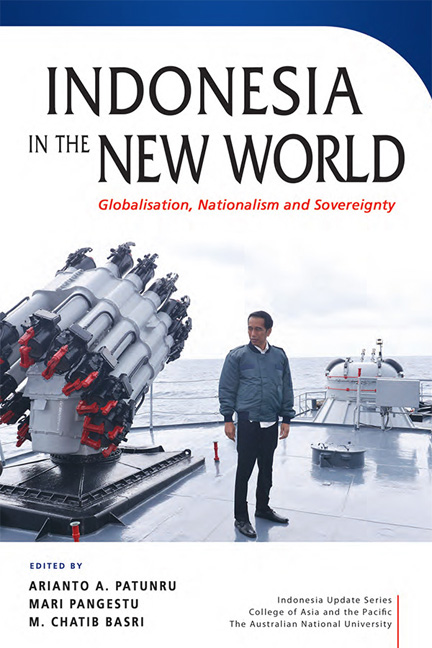
Globalisation is more complex than ever. The effects of the global financial crisis and increased inequality have spurred anti-globalisation sentiment in many countries and encouraged the adoption of populist and inward-looking policies. This has led to some surprising results: Duterte, Brexit and Trump, to name a few. In Indonesia, the disappointment with globalisation has led to rising protectionism, a rejection of foreign interference in the name of nationalism, and economic policies dominated by calls for self-sufficiency. Meanwhile, human trafficking and the abuse of migrant workers show the dark side of globalisation. In this volume, leading experts explore key issues around globalisation, nationalism and sovereignty in Indonesia. Topics include the history of Indonesia's engagement with the world, Indonesia's stance on the South China Sea and the re-emergence of nationalism. The book also examines the impact of globalisation on poverty and inequality, labour markets and people, especially women.
Southeast Asian Affairs, first published in 1974, is an annual review of significant trends and developments in the region. It provides comprehensive commentaries to further the understanding of not only the region's dynamism but also of its tensions and conflicts. Thematic chapters examine key issues for the region as a whole whilst country-specific chapters provide detailed roundups of the developments, and their implications, of the year's events.
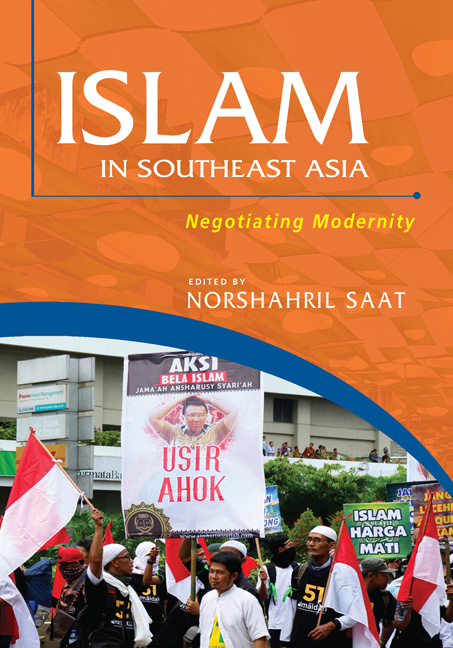
Islam in the Malay world of Southeast Asia or Islam Nusantara, as it has come to be known, had for a long time been seen as representing the more spiritual and Sufi dimension of Islam, thereby striking a balance between the exoteric and the esoteric. This image of 'the smiling face of Islam' has been disturbed during the last decades with increasing calls for the implementation of Shari'ah, conceived of in a narrow manner, intolerant discourse against non-Muslim communities, and hate speech against minority Muslims such as the Shi'ites. There has also been what some have referred to as the Salafization of Sunni Muslims in the region. The chapters of this volume are written by scholars and activists from the region who are very perceptive of such trends in Malay world Islam and promise to improve our understanding of developments that are sometimes difficult to grapple with.
This book offers an illuminating account of how material and ideational dynamics shape the evolution of Malaysia–Indonesia relations. It addresses the circumstances, conditions and constraints that determine the double-edged effects of the culturally bound “special relationship”. The author argues that while their shared serumpun identities and strategic interests do give rise to a considerable closeness between Malaysia and Indonesia, the politics of power (im)balance have prevented the transformation of the special relationship into a “pluralistic security community”, as their egoistic understanding averts the formation of collective self.
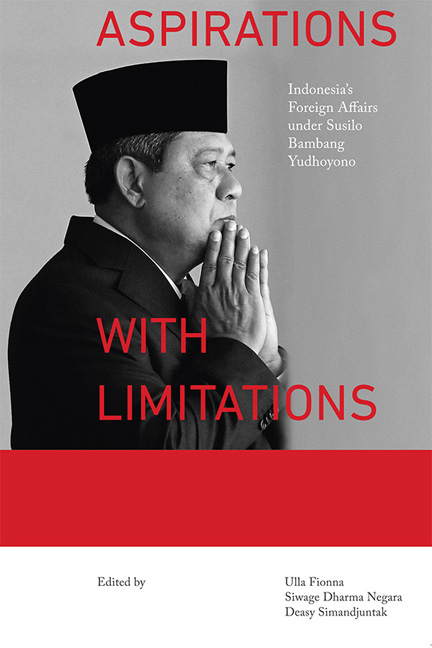
As the first directly elected Indonesian president, Susilo Bambang Yudhoyono (SBY) served at a crucial juncture in Indonesia's history. Succeeding the three short presidencies of BJ Habibie, Abdurrahman Wahid and Megawati Sukarnoputri, his presidency had a lot to prove. While critical assessment of SBY's domestic policies have been undertaken, less attention has been paid to his foreign policy. This volume seeks to fill this gap by examining key foreign policy issues during SBY's tenure, including bilateral relations, Indonesia's involvement in international organizations, and pivotal issues such as international labour and terrorism. The book provides an assessment of the direction of his foreign policy and management style, paying particular attention to his concerns over Indonesia's territorial integrity and sovereignty, the significance of international institutions, and Indonesia's right to lead.
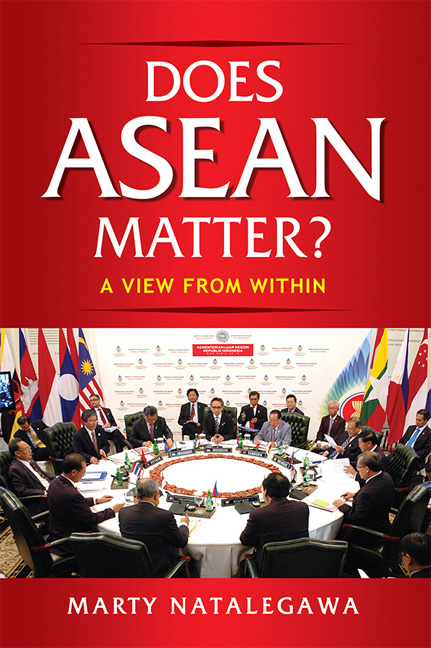
Written by the highly regarded diplomat Marty Natalegawa, former ambassador and foreign minister of Indonesia, this book offers a unique insider-perspective on the present and future relevance of ASEAN. It is about ASEAN's quest for security and prosperity in a region marked by complex dynamics of power. Namely, the interplay of relations and interests among countries — large and small — which provide the settings within which ASEAN must deliver on its much-cited leadership and centrality in the region. The book seeks to answer the following questions: How can ASEAN build upon its past contributions to the peace, security and prosperity of Southeast Asia, to the wider East Asia, the Asia-Pacific and the Indo-Pacific regions? More fundamentally and a sine qua non, how can ASEAN continue to ensure that peace, security and prosperity prevail in Southeast Asia? And, equally central, how can ASEAN become more relevant to the peoples of ASEAN, such that its contributions can be genuinely felt in making better the lives of its citizens?
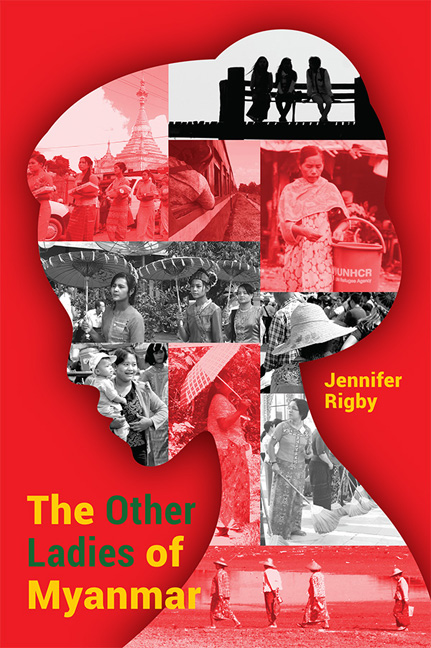
In Myanmar, Aung San Suu Kyi is often not called by her name. Instead, she is just "The Lady", an honorific nickname that signifies her place in the collective imagination of her country. And from global human rights icon to Myanmar's de facto leader, she is certainly a towering figure. But The Lady's reputation has only tarnished in recent years in the face of the persecution of her country's Rohingya minority. In this new book, we present some of Myanmar's other ladies: women from across the social spectrum who are changing their country, and its perceptions of gender, from the ground up. From the artist who defied the junta to hand out sanitary towels at her exhibition, to the Muslim campaigner who has already spent a quarter of her life in prison; from the feminist Buddhist nun to the pop star who gets called a whore for performing; these are the voices of The Other Ladies of Myanmar.
This volume is a book of reflections and encounters about the region that the Chinese knew as Nanyang. The essays in it look back at the years of uncertainty after the end of World War II and explore the period largely through images of mixed heritages in Malaysia and Singapore. They also look at the trends towards social and political divisiveness following the years of decolonization in Southeast Asia. Never far in the background is the struggle to build new nations during four decades of an ideological Cold War and the Chinese determination to move from near-collapse in the 1940s and out of the traumatic changes of the Maoist revolution to become the powerhouse that it now is.
The Philippine economy has grown rapidly since 2010, but despite this growth, poverty and inequality remain high. Two-thirds of the poor live in rural areas, and the weak performance of the agriculture sector has contributed to the slow improvement in livelihoods. The challenge for agriculture will further increase, with climate change posing a growing threat to the sector. But agricultural transformation to spur sustained growth and reduce poverty is still possible under climate change with aggressive institutional reforms and implementation of the right mix of policies and programmes. The identification of the suitable policy and programme combination requires an accurate assessment of the key drivers of agricultural growth and food security; the impacts of climate change on agriculture and the overall economy; and the effectiveness of policies for adaptation and growth. This book addresses these big issues, focusing on enhancing the adaptation capacity of the Philippine agriculture sector. It is designed to provide a much-needed base of knowledge and menu of policy options to support decision- and policymaking on agriculture, climate change, and food security. The volume uses newly generated data, modelling outputs, and innovative analyses to provide a scientific basis for a variety of adaptation measures under different sets of climate change scenarios to guide decision-makers in strategic planning and policy formulation.
2018 marks the 50th anniversary of the ISEAS - Yusof Ishak Institute. The Institute of Southeast Asian Studies, as it was then called, was established in 1968 by then Deputy Prime Minister Dr Goh Keng Swee in order to enable the newly independent city-state better understand the region and its complexities. Since its establishment, ISEAS has dedicated itself to researching the political, economic and socio-cultural dynamics and trends in Southeast Asia for policymakers, scholars, and other relevant stakeholders. On 12 August 2015, the Institute was officially renamed ISEAS - Yusof Ishak Institute, in honour of Singapore's first President. This book presents three public lectures given to commemorate the Institute's Golden Anniversary. Professor Leonard Y. Andaya delivered the first lecture entitled "Developments in the Scholarship of Southeast Asian Studies" on 21 February 2018. The second public lecture was delivered by Prime Minister Lee Hsien Loong on 13 March 2018. Professor Wang Gungwu delivered the final public lecture entitled "Before Southeast Asia: Passages and Terrains" on 3 October 2018. Collectively, these three public lectures exhort ISEAS to continuously reflect on its research agenda, the region, as well as the contemporary landscape and challenges it has to operate in.
Southeast Asian Affairs, first published in 1974, is an annual review of significant trends and developments in the region. It provides comprehensive commentaries to further the understanding of not only the region's dynamism but also of its tensions and conflicts. Thematic chapters examine key issues for the region as a whole whilst country-specific chapters provide detailed roundups of the developments, and their implications, of the year's events.
By
Thushara Dibley, Deputy Director, Sydney Southeast Asia Centre (SSEAC), University of Sydney, Sydney,
Antoni Tsaputra, PhD Candidate, Faculty of Arts and Social Sciences (FASS), University of New South Wales (UNSW), Sydney
‘My parents never treated me any differently to my brothers and sisters. I was given the same responsibilities as my siblings and the same opportunities […] And [being brought up like that] was so useful for my sense of independence. As I became an adult, I was able to do things on my own without having to bother anyone else.’
– Dewi
Dewi was born with a physical impairment and raised by a family who believed she was able to participate fully in the day-to-day activities of the family and the community. With the encouragement and support of her family, Dewi completed her education and is now the leader of the local branch of the Indonesian Association of Women with Disabilities, where she campaigns for the rights of other Indonesians with disability. By creating the conditions for Dewi to be educated and by supporting and encouraging her independence, her family challenged how most Indonesians think of people with disability—as being highly dependent, to be pitied and needing charity.
Stories like Dewi's are part of the reason that disability activists in Indonesia have campaigned so energetically for changes to how disability is conceptualised, legislated and funded by government organisations. For decades, being disabled in Indonesia, as in many other parts of the world, was seen as an impediment, a source of pity and a driver of acts of charity. This ‘welfare’ approach to disability was premised on the understanding that the source of the problem faced by people with disability was their impairments, and that support for people with disability was best delivered in the form of rehabilitation to ‘fix’ their impairments or through payments or other forms of charity. Over the course of the 1990s, the work of disability activists in the global north contributed to a significant shift in how disability was conceptualised, and therefore how support for people with disability was best delivered. The social model of disability, which places the onus of the problem not on the individual living with disability but rather on the social structures that make it difficult for those with disability to participate in society, has become the foundation for how disability is understood globally and, in turn, for how policy related to people with disability is formulated.
By
Robert Cribb, Professor of Asian History, Department of Political and Social Change, Coral Bell School of Asia Pacific Affairs, College of Asia and the Pacific, Australian National University, Canberra
Minorities have been a volatile phenomenon in Indonesia's social and political history for centuries. Over time, minority identity has been shaped by the imperatives of trade, by ideas of ritual purity and power, by ethnicity, by national allegiance, by religious affiliation and by lack of access to the full privileges of citizenship. Older forms of identity have existed alongside, and have sometimes intersected with, newer forms.
In today's world, we are accustomed to seeing minorities as disadvantaged. To belong to a minority is to have less than full acceptance as a citizen in the state where one belongs. It is to be treated, at least in some respects, as being alien in one's own country. The consequences of minority status range from neglect, social marginalisation and legal discrimination to forced assimilation, exclusion, expulsion and even extermination. In understanding minorities as communities under siege by their host societies, we quite correctly invoke the language of human rights and we propose remedies underpinned by law and education. If we are to chart a way forward, however, we need to understand that, historically, minority status has sometimes delivered advantage to the minorities themselves and to the host community. Minority status in Indonesia has been the product of complex social and political forces that have shifted over time. Minorities change character and sometimes disappear as historical circumstances change. We are now in the midst of a major change in the configuration of Indonesia's minorities.
Two categories of minority—trading minorities and ritual minorities (that is, minorities defined by perceived ritual ‘impurity’)—were known in the Indonesian archipelago in early times. The more important were the foreign trading minorities. Living as small communities in the trading cities and towns of the archipelago, they prospered above all when their shared identity provided a basis for trust within the community and among similar communities elsewhere, permitting the exchange of credit and information that was crucial to commercial success (Cohen 1971). Social distance from the host community, and consequent immunity from broader social obligations, was also important. Max Weber, focusing on the example of the Jews in Europe, called such minorities ‘pariahs’, implying that they were driven into commerce by hatred and contempt on the part of host communities, but more recent research has highlighted the positive consequences of ethnic solidarity, not only in commerce but also in other occupations (Dobbin 1996; Light and Karageorgis 2005).