To save content items to your account,
please confirm that you agree to abide by our usage policies.
If this is the first time you use this feature, you will be asked to authorise Cambridge Core to connect with your account.
Find out more about saving content to .
To save content items to your Kindle, first ensure no-reply@cambridge.org
is added to your Approved Personal Document E-mail List under your Personal Document Settings
on the Manage Your Content and Devices page of your Amazon account. Then enter the ‘name’ part
of your Kindle email address below.
Find out more about saving to your Kindle.
Note you can select to save to either the @free.kindle.com or @kindle.com variations.
‘@free.kindle.com’ emails are free but can only be saved to your device when it is connected to wi-fi.
‘@kindle.com’ emails can be delivered even when you are not connected to wi-fi, but note that service fees apply.
What purpose does place serve in films? When it is not just a background to actions, or indistinguishable from the landscape, or a simple space to walk through, a kind of neutral territory? Such filmmakers as Chantal Akerman, Lisandro Alonso, Pedro Costa, Bruno Dumont, Béla Tarr, Avi Mograbi, Tariq Teguia, Philippe Grandrieux, Danièle Huillet and Jean-Marie Straub, and Sharunas Bartas, chose not to focus solely the cinematic narration on the fate of the characters. They showed telluric spatialities, inhabited territories, existential matrices where ways of doing and of living were mobilized, where forces of emancipation and existential weaknesses were carried out. Welcoming rooms, remarkable transitions, havens for individual and communal destinies: place in cinema sometimes implies the insecurity of an unfinished project, sometimes the solidity of fortifications. The Sense of Place in Cinema demonstrates the importance of place and its aesthetic potentialities in film.
Born in Clydesdale, William Roy was a polymath and a visionary. His work established the path that would lead to the formation of the Ordnance Survey and to all of the paper-based and digital mapping products that we use today. His story - very much one of the Enlightenment - demonstrates how one man's curiosity and diligence enabled him to excel across a diverse range of topics: military reconnaissance and intelligence; the lessons that could be learned from the past about the tactical use of landscape; the science of determining the height of mountains; and the development of a meticulous methodology to achieve an unprecedented accuracy in topographical measurement. In this biography, Humphrey Welfare uncovers the career and activities of this important figure, and in doing so paints a vivid picture of the inner complexities of eighteenth-century Britain.
Norwegian Nightmares investigates the origins of this horror wave and charts its unique characteristics in relation to the chiefly American influences that inspired it. Norwegian nature and wilderness, in particular an obsession with dark and deadly water, give shape and national identity to Norway's tradition of horror cinema. Andresen studies the cinematic journey to the dark side of a wealthy, ostensibly peaceful and harmonious social democracy on the fringes of the Arctic. Case studies include: Dark Woods and Dark Woods 2 (Pål Øie, 2003 and 2015), Cold Prey trilogy (Roar Uthaug et al, 2006-2010), Next Door and The Monitor (Pål Sletaune, 2005 and 2011), Thelma (Joachim Trier, 2017), The Innocents (Eskil Vogt, 2021), Troll Hunter (André Øvredal, 2010) Ragnarok (Mikkel Sandemose, 2013), and Lake of Death (Nini Bull Robsahm, 2019).
François Hemsterhuis (1721-1790) was the most significant Dutch philosopher after Spinoza. Daniel Whistler argues that Hemsterhuis' philosophy matters and that its exclusion from the canon of modern philosophy has been unjust. This is not just because of its reception history - its influence on later German thinkers, such as Goethe, Hamann, Hegel, Herder, Hölderlin, Jean Paul, Kant, Jacobi, Novalis, Schelling, the Schlegels, Schleiermacher, Wieland - but is primarily because Hemsterhuis' philosophy contains a rich assemblage of ideas and philosophical practices.
Whistler looks specifically at Hemsterhuis' reflections on philosophical style and the strategies he employs to communicate ideas in his late dialogues. Taking seriously Hemsterhuis' newly-published complete correspondence as a significaphilosophical text, he contends that Hemsterhuis deserves to be placed alongside Shaftesbury, Hamann, Friedrich Schlegel, Kierkegaard and Nietzsche as one of the preeminent philosophical stylists of modernity.
This book sheds light on the contributions of architecture and its literary representations to a series of changes taking place in sexual culture during the late nineteenth and early twentieth-centuries in France, England, Germany and Austria. By analysing an important set of architectural discourses and literary representations of domestic architecture, the book illustrates the constant tension between an increasing sexual permissiveness and more conservative approaches to domesticity and sexuality. It shows the ways in which literature imagined the impact of new architectural designs on sexual culture that suggested the creation of more fluid forms of organisation of space and sexual mores.
This innovative study compares nineteenth-century Arabic translations of the Bible to determine how it emerged as a foundational text of Arab modernity. Bible translation gained global traction through the work of Anglophone Christian missionaries, who made an attempt at synchronising translated Bibles in world languages by laying down strict guidelines and supervising the processes of translation and dissemination. By engaging with the intellectual beginnings of two local translators, Butrus al-Bustani (1819-1883) and Ahmad Faris al-Shidyaq (1804-1887), as well as their subsequent contributions to Arabic language and literature, this book questions to what extent they complied with the missionaries' strategy in practice. Based on documents from the archives of Bible societies that tell the story of two key nahda versions of the text, we come to understand how colonial pressure was secondary to the process of incorporating the Bible into the nahda project of rethinking Arabic.
Although al-Maqrizi is recognised as the most influential historian of pre-modern Egypt, he has never received the probing historical treatment warranted by his standing and scholarly output. This book fills that gap. Arranged in three sections, it tells al-Maqrizi's life story in the first, weaves it with historiographical, textual and methodological analysis of his oeuvre in the second, and reconstructs the afterlife of the author and his work down to the present in the third part.
al-Maqrizi is presented both as a man of his age who forged a distinct and unique scholarly persona and a historian with a structured and principled project aiming to reconstruct the history of Islamic Egypt in all its facets. His, however, was a critical stance with moral overtones, conceived from within the epistemological framework of a medieval Muslim thinker, which ensured not only his reputation in his own historiographical tradition, but also his reclamation in the modern Egyptian consciousness as one of the most original voices of Egypt.
How did Victorian novelists engage with the new theories of human intelligence that emerged from late nineteenth-century psychology and evolutionary science? Assessing Intelligence traces the genealogy of the modern concept of IQ. It examines how five writers - George Eliot, Thomas Hardy, Henry James, HG Wells and Virginia Woolf - used the bildungsroman, or the novel of education, to wrestle with the moral and political implications of the IQ model of intelligence and the fantasies of meritocracy it provoked. Drawing upon the work of Michel Foucault and Jacques Rancière, Sara Lyons argues that Victorian and Edwardian novelists were by turns complicit in the biopolitics of intelligence and sought radical ways to affirm the equality of minds.
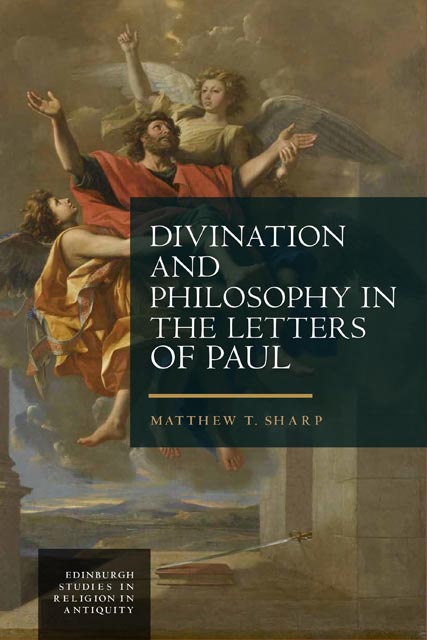
This book analyses the apostle Paul's claims to receive and interpret knowledge from divine sources within the context of divination in the Graeco-Roman world. Each chapter studies a particular aspect of divination in Paul's letters in comparison with similar phenomena in the Graeco-Roman world, dealing in turn with the underlying logic of divination (in the context of ancient philosophical conversations), visionary experience, prophecy and divine speech, the divinatory use of texts and the interpretation of signs. As such, the book forms an in-depth study of divine communication in Paul's letters, integrating this theme with the broader topics of cosmology, anthropology, eschatology and theology. While New Testament texts and early Christian figures have traditionally been studied from the vantage point of theological categories (such as 'revelation') that isolate early Christianity from its historical context in the Graeco-Roman world, this book re-reads Paul's thought and practice concerning divine communication within, not against, the Graeco-Roman thought and practice of divination. In doing so it illuminates the coherence and connections both between Paul and his historical context and between diverse topics of Paul's letters that have usually been studied in isolation from each other.
The Didi-Huberman Dictionary is a specialized introduction to the thought of contemporary French philosopher Georges Didi-Huberman, best known for his path-breaking philosophy of image and for his impact on the 'visual turn' in theoretical humanities.
With over 150 entries, including 125 main entries, the dictionary is a useful research tool for students coming to Didi-Huberman's work for the first time. Entries range from Theodor Adorno and Anthropology through to Materiality and Memory and on to Aby Warburg and Witnessing. Researchers already familiar with his work, but who want to develop a multi-faceted and more comprehensive understanding of the philosophical and cultural references woven into his thought, will gain deeper knowledge of the nuances of his conceptual apparatus, given the interreferential and intertextual aspects of his work.
The dictionary identifies and explains his key figures, inspirations and philosophical metaphors as well as introduces Didi-Huberman's polemics with other contemporary philosophers, including Giorgio Agamben and Jacques Rancière. Entries on concepts and motifs from Didi-Huberman's major texts that are (as of yet) not translated into English - 'Ce que nous voyons, ce qui nous regarde' (1992), and 'Ninfa moderna' (2002) - are also included.
This is your one-stop, go-to resource for learning more about the innovative, exciting work of Georges Didi-Huberman.
Between the 1920s and the 1950s, the heyday of fan magazines, Introduction to Advertising was published in several editions in the United States. Authored by advertising executives and academics, this industry handbook included advice on the distribution of advertisements and editorial material in magazines. It was recommended that advertisers exploit readers’ desire to finish articles. These should terminate among advertisements ‘to increase the probability of the advertisement's being read’ (Brewster, Palmer and Ingraham 1947, 85). This was considered so commonplace a practice that ‘every magazine reader has doubtless learned from his [sic] own experience that it accomplishes this result very effectively’ (85). We cannot know whether such reading strategies were followed by those perusing fan magazines. However, analysis of the interaction of advertisements and editorial material in fan magazines is particularly important because these elements are especially entwined. As well as using stars to advertise films, these publications promoted items endorsed by stars, which readers could buy to emulate them. Stars themselves are products, with editorial material not only sating readers’ desire for information about stars’ lives but contributing to their image. Sumiko Higashi's Stars, Fans, and Consumption in the 1950s: Reading Photoplay (2014) provides some useful comment on the relationship between advertisements and editorial material in the ubiquitous US fan magazine. Since structure has rarely been addressed in relation to fan magazines, and there is criticism that scholarship has unjustly focused on Photoplay due to its availability (Petersen 13 November 2013, n.p.), this chapter considers the contents and structure of Photoplay alongside four other magazine titles. In addition to the August 1955 issue of the little-known Filmalaya, I explore the 3 September 1955 issues of the British weeklies Picturegoer and Picture Show and September 1955 UK and US versions of the monthly Photoplay.
Concern with the interplay of advertisements and editorial material has more often been discussed by scholars addressing women's magazines. Since, as Sally Stein comments, women's magazines are ‘underwritten by advertisers’ (1985, 9), academic work focuses on the address to the increasingly powerful female consumer. Stein's ‘The Graphic Ordering of Desire: Modernization of a Middle-Class Magazine 1914–1939’ (1985) tackles the structural relation of advertisements to other features in the US women's magazine Ladies Home Journal at five-year intervals.
There are two seemingly contradictory, but interlocking historiographical frameworks through which historians have approached the Islamic Near East's responses to the onset of the Crusades. The first is the ‘counter-Crusade’ movement, which is generally applied to nearly all Muslim military, social and cultural reactions to Frankish entanglements in the eastern Mediterranean. The second is Michael Köhler's ‘la maqam’ or ‘no place’ theory, which contends that the Frankish polities established in the Levant were almost directly integrated into the Syrian political milieu by local autonomous rulers, who prioritised mutual survival over the religious obligations of jihad against the Franks.
The term ‘counter-Crusade’ (contre-croisade) was first coined in the 1930s by the French Orientalist René Grousset. According to Grousset, the counter-Crusade encompassed any attempt by Muslim peoples to combat the Crusaders, from 491/1098 onwards. Just one year after the publication of the first volume of a three-volume history of the Kingdom of Jerusalem, Grousset's ‘false conception’ of the Muslim counter-Crusade was strongly disputed by Hamilton A. R. Gibb. For Gibb, Grousset's interpretation of the ‘counter- Crusade’ was far too broad, as there was no Muslim ‘mass movement … swept forward by a wave of emotion’ until the time of Nur al-Din ‘at the earliest’.
Gibb's assertion that there was no organised opposition to the Crusaders during the first fifty years of the sixth/twelfth century was built upon by the Israeli scholar Emmanuel Sivan, who charted the development of an anti- Frankish jihad or counter-Crusade movement around the ‘pivot’ of Nur al-Din's career. As such, Sivan was the first to conflate the counter-Crusade with medieval Islamic conceptualisations of jihad, placing great emphasis on the writings of the early sixth/twelfth-century Damascene hadith scholar ʿAli ibn Tahir al-Sulami (d. 500/1106). Recent scholarship, based upon a broader range of source materials including religious hadith literature and jihad poetry, has corroborated much of Sivan's thesis.
However, some historians have drawn a distinction between counter- Crusade activity by Syrian and Egyptian political elites and non-elites, and jihad sentiment among the religious classes. There are also ongoing debates about the chronology underpinning the counter-Crusade movement.
What is the relationship between digital media and the material world, and how might our use of the former change our understanding of and place within the latter? A central concern of digital media theory from the late- 1990s onwards, the ethical aspects of this technological and (potentially) ontological change in relation to film is summed up by Markos Hadjioannou in From Light to Byte: Towards an Ethics of Digital Cinema (2012). As he describes, analogue cinema's indexicality ‘enables a realization on the part of the spectator of her or his existential position within the world and so qualifies an ethical implication in the image as the potential for responding to, and acting in, the world’ (2012: 177). Digital media, by contrast, offer not indexical trace but interactive, present-tense simulation, and so, for Hadjioannou, ‘cannot conjure up an image of the world as an existential guarantee’ (2012: 177). While assertions around the radical differences between analogue and digital capture have been challenged (see, for instance, Cubitt 2011), it is certainly the case that digital images and the networks that produce them offer a new kind of visual modality. In a digital age, vision becomes a method of filtering, rather than encountering, and the image becomes interactive and navigable (Manovich 2001; Verhoeff 2012). Images are no longer only observed, they are swiped, clicked, tagged, filtered, and shared. If they provide evidentiary proof, it is less as an authentication of a past moment than a trace of a flexible present, a conditional marker of temporary conditions.
All of this alters our ethical relationship to images. The new digital visuality is not principally voyeuristic or scopophilic but rather cartographic, defined by an informatic mode of automated recording and registering that seeks legibility and apparent usefulness. This is not to say that this is entirely novel: the digital's ‘cartographic gaze’ of remote presence certainly inherits impulses to catalogue and quantify familiar from colonial visual modalities – image-making and image-circulation remain methods for distant control and ideological persuasion (Specht and Feigenbaum 2019). Through interactive digital images, the perception of the user is extended beyond their temporalspatial confines. This is achieved through the digital generation of an algorithmic world, one which is less concerned with aesthetic appreciation than it is with bodily immersion and virtual presence.