To save content items to your account,
please confirm that you agree to abide by our usage policies.
If this is the first time you use this feature, you will be asked to authorise Cambridge Core to connect with your account.
Find out more about saving content to .
To save content items to your Kindle, first ensure no-reply@cambridge.org
is added to your Approved Personal Document E-mail List under your Personal Document Settings
on the Manage Your Content and Devices page of your Amazon account. Then enter the ‘name’ part
of your Kindle email address below.
Find out more about saving to your Kindle.
Note you can select to save to either the @free.kindle.com or @kindle.com variations.
‘@free.kindle.com’ emails are free but can only be saved to your device when it is connected to wi-fi.
‘@kindle.com’ emails can be delivered even when you are not connected to wi-fi, but note that service fees apply.
Vegan literary studies has been crystallised over the past few years as a dynamic new specialism, with a transhistorical and transnational scope that both nuances and expands literary history and provides new tools and paradigms through which to approach literary analysis. Vegan studies has emerged alongside the 'animal turn' in the humanities. However, while veganism is often considered as a facet of animal studies, broadly conceived, it is also a distinct entity, an ethical delineator that for many scholars marks a complicated boundary between theoretical pursuit and lived experience.
This collection of twenty-five essays maps and engages with that which might be termed the 'vegan turn' in literary theoretical analysis via essays that explore literature from across a range of historical periods, cultures and textual forms. It provides thematic explorations (such as veganism and race and veganism and gender) and covers a wide range of genres (from the philosophical essay to speculative fiction, and from poetry to the graphic novel, to name a few). The volume also provides an extensive annotated bibliography summarising existing work within the emergent field of vegan studies.
Written by practitioners for practitioners, this definitive handbook covers all of the main aspects of costs and funding issues encountered in the Scottish Civil Courts. It covers the routes to funding, when expenses may be sought, the court's powers in awarding expenses and provides detail on issues including Success Fee Agreements, Qualified One Way Cost Shifting, Pre-Action Protocols, Pursuers' Offers and Tenders, party Litigants, Amendment, Abandonment, Caution and Simple Procedure. It brings together all of the key legislation, court rules and judgments to provide a user-friendly and quick-reference guide to expenses law and practice.
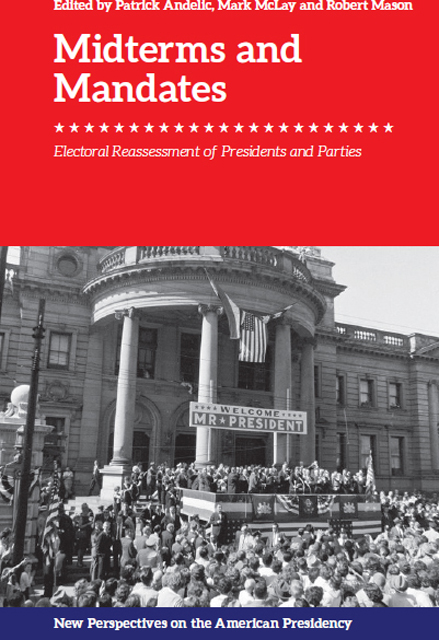
Midterm elections have forced presidents to adjust course and have heralded the rise or fall of new party coalitions, yet they remain understudied in comparison to their presidential counterparts. This book offers a fresh perspective on the American presidency by analysing the significance of midterm elections in the United States. Midterms not only provide an important opportunity for voters to evaluate the record of a president so far, but also have consequences for an administration's pursuit of the president's agenda over the two years that follow. As the essays in this collection show, midterms modify in crucial ways the mandate that a president gained at the time of their election to the White House. The volume integrates contributions from political scientists and historians to create a truly multidisciplinary understanding of the interplay between midterm elections and the American presidency.
This edited collection brings together discussions of literary works from Israel, the Occupied Palestinian Territories, the Palestinian and Jewish Diasporas, as well as from authors and creators not directly involved with the conflict who are seeking to unpack its complexities for a wider audience. It offers new perspectives into how the Palestine/Israel conflict is, and can be, represented after the Second Palestinian Intifada, an epochal event for both Israelis and Palestinians. This collection foregrounds the thematic concerns that link literary engagements with Palestine/Israel across the globe but also examines the role that aesthetic representation plays in framing the conflict and its power dynamics. It addresses how emergent forms of writing and representation illuminate but also redescribe conflict in the context of Israel and Palestine and how, as in the case of the investigative graphic novel for example, depicting this conflict has had reverberations for representing conflict and conflict zones more widely.
British Romanticism and Denmark shows how the articulation in British Romantic-period writing of the idea of a 'Northern' cultural identity - shared by Britain and Denmark and rooted in the Classical Scandinavian past - played an important role in the emergence and development of Romanticism and Romantic nationalism in both countries. By addressing a wide range of Nordic as well as Anglophone scholarship, this study offers new perspectives on British, Danish and European Romanticisms, and on the relationship between them.
Metaphor in Illness Writing argues that even when a metaphor appears problematic and limiting, it need not be dropped or dismissed. Metaphors are not inherently harmful or beneficial; instead, they can be used in unexpected and creative ways. This book analyses the illness writing of contemporary North American writers who reimagine and reappropriate the supposedly harmful metaphor 'illness is a fight' and shows how Susan Sontag, Audre Lorde, Anatole Broyard, David Foster Wallace and other writers turn the fight metaphor into a space of agency, resistance, self-knowledge and aesthetic pleasure. It joins a conversation in Medical Humanities about alternatives to the predominance of narrative and responds to the call for more metaphor literacy and metaphor competence.
Poetic Prosthetics provides an analytical tool for reading war and trauma literature, focussing on contemporary British and American soldier writing, published online in various forums by the soldiers themselves since the onset of wars in Iraq and Afghanistan, and in some cases, recent writings of veterans of the Falkland War.
The book presents a new perspective on the effect of violence on individual personalities as well as on the ability of veterans to reintegrate into society by addressing the damage done to language as an injury. It highlights that soldiers work through an incompatibility between a former way of life and their new linguistic reality by forming a different mode of speaking, through literature or poetry. The independent nature of these poems sheds light on the process of returning to life through writing, and on the life-giving force of literature for repatriated veterans.
This book analyses the way that changes in the comics industry, book trade and webcomics distribution have shaped the publication of long-form comics. The US Graphic Novel pays particular attention to how the concept of the graphic novel developed through the twentieth-century. Art historians, journalists, and reviewers debated whether it was possible for a comic to be a novel - debates that accelerated after the term 'graphic novel' was coined by the comics fan Richard Kyle in 1964. This study underlines the proximity of the graphic novel to other media, showing that this cultural form is not only the meeting place between periodical comics and books, but that graphic novels are in dialogue with films, posters and computer screens.
Since the 1990s, Arabic exile literature in Europe has increasingly become a literature written from the perspective of refugees, asylum seekers, undocumented migrants and others who are situated outside normatively defined citizenship. In this book, Johanna Sellman analyses the changing aesthetic and political dimensions of Arabic exile literature and demonstrates how frameworks such as east-west cultural encounters, political commitment and modernist understandings of exile - which were dominant in twentieth-century Arabic exile literature - have been giving way to writing that explores the dynamics of forced migration and the liminal spaces of borders and borderlands.
This book approaches film and television acting from an actor's perspective rather than that of an audience member, and therefore theorizes how screen acting works as a process that engages an actor's memory, imagination, emotions, and physical body in the creation of a character. It argues that film actors strive to perform profound empathetic connections with their characters and fellow actors, and then put themselves out there through performing to make those connections clear to the eventual audience. It combines interviews with working professional film and television actors, key insights and methods from Film, Television, and Theatre Studies, and theories of imagination and embodiment to show that screen actors are more than just 'the moving parts' of the mise-en-scene.
In the early twentieth-century, a group of Azerbaijani and Georgian artists and intellectuals reinterpreted the Middle Eastern trickster figure Nasreddin in their periodical Mollā Nasreddin. They used folklore, visual art and satire to disseminate a consciously radical and social democratic discourse on religion, gender, sexuality and power in South Caucasus and Iran. The periodical reached tens of thousands of people in the Muslim world, impacting the thinking of a generation.
This highly-illustrated book explores the milieu in which Mollā Nasreddin was born, the way the periodical recreated the trickster trope, and the influence of European graphic artists, especially Francisco Goya, on the journal. It focuses on the most creative period, 1906-11, when the journal reflected the social and political concerns of three major upheavals: the 1905 Russian Revolution, the 1906-1911 Iranian Constitutional Revolution, and the 1908 Young Turk Movement.
Writing the Past in Twenty-first-Century American Fiction examines contemporary novels profoundly shaped by a sense of historical consciousness. Authors including Ben Lerner, Colson Whitehead, Dana Spiotta, Hari Kunzru and Garth Greenwell each use flashbacks, historical parallels and non-sequential narrative arrangements to emphasise the re-emergence, in a twenty-first-century context, of historical structures and circumstances. This study explores how these frequent moments of temporal slippage amount to a 'falling out of time', as characters are forced to confront the past crises which continue to exert pressure on their own contemporary moment.
What happens to the cultural politics of human rights when atrocities are rendered calculable, abuses are transformed into data, and victims become vectors? As human rights organizations have increasingly embraced information technologies this 'datafication' of rights has become both a reality and a pressing concern, one inextricably tangled up with questions regarding the broader political valences of human rights.
Combining contemporary social and cultural theory with archival research and original ethnographic work, Josh Bowsher resituates recent critiques of human rights within ongoing theoretical discussions concerning informational capitalism, digital culture and the politics of data.
Critically analysing the contemporary human rights movement as an informational politics, Bowsher provides a new conceptual agenda for both exploring and overcoming the limits of human rights in an era shaped by the data flows, network infrastructures and informational logic of late capitalism.
Looking Beyond Neoliberalism explores how cinema is responding to the economic crisis that sprang to public attention in 2008 and continues to shape our politics and societies. Bringing French and francophone Belgian films into dialogue with carefully selected theories, O'Shaughnessy develops insights and an analytical framework that will become important resources for other scholars of contemporary cinema.
This book explores cinema's capacity to register mutations in subjectivity, the material grounds for identity construction and the machinic dimension of neoliberal subjection. It also probes its capacity to imagine alternative economies and identities and an exit from neoliberal labour. By developing fresh insights into political cinema, this book provides engages with cinema's response to neoliberalism in crisis.
Petrie reappraises Scottish politics in the decades after 1945, augmenting existing accounts of this period by foregrounding the importance of ideology and language. Founded upon original archival research, the book recovers the central role played within modern Scottish politics by an individualist, anti-bureaucratic critique of central government. Deployed initially by those on the political right to attack the programme of nationalisation implemented by the post-war Labour government, by the 1960s this rhetoric was being exploited by advocates of constitutional change. As liberty came to be framed in constitutional rather than economic terms, understandings of political representation also changed: crucially, the arrival of the referendum in British politics granted credibility to the belief that there existed a distinctive Scottish tradition of popular sovereignty. Focused upon Scotland, this study nevertheless engages with broader debates and will appeal to historians of modern Britain as well as political and legal scholars.
A lonely damsel imprisoned within a castle or convent cell. The eavesdropping of a prisoner next door. The framed image of a woman with a sinister past. These familiar tropes from 1790s novels and tales exploded onto the English literary scene in 'low-brow' titles of Gothic romance. Surprisingly, however, they also re-emerged as features of major Victorian poems from the 1830s to 1870s. Such signature tropes - inquisitional overhearing; female confinement and the damsel in distress; supernatural switches between living and dead bodies - were transfigured into poetic forms that we recognise and teach today as canonically Victorian. The Gothic Forms of Victorian Poetry identifies a poetics of Gothic enclosure constitutive of high Victorian poetry that came to define key nineteenth-century poetic forms, from the dramatic monologue, to women's sonnet sequences and metasonnets, to Pre-Raphaelite picture poems.
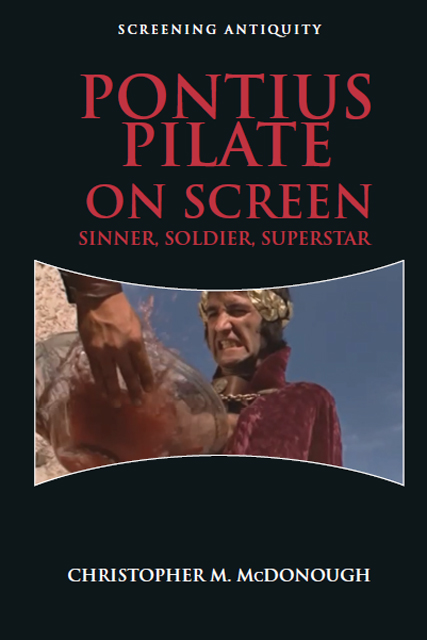
Pontius Pilate On Screen deals with one of history's most controversial characters. From Monty Python's 'Life of Brian' to Mel Gibson's 'Passion of the Christ', Pontius Pilate is a figure of evidently endless fascination to filmmakers. The Roman prefect is depicted at times as the hapless victim of machinations beyond his control and at other times as the heartless villain of the piece. If in films about the Passion Jesus represents eternal truth, Pilate symbolises the values of the present - whether it is the lingering trauma of the Holocaust, the ongoing struggle over Civil Rights or the polarised politics of the current day - as filmmakers endeavour again and again to portray in Pontius Pilate a compelling counter-figure to Jesus himself.
This book considers portrayals of Pontius Pilate in film from the silent era to the twenty-first century. It discusses over 25 films in detail, including Cecil B. DeMille's 'King of Kings' (1927), Norman Jewison's 'Jesus Christ Superstar' (1973), Martin Scorsese's 'Last Temptation of Christ' (1988), Mel Gibson's 'The Passion of the Christ' (2004) and Sony's 'Risen' (2016). Based on extensive archival research and original interviews with actors, screenwriters and producers, it offers an extended discussion of the history, tradition and reception of Pontius Pilate.
The Athenian Reconciliation of 403 BCE was the pinnacle of amnesty agreements in Greek antiquity. It guaranteed lasting peace in a political community torn apart by civil conflict, because it recognised that for society to cohere, vindictive action over crimes which predated the exchange of oaths was legally inadmissible. This study analyses the historical circumstances which led to the fall of democracy at Athens in 404, the civil conflict which followed under the Thirty Tyrants and the restoration of democracy and the rule of law in 403. It analyses afresh the Reconciliation Agreement in the light of New Institutionalist perspectives, showing that the resurrection of democracy was guaranteed by the rule of law and by the strict application of the agreement in the democratic law courts. It offers fresh readings of the clauses of the Agreement and the legal trials which followed in its wake and shows that the Athenian example was the paradigm not only for amnesties in the ancient world but for those since the seventeenth-century.
In the ancient Mediterranean world, individuals routinely looked for divine aid to cure physical afflictions. Contested Cures argues that the inevitability of sickness and injury made people willing to experiment with seemingly beneficial techniques, even if they originated in a foreign cultural or religious tradition. With circumstances of close cultural contacts, such as prevailed in Palestine, the setting was ripe for neighbouring Jews, Samaritans, Christians, Greeks and Romans to borrow rituals perceived to be efficacious and to alter them to fit their own religious framework. As a result, they employed related means of seeking miraculous cures. The similarities of these rituals, despite changes in the identity of the divine healers that they invoked, made them the subject of polemical discourse among elite authors trying to police collective borders. Contested Cures investigates the resulting intersection of ritual healing and communal identity.
This innovative study synthesises evidence for the full range of healing rituals that were practised in the ancient Mediterranean world. Examining both literary and archaeological evidence, it considers ritual healing as a component of identity formation and deconstructs the artificial boundary between 'magic' and 'religion' in relation to ritual cures.
New scholarship on Katherine Mansfield's The Garden Party and Other Stories together with creative work inspired by Mansfield. The last collection of short stories published in her lifetime, The Garden Party and Other Stories would solidify Katherine Mansfield's place as the most prominent modernist short story writer of her generation. Early reviewers of the collection commented on the similarities it shared with her previous collection, Bliss and Other Stories; however, while contemporary reviews were mixed, many emphasised the psychological power of her stories, praising how she was able to bring her characters to life in a way simple action could not. While it contains some of Mansfield's most sophisticated and well-loved stories, several of the stories in The Garden Party initially appeared in the Sphere, and thus were often dismissed as inferior. Mansfield herself felt some of these stories fell short of her desired effect, though recent scholarship has revealed their greater complexity. The essays in this volume, by both seasoned and newer Mansfield scholars, work to continue this conversation. The collection also includes Mansfield-inspired short fiction, two translations of memorial poems dedicated to Mansfield by Chinese and French contemporaries with accompanying notes, and a recently re-discovered book review by Mansfield. In addition, Sydney Janet Kaplan provides a reflection on her personal meeting with Christopher Isherwood, a writer heavily influenced by the life and work of Mansfield.