To save content items to your account,
please confirm that you agree to abide by our usage policies.
If this is the first time you use this feature, you will be asked to authorise Cambridge Core to connect with your account.
Find out more about saving content to .
To save content items to your Kindle, first ensure no-reply@cambridge.org
is added to your Approved Personal Document E-mail List under your Personal Document Settings
on the Manage Your Content and Devices page of your Amazon account. Then enter the ‘name’ part
of your Kindle email address below.
Find out more about saving to your Kindle.
Note you can select to save to either the @free.kindle.com or @kindle.com variations.
‘@free.kindle.com’ emails are free but can only be saved to your device when it is connected to wi-fi.
‘@kindle.com’ emails can be delivered even when you are not connected to wi-fi, but note that service fees apply.
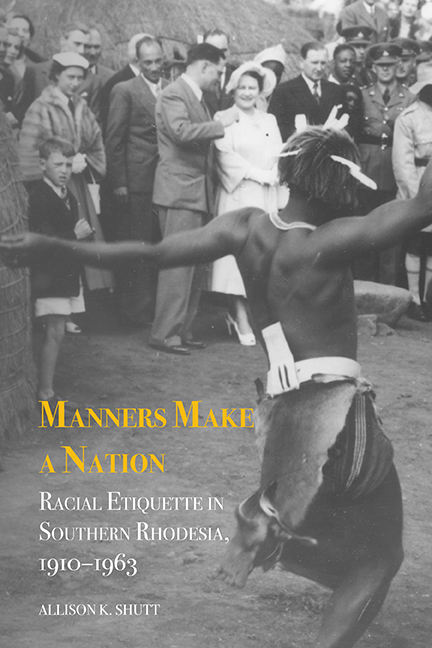
Shortlisted for the inaugural award of the ASAUK Fage & Oliver Prize Tells the story of how people struggled to define, refine, reform, and ultimately overturn racial etiquette as a social guide for Southern Rhodesian politics.
After 1945, France and West Germany were involved in a bitter dispute over the Saar, a small, coal-rich, culturally German territory bordering France's Lorraine region that France had occupied at war's end. French officials and the Saar's political elite attempted to wrest the territory from Germany and make it an independent nation oriented culturally towards France. Although France's occupation officially ended in 1947 with the ratification of a new constitution and elections, the new Saar state was not fully sovereign, as French control persisted until 1955. The Saar's status was an increasing concern for West Germany, partly due to its implications for the division of Germany. After lengthy negotiations, France and West Germany agreed to turn the Saar into a European territory and the seat of European institutions, much as today's Brussels. Saarlanders, however, saw this as a French ploy to maintain control, and in a heated 1955 referendum voted against it, leading to the territory's reunification with West Germany. This is the first study in English dealing with the German research of recent decades and citing original French and German sources.Bronson Long is Associate Professor of History at Georgia Highlands College.
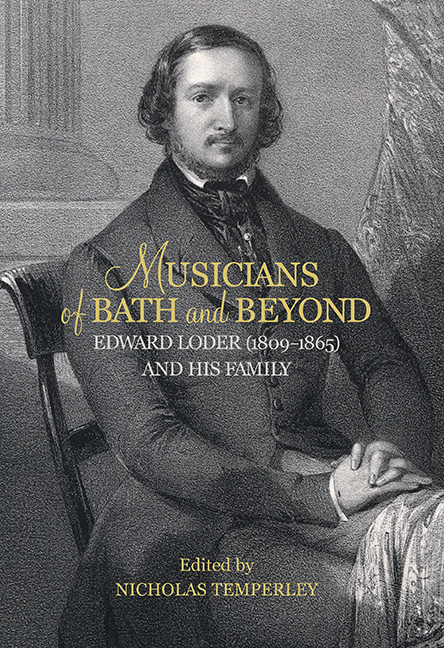
Musicians of Bath and Beyond: Edward Loder (1809-1865) and his Family illuminates three areas that have recently attracted much interest: the musical profession, music in the British provincesand colonies, and English Romantic opera. The Loder family was pre-eminent in Bath's musical world in the early nineteenth century. John David Loder (1788-1846) led the theatre orchestra there from1807, and later the Philharmonic orchestra and Ancient Concerts in London; he also wrote the leading instruction manual on violin playing and taught violin at the Royal Academy of Music. His son Edward James (1809-65) was a brilliant but underrated composer of opera, songs, and piano music. George Loder (1816-68) was a well-known flautist and conductor who made a name in New York and eventuallysettled in Adelaide, where he conducted the Australian premieres of Les Huguenots, Faust, and other important operas. Kate Fanny Loder (1825-1904) became a successful pianist and teacher in early Victorian London, and she is only now getting her due as a composer. This book takes advantage of new and often surprising biographical research on the Loder family as a whole and its four main figures. It uses them to illustrate several aspects of music history: the position of professional musicians in Victorian society; music in the provinces, especially Bath and Manchester;the Victorian opera libretto; orchestra direction; violin teaching; travelling musicians in the US and Australasia; opera singers and companies; and media responses to English opera. The concludingsection is an intense analysis and reassessment of Edward Loder's music, with special emphasis on his greatest work, the opera Raymond and Agnes.
NICHOLAS TEMPERLEY is Professor Emeritus of Musicology at the University of Illinois at Urbana-Champaign and is a leading authority on Victorian music.
CONTRIBUTORS: Stephen Banfield, David Chandler, Andrew Clarke, Liz Cooper,Therese Ellsworth, David J. Golby, Andrew Lamb, Valerie Langfield, Alison Mero, Paul Rodmell, Matthew Spring, Julja Szuster, Nicholas Temperley
Interweaves Eastern European postwar history, dissidence, and literature to expand our understanding of the significance of this important Lithuanian writer.
The late tenth-century Old English Metrical Calendar (traditionally known as Menologium) summarises, in the characteristic heroic diction and traditional metre of Old English poetry, the majorcourse of the Anglo-Saxon liturgical year. It sets out, in a methodical structure based on the basic temporal framework of the solar/natural year, the locations of the major feasts widely observed inlate Anglo-Saxon England. Such a work could have been a practical timepiece for reading the dates of the Anglo-Saxon Chronicle, for which it serves as a kind of prologue in the manuscript. The clearlydomestic perspective of the poem, which fits in the manuscript context, is also noteworthy, while the poem also reveals various interesting characteristics in its grammar, vocabulary and prosody. This is the first full modern edition of the poem, and is accompanied by a facing translation. The introduction provides an extensive discussion of matter, content, style, and context, while the commentary offers further information. The volume also includes the texts and translations of a number of analogous works.
Kazutomo Karasawa is Professor of English philology at Komazawa University, Tokyo.
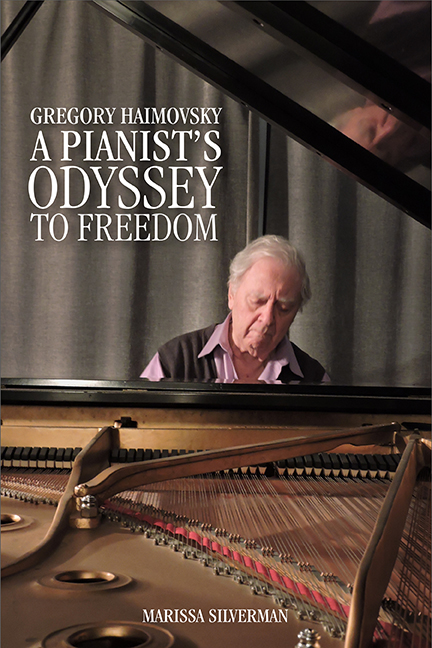
In the bleak cage of the Soviet Union, a brilliant pianist, inspired by the music of Olivier Messiaen, survived and triumphed. This is his story, told partly in his own words.
Lucas Fernández (1474-1542) fue músico, dramaturgo y poeta. De sus obras solo quedan las Farsas y Églogas que se publicaron en 1514 en Salamanca. La edición que aquí se presenta no pretende ofrecer lo que pudo ser el manuscrito original y se basa en el estudio cuidadoso de los dos únicos ejemplares que quedan del impreso de 1514. Va acompañada de una introducción novedosa, de numerosas notas a pie de página, imprescindibles hoy para la comprensión del texto, de un importante glosario y de una bibliografía al día.
Françoise Maurizi es profesora en la Universidad de Caen, Francia.
Lucas Fernandez was a musician, playwright and poet. His only surviving works are the Farsas y Églogaswhich were published in Salamanca in 1514. This edition doesn't attempt to reconstruct an original manuscript, but is based on a careful comparison of the two only surviving texts of the 1514 printed edition. It is accompanied by an original introduction, full and informative footnotes to the text, an important glossary, and an up-to-date bibliography.
Françoise Maurizi is a professor of Spanish at the Université; de Caen, France.
A look at how Hillary Clinton, Donald Trump, and American voters invoked ideas of gender and race in the fiercely contested 2016 US presidential election.
From the great age of pastoral expansion in the thirteenth century, to the revolutionary paroxysms of the English Reformation, England's religious writings, cultures, and practices defy easy analysis. The diverse currents of practice and belief which interact and conflict across the period - orthodox and heterodox, popular and learned, mystical and pragmatic, conservative and reforming - are defined on the one hand by differences as nuanced as the apophatic and cataphatic approaches to understanding the divine, and on the other by developments as profound and concrete as the persecution of declared heretics, the banning and destruction of books, and the emergence of printing. The essays presented in this volume respond to and build upon the hugely influential work of Vincent Gillespie in these fields, offering a variety of approaches, spiritual and literary, bibliographical and critical, across the Middle Ages to the Protestant Reformation and beyond. Topics addressed include the Wycliffite Bible; the Assumption of the Virgin as represented in medieval English culture; Nicholas Love and Reginald Pecock; and the survival of late medieval piety in early modern England. Contributors: Tamara Atkin, James Carley, Alexandra da Costa, Anne Hudson, Ian Johnson, Daniel Orton, Susan Powell, Denis Renevey, Michael G. Sargent, Annie Sutherland, Nicholas Watson, Barry Windeatt.
Representations of monsters and the monstrous are common in medieval art and architecture, from the grotesques in the borders of illuminated manuscripts to the symbol of the "green man", widespread inchurches and cathedrals. These mysterious depictions are frequently interpreted as embodying or mitigating the fears symptomatic of a "dark age". This book, however, considers an alternative scenario: in what ways did monsters in twelfth-century sculpture help audiences envision, perhaps even achieve, various ambitions? Using examples of Romanesque sculpture from across Europe, with a focus on France and northern Portugal, the author suggests that medieval representations of monsters could service ideals, whether intellectual, political, religious, and social, even as they could simultaneously articulate fears; he argues that their material presence energizes works of art in paradoxical, even contradictory ways. In this way, Romanesque monsters resist containment within modern interpretive categories and offer testimony to the density and nuance of the medieval imagination.
Kirk Ambrose is Associate Professor & Chair, Department of Art and Art History, University of Colorado Boulder.
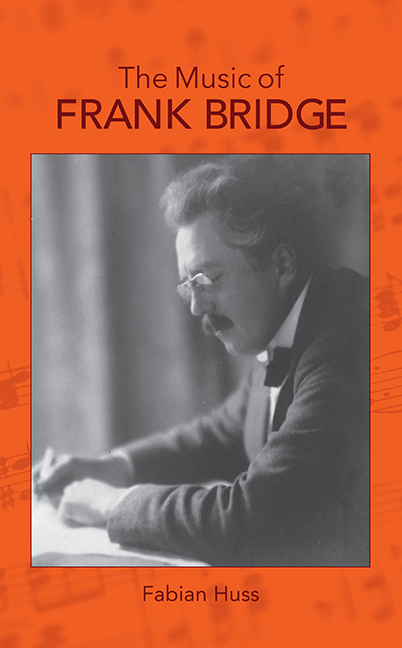
The English composer, violist, and conductor Frank Bridge (1879-1941), a student of Sir Charles Villiers Stanford, was one of the first modernists in British music, developing the most radical and lastingly modern musical language of his generation. Bridge was also one of the most accomplished British composers of chamber music in the twentieth century. After the lyrical romanticism of the early period, a notable expansion of style can be observed as early as 1913, leading eventually to the radical language of the Piano Sonata and Third String Quartet, drawing on influences such as Debussy, Stravinsky and the Second Viennese School composers. However, Bridge became frustrated that his later, more complex music was often ignored in favour of his earlier 'Edwardian' works; this neglect of his mature music contributed to the growing obscurity into which his music and reputation fell in his last years and after his death. Symptomatically, Bridge is still often remembered primarily for privately tutoring Benjamin Britten, who later championed his teacher's music and paid homage to him in the 'Variations on a Theme of Frank Bridge' (1937).This book, the first detailed, and long-overdue, study of Bridge's music and its relevant socio-cultural and aesthetic contexts, encourages a more thorough understanding of Bridge's style and development and will appeal to readers with interests in British music, early twentieth-century modernism and post-romanticism as well as genre and style.
Fabian Huss is Visiting Fellow at the University of Bristol and has published widely on British music (particularly E. J. Moeran), with an emphasis on cultural history, and aesthetic and analytical issues.
Drawing on a wealth of unexplored sources, this biography offers the first comprehensive critical reappraisal of the life and works of Nikolay Myaskovsky. Zuk's account is far removed from Cold War clichés of the regimented Sovietartist or sentimental stereotypes of persecuted genius.
Queen Elizabeth I (1558-1603) had a strong reputation for musicality; her court musicians, Thomas Tallis and William Byrd, even suggested that music was indispensable to the state. But what roles did music play in Elizabethan court politics? How did a musical image assist the Queen in projecting her royal authority? What influence did her private performances have on her courtships, diplomatic affairs, and relationships with courtiers? To what extent did Elizabeth control court music, or could others appropriate performances to enhance their own status and achieve their ambitions? Could noblemen, civic leaders, or even musicians take advantage of Elizabeth's love of music to present their complaints and petitions in song? This book unravels the connotations surrounding Elizabeth's musical image and traces the political roles of music at the Elizabethan court. It scrutinizes the most intimate performances within the Privy Chamber, analyses the masques and plays performed in the palaces, and explores the grandest musical pageantry of tournaments, civic entries, and royal progresses. This reveals how music served as a valuable means for both the tactful influencing of policies and patronage, and the construction of political identities and relationships. In the late Tudor period music was simultaneously a tool of authority for the monarch and an instrumentof persuasion for the nobility. Katherine Butler is a researcher and tutor at the University of Oxford.
The tale of the mysterious knight carried across the water by a swan to the woman he saves and marries is one of the great narrative traditions of the Middle Ages. The version in the German Lohengrin (ca.1300) is perhaps the most striking. It captures the imagination with the appearance of the epic poet Wolfram von Eschenbach as narrator, the changing forms of the swan, and Lohengrin's appearance as a warrior alongside Saints Peter and Paul. In the past, however, Lohengrin has been dismissed as an awkward amalgamation of earlier sources - partly due to more recent retellings of the material, such as Wagner's opera. This first monograph on Lohengrin in English presents a new response to the challenges the text poses. It is a study of how we read narrative across temporal distance, and at its heart lies the question: if a story is not held together by the chronological and causal links characteristic of modern narratives, how does it cohere? Alastair Matthews analyzes both the invocations of Wolfram that frame the text and the story of the Swan Knight that they enclose, arguing that Lohengrin is defined by a web of connections in which questions ofidentity and recognition are crucial, and thus that the themes at the core of the tale govern how it is told.
Alastair Matthews, DPhil Oxford, is a Marie Curie Research Fellow at the Centre for Medieval Literature, University of Southern Denmark.
Mysticism in Early Modern England traces how mysticism featured in polemical and religious discourse in seventeenth-century England and explores how it came to be viewed as a source of sectarianism, radicalism, and, most significantly, religious enthusiasm.
To evaluate the familiar, even over-familiar, story of Handel's life could be seen as a quixotic endeavour. How can there be anything new to say? This book seeks to distinguish fact from fiction, notonly to produce a new biography but also to explore the concepts of biography and dissemination by using Handel's life and lives as a case study. By examining the images of Handel to be found in biographies and music histories - the genius, the religious profound, the master of musical styles, the distiller into music of English sentiment, the glorifier of the Hanoverians, the hymner of the middleclass, the independent, the prodigious, the generous, the sexless, the successful, the wealthy, the bankrupt, the pious, the crude, the heroic, the devious, the battler of ill-fortune, the moral exemplar - and by adding new factual information, David Hunter shows how events are manipulated into stories and tropes. One such trope has been employed to portray numerous persons as Handel's enemies regardless of whether Handel considered them as such. Picking apart the writing of Handel's biographers and other reporters, Hunter exposes the narrative underpinnings - the lies, confusions, presumptions, and conclusions, whether direct and inferred or assumed - to show how Handel's 'lives' in biographies and histories have moulded our understanding of the musician, the man and the icon.
DAVID HUNTER is Music Librarian at the University of Texas at Austin.
The livery collar had a pervasive presence in late-medieval England. Worn about the neck to denote service to a lord, references to the collar abound in government records, contemporary chronicles andcorrespondence, and many depictions of the collar can be found in illuminated manuscripts and on church monuments. From the fifteenth century the collar was regarded as a powerful symbol of royal power, the artefact associating the recipient with the king; it also played a significant function in the construction and articulation of political and other group identities during the period. This first book-length study of the livery collar examines its cultural and political significance from the late fourteenth to the early sixteenth centuries, in particular between 1450 and 1500, the period associated with the Wars of the Roses. It explores the principal meanings bestowed on the collar, considers the item in its various political contexts, and places the collar within the sphere of medieval identity construction. It also investigates the motives which lay behind its distribution, shedding new light on the nature and understanding of royal power at the time.
Matthew Ward teaches medieval history at the University of Nottingham.
Recent scholarship on The Prince interprets the classic work in the context of Machiavelli's sixteenth-century Italy, but this scholarship neglects the source on which the moral and political world of the sixteenth century was based, the Christian Bible. In this study of The Prince, William Parsons plumbs Machiavelli's allusions to the Bible, along with his statements on the church,and shows that Machiavelli was a careful reader of the Bible and an astute observer of the church. Machiavelli's teaching in The Prince, Parsons contends, might be instructively compared with that of the church's teacher, Jesus Christ.
Parsons undertakes what recent interpreters of The Prince have not done: contrast Machiavelli's advice with the teachings of Christ. The result is a new reading of The Prince, revealing in Machiavelli's political thought a systematic critique of the teachings of the New Testament and its model for human life, Christ. In this study of the one of greatest works on politics ever written, Parsons not only challenges the most recent interpretations of The Prince but also gives new understanding to the reading that made Machiavelli famous.
William Parsons is associate professor of political science at Carroll College.