To save content items to your account,
please confirm that you agree to abide by our usage policies.
If this is the first time you use this feature, you will be asked to authorise Cambridge Core to connect with your account.
Find out more about saving content to .
To save content items to your Kindle, first ensure no-reply@cambridge.org
is added to your Approved Personal Document E-mail List under your Personal Document Settings
on the Manage Your Content and Devices page of your Amazon account. Then enter the ‘name’ part
of your Kindle email address below.
Find out more about saving to your Kindle.
Note you can select to save to either the @free.kindle.com or @kindle.com variations.
‘@free.kindle.com’ emails are free but can only be saved to your device when it is connected to wi-fi.
‘@kindle.com’ emails can be delivered even when you are not connected to wi-fi, but note that service fees apply.
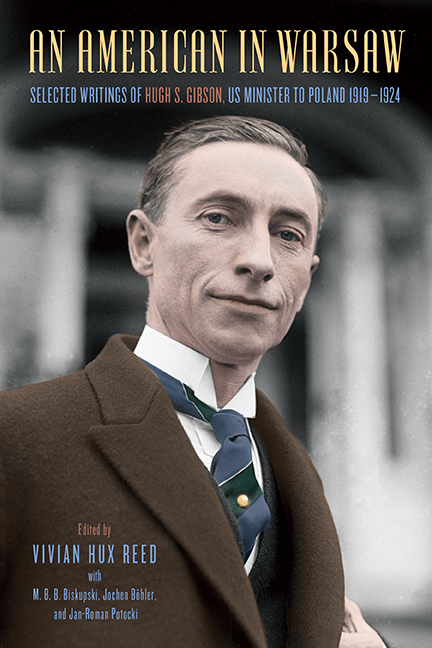
Hugh Gibson, US Minister to Poland from 1919 to 1924, recorded his involvement with the rocky first years of Polish statehood in this collection of official dispatches and personal letters.
Drawing from accounts of colonial experience in western Kenya, Population, Tradition, and Environmental Control in Colonial Kenya examines the government's efforts to enforce certain land management programs in relation to its initiatives to revive and co-opt African "traditions" in soil conservation and land consolidation programs. Martin Shanguhyia analyzes how these programs were negotiated or contested by the local community; further, he argues that their legacy continues to define the everyday experiences of the rural population in Vihiga County, Western Province, notably in termsof high population densities and diminishing returns from the land. Relying on a rich collection of archival sources as well as oral interviews, the book explores the intersection between government policies, demography, and community traditions within a rapidly declining natural environment and adds significantly to our understanding of Africa's environmental history.
Martin Shanguhyiais assistant professor of history at Syracuse University.
This book reveals Czech composer Bedřich Smetana as a dynamic figure whose mythology has been rewritten time and again to suit shifting political perspectives.
Examines the emergence of Brazilian psychiatry during a period of national regeneration, demonstrating how sociopolitical negotiations can shape psychiatric professionalization.
After the First World War, Vienna was overrun by jazz, Hollywood movies, and Fordism; its citizens were both fascinated and appalled by the waves of American ideas and products. To make sense of the American phenomenon, readers turned to Ann Tizia Leitich, the New York-based correspondent for Vienna's prominent daily Neue Freie Presse and other newspapers. Rob McFarland tells the story of Leitich's escape, occasioned by a personal crisis, from Austria to America in 1921, and of her rise as a journalist, cultural historian, and novelist. By the early 1930s, she had met President Coolidge, Senator Sol Bloom, the writer Upton Sinclair, and the critic H. L. Mencken. Her devoted readers - including the novelist Stefan Zweig and the Austrian chancellor Ignatz Seipl - sought in her witty,insightful descriptions of the United States some American vitality to invigorate their own moribund culture and economy. Chronicling Leitich's career as a journalist, cultural historian, and novelist and providing close readings of her writings about America, this book reveals her as an important cultural mediator between Austria and America.
Rob McFarland is Associate Professor of German at Brigham Young University.
This pioneering study of Parisian music-hall ballet brings to light a vibrant dance culture that was central to the renewal of French ballet at the turn of the twentieth century. Long thought a lost period for ballet in France, the fin de siècle in fact saw a flourishing of choreographic activity. More than four hundred ballets were created to great acclaim, half of which were full-scale pantomime-ballets, with entertaining narratives, catchy music, titillating choreography, lavish sets and costumes, appealing corps girls, and star ballerinas. Most of these productions were staged not at the elite Paris Opéra but in the city's trendiest commercial venues: music halls.Between 1871 and 1913, the Folies-Bergère, the Olympia, and the Casino de Paris brought together the era's leading authors of light theatre and comic opera to produce a flurry of imaginative ballets that combined the conventional structures of high art with the popular idioms of mass entertainment. They also drew unprecedented numbers of people who had never before attended ballet. 'Parisian Music-Hall Ballet, 1871-1913' rediscovers this repertoire and culture, supplying a missing chapter in the history of French dance.Sarah Gutsche-Miller is assistant professor of musicology at the University of Toronto.
Venanzio Rauzzini (1746-1810), the celebrated Italian castrato, is best known for his performance in Mozart's Lucio Silla in 1772, with which Mozart was so pleased that he composed for the singer the famous motet Exsultate Jubilate. In 1774, Rauzzini moved to London where he performed three seasons of serious operas at the King's Theatre. From 1777 until his death in 1810, he was the director of the concert series in Bath, a series that matched the prestige of any that were given in London. In addition, he composed prolifically, writing music for eleven operas.
This book is a study of Rauzzini's remarkable yet often overlooked career in Britain. Paul Rice chronicles Rauzzini's performances at the King's Theatre and examines his leadership of the Bath subscription concerts from 1780-1810, recovering much of the repertory. Rice shows in detail how Rauzzini responded musically to the social and political conditions of his adopted country, and analyzes the castrato's reception, as well as compositional choices, shedding new light on changing musical tastes in late eighteenth-century Britain.
Paul F. Rice is professor of musicology at the School of Music, Memorial University of Newfoundland.
By the 1840s Joseph Haydn, who died in 1809 as the most celebrated composer of his generation, had degenerated into the bewigged "Papa Haydn," a shallow placeholder in music history who merely invented the forms used by Beethoven. In a remarkable reversal, Haydn swiftly regained his former stature within the opening decades of the twentieth century. Reviving Haydn: New Appreciations in the Twentieth Century examines both the decline and the subsequent resurgence of Haydn's reputation in an effort to better understand the forces that shape critical reception on a broad scale.
Nosingle person or event marked the turning point for Haydn's reputation. Instead a broad resurgence reshaped opinion in Europe and the United States in short order. The Haydn revival engaged many of the music world's leading figures -- composers (Vincent d'Indy and Arnold Schoenberg), conductors (Arturo Toscanini), performers (Wanda Landowska), critics (Lawrence Gilman), and scholars (Heinrich Schenker and Donald Tovey) -- each of whom valued Haydn's music for specific reasons and used it to advance particular goals. Yet each advocated for a rehearing and rereading of the composer's works, calling for a new appreciation of Haydn's music.
Bryan Proksch is assistant professor of music history at Lamar University in Beaumont, Texas, where he specializes in the music of the late eighteenth century.
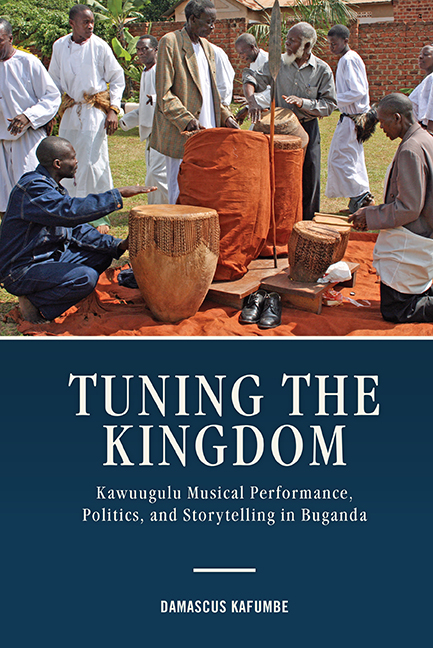
Examines how the Kawuugulu Clan-Royal Musical Ensemble uses musical performance and storytelling to manage, structure, model, and legitimize power relations among the Baganda people of south-central Uganda.
This pathbreaking study reveals Purcell's extensive use of symmetry and reversal in his much-loved trio sonatas, and shows how these hidden structural processes make his music multilayered and appealing.
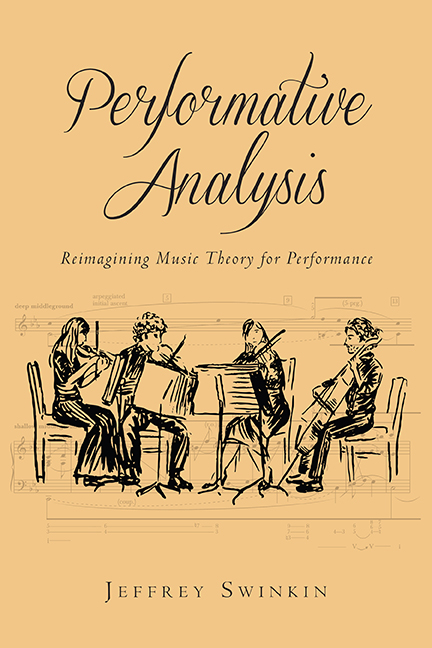
This book proposes a new model for understanding the musical work, which includes interpretation -- both analysis- and performance-based -- as an integral component.
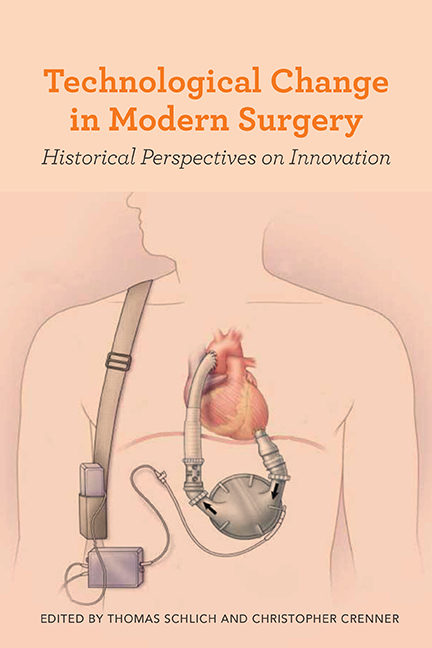
Examining the complex dynamics of medical treatment options and the variable character of surgical technologies, this volume broadens and transcends the notion of technological innovation.
This book examines Rossini within the context of his own time, one of Napoleonic domination of Italy, restoration of the Bourbon monarchy in Naples in 1815, and the 1830 Revolution in Paris. Using thetechniques of the historian, and reading librettos as texts, the author analyzes the five operas treated in detail in the book (Il barbiere di Siviglia, Cenerentola, La gazza ladra, Matilde di Shabran, and Il viaggio a Reims) as responses, each in its own way, to the history that the composer experienced. Roberts shows that Rossini made probing commentaries on politics and religion in a time of reaction and revolution, and that the composer was well-informed on post-Napoleonic politics. Rossini's comic writing served very serious purposes, exposing the problems and complications of an age that he observed with striking clarity.
Warren Roberts is Professor Emeritus of History at the University at Albany, SUNY, and has published extensively on eighteenth-century French culture.
Winner of the African Studies Association 2016 Bethwell A. Ogot Book Prize A lively account of the 1924 Revolution in Sudan and the way in which the colonial situation has affected its representation, a case in point in the histories of nationalist anti-colonial movements in Africa and the Middle East.
An exploration of the relations between medical and religious discourse and practice in medieval culture, focussing on how they are affected by gender.
Long recognized as one of the most important medieval treatises on music, the Musica of Hermannus Contractus is here presented in a newly revised translation, with commentary reflecting the best current scholarship.
A polymath and monk, Hermannus Contractus (1013-54) contributed to the important advancements made in European arts and sciences in the first half of the eleventh century, writing on history, astronomy, and time-keeping devices, among other topics, and composing several chants. His music theory, founded on a systematic treatment of traditional concepts and terminology dating back to the ancient Greeks, is concerned largely with the organization of pitch in Gregorian chant. Hermann's approach stems from Germanic species-based thought, and is marked by a distinction between aspects of form and aspects of position, privileging the latter. He expresses this in terms imported from then-new developments in Italian music theory, thus acting as a nexus for the two traditions. Numerology and number symbolism play significant roles in Hermann's theories, and his critiques of other theorists offer insights into medieval intellectual life. Hermann also uses chant citations and exercises to help his readers apply theory to practice.
John L. Snyder's revised edition of Ellinwood's long-standard 1952 text and translation offers a new introduction, including codicological descriptions of the sources; a critical edition of the Latin text with an annotated English translation on facing pages; appendices detailing the documents pertaining to Hermann's life, his citations of plainsong, and his original diastematic notation system; and greatly expanded indexes. Snyder's Musica will serve as the standard version of this major historical document for years to come.
Leonard Ellinwood (1905-94) served in the Library of Congress cataloging divisions in music and in the humanities for thirty-five years. He published scholarly works and editions of both medieval music and church music. John L. Snyder is Professor of Music Theory and Musicology at the University of Houston's Moores School of Music.