To save content items to your account,
please confirm that you agree to abide by our usage policies.
If this is the first time you use this feature, you will be asked to authorise Cambridge Core to connect with your account.
Find out more about saving content to .
To save content items to your Kindle, first ensure no-reply@cambridge.org
is added to your Approved Personal Document E-mail List under your Personal Document Settings
on the Manage Your Content and Devices page of your Amazon account. Then enter the ‘name’ part
of your Kindle email address below.
Find out more about saving to your Kindle.
Note you can select to save to either the @free.kindle.com or @kindle.com variations.
‘@free.kindle.com’ emails are free but can only be saved to your device when it is connected to wi-fi.
‘@kindle.com’ emails can be delivered even when you are not connected to wi-fi, but note that service fees apply.
What exactly is operetta? As a genre it seems defined by its lack of definition, by its inherent in-betweenness. On an aesthetic scale defined by opera at one end and music hall, revue and burlesque at the other, it lies somewhere in the middle. But where? True, it is difficult to disentangle operetta from the various kinds of variety theatre; it shares their fondness for a chorus line and a catchy refrain. On the other hand, the name operetta suggests a love–hate relationship with opera, its high-brow relative. ‘Little opera’ is generally shorter than opera (though what about concise classics of ‘big opera’ such as La bohème?), funnier than opera (though what about comic touchstones such as Il barbiere di Siviglia?) and less serious than opera (though the satirical bent of some operettas can be taken seriously). Perhaps, then, the difference is that it takes itself less seriously, with fewer pretensions to grandeur and more concessions to popular taste. Capitalising unashamedly on its popularity through promotional tie-ins, flaunting musical numbers poised to become well-known hits on the bandstand or on the mechanical piano, and almost invariably giving spectators the happy ending they desire: operetta is selling out, in all senses of the phrase.
This article presents a literary genealogy of the titular character in Verdi's Aida. While scholars have explored the opera's resonances with late nineteenth-century conceptions of Orientalism, Blackness and the imagined ‘East’, Aida's etymology and character traits reflect a much broader archetype that extends back a century from its 1871 premiere. Her name is not Egyptian or Ethiopian but Greek, and her backstory was modelled on characters named ‘Haidée’ and ‘Haydée’ who appeared in works by Lord Byron and Alexandre Dumas fils, as well as in a celebrated opéra comique by Daniel Auber. Aida was thus an assemblage of ready-made character archetypes and scenarios rather than an author's sui generis depiction of non-Western culture. An intertextual reading of Aida offers a broader perspective on alterity in the nineteenth century, which eschewed geographical specificity for archetypes, quotations and allusions. It also offers another way to confront claims of authenticity made by current-day defenders of brownface in Verdi's work.
In 1888, Norwegian newspapers eagerly announced the arrival of ‘Miss Gina Oselio’, who was returning to Norway ‘after seven years of staying abroad’. Oselio (Ingeborg Aas (1858–1937)) had achieved tremendous success as an opera singer in Europe and her performance on the Norwegian concert stage did not disappoint. Her new popularity positioned the singer as a member of the country's cultural elite and introduced a new complexity to her operatic identity. Unlike other Norwegian musicians who were treated primarily in terms of their nationality, her ‘Norwegianness’ had been largely incidental during her career. Oselio's private papers, however, offer new insights into the complex relationship between the singer and the nation. Together with her reception history, these materials invite a fresh examination of Oselio's position in fin-de-siècle Norwegian musical life. They show how she cultivated her career and her identity outside Norway, as well as her deliberate decision to assert her ‘Norwegianness’. They demonstrate the roles that Oselio wished to occupy on the country's stages and how other Norwegians responded to these roles. Ultimately, they document a period of transition, as artists, critics and audiences sought to determine the place that opera would occupy within the nation.
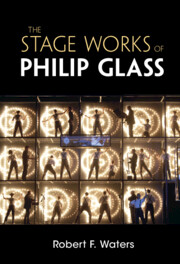
The Stage Works of Philip Glass is the first publication to exclusively examine Glass's stage works from 1976 to the present day. Glass, who is regularly acclaimed as the most popular living classical composer, created stage works that have had a mesmerizing effect on younger generations. Robert Waters analyses Glass and his music for the theatre in the context of other composers interested in so-called minimalist features. His discussion includes three introductory chapters that address the validity versus invalidity of terms such as minimalism, post-minimalism, postmodernism, and neo-Romanticism, together with a brief overview of Glass's life and works. Waters examines the different types of theatre responsible for Glass's impact, including Robert Wilson's Theater of Images. He sheds light on Glass's philosophy regarding staging, text, and other theatrical components, which includes a defiance of conventional narrative, visual and aural dissociation as a theatrical technique, and deconstructionist concepts.
On the score of his St Ludmila oratorio, Dvořák scribbled: ‘completed in the days when The Cunning Peasant was executed in Vienna’. Indeed, Dvořák's comic opera sparked a riot at its Hofoper premiere in 1885 and was met with harsh criticism in the Viennese press. David Brodbeck argues that the rioters were motivated to action not by The Cunning Peasant itself, but by the composer's nationality. Likewise, Brodbeck shows that the opera's harshest Viennese critics belonged to a new generation of German liberals, who subscribed to an increasingly ethnic, rather than civic, view of nationalism and were thus predisposed to disapprove of any Dvořák opera because it was not German. Based on this analysis, it would appear that Dvořák's fate was sealed long before the first notes of The Cunning Peasant were sounded at the Vienna Hofoper. This article builds on Brodbeck's claims, by exploring the Viennese scandal from the perspective of Czech critics, many of whom remained unconvinced that all Czech operas – whether by Dvořák or by another composer – would have been greeted with the same kind of disdain. In their view, The Cunning Peasant failed because it was too overtly Czech for Vienna, having been designed for Prague's Provisional Theatre, and because it was insufficiently representative of Czech achievement in the genre, paling in comparison with the operas of Smetana. Rather than offering a more plausible explanation for the riot, the opinions articulated in the Prague press reveal much about the biases and motivations of the Czech critics themselves.
Turning to the genre that was included in the repertoire of nearly every company, this chapter explores melodrama. Featuring only a select few performers, melodramas were showpieces for the finest dramatic actors and vehicles for their fame. The genre spread rapidly throughout the Empire, and although some recognized the role of Jean-Jacques Rousseau (1712–78) in melodrama's inception, it was eventually labelled ‘Germany’s daughter’. The success of Ariadne auf Naxos (Gotha, 1775) by Georg Benda (1722–95) led to an intense period of melodramatic reform. This chapter traces this reform movement through such pieces as Sophonisbe (Leipzig, 1776) by Christian Gottlob Neefe (1748–98), Benda’s Philon und Theone (Vienna, 1779), and Zelmor und Ermide (Vienna, c.1779) by Anton Zimmermann (1741–81). Arguing that such pieces as these pushed melodrama's generic boundaries to the verge of opera and imparted instrumental music with new aesthetic powers, this chapter offers new insight into music-text relations, generic hybridity, and melodrama's aesthetic entanglements with opera and symphonic music.
Based on a distant reading of key periodicals, this chapter investigates the music and musicians that received the most contemporary attention – and how recognition developed – throughout the era. It demonstrates in the first instance that the Reich had its own practical repertoire that transcended any one area, national tradition, or group of composers. Contemporaries often referenced musical titles without identifying a composer despite the fact that works could circulate in multiple versions by a single musician, in various settings by different composers, and as adapted texts by dramatists and musicians. But evidence suggests that the years around 1785 marked a moment of increasing normalization during which topics already set to music would be generally avoided and pieces circulating in multiple settings were increasingly linked to the work of just one composer. Establishing which music and musicians received the most attention, their relative importance to one another, and how associations between them altered in time, this chapter demonstrates that the Reich cultivated a shared repertoire that was formed and informed by networks of information and communication.
The final chapter explores music theatre as a cultural expression of the Empire. Dramatists and composers responded to current events by creating works of varying genres for the Empire's stages. Focusing on Günther von Schwarzburg (Mannheim, 1777; German serious opera) by Ignaz Holzbauer (1711–83), Oberon, König der Elfen (Vienna, 1789; Singspiel) by Paul Wranitzky (1756–1808), Heinrich der Löwe (Frankfurt am Main, 1792; Singspiel) by Carl David Stegmann (1751–1826), Die Feier des achtzehnten Jahrhunderts (Leipzig, 1794; melodrama) by Siegfried Schmiedt (1756–99), the anonymous Der Retter Deutschlands (Vienna, 1797; melodrama), and Achille (Vienna, 1801; opera seria) by Ferdinando Paer (1771–1839), this chapter argues that music theatre portraying the Reich called for cooperation in uncertain times by appealing to a sense of belonging to both local Estate and the Empire. Studies of these works tend to view them as expressions of an emerging German nationalism. This chapter challenges such perceptions, arguing that although the Reich was not a nation-state, composers nevertheless portrayed it as a complex nation and state, placing its past, present, and future centre stage.
This central chapter turns to written communication to explore its part in regulating and networking theatres and repertoire. It begins with an exploration of the types of information shared between troupes and how discursive networks supported their performances. Although theatres are commonly portrayed as having to compete to survive, this chapter reveals that they also regularly cooperated. By illustrating the equal importance of discursive networks and material exchange among the Großmann (touring), Mainz (ecclesiastical court-affiliated), and Schwerin theatres (secular court-affiliated), it reveals that theatre companies were designed with both court and public audiences in mind, and in practice cultivated a shared repertoire. Programming choices were made to some degree based on location, the status of audiences, tastes of patrons, and access to performance materials. But this chapter argues that such decisions were usually owing to the intense communication of theatrical information and recommendations between theatre directors and enthusiasts – and, ultimately, on the expectations to which a collective imperial culture gave rise.
This chapter maps the vast web of German-language theatres that connected Central European audiences around the year 1800. Using periodicals and missives written by those active at these institutions, it investigates how the network functioned in practice as well as how it was imagined across vast distances. It explores the mobility of theatre companies to at once redraw the theatrical map of late eighteenth-century Central Europe and challenge perceptions of oppositional court and public music cultures. The Reich's theatrical network simultaneously existed in the imaginary thanks to print culture and a reading public. While touring companies made the journey from one performance location to the next, readers could be transported to theatres scattered across the Empire with the turn of a page. This rendered the network as much a political and theatrical reality as an imaginary realm, where the bandwidth of data was as important as the institutions, personnel, repertoires, and developments the information conveyed. The Empire’s musico-theatrical complex – both physical and imaginary – was the foundation upon which a shared imperial repertoire could be cultivated.