To save content items to your account,
please confirm that you agree to abide by our usage policies.
If this is the first time you use this feature, you will be asked to authorise Cambridge Core to connect with your account.
Find out more about saving content to .
To save content items to your Kindle, first ensure no-reply@cambridge.org
is added to your Approved Personal Document E-mail List under your Personal Document Settings
on the Manage Your Content and Devices page of your Amazon account. Then enter the ‘name’ part
of your Kindle email address below.
Find out more about saving to your Kindle.
Note you can select to save to either the @free.kindle.com or @kindle.com variations.
‘@free.kindle.com’ emails are free but can only be saved to your device when it is connected to wi-fi.
‘@kindle.com’ emails can be delivered even when you are not connected to wi-fi, but note that service fees apply.
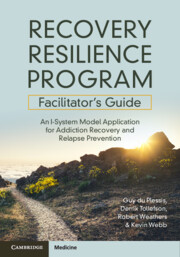
A manual for those working with addicted populations (from lay counsellors to psychiatrists) for delivering the evidence-based Recovery Resilience Program (RRP). RRP is a person-centered, strength and resiliency-based relapse prevention and recovery-oriented intervention that works in synergy with other models, especially 12-Step programs. Presenting practices that enhance 'recovery resilience' – an individual's capacity to effectively apply coping and self-regulation skills in dealing with cravings, triggers, stress, and high-risk situations without reverting to substance use. The program helps individuals to enhance and use their recovery capital at any stage of recovery, and ultimately reach recovery and life goals. It effortlessly integrates with other evidence-based relapse programs, from the original cognitive-behavioral approaches to the newer mindfulness-based and metacognitive approaches. Written by clinicians who have worked with addicts and their families for many decades, the program is easy-to-implement and very little preparation is necessary with handouts and PowerPoints included in each session.
Operations management has an important role in improving healthcare. Some of its core concepts and tools, such as Lean and statistical process control, have their own Elements in this series. In this Element, the authors offer an overview of three major topics in healthcare operations management: capacity and demand, focus, and people and process. They demonstrate how queuing theory reveals counterintuitive insights about capacity utilisation and waiting times, examine how strategic focus can achieve significant productivity gains while creating potential inequities, and explore why process improvements must account for human behaviours like multitasking and workarounds. Using practical examples, the authors illustrate both the critical role and the limitations of operations management against a backdrop of high demand and resource constraints. This title is also available as open access on Cambridge Core.
Effective leadership is critical to ensuring safety, efficiency and maximum productivity in the operating room (OR). This practical, evidence-based third edition focuses on the dynamics of a successful OR environment to underline the key techniques for management of policies, systems, staff members and teams. Fully updated to include recent clinical guidelines, the book provides the 'A-Z' of OR management, including sections on metrics, scheduling, human resource management, leadership principles, economics, quality assurance, recovery, ambulatory practice and topics specific to anesthesia and pain service providers. Featuring new chapters on the role of artificial intelligence in transforming operating room perform, training, certification and career development, instrumentation management, and safety of operating room personnel. With contributions from authors with unrivalled experience in the field, this new edition continues to be an essential guide for anyone working in the OR including anaesthesiologists, surgeons, nurses, and administrators.
Focusing on the principles of physiological interpretation of CTG, this new edition promotes an evidence-based approach to interpreting fetal heart rate changes. Traditional classification systems are arbitrary and associated with increased caesarean sections without improvements in perinatal outcomes. Guiding the reader in the use of novel tools to help eliminate avoidable, intrapartum-related fetal hypoxic-ischaemic brain injuries and their long term consequences such as cerebral palsy and learning difficulties, this book moves away from traditional, illogical classification systems. Topics such as non-hypoxic causes of fetal brain injury, types of intrapartum hypoxia, and medico-legal issues are clearly explained, and new chapters on human factors in CTG interpretation and the development of new technologies that can reduce human errors are included. Methods discussed comply with the International Expert Consensus Statement on Physiological Interpretation of CTG (October 2024), authored by over 50 CTG experts from over 20 countries.
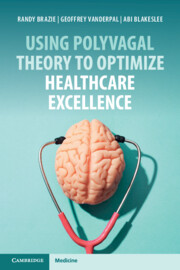
Healthcare organizations face ongoing challenges, including staff shortages, high rates of burnout, and a complex regulatory and financial environment. This book is among the first of its kind to introduce Polyvagal Theory (PVT), and how it explains human behavior under stress. Understanding human responses to stressful situations holds significant value in enhancing patient care and operational efficiency, leading to happier staff, increased productivity and decreased costs. PVT can be widely applied, including in human resources and workplace policies and procedures, providing significant benefit in both direct patient care and business aspects of any health care organization. Exploring the core tenets of PVT, this book equips healthcare providers and organizations with the knowledge to understand and apply this theory effectively. Featuring easy-to-understand exercises which can be applied in any setting, this is an essential guide for all healthcare providers seeking to implement PVT into their policies, procedures, and clinical interventions.
Suicide is not simply a typology of violence. All forms of violence are interrelated, and preventative action should tackle the common antecedents to all. Understanding what these are, and how they differ between regions and cultures, is key to developing effective violence prevention strategies that extend beyond suicide. In this chapter we discuss the relationship between suicide and other forms of violence including analysis of data from the World Health Organization. We then consider factors influencing volume and direction of violence including gender, poverty, drug and alcohol misuse, adverse childhood experiences, war, and natural disasters. Before finally moving on to preventative action that considers all forms of violence under the same framework. Throughout the chapter real-world examples will be given for important concepts with particular reference to self-immolation in South Asia and the Eastern Mediterranean Region as it is the authors’ area of research expertise.
This chapter describes the Mental Health Gap Action Programme (mhGAP) and the mhGAP-Intervention Guide (mhGAP-IG) developed by the World Health Organization (WHO), aimed at scaling up suicide prevention and management services to bridge unmet need.The mhGAP-IG is an evidence-based tool for mental disorders with structured and operationalised guidelines for clinical decision-making targeting non-specialist community and primary care workers in low and middle-income countries (LMICs).
The aim of this book is to provide evidence to inform the development and implementation of suicide prevention globally. It covers a range of topics that are relevant from local to national levels. It has an unapologetic emphasis on social determinants of suicide and a global perspective, with utility across the world as a primary resource by practitioners and policymakers. It aims at accessibility, with an emphasis on what can be achieved given the current knowledge base.
A central message of this book is the importance of using rigorous evidence to guide suicide prevention, whilst recognising that the best evidence is always partial. Key research is cited in the text and readers are, in places, directed to public-domain digital resources. The book aims to have relevance in low- and middle-income countries, as well as in high-income countries. It is not a country-by-country international overview.
Before examining how the regulation of bioethical matters impacts the equal right to live in the world for people with impairments, Chapter 1 elaborates on key concepts relevant for the book’s later chapters: disability, eugenics, ableism, and neoliberalism. It begins with a critical discussion of the medical and social models of disability, the two dominant approaches to understanding disability in disability studies. The chapter also highlights the troubled recent history of eugenics, the concept of ableism and the persistence of ableist policies and practices, as well as the importance and shortcomings of disability rights laws in furthering disability justice and equality.
Beyond the demographic factors of socio-economic disadvantage, inequality and unemployment, some occupations have been historically linked with higher rates of suicide deaths. These include: the armed forces, farmers, healthcare workers (including doctors), and “blue light” emergency workers, or “first responders,” for example, police, ambulance, rescue and fire personnel. Where available, the chapter draws upon systematic reviews and meta-analyses to discuss the evidence in specific occupational groups; the risk indicators and protective factors for suicide at individual, organisational and systemic level; and potential interventions over the course of a worker’s career. Understanding occupational risk factors over the career span from recruitment, self-selection and selection, through work environments and cultures, occupational trauma and stresses, could yield strategies for more generalisable suicide prevention at a population level as well as reducing rates in specific occupations.