To save content items to your account,
please confirm that you agree to abide by our usage policies.
If this is the first time you use this feature, you will be asked to authorise Cambridge Core to connect with your account.
Find out more about saving content to .
To save content items to your Kindle, first ensure no-reply@cambridge.org
is added to your Approved Personal Document E-mail List under your Personal Document Settings
on the Manage Your Content and Devices page of your Amazon account. Then enter the ‘name’ part
of your Kindle email address below.
Find out more about saving to your Kindle.
Note you can select to save to either the @free.kindle.com or @kindle.com variations.
‘@free.kindle.com’ emails are free but can only be saved to your device when it is connected to wi-fi.
‘@kindle.com’ emails can be delivered even when you are not connected to wi-fi, but note that service fees apply.
Hitherto, this book has focused on the mechanics, economics, and ecology of fisheries in fifteenth- and sixteenth-century Ireland, so it can be easy to forget the prime reason why fishing was happening: to provide food. Of course, there are non-food uses for marine products; farmers would have scattered waste fish bones and meat over the fields to add nutrients to the soil. Seaweed too has been used on fields as fertiliser for centuries. But there is no indication that these practices supported large industries in the late medieval or early modern periods. In the twentieth century, the production of fishmeal for animal feed became a major industry; indeed, in some European countries, the consumption of fishmeal even outmatched the demand for fish as food. However, the fishmeal industry did not exist in the fifteenth or sixteenth centuries, and Ireland has never been a major producer, even in modern times.
Food production was almost the sole focus of fisheries in fifteenth- and sixteenth-century Ireland; and like any foodstuff, elements of culture, taste, tradition and ritual factor into how people chose and consumed fish. Cured fish was also a vital supply for armed forces in this period and was commonly eaten by soldiers and mariners alike. If we want to fully understand fluctuations in the production and demand of fish, we have to try to understand these elements of food culture and consumption too.
Until recently, Irish historians have shown little interest in studying food or consumption in the early modern period. The task is a challenging one; it is difficult to determine what foods people from different social classes consumed daily, and even more difficult to know how consumption patterns changed over time. This situation is not helped by a dearth of documentary sources detailing daily diet. In 1992, Louis Cullen wrote that Irish consumption history had been too focused on the role of the potato and the Great Famine of the 1840s. He also contended that diet has been used by Irish historians to emphasise poverty and class distinctions, to the detriment of more analytical or detailed studies.
Gathered about his soft locks are the heroes of the Tuatha, the warriors of Fanad, the kingly youth of Inishowen, delightful hosts from whom the sea is easy to fish.
Tadhg Dall Ó Huiginn, The Battle of Drumleene (composed between 1550 and 1591)
Macro View of Fisheries, 1500–1603
For the sixteenth century at least, it is possible to explore and answer many of the fundamental questions about fisheries. For example, where they operated, where fishers came from, how large the fisheries were, what species were caught and what methods were used to do the catching. Answering these basic questions is vital to understanding the diverse and distinctive nature of Irish fisheries in the sixteenth century. Furthermore, in the answers to these questions lie many of the factors that contributed to the economic significance of the industry and its ultimate decline by the end of the sixteenth century.
One of the most fundamental questions we can answer about fisheries around Ireland during the sixteenth century is where they took place. To this end, Map 2.1 shows the site of every fishing location mentioned in the sources from 1496 to 1603. Written accounts that explicitly discussed the location of fishing sites or fishing towns and centres were analysed to generate this map. These sites do not, therefore, in every case represent the exact location where fish was caught but do indicate the locations around which fisheries were based and where the majority of the catch was landed. For example, we have records that discuss Killybegs hosting a fishery, but it is likely that fishers made catches along the coast in the general vicinity of the town. In this instance, not all catches were made at Killybegs, but it was the central landing point.
The map includes river fisheries and lake fisheries, but the majority of sites recorded are sea fisheries. Table 2.1 also lists the ten most frequently mentioned sea and river fishing sites. Here locations that were very close but had different names have been combined in some cases into one central location. The spatial pattern of these locations fits into the general regions established in the previous chapter. There is a concentration of smaller fishing sites on the east coast between Dublin and Carlingford. On the Ulster coast, the English outpost of Carrickfergus stands out, as does the diverse fishery on the Bann.
They fish with hooks of gold and we but with speech.
Sir William Cecil to Sir Henry Sidney, 13 July 1567
1. Qualitative Methods
There have been few comprehensive studies of Ireland's late medieval or early modern fisheries, and most of what has been written tends to rely on anecdotes rather than methodically collected evidence. The current study aimed to change that by utilising a range of digital methods designed to collect and analyse evidence systematically from a variety of qualitative and quantitative sources. Information collected from these sources was then amalgamated into two central relational databases: the QFD for qualitative information and the FTD for quantitative. From these databases, three datasets have been released alongside this study. One dataset contains qualitative information related to fishing from the QFD, and another relates to piracy events from 1564 to 1603. The third dataset is a compilation of fish trade data from the FTD. All three are hosted on the file-sharing service Figshare. The rest of this appendix will detail how these databases and their related datasets were constructed and explore some of the methods used to analyse data from them.
No sources from early modern Ireland deal specifically with fisheries; the evidence is scattered throughout a range of primary sources and can be found in many different contexts. Three main categories of evidence have been employed in this study: qualitative, quantitative, and visual. Each of them demands a different method and approach. In addition, archaeological and ecological observations from existing studies were interwoven with the historical data.
The corpus of qualitative primary sources collected for this study contains ninety documents and over 11 million words. Given this scale, it would be nearly impossible to locate all entries relevant to fisheries using manual means. Instead, Qualitative Data Analysis (QDA) methods were used to search sources. MaxQDA was the software chosen; it allows for the large-scale searching and coding of textual and multimedia sources. MaxQDA, and similar software packages, use ‘codes’ to collect and apply meaning systematically to text segments. In the a priori QDA approach, codes are determined prior to data collection, while in a more exploratory approach, codes are ‘continually refined as inductive codes are developed and applied to more data’. The latter approach was taken.
The methodology used was inspired by Robert M. Schwartz's analysis of the British parliamentary reports on sea fisheries.
Many Afro-Palearctic songbird migrants have declined, with conservation efforts mainly focused on the restoration of breeding habitat. However, pressures outside the breeding season might play a role. This includes the possibility that local relict populations no longer maintain the original phenotypic variation in migration patterns, with a loss of flexibility. The Great Reed Warbler Acrocephalus arundinaceus kept stable population levels in central and eastern Europe, but was almost extinct in the western part of the breeding range. In the Rhine delta the population declined from 10,000 individuals around 1950, to fewer than 100 at present. Here we document migratory timing, routes, and destinations of members of this remnant songbird population. It turned out that the remaining adults still showed high diversity in migratory phenotypes. This is even true in each of the two last tiny subpopulations in the Netherlands (of 50 and 15 pairs). So, even very small populations maintain the possible adaptive phenotypic variation, and with hindsight this justifies the breeding habitat restoration efforts currently underway.
The Seychelles Kestrel Falco araeus is an endemic species confined to the larger granitic islands in the Seychelles archipelago. It is classified as “Vulnerable” and became extinct on Praslin and La Digue islands in the 1970s, leading to an attempt of reintroduction in 1977. This reintroduction was not a success, with the last census reporting only four breeding pairs on Praslin Island. Studies on the Seychelles Kestrel are very limited and dated, and a lack of data on the biology and ecology of the species has made it difficult to make a thorough assessment of the cause of the current decline of the Praslin population. In order to determine the limiting factors on Praslin we investigated the following ecological parameters: nest-site availability, trophic availability, predatory pressure, and interspecific competition. Data were collected on Mahé and Praslin islands in three habitats (i.e. urban, suburban, and forest areas) and compared to determine if limiting factors differed among islands, habitats, and islands*habitat. We only found a significant difference in nest-site availability, with Praslin showing a marked lack of nesting cavities. Breeding pairs on Praslin are probably forced to nest in suboptimal sites. Indeed, the breeding success rate on Praslin is very low, and most of the nests there fail. The Seychelles Kestrel population on Praslin is in decline and cannot be sustained without human intervention. Such an intervention must take into account the ecological parameters highlighted in the present study.
Over the years as a part of many fishery surveys, considerable number of stomiiform fishes were collected by the Centre for Marine Living Resources and Ecology (CMLRE) Research Vessel ‘Sagar Sampada’. The collection came from throughout the Indian EEZ and some from the western Indian Ocean. However, a systematic identification of these fishes had never been carried out prior to this paper. Thirty-four species were identified and it was found that eight species were new records to India and one to peninsular India. Among the records, two species, Photonectes paxtoni Flynn and Klepadlo, 2012 and Photonectes barnetti Klepadlo, 2011, are collected from the Indian Ocean for the first time. The paper provides a detailed report on all the new records and a list of stomiiform species collected during these surveys. Differences in barbel morphology observed for many of the stomiids are discussed.
Sagamiscintilla thalassemicola (Bivalvia: Galeommatoidea: Galeommatidae) is a rare ectocommensal bivalve that lives on the proboscis of echiuran worms, Anelassorhynchus spp. (Annelida: Thalassematidae: Thalassematinae: Thalassematini), and has been known only from the temperate zones of Japan. In this study, we found S. thalassemicola on the proboscis of the large echiuran Ochetostoma sp. (Thalassematidae: Thalassematinae: Thalassematini) on intertidal flats of three islands of the Ryukyu Archipelago, southern Japan. These are the first records of S. thalassemicola on non-Anelassorhynchus hosts and also from the subtropical regions. Additionally, we also collected S. thalassemicola from an intertidal flat of Kushimoto, Wakayama, Kii Peninsula, Japan, which is an update of the easternmost record of this species. The genetic differences in the mitochondrial cytochrome c oxidase subunit I and nuclear internal transcribed spacer 2 genes among S. thalassemicola, including those with Ochetostoma sp. from the subtropical region and with Anelassorhynchus spp. from the temperate region, can be considered within the intraspecific variation. These suggest that S. thalassemicola uses different echiuran hosts in the temperate and subtropical regions, respectively.
In the 19th century, sealing vessels visited the South Shetland Islands to exploit animal resources for the global skin and oil markets. The captains or mates of these vessels were responsible for keeping a logbook in which they recorded daily observations of weather conditions, hunting activities, etc. Despite the value of these documents as a source of information, archaeologists studying Antarctic sealing have not always relied on them. This paper examines the potential of logbooks for providing information that is relevant to the archaeological study of sealing in the South Shetland Islands. In particular, it discusses how documentary analysis of exploitation strategies can provide insight into the dynamics that influenced the configuration of sealers’ sites. To this end, we propose a methodology for investigating exploitation strategies, taking into account several archaeologically sensitive variables, including the number, location and duration of landings, as well as the activities carried out during these events. We have taken four logbooks dating from the early and late 19th century – specifically those of the Aurora (1820–1821), the Huron (1820–1822), the Thomas Hunt (1873–1874) and the Sarah W. Hunt (1887–1888) – as case studies to test the proposed methodology.
Much has been written about the so-called Franklin expedition (1845–), but not about the master mariners, who joined as “Greenland pilots,” as experienced whaling masters on Royal Navy expeditions were usually called in the 19th century. Having been on Royal Navy expeditions to the Arctic before, Thomas Blanky, the ice master of HMS Terror, was mentioned here and there in contemporary sources. But who he was and how and why he joined the expedition are still widely unanswered questions, to be dealt with for the first time here.
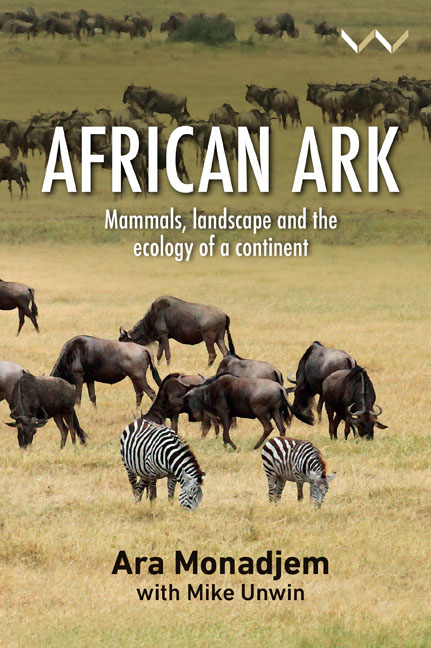
African Ark tells the story of how Africa’s mammals have helped shape the continent’s landscapes over time to support an amazing diversity of life. It explores the impact of megafauna on the environment, also highlighting small mammals such as rodents and bats, and their interaction with the people who live alongside them.
Africa is home to an amazing array of animals, including the world’s most diverse assortment of large mammals. These include the world’s largest terrestrial mammal, the African elephant, alongside a host of hooved mammals such as hippopotamuses, giraffes, rhinoceroses, and zebras. African Ark: Mammals, Landscape and the Ecology of a Continent tells the story of where these mammals have come from and how they have interacted to create the richly varied landscape that makes up Africa as we know it today. It also highlights small mammals, such as rodents and bats, which are often overlooked by both naturalists and zoologists in favour of their larger cousins. African Ark explains the processes through which species and population groups are formed and how these fluctuate over time. It explores the impact of megafauna on the environment and the important roles they play in shaping the landscape. In this way, mammals such as elephants and rhinoceros support countless plant communities and the habitats of many smaller animals. The book brings in a human perspective as well as a conservation angle in its assessment of the interaction of African mammals with the people who live alongside them.
The new terricolous lichen species Thamnolecania yunusii Halıcı, Güllü, Bölükbaşı & Kahraman, which is characterised by its cream to greyish brown granulose-crustose thallus without vegetative propagules, is described from Horseshoe Island in the South-West Antarctic Peninsula region. All Thamnolecania species are known only from the Antarctic. The only species of the genus with a crustose thallus is T. racovitzae, but it differs from T. yunusii by growing on rocks, having an effuse to subeffigurate thallus that is sometimes isidiate and with shorter and narrower ascospores (c. 15 × 3.5 µm vs. 15.5–19.5 × 3.5–5.5 µm). The nrITS, mtSSU and RPB1 gene regions of the new species were studied and the phylogenetic position of the species was shown to be in the same clade as Thamnolecania gerlachei, T. brialmontii and T. racovitzae, but occurs on a different branch from these species. As T. yunusii is an Antarctic endemic, like the other Thamnolecania species, and most of the morphological characters fit well with this genus, we describe this new species under the genus Thamnolecania.
Here, we report the first validated record of the non-indigenous grouper species Epinephelus areolatus (Perciformes: Serranidae) along the Mediterranean coast of Syria. A single specimen of E. areolatus (Forsskål, 1775), was found on 29 September 2021 during a recurrent ichthyological survey, in a rocky habitat from the Mediterranean coast of Syria. This represents the first confirmed record of this species, native to the Red Sea, for the Syrian waters and the fourth for the Mediterranean Sea. The present record fills the gap with species distribution along the eastern Mediterranean and provides further evidence that the environmental alterations due to the combination of human activities and climate change render the Mediterranean waters increasingly likely to accommodate tropical species, possibly at the expense of the native ones.
Shovelhead worms are common polychaetes around the British Isles and have been recorded in numerous ecological surveys. Yet, understanding of their habitat conditions is poor, based heavily on visual observations of sediments from historical records. In this study, the drivers of abundance and geographical distribution of two morphologically and behaviourally diverse species Magelona alleni and Magelona minuta are investigated by reanalysing sediment characteristics and depths from museum marine monitoring surveys. Although both species are historically associated with muddy sediments, the records herein suggest that M. alleni occurs in an extensive range of sediments, but is more abundant at localities with more than 25% sand. In comparison, M. minuta shows a negative linear relationship between grain diameter and abundance, corroborating previous work that the species is abundant in fine-grained mud. The depth records show that while M. alleni predominates below 60 m, M. minuta is a distinct offshore species. These differences may be attributed to the interspecific variation in morphology and motility between the species: M. alleni is stout and tube-dwelling, while M. minuta is fragile, small, and fairly motile. To corroborate these findings, sediment grains from tubes of M. alleni were classified using the Udden–Wentworth grain size scale and suggest sand is the key component for tube construction. Overall, this study highlights that sediment parameters for M. alleni have been misinterpreted and generalised in historical records, emphasising the importance of quantitative sediment analysis in defining the habitat of Magelona.
Edited by
Alexandre Caron, Centre de Coopération Internationale en Recherche Agronomique pour le Développement (CIRAD), France,Daniel Cornélis, Centre de Coopération Internationale en Recherche Agronomique pour le Développement (CIRAD) and Foundation François Sommer, France,Philippe Chardonnet, International Union for Conservation of Nature (IUCN) SSC Antelope Specialist Group,Herbert H. T. Prins, Wageningen Universiteit, The Netherlands
The development of genetic studies on the African buffalo helped: to delineate subspecies number based on restricted gene flow criteria to either two or maximally three; to define three Conservation Units requiring separate management efforts, namely: (1) Eastern–Southern Africa, (2) the West–Central African forests and (3) the West–Central African savannas; to uncover major evolutionary demographic events, with the earliest identified expansion occurring 500–1000 kya; to evidence a strong population decline in Eastern–Southern Africa starting around 5 kya, and proposed to result from both climatic factors and explosive growth of human populations and their cattle. However, buffalo populations still display high genetic diversity and low genetic differentiation, and show primary sex-ratio distortion and high-frequency deleterious alleles in the buffalo genome and their potential effect on population demography and viability. Future management efforts are necessary to maintain gene flow, with the challenge that populations become more fragmented, distributed into a mosaic of conserved areas.
Edited by
Alexandre Caron, Centre de Coopération Internationale en Recherche Agronomique pour le Développement (CIRAD), France,Daniel Cornélis, Centre de Coopération Internationale en Recherche Agronomique pour le Développement (CIRAD) and Foundation François Sommer, France,Philippe Chardonnet, International Union for Conservation of Nature (IUCN) SSC Antelope Specialist Group,Herbert H. T. Prins, Wageningen Universiteit, The Netherlands
Much of the narrative for land clearing of wildlife is historic and frequently blames buffalo for livestock diseases, a dogma perpetrated throughout colonial history and inherited by emerging African states after decolonization. A review of this dogma indicates that the many significant problems for wildlife and cattle are related to introduced exotic livestock breeds that brought their diseases into Africa and the production and trade models that came with them. Reproducing European economic agricultural systems in Africa has failed in most African countries so far, challenging us to reconsider current agricultural economic development models in the context of human-induced global ecological changes, human relations to nature and our planetary limits. The next generation of African farmers, wildlife managers and policymakers have the opportunity to frame new coexistence and productive models between wildlife, including African buffalo, and livestock-based agriculture in the ecosystems in which they have coevolved.
Edited by
Alexandre Caron, Centre de Coopération Internationale en Recherche Agronomique pour le Développement (CIRAD), France,Daniel Cornélis, Centre de Coopération Internationale en Recherche Agronomique pour le Développement (CIRAD) and Foundation François Sommer, France,Philippe Chardonnet, International Union for Conservation of Nature (IUCN) SSC Antelope Specialist Group,Herbert H. T. Prins, Wageningen Universiteit, The Netherlands
Buffalo are ranched primarily to produce trophy animals, but inferior animals represent a good potential for meat production. Estimating and applying the well-reasoned stocking rates and feed supplementation during periods of nutrient shortages are essential to ensure the maintenance of good body condition. Protein supply, and the intake thereof, is the main constraining factor with regards to production performance in buffalo during the dry season on rangeland. Through optimized nutrition, year-round breeding may be supported, earlier attainment of sexual maturity can be realized, and more cows can be served by one bull (1 bull:30 cows sex ratio), thereby improving the productivity of buffalo herds in captivity. Buffalo have carcass yields similar to those of domestic beef cattle, and by applying the suggested grading system presented in this chapter, meat processing of buffalo carcasses may be optimized regarding allocation of carcasses and cuts according to their expected quality. Primal cuts should be vacuum-packed and matured for a minimum of 25 days under refrigerated conditions before being sold, with the sirloin and topside muscles being valuable cuts.
Edited by
Alexandre Caron, Centre de Coopération Internationale en Recherche Agronomique pour le Développement (CIRAD), France,Daniel Cornélis, Centre de Coopération Internationale en Recherche Agronomique pour le Développement (CIRAD) and Foundation François Sommer, France,Philippe Chardonnet, International Union for Conservation of Nature (IUCN) SSC Antelope Specialist Group,Herbert H. T. Prins, Wageningen Universiteit, The Netherlands
There are only a few infections that cause disease and mortality in African buffalo. These include rinderpest (historically – now eradicated), anthrax, bovine tuberculosis, bovine brucellosis, bovine papillomatosis and possibly Rift Valley fever. Historically, buffalo were probably the original source and maintenance hosts of several important cattle diseases, namely the SAT strains of FMD and theileriosis caused by Theileria parva. More recently, cattle-adapted strains of these two diseases have evolved, and they now cycle in several areas of sub-Saharan Africa in the total absence of buffalo. Buffalo may also be important reservoirs of trypanosomes in tsetse fly-infested areas, and may be a source of heartwater rickettsias in open systems within the distribution range of the Amblyomma vector ticks. Buffalo are susceptible to a whole range of important livestock diseases, including bluetongue, epizootic haemorrhagic disease, peste des petits ruminants, bovine ephemeral fever, bovine viral diarrhoea and anaplasmosis, but large knowledge gaps remain. Although these pathogens can infect and replicate in buffalo, buffalo appear to play little or no role in the epidemiology and maintenance of these livestock diseases. Buffalo appear to be totally refractory to several important infections of livestock like lumpy skin disease, contagious bovine pleuropneumonia and dermatophilosis. Buffalo, like most wildlife species, naturally carry a complement of ecto- and endo- macroparasites. With few exceptions, most of these parasites do not appear to deleteriously affect the health of free-ranging buffalo in any way. They may, however, become a problem in intensive ranching systems.
Edited by
Alexandre Caron, Centre de Coopération Internationale en Recherche Agronomique pour le Développement (CIRAD), France,Daniel Cornélis, Centre de Coopération Internationale en Recherche Agronomique pour le Développement (CIRAD) and Foundation François Sommer, France,Philippe Chardonnet, International Union for Conservation of Nature (IUCN) SSC Antelope Specialist Group,Herbert H. T. Prins, Wageningen Universiteit, The Netherlands
The current tribe Bovini may very well be polyphyletic. African buffalo might be descended from African Boselaphini, but the African fossil record before 8 Myr is quite poor. Palaeontological data tally well with nuclear DNA data showing that African buffalo and Asian buffalo separated some 8 Myr ago and are very distantly related. Cross-fertilization experiments and (failed) implantation tests of embryos of Asian Bovini into African buffalo wombs underscore the fact that these species are evolutionarily very distantly related. Karyotypic evolution of African buffalo is also very different from these Asian Bovini. This may warrant the establishment of a separate tribe for the African buffalo and its ancestors, namely, the Syncerini. Until recently there were two species of buffalo in Africa, Syncerus caffer and S. antiquus, which in some parts of their range coexisted. The ecology of the single surviving species of African buffalo may thus have been co-shaped by that recently extinct sister taxon. Because the present species is so distantly related to wild cattle and Asian buffalo, little or nothing can be learned from studying these species for the ecology or management of the African buffalo, even if much were known about these species in the wild (which is not the case).