To save content items to your account,
please confirm that you agree to abide by our usage policies.
If this is the first time you use this feature, you will be asked to authorise Cambridge Core to connect with your account.
Find out more about saving content to .
To save content items to your Kindle, first ensure no-reply@cambridge.org
is added to your Approved Personal Document E-mail List under your Personal Document Settings
on the Manage Your Content and Devices page of your Amazon account. Then enter the ‘name’ part
of your Kindle email address below.
Find out more about saving to your Kindle.
Note you can select to save to either the @free.kindle.com or @kindle.com variations.
‘@free.kindle.com’ emails are free but can only be saved to your device when it is connected to wi-fi.
‘@kindle.com’ emails can be delivered even when you are not connected to wi-fi, but note that service fees apply.
Edited by
Alexandre Caron, Centre de Coopération Internationale en Recherche Agronomique pour le Développement (CIRAD), France,Daniel Cornélis, Centre de Coopération Internationale en Recherche Agronomique pour le Développement (CIRAD) and Foundation François Sommer, France,Philippe Chardonnet, International Union for Conservation of Nature (IUCN) SSC Antelope Specialist Group,Herbert H. T. Prins, Wageningen Universiteit, The Netherlands
African buffalo herd size varies across their distribution range from as few as 5–10 in the rainforests of West and Central Africa to as many as 2000 individuals in the floodplains of eastern and southern Africa. The home range size of African buffalo also varies greatly, with those of savanna buffalo herds generally ranging between 50 and 350 km2. The larger home ranges are generally observed in areas where resources are spatially segregated, and where herds are forced to undertake seasonal movements. In contrast, forest buffalo exhibit smaller home ranges (<10 km2) due to a less pronounced seasonality of the environment, and a more homogeneous spatial arrangement of resources. African buffalo are ruminants, essentially feeding on grass and roughage. This species is capable of subsisting on pastures too coarse and too tall for most other herbivores. The African buffalo occupies an important niche, opening up habitats that are preferred by short-grass grazers. Although the African buffalo primarily is a grazer, savanna buffalo can partially switch their diet to browse when grasses become tall and lignified. The ability of the African buffalo to cope with contrasting environmental conditions throughout most sub-Saharan ecosystems, by modulating a large array of biological traits, highlights a high degree of behavioural plasticity.
Edited by
Alexandre Caron, Centre de Coopération Internationale en Recherche Agronomique pour le Développement (CIRAD), France,Daniel Cornélis, Centre de Coopération Internationale en Recherche Agronomique pour le Développement (CIRAD) and Foundation François Sommer, France,Philippe Chardonnet, International Union for Conservation of Nature (IUCN) SSC Antelope Specialist Group,Herbert H. T. Prins, Wageningen Universiteit, The Netherlands
Edited by
Alexandre Caron, Centre de Coopération Internationale en Recherche Agronomique pour le Développement (CIRAD), France,Daniel Cornélis, Centre de Coopération Internationale en Recherche Agronomique pour le Développement (CIRAD) and Foundation François Sommer, France,Philippe Chardonnet, International Union for Conservation of Nature (IUCN) SSC Antelope Specialist Group,Herbert H. T. Prins, Wageningen Universiteit, The Netherlands
Edited by
Alexandre Caron, Centre de Coopération Internationale en Recherche Agronomique pour le Développement (CIRAD), France,Daniel Cornélis, Centre de Coopération Internationale en Recherche Agronomique pour le Développement (CIRAD) and Foundation François Sommer, France,Philippe Chardonnet, International Union for Conservation of Nature (IUCN) SSC Antelope Specialist Group,Herbert H. T. Prins, Wageningen Universiteit, The Netherlands
Based on genetics and ecology, it is best to discern three subspecies of African buffalo, namely the northern savanna buffalo, the Cape buffalo and the forest buffalo. In honour of the oldest written reference to the buffalo by the Syrian geographer Ibn Fadl Allah al-Umari in 1347 CE, we propose the name Syncerus caffer umarii for the northern savanna buffalo, and maintain S. c. caffer for the Cape buffalo and S. c. nanus for the forest buffalo. We think it likely that the forest buffalo is a recent form of buffalo (about 150 kyr), derived from the northern savanna buffalo in the eastern part of its range, which underwent dwarfing (i.e. miniaturization) in the rainforest. We propose that the northern savanna buffalo, because of the high amount of genetic exchange with the forest buffalo, has many hallmarks of a hybrid subspecies that expanded its range due to the creation of the Guinea savanna and Sudan savanna by Iron Age agriculturalists. The Cape buffalo shows the highest number of food web interactions with other large mammals, while the dwarfed forest buffalo is very lightly embedded in its trophic web.
Edited by
Alexandre Caron, Centre de Coopération Internationale en Recherche Agronomique pour le Développement (CIRAD), France,Daniel Cornélis, Centre de Coopération Internationale en Recherche Agronomique pour le Développement (CIRAD) and Foundation François Sommer, France,Philippe Chardonnet, International Union for Conservation of Nature (IUCN) SSC Antelope Specialist Group,Herbert H. T. Prins, Wageningen Universiteit, The Netherlands
Some aspects of the well-described planet- and satellite-like framework of, respectively, mixed herds and bachelor groups of buffalo recently were challenged. Associations of female buffalo are now considered more fluid than the initial idea of a stable mixed herd defined by a home range. Within mixed herds, adult female associations are unstable and transient despite using largely overlapping home ranges. Mixed herds in most instances do not seem to overlap much in space. Between mixed herds exchanges exist, apparently dominated by juvenile females (but almost no information exists on juvenile males). The dynamics of fusion–fission events within mixed herds are largely driven by habitat heterogeneity, the quality and quantity of grazing and surface water, and the influence of predation, parasitism and fires. The influence of the human/buffalo interface on these dynamics is not yet well understood. Future studies will benefit from more advances in telemetry and new technologies, new information sources (e.g. sound recorders) and non-invasive genetic studies to enhance our knowledge of buffalo social dynamics. Knowledge of buffalo social dynamics would also benefit from studies more representative of the African distribution of the species and across its subspecies.
Didemnum vexillum is an aggressive, rapidly growing colonial ascidian and regarded as a global alien invasive species in temperate waters. It has recently become established in the western Mediterranean and the vectors of its introduction were assumed to be shipping or oyster trade. A dense settlement of it was encountered on nets of the bluefin tuna (Thunnus thynnus) cages placed at 60–65 m depths off the İzmir Peninsula (eastern Aegean Sea, eastern Mediterranean) in December 2022. It had considerably clogged net's eye openings, hindering water circulations inside cages. It had a vertical distributional pattern on 35 m long-nets, occurring solely on depths from surface down to 15 m, around where a summer thermocline develops. It has entirely replaced the native black mussel Mytilus galloprovincialis on nets. This colonial ascidian changed the routine cleaning procedure of nets in the farming. Three possible ways of its introduction to the eastern Mediterranean were proposed, but the most reasonable one is its secondary transfer via nets or ships from Malta. Mechanisms of its invasion biology and behaviour should be studied and monitored in the region.
A dense Ecklonia radiata (Laminariales) kelp forest extending at least 35 km has been found between 45 and 60 m depth range within the mesophotic zone inside the iSimangaliso marine-protected area (MPA) at the iSimangaliso Wetland park World Heritage Site on the east coast of South Africa. This is the first visual confirmation of the occurrence of E. radiata beds in subtropical South Africa, in an area situated between the tropical and subtropical bioregions, in an area that spans the Natal and Delagoa bioregions of the south-western Indian Ocean, more than 350 km north of its previously documented South African range. The kelp was found to be present across the length of the MPA, but dense beds were present only in the southern Natal bioregion, with sparse occurrences observed elsewhere on soft-coral and sponge-dominated reefs in the upper mesophotic zone. The footage was collected in November 2020, May 2021 and November 2022 during remotely operated vehicle and drop camera surveys of the mesophotic zone inside the MPA. This discovery adds to the body of knowledge on the global distribution of Laminariales populations in deep tropical and subtropical settings and the diversity of habitats within South Africa's largest coastal MPA.
Record-sized specimens of the ornate eagle ray Aetomylaeus vespertilio and mangrove whipray Urogymnus granulatus were caught by single-day trawlers off Pamban Island in the Gulf of Mannar, Tamil Nadu, India during 2021 and 2022. All were landed at the Pamban Therkuvadi Fish Landing Centre (FLC). The largest ornate eagle ray was 384 cm disc width (DW) and weighed 530 kg, setting a new global record for the species, as the previous maximum size was reported to be 300 cm DW. This specimen was landed on 19 July 2021. Another large specimen of this species (360 cm DW and total weight of 453 kg) was caught and landed on 12 August 2022. The landed mangrove whipray was 153 cm DW and 150 kg total weight, larger than the previously reported maximum size of 141 cm DW. The morphometrics, stomach contents and reproductive state were studied. One of the eagle rays was a pregnant female with three full-term embryos in the uterus, while the whipray was a spent female. The main prey species in the stomach of eagle ray was big-eye scad Selar crumenophthalmus. The mangrove whipray had fed on a range of fish (pigface bream, goatfish, silverbellies, silverbiddies and lesser sardine) and octopus.
Records of the Nubian Bustard Nubotis nuba range across the drier northern component of the Sahel zone in Africa from Mauritania through Mali, Niger, and Chad to Sudan. Reports of significant hunting pressure have caused it to be treated as IUCN “Near Threatened” for almost 40 years, but information relating to distribution and population trends remains scattered, anecdotal, and unevaluated. All accessible evidence bearing on its conservation is therefore assembled and reviewed here. The lack of records from Mauritania since 1984, Mali since 1974, and Sudan since 1988 suggests that populations there may now be very small and perhaps entirely extinguished. Records from Niger and Chad remain many, thanks largely to the assiduous reporting of observations on the West African Bird DataBase (WABDaB) by researchers involved in ungulate conservation. The national nature reserves of Aïr and Ténéré (RNNAT) and Termit and Tin-Toumma (RNNTT) in Niger and the Ouadi Rimé–Ouadi Achim Faunal Reserve (RFOROA) in Chad emerge as vital to the long-term survival of the Nubian Bustard, given the accumulating evidence in both countries of (1) widespread habitat degradation and conversion, as human populations and their livestock expand in numbers and range in the Sahel, and (2) intensifying persecution, as highly mobile and well-armed local poachers plus Gulf state hunters gain increasing vehicular access to the remotest regions, depleting all huntable wildlife (a Sahel-wide bird study, 2011–2019, encountered just 16 bustards of four species – none Nubian – in 487 observation days). Populations of Nubian Bustard must now be greatly fragmented and depleted, with many entirely lost, so targeted programmes to minimise disturbance, persecution, and damage to habitat in the three key reserves (including the exclusion of powerlines) are urgently needed. Ultimately however the survival of this and other endemic Sahelian species can only be secured via a huge programme of ecologically and economically sustainable management practices.
Many marine fish species are experiencing population declines, but their extinction risk profiles are largely understudied in comparison to their terrestrial vertebrate counterparts. Selective extinction of marine fish species may result in rapid alteration of the structure and function of ocean ecosystems. In this study, we compiled an ecological trait dataset for 8,185 species of marine ray-finned fishes (class Actinopterygii) from FishBase and used phylogenetic generalized linear models to examine which ecological traits are associated with increased extinction risk, based on the International Union for the Conservation of Nature Red List. We also assessed which threat types may be driving these species toward greater extinction risk and whether threatened species face a greater average number of threat types than non-threatened species. We found that larger body size and/or fishes with life histories involving movement between marine, brackish, and freshwater environments are associated with elevated extinction risk. Commercial harvesting threatens the greatest number of species, followed by pollution, development, and then climate change. We also found that threatened species, on average, face a significantly greater number of threat types than non-threatened species. These results can be used by resource managers to help address the heightened extinction risk patterns we found.
The CCAMLR System of Inspection has been in place for more than 30 years, but its implementation and impact have yet to be summarised and analysed. The purpose of the research is to clarify the legal basis, analyse the implementation and make suggestions for further improvements. By analysing the CAMLR Convention and historical files, the System of Inspection has been further improved and many details have been added based on some international fisheries agreements and domestic laws regulating fisheries. Article XXIV of the CAMLR Convention, various Conservation Measures and documents form the legal basis of the System of Inspection. The System is divided into two types, namely At-sea inspection and Port inspection. Combined with the annual reports of CCAMLR meetings over the past 30 years, the System has become relatively complete as a “Compliance Monitoring Mechanism” under the CCAMLR Compliance Evaluation Procedure with other monitoring, control and surveillance (MCS) tools. However, inspection data have not been stable over the years. Since 2017, the increase in catches has not led to an increase in the number of inspections in the annual reports. In addition, At-sea inspections do not cover all Subareas of the Convention. At present, the objects of inspection have been extended to Non-Member vessels, so that it should also be sanctioned through various mechanisms. In addition, the System of Inspection is different from the Compliance Evaluation Procedure and the relationship between the two needs to be confirmed in practice. Due to the change in inspection methods, the lack of inspection data and the increase in other MCS tools, At-sea inspection does not cover all Subareas of the Convention. The System of Inspection is constantly being practised and improved. The study calls on Members to continue to carry out inspections and to improve the System in order to achieve the conservation and rational use of fishery resources.
Plastic pollution in the Arctic marine system is sparsely quantified, and few enforceable policies are in place to ameliorate the issue. With an inflow-outflow budget for the Arctic Ocean, we identify gateways through which plastic enters and exits the Arctic marine system. While estimating the flux of plastic through rivers, sea ice, and ocean, we also quantify marine plastic pollution from Arctic shipping and fishing. Plastic fluxes are calculated using horizontal volume fluxes of water and ice and combining them with plastic waste concentration data; flux from fishing and shipping is generated through combining waste estimates with estimated ship traffic. We estimate that fishing and shipping contribute 105 tonnes of plastic flux per annum, compared to 10−1 tonnes per annum from river inflow. The ocean has a far smaller net outflow, dwarfed by that of ice, at 10−8 to 10−7 and 10−5 to 10−3 tonnes per annum, respectively. We examine how a suite of proposed policy interventions would quantitatively change those concentrations, and how the current governance environment makes each feasible; we find interventions targeting vessel traffic most effective. These interventions include a prohibition on the use of certain plastics in fishing as well as a Polar Code permitting scheme.
One of iconic Africa's Big Five, the African buffalo is the largest African bovine or antelope that occurs throughout most of sub-Sahara and in a wide range of ecosystems from savanna to rainforest. The African buffalo is also one of the most successful large African mammals in terms of abundance and biomass. This species thus represents a powerful model to enhance our understanding of African biogeography and wildlife conservation, ecology and management. Edited by four researchers experienced in different aspects of the African buffalo's biology, this volume provides an exhaustive compilation of knowledge on an emblematic species that stands out as an important component of African natural and human ecosystems. It delivers a global view of the African buffalo and all known aspects of its ecology and management. This book will appeal to students, scholars, scientists and wildlife managers as well as those enthusiastic about the charismatic species. This title is also available as Open Access on Cambridge Core.
Over the past several decades, there have been a number of national and international meetings on waterborne diseases. Conclusions from these meetings often seem remarkably similar and suggest little progress in the field of water and health. This is both a true and a false premise, as our ability to use molecular tools to describe microbial communities has advanced to the level at which whole genome sequencing is now a routine practice and can even be deployed in the field. This article seeks to illustrate both these advances and their limitations, especially for use in low-resourced settings. What remains clear is that for most of the world, basic hygiene and sanitation measures can do more for human health than any of our current advances in molecular biology. That is not to say that these advances are not remarkable and that they can undoubtedly revolutionize risk-based testing and surveillance. Although there are many factors that contribute to increased risks from waterborne diseases, climate change above all else is creating challenges that we are ill-prepared to meet. The biggest barrier to control of these diseases is not limitations in technology but has been and continues to be the lack of political will and economic incentives.
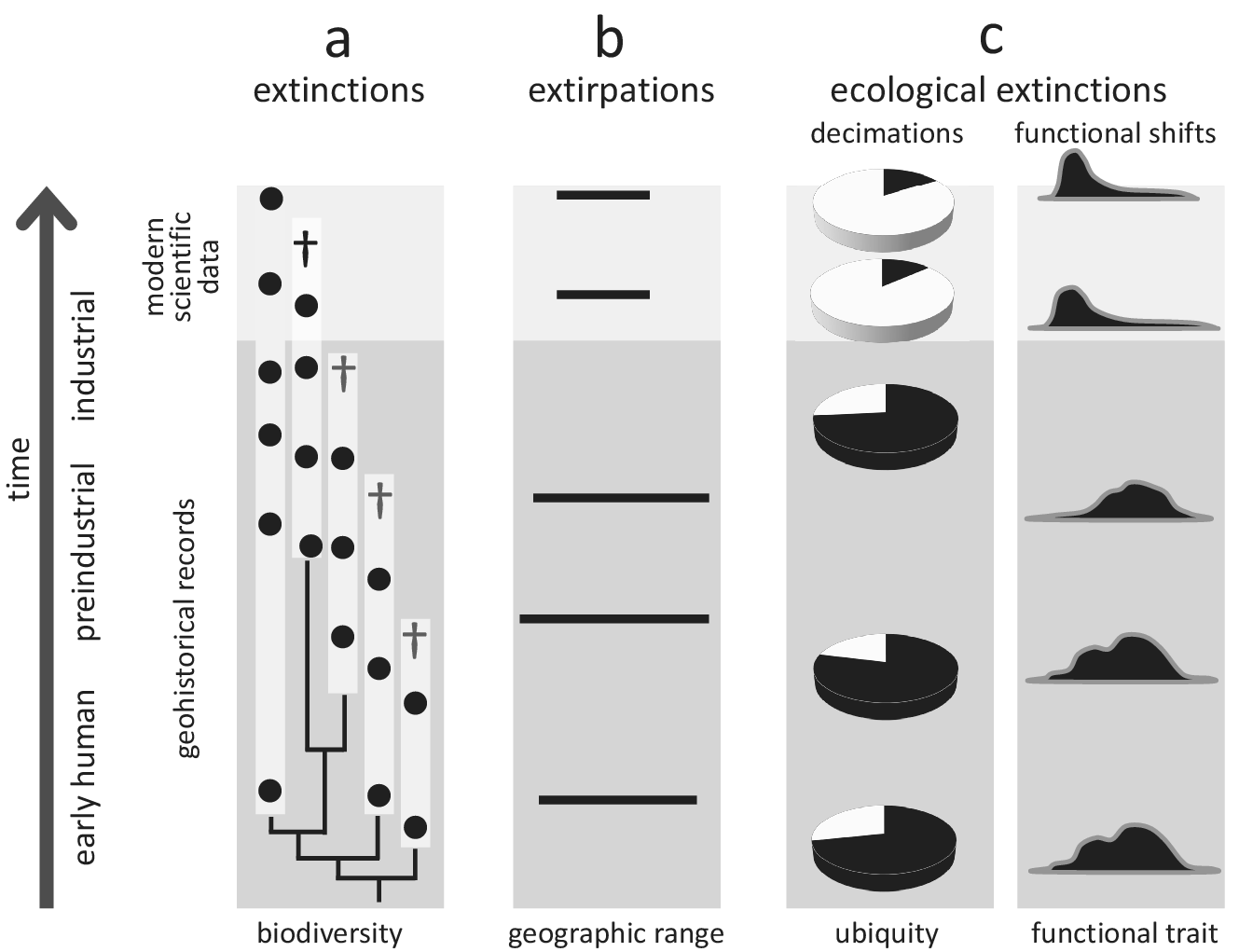
Near-time conservation palaeobiology uses palaeontological, archaeological and other geohistorical records to study the late Quaternary transition of the biosphere from its pristine past to its present-day, human-altered state. Given the scarcity of data on recent extinctions in the oceans, geohistorical records are critical for documenting human-driven extinctions and extinction threats in the marine realm. The historical perspective can provide two key insights. First, geohistorical records archive the state of pre-industrial oceans at local, regional and global scales, thus enabling the detection of recent extinctions and extirpations as well as shifts in species distribution, abundance, body size and ecosystem function. Second, we can untangle the contributions of natural and anthropogenic processes by documenting centennial-to-millennial changes in the composition and diversity of marine ecosystems before and after the onset of major human impacts. This long-term perspective identifies recently emerging patterns and processes that are unprecedented, thus allowing us to better assess human threats to marine biodiversity. Although global-scale extinctions are not well documented for brackish and marine invertebrates, geohistorical studies point to numerous extirpations, declines in ecosystem functions, increases in range fragmentation and dwindling abundance of previously widespread species, indicating that marine ecosystems are accumulating a human-driven extinction debt.
Given the increasing demand for high-quality food and protein, global food security remains a challenge, particularly in the face of global change. However, since agriculture, food and water security are inextricably linked, they need to be examined via an interdisciplinary lens. Sociohydrology was introduced from a post-positivist perspective to explore and describe the bidirectional feedbacks and dynamics between human and water systems. This review situates sociohydrology in the agricultural domain, highlighting its contributions in explaining the unintended consequences of water management interventions, addressing climate change impacts due to/on agriculture and incorporating human behaviour into the description of agricultural water systems. Sociohydrology has combined social and psychological insights with novel data sources and diverse multi-method approaches to model human behaviour. However, as agriculture and agriculturalists face global change, sociohydrology can better use concepts from resilience thinking more explicitly to identify gaps in terms of desirable properties in resilient agricultural water systems, potentially informing more holistic climate adaptation policy.
This review provides an overview of the ethics of extinctions with a focus on the Western analytical environmental ethics literature. It thereby gives special attention to the possible philosophical grounds for Michael Soulé’s assertion that the untimely ‘extinction of populations and species is bad’. Illustrating such debates in environmental ethics, the guiding question for this review concerns why – or when – anthropogenic extinctions are bad or wrong, which also includes the question of when that might not be the case (i.e. which extinctions are even desirable). After providing an explanation of the disciplinary perspective taken (section “Introduction”), the concept of extinction and its history within that literature are introduced (section “Understanding extinction”). Then, in section “Why (or when) might anthropogenic extinctions be morally problematic?”, different reasons for why anthropogenic extinctions might be morally problematic are presented based on the loss of species’ value, harm to nonhuman individuals, the loss of valuable biological variety and duties to future generations. This section concludes by also considering cases where anthropogenic extinctions might be justified. Section “How to respond to extinctions?” then addresses a selection of topics concerning risks and de-extinction technologies. Finally, the section on “Extinction studies” introduces other viewpoints on the ethics of extinction from the extinction studies literature, followed by the “Conclusion”.
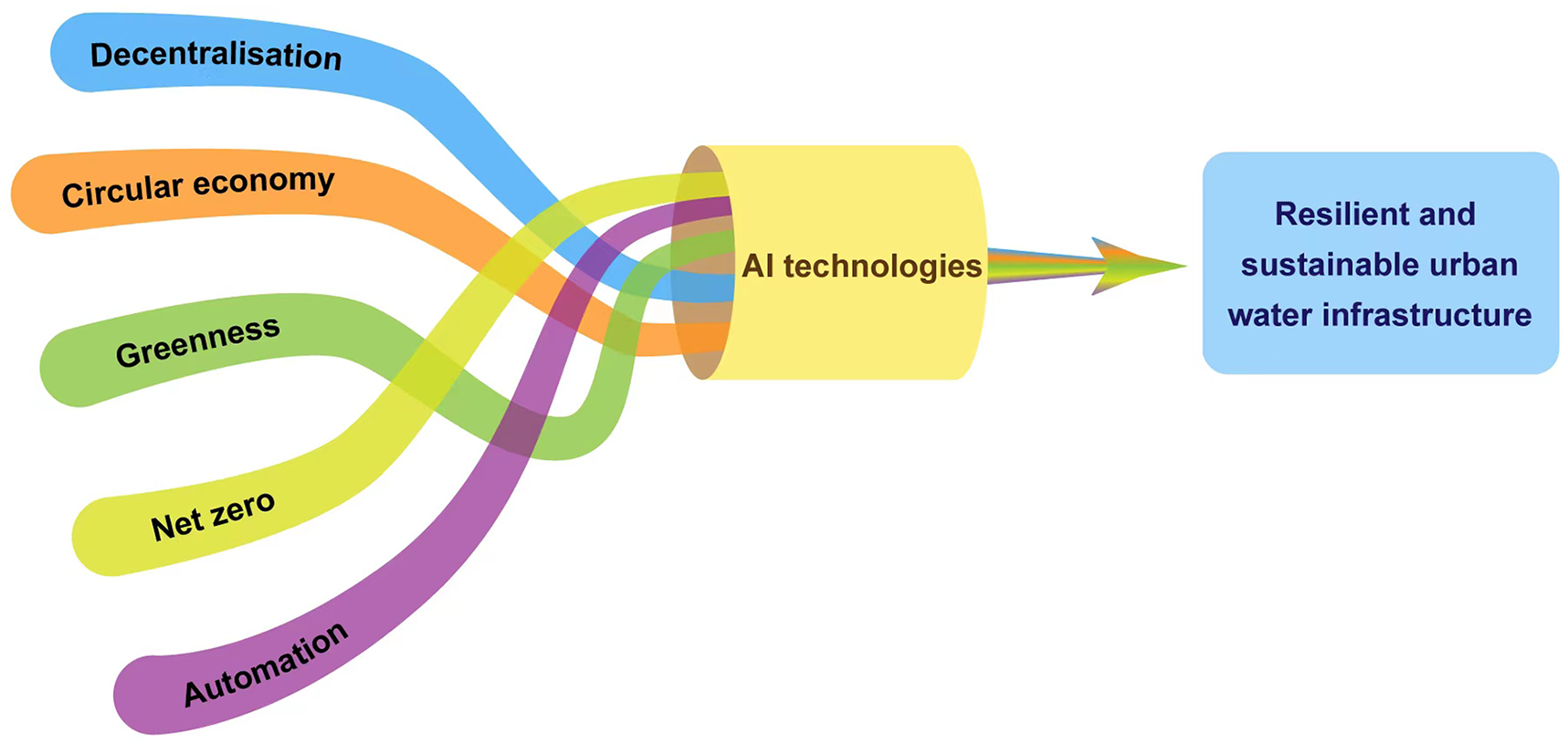
The potential of artificial intelligence (AI) in water management is widely recognised by research and practice communities alike, with an increasing number of applications showed tackling water supply, stormwater and wastewater management challenges. However, there is a critical knowledge gap in understanding the fundamental role of AI in the development of urban water infrastructure (UWI). This review aimed to provide an analysis of how AI could be aligned to support the future development of UWI systems. Four types of AI analytics – descriptive, diagnostic, predictive and prescriptive – are discussed and linked to the improvement in the performance of UWI systems from three categories: reliability, resilience and sustainability. It is envisioned that AI technology will play a pivotal role in UWI transitioning to the future through underpinning the five development pathways: decentralisation, circular economy, greening, decarbonisation and automation. The barriers in improving AI adoption in the real world are also highlighted from four dimensions: cyber-physical infrastructure, institutional governance, social-economic systems and technological development in wider society. Embedding AI in the development pathways and tackling the barriers can ensure that AI-empowered systems are deployed in an equitable and responsible way to improve the resilience and sustainability of future UWI systems.
In many large shallow lakes across the globe, the surface wind field drives the hydrodynamic process directly through the momentum and energy exchange at the air–water interface. Numerous field measurements, experiments and modeling show that wind-driven hydrodynamic disturbances have profound impacts on the structure and function of lake ecosystems. In this article, we review the response of the shallow lake to the wind-driven wave and flow field, which may accelerate the sediment resuspension and nutrient cycling and, in turn, affect the concentrations of nutrients and dissolved oxygen. Furthermore, the life activities of bacterioplankton, plankton and fish in the aquatic ecosystem are closely related to these water-quality factors. Although we have a developed understanding of the physical processes and biogeochemical cycles of lakes by process-based modeling, the most basic wind-driven hydrodynamic process in some lake models is imprecise. Comprehensive results of physical parameterization, including the wind stress and wind drag coefficient, with their mathematical expressions for depicting the wind-driven force in the hydrodynamic model of lakes are synthesized. Some of these expressions are empirically determined without considering the dynamic environment, and expressions based on physical mechanisms have been widely recognized. Additionally, the adaptation standard of wind-driven force parameterizations to inland lake models under light winds is provided. This article highlights the importance of heterogeneous wind field variability and suggests future studies on the wind fields in extreme climates, which could also cause damage to deep lake ecosystems and the biodiversity effects of wind wave turbulence.
Squids of the family Gonatidae are key components in oceanic communities. However, issues related to correct species identification, number of species, and their genetic relatedness remain. To address these issues, sequences from three mitochondrial (cytochrome c oxidase subunit I [CO1], 16S rRNA, and 12S rRNA) and two nuclear (18S and 28S) genes were analysed in the Gonatidae. Four of the five sequences (12S rRNA, 16S rRNA, 28S, and CO1) yielded rather similar patterns of genetic relationships among the species. Molecular evidence suggested intra-familial subdivision into two major groups of species having either five or seven longitudinal rows of teeth in the radula. The former group included all species of the genus Gonatus and two sister-species of Gonatopsis s. str. suggesting that all gonatid species with five rows of radular teeth represent a single taxonomic unit of a genus or subfamily level. Species with seven rows of radular teeth formed several ‘species’ clusters. Sequence analysis also addressed species identification issues in the Gonatidae. Two genetically divergent groups were found among squid which conformed to the description of Gonatus berryi. Molecular evidence suggested sister-species relationships between ‘large’ and ‘small’ forms of Boreoteuthis borealis with size-at-maturity as the only reported difference between these two cohorts. Sequence variation was observed within Gonatus pyros. Inclusion of gonatid sequences from the GenBank into the analysis suggested probable species misidentification in several cases. Combined use of several mitochondrial and nuclear sequences served as a valuable tool for species identification and provided a solid background for unravelling molecular genetic and taxonomic relationships in the Gonatidae.