Refine search
Actions for selected content:
212083 results in Engineering
21 - Introduction to Oversampling ADCs
-
- Book:
- Analysis and Design of Data Converters
- Published online:
- 13 November 2025
- Print publication:
- 03 July 2025, pp 479-508
-
- Chapter
- Export citation
12 - Introduction to Nyquist-Rate ADCs
-
- Book:
- Analysis and Design of Data Converters
- Published online:
- 13 November 2025
- Print publication:
- 03 July 2025, pp 236-250
-
- Chapter
- Export citation
5 - Learning Resource Allocation in Wireless Networks
-
- Book:
- Wireless Communications and Machine Learning
- Published online:
- 21 October 2025
- Print publication:
- 03 July 2025, pp 176-220
-
- Chapter
- Export citation
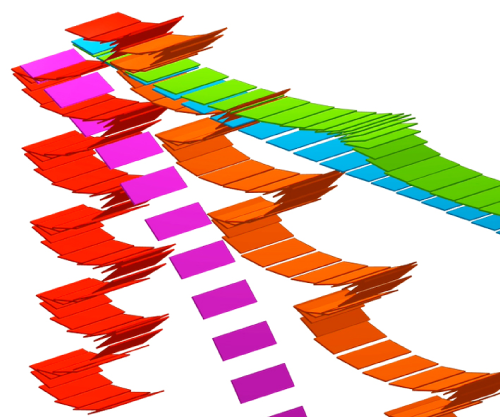
Aerodynamic equilibria and flight stability of plates at intermediate Reynolds numbers
-
- Journal:
- Journal of Fluid Mechanics / Volume 1014 / 10 July 2025
- Published online by Cambridge University Press:
- 03 July 2025, A24
-
- Article
-
- You have access
- Open access
- HTML
- Export citation
1 - Introduction
-
- Book:
- Wireless Communications and Machine Learning
- Published online:
- 21 October 2025
- Print publication:
- 03 July 2025, pp 1-36
-
- Chapter
- Export citation
24 - Advanced Oversampling ADCs
-
- Book:
- Analysis and Design of Data Converters
- Published online:
- 13 November 2025
- Print publication:
- 03 July 2025, pp 559-581
-
- Chapter
- Export citation
Preface
-
- Book:
- Wireless Communications and Machine Learning
- Published online:
- 21 October 2025
- Print publication:
- 03 July 2025, pp ix-xi
-
- Chapter
- Export citation
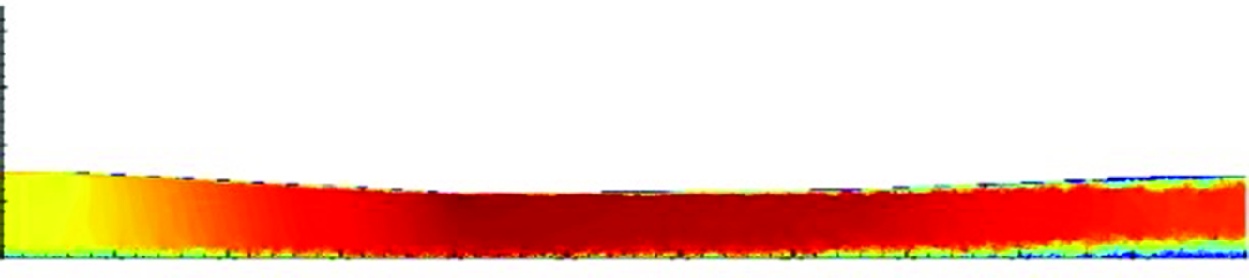
Large-eddy simulation of a non-equilibrium turbulent boundary layer
-
- Journal:
- Journal of Fluid Mechanics / Volume 1014 / 10 July 2025
- Published online by Cambridge University Press:
- 03 July 2025, A20
-
- Article
-
- You have access
- Open access
- HTML
- Export citation
-
Wall-resolved large-eddy simulation (LES) of a non-equilibrium turbulent boundary layer (TBL) is performed. The simulations are based on the experiments of Volino (2020a J. Fluid Mech. 897, A2), who reported profile measurements at several streamwise stations in a spatially developing zero pressure gradient TBL evolving through a region of favourable pressure gradient (FPG), a zero pressure gradient recovery and subsequently an adverse pressure gradient (APG) region. The pressure gradient quantified by the acceleration parameter $K$ was held constant in each of these three regions. Here, $K = -(\nu /\rho U_e^{3}) {\textrm d}P_e/{\textrm d}x$, where $\nu$ is the kinematic viscosity, $\rho$ is density, $U_e$ is the free stream velocity and ${\textrm d}P_e/{\textrm d}x$ is the streamwise pressure gradient at the edge (denoted by the subscript ‘ $e$’) of the TBL. The simulation set-up is carefully designed to mimic the experimental conditions while keeping the computational cost tractable. The computational grid appropriately resolves the increasingly thinning and thickening of the TBL in the FPG and APG regions, respectively. The results are thoroughly compared with the available experimental data at several stations in the domain, showing good agreement. The results show that the computational set-up accurately reproduces the experimental conditions and the results demonstrate the accuracy of LES in predicting the complex flow field of the non-equilibrium TBL. The scaling laws and models proposed in the literature are evaluated and the response of the TBL to non-equilibrium conditions is discussed.


4 - Design Study of a Sampling Circuit
-
- Book:
- Analysis and Design of Data Converters
- Published online:
- 13 November 2025
- Print publication:
- 03 July 2025, pp 60-69
-
- Chapter
- Export citation
3 - Learning Receiver Design: Signal Detection and Channel Decoding
-
- Book:
- Wireless Communications and Machine Learning
- Published online:
- 21 October 2025
- Print publication:
- 03 July 2025, pp 91-134
-
- Chapter
- Export citation
Contents
-
- Book:
- Analysis and Design of Data Converters
- Published online:
- 13 November 2025
- Print publication:
- 03 July 2025, pp vii-xiv
-
- Chapter
- Export citation
20 - Interleaved ADCs
-
- Book:
- Analysis and Design of Data Converters
- Published online:
- 13 November 2025
- Print publication:
- 03 July 2025, pp 439-478
-
- Chapter
- Export citation
About the Author
-
- Book:
- Analysis and Design of Data Converters
- Published online:
- 13 November 2025
- Print publication:
- 03 July 2025, pp xviii-xviii
-
- Chapter
- Export citation
18 - Nonidealities in Pipelined ADCs
-
- Book:
- Analysis and Design of Data Converters
- Published online:
- 13 November 2025
- Print publication:
- 03 July 2025, pp 383-417
-
- Chapter
- Export citation
15 - SAR ADC Nonidealities
-
- Book:
- Analysis and Design of Data Converters
- Published online:
- 13 November 2025
- Print publication:
- 03 July 2025, pp 310-329
-
- Chapter
- Export citation
6 - Advanced Comparator Concepts
-
- Book:
- Analysis and Design of Data Converters
- Published online:
- 13 November 2025
- Print publication:
- 03 July 2025, pp 102-128
-
- Chapter
- Export citation
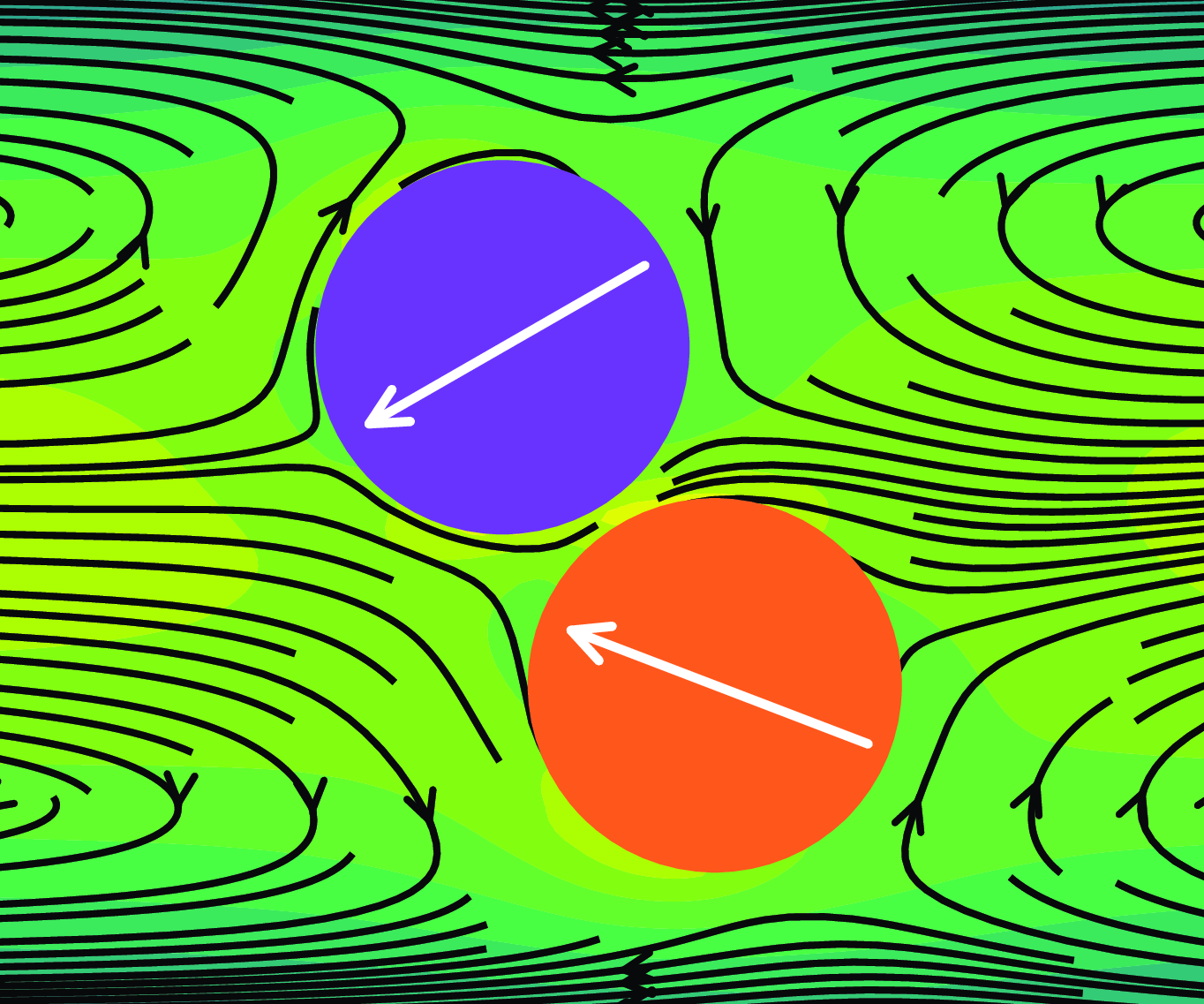
How can two circular self-propelled particles form a stable wedge-like conformation in channel flow?
-
- Journal:
- Journal of Fluid Mechanics / Volume 1014 / 10 July 2025
- Published online by Cambridge University Press:
- 03 July 2025, A19
-
- Article
- Export citation
-
We investigate the dynamics of circular self-propelled particles in channel flow, modelled as squirmers using a two-dimensional lattice Boltzmann method. The simulations explore a wide range of parameters, including channel Reynolds numbers ( $\textit{Re}_c$), squirmer Reynolds numbers ( $\textit{Re}_s$) and squirmer-type factors ( $\beta$). For a single squirmer, four motion regimes are identified: oscillatory motion confined to one side of the channel, oscillatory crossing of the channel centreline, stabilisation at a lateral equilibrium position with the squirmer tilted and stable upstream swimming near the channel centreline. For two squirmers, interactions produce not only these four corresponding regimes but also three additional ones: continuous collisions with repeated position exchanges, progressive separation and drifting apart and, most notably, the formation of a stable wedge-like conformation (regime D). A key finding is the emergence of regime D, which predominantly occurs for weak pullers ( $\beta = 1$) and at moderate to high $\textit{Re}_c$ values. Hydrodynamic interactions align the squirmers with streamline bifurcations near the channel centreline, enabling stability despite transient oscillations. Additionally, the channel blockage ratio critically affects the range of $\textit{Re}_s$ values over which this regime occurs, highlighting the influence of geometric confinement. This study extends the understanding of squirmer dynamics, revealing how hydrodynamic interactions drive collective behaviours. The findings also offer insights into the design of self-propelled particles for biomedical applications and contribute to the theoretical framework for active matter systems. Future work will investigate three-dimensional effects and the stability conditions for spherical squirmers forming stable wedge-like conformations, further generalising these results.


Dedication
-
- Book:
- Analysis and Design of Data Converters
- Published online:
- 13 November 2025
- Print publication:
- 03 July 2025, pp v-vi
-
- Chapter
- Export citation
Frontmatter
-
- Book:
- Wireless Communications and Machine Learning
- Published online:
- 21 October 2025
- Print publication:
- 03 July 2025, pp i-iv
-
- Chapter
- Export citation
Frontmatter
-
- Book:
- Analysis and Design of Data Converters
- Published online:
- 13 November 2025
- Print publication:
- 03 July 2025, pp i-iv
-
- Chapter
- Export citation
