To save content items to your account,
please confirm that you agree to abide by our usage policies.
If this is the first time you use this feature, you will be asked to authorise Cambridge Core to connect with your account.
Find out more about saving content to .
To save content items to your Kindle, first ensure no-reply@cambridge.org
is added to your Approved Personal Document E-mail List under your Personal Document Settings
on the Manage Your Content and Devices page of your Amazon account. Then enter the ‘name’ part
of your Kindle email address below.
Find out more about saving to your Kindle.
Note you can select to save to either the @free.kindle.com or @kindle.com variations.
‘@free.kindle.com’ emails are free but can only be saved to your device when it is connected to wi-fi.
‘@kindle.com’ emails can be delivered even when you are not connected to wi-fi, but note that service fees apply.
In chapter 4, Foreign creditors (May 16 - May 25) the actors deal with the problem of raising an Austrian government bond loan, while at the same time Credit Anstalt’s foreign creditors are getting involved. Conflicts begin to disappear between Austrian actors and central bankers and international creditors, and it becomes increasingly clear to the latter that the situation may well be more problematic than they imagined in the first place. On the Austrian side talks of a moratorium upsets central bankers and creditors who favor a guarantee. It’s getting increasingly difficult for the central bankers to emplot a narrative that can make sense of the situation and enable action to dodge the crisis. The fear of contagion becomes widespread, adding to the uncertainty.
In chapter 2, central bankers and their world, I first present the most important protagonists and a few other actors. They include Montagu Norman and Harry Siepmann of Bank of England, George L. Harrison of the Federal Reserve Bank of New York and Francis Rodd of the Bank for International Settlements. I discuss their background and worldview as they were headed into the 1931 crisis. Having presented these main actors and a few others, I proceed to present their world and how they saw it in 1930 and early 1931. The world was already in the midst of the great depression and private bankers as well as central bankers and other decision-makers were aware that they were dealing with crisis and radical uncertainty that might bring about the end of the gold standard and capitalism. I discuss the actors view of the "present world depression" and how they viewed the gold standard and their options as they got ready for trying to save the world from economic disaster.
Chapter 14, Aqnxiety within Germany at climax (July 11 - July 23). In this chapter tension reaches its climax as the Darmstädter und Nationalbank (Danatbank) fails on July 13. Without help from outside of Germany, the German government declares a bank holiday and introduces exchange controls, effectively ending the gold standard in Germany. The New York Fed and Harrison declines to intervene and the BIS does not have the resources or the inclination to intervene. Norman’s position that the situation goes back to the Versaille Peace agreement and is now a matter for governments strengthens. A conference in London is unable to come up with new solutions and meanwhile sterling comes under pressure. The fear of contagion beginning in early May is now a reality.
I first describe how the physical-science and economics literatures have sought to cope with uncertainty about the correct climate model and discount rate, respectively. I next formalize MMR policy choice in an abstract manner. I then present the computational model studied in my research and summarize the main findings.
I first review and critique the prevailing use of hypothesis tests to compare treatments. I then describe my application of statistical decision theory. I compare Bayes, maximin, and minimax regret decisions. I consider choice of sample size in randomized trials from the minimax regret perspective.
Chapter 8, Surrounded with trouble (June 5 - June 10). The BIS board decides to grant a second credit to the BIS, but only after a prolonged discussion and it is made conditional on the placement of the Austrian government loan. There is increasing concern about the schilling as capital flows out of the country and the government issues take increasing priority, without being placed. At the same time, Germany’s reparations issues become ever more present as the German Chancellor Brüning meets with Prime Minister MacDonals at Chequers. Shortly before, Brüning published a statement saying that the burden on the German people has reached its limit. The international creditors too become increasingly nervous about the Austrian situation.
Section 3.1 presents key findings on partial identification of mean treatment response with observational data, with accompanying illustrations. Section 3.2 considers identification problems that arise with data from randomized trials, focusing on an important practical issue that has escaped notice until recently. Section 3.3 discusses the difficult problem of identification of treatment response with social interactions. Section 3.4 revisits the subject of meta-analysis discussed in Chapter 2, now offering an alternative to the manner in which meta-analysis has been performed to date.
Chapter 18, The End (1931 - 2022). Since the narrative IS the analysis, there is no conclusion as such. Instead, The End provides a discussion of what a forward looking, thick description, humanistic approach to the financial crisis of 1931 have contributed to our knowledge in combination with the concepts embodied in the narrative. First, it is argued that the historical narrative provides new information exactly because writing the history forward brings out the uncertainty and need for sensemaking and narrative emplotment. This argument is discussed briefly in the context of the historiography of the 1931 crisis. Secondly, I ask what this narrative approach has contributed to our emprical and theoretical understanding of decision-making. By very briefly comparing with the Great financial crisis of 2008 I argue that uncertainty is a basic condition that requires sensemaking and narrative construction. I end by suggesting that rather than drawing lessons from history, history can be used as a way to reflect upon the past and the present.
Chapter 17, Exit (September 16 - October 23). In this chapter I follow the last few days before Britain leaves gold on September 21 after having exhausted the credits on the peg to the US dollar. The decision makes sterling decline by 20 per cent, which lead to massive losses not least for the Banque de France. J.P. Morgan is unhappy as well, seeing how the credits are gone with nothing to show for them. As Norman returns to Britain and the Bank, he is unhappy with the situation and Bank of England’s bad reputation following the devaluation. Rodd and Siepmann struggle to make sense of the situation, and Norman - some years later - expresses that it was all in vain. He was left ’a bitterly disappointed man.’ The narrative ends with this chapter.
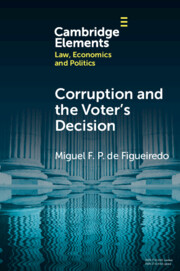
Despite voters' distaste for corruption, corrupt politicians frequently get reelected. This Element provides a framework for understanding when corrupt politicians are reelected. One unexplored source of electoral accountability is court rulings on candidate malfeasance, which are increasingly determining politicians' electoral prospects. The findings suggest that (1) low-income voters – in contrast to higher-income voters – are responsive to such rulings. Unlike earlier studies, we explore multiple trade-offs voters weigh when confronting corrupt candidates, including the candidate's party, policy positions, and personal attributes. The results also surprisingly show (2) low-income voters, like higher-income voters, weigh corruption allegations and policy positions similarly, and are slightly more responsive to candidate attributes. Moreover, irrespective of voter income, (3) party labels insulate candidates from corruption, and (4) candidate attributes like gender have little effect. The results have implications for when voters punish corrupt politicians, the success of anti-corruption campaigns, and the design and legitimacy of electoral institutions.
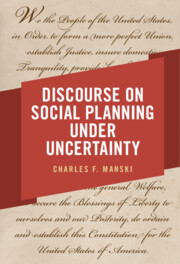
Economists have long studied policy choice by social planners aiming to maximize population welfare. Whether performing theoretical studies or applied analyses, researchers have generally assumed that the planner knows enough about the choice environment to be able to determine an optimal action. However, the consequences of decisions are often highly uncertain. Discourse on Social Planning under Uncertainty addresses the failure of research to come to grips with this uncertainty. Combining research across three fields – welfare economics, decision theory, and econometrics – this impressive study offers a comprehensive treatment that fleshes out a 'worldview' and juxtaposes it with other viewpoints. Building on multiple case studies, ranging from medical treatment to climate policy, the book explains analytical methods and how to apply them, providing a foundation on which future interdisciplinary work can build.
Economics without Preferences lays out a new microeconomics – a theory of choice behavior, markets, and welfare – for agents who lack the preferences and marginal judgments that economics normally relies on. Agents without preferences defy the rules of the traditional model of rational choice but they can still systematically pursue their interests. The theory that results resolves several puzzles in economics. Status quo bias and other anomalies of behavioral economics shield agents from harm; they are expressions rather than violations of rationality. Parts of economic orthodoxy go out the window. Agents will fail to make the fine-grained trade-offs ingrained in conventional economics, leading market prices to be volatile and cost-benefit analysis to break down. This book provides policy alternatives to fill this void. Governments can spur innovation, the main benefit markets can deliver, while sheltering agents from the upheavals that accompany economic change.
There is a broad consensus that the ideological space of Western democracies consists of two distinct dimensions: one economic and the other cultural. In this Element, the authors explore how ordinary citizens make sense of these two dimensions. Analyzing novel survey data collected across ten Western democracies, they employ text analysis techniques to investigate responses to open-ended questions. They examine variations in how people interpret these two ideological dimensions along three levels of analysis: across countries, based on demographic features, and along the left-right divide. Their results suggest that there are multiple two-dimensional spaces: that is, different groups ascribe different meanings to what the economic and cultural political divides stand for. They also find that the two dimensions are closely intertwined in people's minds. Their findings make theoretical contributions to the study of electoral politics and political ideology.
Designed as a reference, learning and teaching tool to assist students, educators and researchers, this book describes the history, contribution and application of over ninety keywords in the field of education policy research.
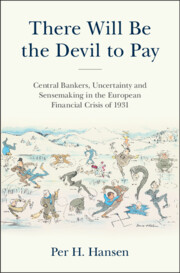
The European financial crisis of 1931 was a pivotal moment in the economic and financial history of the twentieth century. Based on extensive archival research and a cultural conceptual framework, There Will be the Devil To Pay offers a new and much needed understanding of the European financial crisis. It tells the dramatic story of the five months that led to the breakdown of the gold standard, writing the history of the crisis from the perspective of central bankers, private bankers, and government officials. It provides a new narrative of how those involved struggled to understand and respond to the crisis as it unfolded. Contributing to the emerging literature on radical uncertainty and narrative economics, this book provides a detailed analysis of how decision-makers confront uncertainty and shape narratives that create actionable knowledge and enable decision-making.
This paper examines the role of offshoring in the flattening of the ratio of female to male hours worked in the US since the early 1990s. The observed flattening coincides with a decline in the share of occupations with high offshoring potential in women’s hours worked and an increase in service offshoring. I propose a two-gender, two-sector model with a continuum of occupations. Given the higher female intensity in the service sector, the gender hours ratio declines as service offshoring increases. Quantitatively, the service offshoring plays an important role in explaining the plateau in the gender hours ratio since the 1990s.
Real estate is a major component of China’s national wealth, serving as a key store of value. Property taxes potentially influence households’ belief in the stability of the housing market, resulting in varying effects of such taxes. This paper constructs an equilibrium model of stores of value to examine these effects under diverse beliefs. The results show that property taxes can constrain the growth of housing prices if households maintain their belief in the future stability of housing values. However, damaging this belief would lead to a safety trap with a decline in output. The paper also demonstrates that using tax revenue to finance government bond issuance can be an effective way to lower housing prices and increase output.
We investigate two findings in Gali and Monacelli (2016, American Economic Review): (i) the effectiveness of labor cost adjustments on employment is much smaller in a currency union and (ii) an increase in wage flexibility often reduces welfare, more likely in an economy that is part of a currency union. First, we introduce a distorted steady state into Gali and Monacelli’s small open economy model, in which employment subsidies making the steady state efficient are not available, and replicate their two findings. Second, an endogenous fiscal policy rule similar to that in Bohn (1998, Quarterly Journal of Economics) is introduced with a government budget constraint in the model. The results suggest that while Gali and Monacelli’s first finding is still applicable, their second finding is not necessarily valid. Therefore, an increase in wage flexibility may reduce welfare loss in an economy that is part of a currency union as long as wage rigidity is sufficiently high. Thus, there is scope to discuss how wage flexibility benefits currency unions.