To save content items to your account,
please confirm that you agree to abide by our usage policies.
If this is the first time you use this feature, you will be asked to authorise Cambridge Core to connect with your account.
Find out more about saving content to .
To save content items to your Kindle, first ensure no-reply@cambridge.org
is added to your Approved Personal Document E-mail List under your Personal Document Settings
on the Manage Your Content and Devices page of your Amazon account. Then enter the ‘name’ part
of your Kindle email address below.
Find out more about saving to your Kindle.
Note you can select to save to either the @free.kindle.com or @kindle.com variations.
‘@free.kindle.com’ emails are free but can only be saved to your device when it is connected to wi-fi.
‘@kindle.com’ emails can be delivered even when you are not connected to wi-fi, but note that service fees apply.
There has been great popular and scholarly interest in the activities of non-Arctic actors in the Arctic region, and in the Arctic Council specifically. We find controversy around the activities of Observers in the Council, with some seeing challenges to Arctic states and others seeing positive co-operation. The Arctic Council is the preeminent governance forum for the Arctic region, consisting of the Arctic states (as of 2023, minus Russia) and six Indigenous peoples’ organisations. Non-Arctic states, intergovernmental organisations and non-governmental organisations can be Observers in the institution. Existing literature has examined the significance, interest and powers of these actors; this paper answers the research question, what do Observers actually do in the Arctic Council? To answer this question, this paper presents the results of content analysis of official Arctic Council Observer reviews and reports, which catalogue their activities. The answer may seem obvious: Observers observe. However, Arctic Council Observers do more than this simple function. This paper proposes that all of the activities of Observers fit into a typology of six types of activity. The ultimate finding is that Observers in the Arctic Council work with Arctic states to enhance institutional work around climate change and sustainable development; we see examples of positive co-operation that enhances regional governance. It is another example of peaceful international relations in the Arctic.
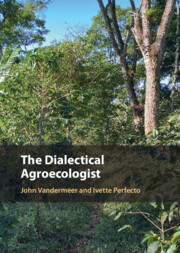
This book examines contradictions within the fields of food studies and agroecology, from the differences between traditional and scientific knowledge, to habitat fragmentation and connection, monocultures versus diverse farming systems, pest regulation, and the rural/urban dialectic. Building and expanding on the work of Richard Levins and Richard Lewontin, who used the dialectical method in the field of biology, this analysis includes examples from the authors' own pioneering research in Mexico, Nicaragua, and Puerto Rico, to demonstrate the benefits of applying the dialectical method to agroecology in practice. Exploring themes in studies that are currently the subject of rigorous debate among academics and activists alike, especially related to food production and distribution, this book is indispensable for practitioners and activists seeking to transform the food system, as well as for social and natural scientists.
In the year 1900, Otani Kozui, along with three travel companions, ventured on a one-month Arctic cruise, visiting the Norwegian fjords, the North Cape, Spitsbergen (Svalbard) and Iceland. The turn of the 20th century was a formative time for early Arctic tourism, and the aura of exploration was still a part of the northern allure. While Otani and his friends were not the first Japanese to cross the Arctic Circle, they were seen among their contemporaries as holding the record for being the first Japanese to cross the 70th parallel, which became a badge of honour in the exclusive Arctic Circle Society that was established in Japan in the early 1930s. As one of Japan’s most important 20th-century explorers, Otani is well known for having collected and studied Buddhist treasures from across Central Asia and the Silk Road. This paper aims to establish the facts surrounding Otani’s Arctic cruise and the Arctic Circle Society, both of which have gone mostly unnoticed by contemporary scholars. The paper also discusses how Otani’s voyage – which contains elements of tourism, study and competition – should be perceived, both in the context of his legacy and the broader historical developments of the era.
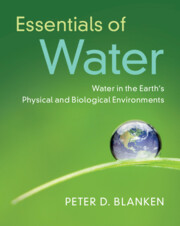
Water shapes the planet and all life upon it. Breaking down traditional disciplinary barriers, this accessible, holistic introduction to the role and importance of water in Earth's physical and biological environments assumes no prior knowledge. It provides the reader with a clear and coherent explanation of the unique properties of water and how these allow it to affect landscapes and underpin all life on Earth. Contemporary issues surrounding water quality – such as the rise of microplastics and climate change – are highlighted, ensuring readers understand current debates. Giving all of the necessary background and up-to-date references, and including numerous examples and illustrations to explain concepts, worked mathematical calculations, and extensive end-of-chapter questions, this is the ideal introductory textbook for students seeking to understand the inextricable links between water and the environment.
“Antarctic Ambassadorship” has emerged as an important concept in tourism, conservationist, and polar research communities. This article investigates tourists’ perceptions of “Antarctic Ambassadorship” through surveys and interviews conducted during and shortly after their travel to Antarctica, from 2015 to 2018. Interpretations of the term “Antarctic ambassador” varied widely but most hesitated to identify themselves this way. Tourists were not sure how to enact “Ambassadorship” or whether the actions they did take would “count.” Our findings suggest that the industry has great potential to promote Antarctic Ambassadorship by providing concrete ideas about what Ambassadorship might entail and offering tools for tourists to take concrete actions. We suggest a shift towards a focus on “Antarctic Civics” that would educate travellers about how Antarctica is governed and which institutions are responsible for its conservation, in order to empower tourists to engage in political advocacy in addition to personal lifestyle changes.
Antarctica is often cast as a last wilderness, untouched by humans and set aside for peace and science. Yet it also has a nuclear past that foreshadowed a shift in human interactions with the continent, away from development and towards protection. This paper examines the discourse around the installation and the dismantlement of PM-3A, the first and only large-scale nuclear reactor to have been used on the Antarctic continent. Affectionately known as “Nukey Poo,” the reactor was greeted with optimism by the USA and was seen as a catalyst for a more comfortable and technologically advanced future for the humans at McMurdo Station. This techno-optimism spurred visions of a resource-rich Antarctic future. When it became apparent a decade on that the reactor was too costly and had been leaking, the narration shifted to centre on environmental protection, resulting in the removal of a mountainside of gravel in the name of ecological restoration. The reactor is gone, but not forgotten – the site is designated as a Historic Site and Monument under the Antarctic Treaty System. Spanning from the Cold War to the Madrid Protocol era, the story of Nukey Poo provides a useful lens through which to track the evolution of attitudes towards Antarctica and to reflect on imagined Antarctic futures.
Between 1750 and 1850, at least twenty versions of the Greenlandic Bible were published through the efforts of Greenlandic catechists, Danish Lutherans, German Moravians, the Danish Bible Society and the British and Foreign Bible Society (BFBS). This article assesses the role of Greenlandic and other Inuit translators as they were engaged in the colonial project of devising a complete version of the scriptures in their own language. Using the relatively untapped correspondence of the BFBS, it considers how and why the status of Inuit translators changed over the course of the missionary translation project. In one response to the reception of new Bibles, Inuit people offered gifts of blubber to the BFBS to support translations for other mission communities. To understand the meaning of this exchange, this essay brings together the methodologies and perspectives of missionary linguistics. It uncovers the unique role played by Greenlandic and other Inuit translators and catechists, foregrounding their contribution to a successful national project, the creation of a national language for independent Greenland and the emergence of literate Christian communities. By reading along and against the grain of colonial archives, it seeks to recover something of the names and motivation of Inuit scripture translators.
In 1949, human skeletal remains discovered by RCMP Inspector Henry Larsen near Cape Felix, King William Island, Nunavut, were identified as an adult male of European ancestry and a member of the 1845 Franklin Northwest Passage Expedition. The identification has never been questioned and is considered significant to reconstructions of the fate of the Franklin expedition because the sailor’s death presumably pre-dated the desertion of HMS Erebus and HMS Terror in April 1848 and because no other human remains of expedition personnel have ever been found between Victory Point and Cape Felix. The aim of this study was to re-examine the basis on which the ancestry of the skeleton was interpreted to be European. A review of archival records revealed previously unpublished details concerning the location and context of the discovery, and re-assessments of the antiquity and of key morphological attributes of the bones suggest they are those of an adult male Inuk and have no connection to the 1845 Franklin expedition.
Water shapes the planet and all life upon it. Breaking down traditional disciplinary barriers, this accessible, holistic introduction to the role and importance of water in Earth’s physical and biological environments assumes no prior knowledge. It provides the reader with a clear and coherent explanation of the unique properties of water and how these allow it to affect landscapes and underpin all life on Earth. Contemporary issues surrounding water quality – such as the rise of microplastics and climate change – are highlighted, ensuring readers understand current debates. Giving all of the necessary background and up-to-date references, and including numerous examples and illustrations to explain concepts, worked mathematical calculations, and extensive end-of-chapter questions, this is the ideal introductory textbook for students seeking to understand the inextricable links between water and the environment.