To save content items to your account,
please confirm that you agree to abide by our usage policies.
If this is the first time you use this feature, you will be asked to authorise Cambridge Core to connect with your account.
Find out more about saving content to .
To save content items to your Kindle, first ensure no-reply@cambridge.org
is added to your Approved Personal Document E-mail List under your Personal Document Settings
on the Manage Your Content and Devices page of your Amazon account. Then enter the ‘name’ part
of your Kindle email address below.
Find out more about saving to your Kindle.
Note you can select to save to either the @free.kindle.com or @kindle.com variations.
‘@free.kindle.com’ emails are free but can only be saved to your device when it is connected to wi-fi.
‘@kindle.com’ emails can be delivered even when you are not connected to wi-fi, but note that service fees apply.
So far, this book has examined several components of a 100 percent clean, renewable energy and storage system. This chapter focuses on integrating the components together in countries, states, cities, and towns to provide end-point roadmaps for a transition. Such roadmaps provide scenarios for meeting all-purpose, annually averaged power demand with 100 percent WWS in 2050. Chapter 8 discusses methods of matching time-dependent power demand with supply and storage. The subjects discussed in this chapter are projecting annually averaged power demand in all energy sectors to 2050 (Section 7.1), quantifying the transition of all business-as-usual (BAU) energy in all sectors to electricity, electrolytic hydrogen, and some heat, all sourced by WWS (Section 7.2), reducing end-use power demand due to such a transition (Section 7.3), performing a renewable energy resource analysis (Section 7.4), selecting a WWS energy mix in each location to meet end-use demand in the annual average while also meeting resource constraints (Section 7.5), calculating changes in energy costs due to such a transition (Section 7.6.1), calculating changes in air pollution mortality and morbidity and their associated costs due to such a transition (Section 7.6.2), and estimating the climate-relevant emissions and their associated costs due to such a transition (Section 7.6.3). The methods in this chapter are applicable to roadmaps for towns, cities, states, provinces, and countries but are derived here for countries as an example.
A 100 percent wind-water-solar (WWS) energy infrastructure involves electrifying or providing direct heat for all energy sectors and then providing the electricity or heat with WWS. Because electricity is such a large part of the solution, understanding how it works is important. In addition, WWS technologies convert either mechanical or solar energy into electricity. This chapter provides the basic information for understanding those conversion processes, which are elaborated on in Chapters 5 (solar energy) and 6 (wind energy). This chapter discusses the basics of electricity with a particular focus on electric power. It starts by examining different types of electricity – static electricity, lightning, and wired electricity. It then covers voltage and Kirchoff’s laws of voltage and current. Next, it turns to power, resistance in series and parallel, and capacitors. This is followed by a discussion of electromagnetism, AC electricity, and inductors. Both single-phase and three-phase AC electricity, as well as generators, are then described. Finally, real and reactive power, transformers, and transmission, including high voltage AC and DC transmission, are covered.
The solution to air pollution, global warming, and energy insecurity is, in theory, simple and straightforward: electrify or provide direct heat for everything; obtain the electricity and heat from only wind, water, and solar power; store energy; and reduce energy use.
After solar, onshore and offshore wind have the potential to supply the greatest portion of the world’s all-purpose energy demand. Not only are wind resources abundant in almost every country of the world, but the cost of onshore wind energy has also declined so much in recent years, that it is, in 2020, the least expensive form of new electric power in many countries of the world. The low cost has resulted in massive installations of wind to replace fossil-fuel power plants and to provide new energy demand.
Prior to the Industrial Revolution of the mid-1700s, the world relied primarily on biomass but also on some coal for its energy, which was primarily heat. During the Industrial Revolution, manufacturing processes transitioned from artisan shops to factories following expanded use of the steam engine. The use of coal, which powered the steam engine, has grown ever since. Although natural gas was discovered accidentally in China around 500 BC, it was not used on a large scale until after the first natural gas well was constructed in Fredonia, New York, in 1821. On August 27, 1859, oil was discovered in Titusville, Pennsylvania. Worldwide, oil consumption has increased since then.
Solar and wind will make up the bulk share of a 100 percent wind-water-solar (WWS) energy generation infrastructure worldwide. The main types of solar generation are solar photovoltaics (PV) on rooftops and in utility-scale power plants, concentrated solar power (CSP), and solar thermal collectors for water and air heating. The sun produces enough energy worldwide to power the world with PV for all purposes in 2050, if all energy were electrified, about 2,200 times over. Over land, PV can power all energy about 640 times over. Needless to say, the world needs only a small fraction of this. If half the world’s all-purpose power were from solar PV, that would mean about 0.08 percent of the world’s solar resource over land would be needed. Given the large potential of solar PV in particular for powering the world’s energy needs, it is useful to understand PV panels and solar resources better. This chapter discusses both as well as how to determine the quantity of solar radiation reaching a PV panel over time and space. The chapter starts with a detailed description of solar photovoltaic cells, panels, and arrays and their efficiencies (Section 5.1). It then goes into solar resource availability and optimal tilt angles for solar panels worldwide (Section 5.2). Finally, it discusses how to calculate radiation through the atmosphere (Section 5.3).
This paper discusses an unsourced anecdote in Roland Huntford’s dual biography of Scott and Amundsen and their race for the South Pole; the first edition of the book was published in 1979. During a meeting between the Fram and Terra Nova in the Bay of Whales on 4 February 1911, Lieutenant Victor Campbell allegedly told Roald Amundsen—in order to deceive him—that one of the British motor sledges was “already on terra firma”. In a recent article in Polar Record, Huntford received criticism for (seemingly) having imagined the episode. However, a description of this incident, though with a slight variation compared to Huntford’s version, can be found in Tryggve Gran’s book, Kampen om Sydpolen [The Battle for the South Pole], published in 1961. Hence, one must conclude that Campbell really did try to mislead Amundsen regarding the motor sledges. Nevertheless, it is unlikely that the attempted deception had an impact on Amundsen’s plan for his south polar journey.
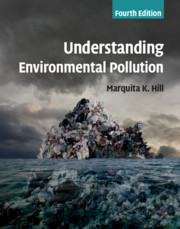
This undergraduate textbook examines environmental pollution ranging from our homes to the global environment. Completely updated and with over 50% new and rewritten material, this new edition assesses the international scope of pollution, including water, climate change, acidification, energy, solid and hazardous waste, persistent chemicals, and pesticides. The pollutants of current major concern are examined, including plastics and electronic waste. Both the impacts and the sources of pollution are addressed, as well as governmental, corporate, and personal responsibility for pollution. Pollution prevention is emphasized throughout, but students will come to see that prevention is not enough. The text moves on to examine a circular economy with closed-loop systems, where by-products are reused, wastes become raw materials, water is recycled, and energy is recovered from waste energy. Understanding Environmental Pollution engages students with the idea that humanity holds the tools to confronting the daunting pollution issues by considering a circular economy.
The utilization of Traditional Ecological Knowledge (TEK) in wildlife management has been a prominent topic for several decades. Since its establishment, Arctic Council (AC) has emphasized the importance of TEK and its utilization in its work. Yet, the process of knowledge coproduction in the AC has never been assessed. To what extent has TEK been meaningfully incorporated into the AC? The research uses qualitative content analysis to analyze the AC working groups’ meeting minutes, reports, scientific reports and assessments as well as reports released by Permanent Participants in order to investigate how the TEK has been incorporated into the AC. The study investigates that the process of knowledge coproduction in the AC turned into lip service, and suggests the set of recommendations that could potentially guide the TEK projects in the process of knowledge co-production. These recommendations, including the use of participatory methodology, the use of Indigenous methods, a recognition that TEK is local, application to policy, and better cross-cultural communication, could result in the more meaningful integration of TEK into scientific projects as well as wildlife management policies.
International environmental non-governmental organizations (IENGOs) have a long and checkered history of involvement and impact in, and on, the North. Using the example of Greenpeace, arguably one of the most stigmatized IENGOs in the North American North, this paper explores the questions: why are IENGOs stigmatized in the North American North and how might they overcome their stigma with local audiences? It outlines the role of moral legitimacy in stigmatization and overcoming stigma, and the challenges of (re)establishing moral legitimacy with a stigmatizing audience, in this case, Inuit in Northern Canada and Greenland.
Throughout the past two decades, the number of studies examining the adaptive capacity of Arctic communities in the context of climate change has been increasing; however, little is known about Arctic communities’ ability to adapt to certain emerging changes, such as increased shipping activity. To address this knowledge gap, this study systematically analyses published scientific articles on community adaptive capacity in circumpolar Arctic, including articles published in Russian which may not be captured in English-only reviews. Throughout this review, the study focuses on three areas: the development of the adaptive capacity framework; the conditions that enable community adaption abilities; and the extent to which shipping developments are addressed in the literature. This study demonstrates that the adaptive capacity framework has been significantly developed both theoretically and methodologically and is broadly used to address new types of climatic and non-climatic changes. Though the impacts from the shipping development are discussed in some studies, there is a clear need for further examination of coastal communities’ ability to adapt to such changes. Additionally, the study reveals limitations in the application of the Western conceptual terminology when exploring community-based research by Russian scholars.
Numerous laws – including the Green New Deal – have been proposed or passed in cities, states, and countries to transition from fossil fuels to 100% clean, renewable energy in order to address climate change, air pollution, and energy insecurity. This textbook lays out the science, technology, economics, policy, and social aspects of such transitions. It discusses the renewable electricity and heat generating technologies needed; the electricity, heat, cold, and hydrogen storage technologies required; how to keep the electric power grid stable; and how to address non-energy sources of emissions. It discusses the history of the 100% Movement, which evolved from a collaboration among scientists, cultural leaders, business people, and community leaders. Finally, it discusses current progress in transitioning to 100% renewables, and the new policies needed to complete the transition. Online course supplements include lecture slides, answers to the end-of-chapter student exercises, and a list of extra resources.