To save content items to your account,
please confirm that you agree to abide by our usage policies.
If this is the first time you use this feature, you will be asked to authorise Cambridge Core to connect with your account.
Find out more about saving content to .
To save content items to your Kindle, first ensure no-reply@cambridge.org
is added to your Approved Personal Document E-mail List under your Personal Document Settings
on the Manage Your Content and Devices page of your Amazon account. Then enter the ‘name’ part
of your Kindle email address below.
Find out more about saving to your Kindle.
Note you can select to save to either the @free.kindle.com or @kindle.com variations.
‘@free.kindle.com’ emails are free but can only be saved to your device when it is connected to wi-fi.
‘@kindle.com’ emails can be delivered even when you are not connected to wi-fi, but note that service fees apply.
Arctic mining has a bad reputation because the extractive industry is often responsible for a suite of environmental problems. Yet, few studies explore the gap between untouched tundra and messy megaproject from a historical perspective. Our paper focuses on Advent City as a case study of the emergence of coal mining in Svalbard (Norway) coupled with the onset of mining-related environmental change. After short but intensive human activity (1904–1908), the ecosystem had a century to respond, and we observe a lasting impact on the flora in particular. With interdisciplinary contributions from historical archaeology, archaeozoology, archaeobotany and botany, supplemented by stable isotope analysis, we examine 1) which human activities initially asserted pressure on the Arctic environment, 2) whether the miners at Advent City were “eco-conscious,” for example whether they showed concern for the environment and 3) how the local ecosystem reacted after mine closure and site abandonment. Among the remains of typical mining infrastructure, we prioritised localities that revealed the subtleties of long-term anthropogenic impact. Significant pressure resulted from landscape modifications, the import of non-native animals and plants, hunting and fowling, and the indiscriminate disposal of waste material. Where it was possible to identify individual inhabitants, these shared an economic attitude of waste not, want not, but they did not hold the environment in high regard. Ground clearances, animal dung and waste dumps continue to have an effect after a hundred years. The anthropogenic interference with the fell field led to habitat creation, especially for vascular plants. The vegetation cover and biodiversity were high, but we recorded no exotic or threatened plant species. Impacted localities generally showed a reduction of the natural patchiness of plant communities, and highly eutrophic conditions were unsuitable for liverworts and lichens. Supplementary isotopic analysis of animal bones added data to the marine reservoir offset in Svalbard underlining the far-reaching potential of our multi-proxy approach. We conclude that although damaging human–environment interactions formerly took place at Advent City, these were limited and primarily left the visual impact of the ruins. The fell field is such a dynamic area that the subtle anthropogenic effects on the local tundra may soon be lost. The fauna and flora may not recover to what they were before the miners arrived, but they will continue to respond to new post-industrial circumstances.
This paper concerns affective relations and unexpected interruptions as the planned expansion of an extractive open-pit mining site gathers momentum. The site is a mountain in Varanger, North Norway, criss-crossed by a sand-coloured meshwork of roads that are part of the current infrastructure of a quartzite quarry. Recently purchased by Chinese investors, the mining company Elkem plans a massive expansion of the operations, which will interrupt a wide range of practices and projects, including the migratory movement of reindeer, as well as their grazing patterns. Known as Giemaš amongst Sámi speakers, the mountain is also alluded to as a site of other powers, manifesting as unexpected accidents. In this article, I explore how the planned expansion evokes this contested site as more than a singular mountain, and how divergent epistemic formations interrupt the making of extractive resources in multiple ways.
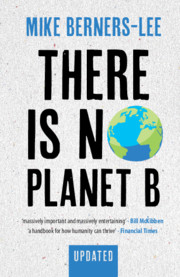
Feeding the world, climate change, biodiversity, antibiotics, plastics, pandemics - the list of concerns seems endless. But what is most pressing, and what should we do first? Do we all need to become vegetarian? How can we fly in a low-carbon world? How can we take control of technology? And, given the global nature of the challenges we now face, what on Earth can any of us do, as individuals? Mike Berners-Lee has crunched the numbers and plotted a course of action that is full of hope, practical, and enjoyable. This is the big-picture perspective on the environmental and economic challenges of our day, laid out in one place, and traced through to the underlying roots - questions of how we live and think. This updated edition has new material on protests, pandemics, wildfires, investments, carbon targets and of course, on the key question: given all this, what can I do?
Seabird populations in Antarctica serve as indicators to assess the impacts of global environmental change. Ecological data on seabirds in Antarctica are scarce due to limited knowledge on their distribution and abundance in most parts of the continent. In this study, we investigated the status of seabird species around the Indian research stations Bharati at Larsemann Hills, Prydz bay and Maitri at Schirmacher Oasis, central Dronning Maud Land located in east Antarctica. We conducted primary surveys during austral summers under the Indian Antarctic Program and compiled published as well as unpublished information on seabird distribution from these areas. We employed intensive area search methods to locate presence of seabird nesting and moulting sites. Ten species were recorded from Larsemann Hills with confirmed breeding of snow petrel, south polar skua and Wilson’s storm-petrel. Only south polar skua and Adélie penguin were reported breeding at Schirmacher Oasis with unconfirmed breeding of Wilson’s storm-petrel. This study presents the first detailed synthesis of status of seabirds from Larsemann Hills and Schirmacher Oasis regions in Antarctica and serves as a strong baseline for future ecological work on seabirds in the sector of operation of Indian Antarctic Program.
This article addresses the normative potential of the principle of sustainability to integrate the rules, principles, and procedures of international law applicable in the Arctic, so that Arctic international law can be posited more holistically and systematically. The holistic and integrative approach towards international law is particularly called for in the context of the Arctic, as the inextricable interconnectedness between its changing natural environments, its societal particularities, and its economic and industrial potential is the fundamental characteristic of the Arctic. In line with the purpose of the special issue, this article takes up a harder case of sustainability, in addressing Arctic mineral resource development. This article posits the principle of sustainability as a principle with an integrative function operating behind the primary norms relating to resource development at the international law level. In response to the claim of fragmented nature of the law at issue, this article calls for an academic examination into the normative function of the sustainability principle to forge the relevant and evolving norms applicable in the specific context of the Arctic mineral resource development towards an integral, coherent whole. This aim will be pursued using the analytical methodology employed by the International Law Commission’s (ILC) work on the “fragmentation of international law” (2006) and the “principle of integration” as identified by the International Law Association’s (ILA) work on the international law relating to sustainable development (2002–12). Finally, as an initial attempt to articulate the legal reasoning for such integration, this article examines the legal institution of environmental impact assessment (EIA) as a tool to present a holistic view of the international law on Arctic mineral resource development.
Global change poses challenges for remote Arctic Russian indigenous communities in the Republic of Sakha. On the basis of interviews from the village of Khara Tumul (Oymyakonskiy ulus) and city of Yakutsk, we illustrate the manners in which sharing networks may be used to enhance resilience in remote conditions as these communities confront climate change, industrial development and limited support from authorities. We identified the main carriers (givers and recipients), location, relationships and mediators, objects, and social and cultural meanings of sharing practices both in daily life and in the case of extreme events. The circulation of goods, money, information and people between cities and remote communities ultimately combines traditional values and modern technologies.
Despite the global alarm caused by accelerating climate change, hydrocarbon companies are exploring and opening up new oil and gas fields all over the world, including the Arctic. With increasing attention on the Arctic, companies address the growing global environmental pressure in their public marketing in various ways. This article examines the webpages of Norwegian Equinor and Russian Gazprom & Gazprom Neft. Building on feminist discussions, I analyse the different justification strategies these fossil fuel companies working in the Arctic utilise in order to support their ongoing operations. This article concludes that in order to justify their operations in the Arctic, the Norwegian and Russian companies emphasise values based on discourses that have historically and culturally been associated with masculine practices, such as the control of nature enabled by technology. These justifications are thus reinforcing the narrative of the Arctic as a territory to be conquered and mastered. Even though the companies operate in different sociopolitical contexts, the grounds of justification are rather similar. Their biggest differences occur in their visual presentations of gender, which I argue is part of the justification. Approaching the fossil fuel industry from a feminist perspective allows questioning the dominant conceptualisations, which the justifications of Arctic hydrocarbon companies are based on.
The Antarctic Treaty System (ATS) is considered a successful example of international governance as it has managed tensions over sovereignty claims, avoided militarisation and dealt with marine resources and environmental protection. Recently, China’s influence and assertiveness in many international institutions have significantly grown. What effect this shift in the international politics will have upon Antarctic governance remains to be seen. However, to further thinking on this issue we explore two current case studies that reveal pressure points within the ATS. First, in the Commission for the Conservation of Antarctic Marine Living Resources, Australia has proposed marine protected areas off East Antarctica, to which China and several other states have objected. Second, in the Antarctic Treaty Consultative Meetings, China has proposed special management arrangements for the area around the “Kunlun” station, to which Australia and several other states have objected. Negotiation theory suggests “logrolling” (i.e. trade of mutual decision-making support across issue areas) can be an effective strategy to avoid diplomatic deadlocks. We therefore consider the merits of a logrolling strategy for the above issues. We find that while a logrolling strategy in the ATS might facilitate short-term diplomatic success, it would carry significant risks, including the weakening of existing norms.
The governance of the Arctic as a frontier for international environmental and climate cooperation, resource politics and security governance holds the promise to provide important insights into some of the 21st century’s most enduring and pressing global challenges. This article reviews the state of the art of Arctic governance research (AGR) to assess the potential and limitations of a regional studies community for making sense of Northern politics and contributing to the broader discipline of international relations (IR) research. A bibliometric analysis of 398 articles published in 10 outlets between 2008 and 2019 reveals that AGR faces at least four limitations that undermine understanding and explaining the processes and outcomes of regional politics and inhibit generalisable observations applicable to questions of global governance: academic immaturity, methodological monoculturalism, state-centrism and analytical parochialism. The lack particularly of theoretically driven and comparative research is indicative of a deeper crisis in AGR which, if unaddressed, could further solidify the community’s unjustified reputation as quixotic in orientation and negligible in its contributions to IR research.
Marine plastic pollution is increasing prominence in current discussions on the governance of the world’s oceans. The Southern Ocean is geographically remote but is still significantly impacted by plastic pollution. Plastic pollution in the Southern Ocean can derive from a variety of sources, including waste from research stations and fishing operations within the Treaty Area and, through transport by ocean currents and wind-generated water movements, from outside the Treaty Area. While there is a growing academic literature on marine plastic pollution in Antarctic, there is less attention to date on the response of the Antarctic Treaty System (ATS) to this issue. This paper analyses how the ATS has engaged with the issue of plastic waste in general, and marine plastic pollution more particularly, from the entry into force of the Protocol on Environmental Protection to the Antarctic Treaty in 1998–2019. Our results indicate that from 2017 the ATS has shown increased attention towards addressing locally sourced marine plastic pollution. A significant problem, however, remains with the respect to marine plastic pollution originating from outside Antarctic Treaty Area that requires a governance response from outside the ATS.
Many people around the globe rely on the low-cost transport of goods and commodities that commercial shipping provides. Indeed, about 90 per cent of the world’s traded goods are transported by sea, with more than 70 per cent of this being containerized cargo (United Nations Conference on Trade and Development, 2017). Shipping densities are illustrated in Figure 1.1, demonstrating the great concentration of traffic along key routes.
Anthropogenic underwater noise has severely increased over the last century and a significant component of noise in marine environments is due to ship traffic. Every year at sea, we observe the continuous movement of more than 60,000 medium to very large commercial vessels, such as cargo ships, bulk carriers, container vessels, tankers, cruise ships and ferries (Equasis, 2015). The incredible increase in commercial maritime trade and the related increase in vessel speed of the last 40 years have raised the amount of noise that ship traffic is spreading throughout the oceans. From the 1960s, when the first measures of noise levels were reported (Wenz, 1962), until the 1990s, underwater noise has almost doubled every 10 years (Andrew et al., 2002; McDonald et al., 2006a; Merchant et al., 2012). While some recent studies describe slowly decreasing low-frequency ocean noise levels at different oceanic locations during the early 2000s (Andrew et al., 2011; Miksis-Olds et al., 2016), the typical and long-term trends for ship noise are still unknown in many regions of the world (Viola et al., 2017).
Marine litter and waste has become one of the major environmental issues of the early twenty-first century. Around 6.4 million tonnes of litter are deposited into the oceans each year (UNEP, 2005), a figure that continues to grow as a result of a variety of social and economic factors, including consumerism and the purchase of single-use products, coastal urbanization, shipping, poor waste management and the use of plastics. Indeed, as Bergmann et al. (2015, p. x) noted, ‘The ubiquity of litter in the open ocean is prominently illustrated by numerous images of floating debris from the ocean garbage patches and by the fact that the search for the missing Malaysia Airlines flight MH370 in March 2014 produced quite a few misidentifications caused by litter floating at the water surface.’ Eriksen et al. (2014) estimated that there was a minimum of 5.25 trillion plastic particles weighing 268,940 tons afloat in the sea, but this figure does not include debris on beaches or on the sea floor. Galgani et al. (2015, p. 29) suggest that plastics ‘typically constitute the most important part of marine litter sometimes accounting for up to 100 % of floating litter’, while 90 per cent of litter caught in benthic trawls is also plastic (Galgani et al., 2015). However, it is important to note that even though the amount of plastic that is produced is increasing, and is expected to continue to do so in the future (Taylor, 2017), the ‘predominance of plastics in litter is not the result of relatively more plastics being littered compared to paper, paperboard or wood products reaching the oceans, but because of the exceptional durability or persistence of plastics in the environment’ (Andrady, 2015, p. 58).
Colonization by fouling organisms is a problem that has challenged operators of ships since humans first took to the seas. Reducing or preventing the fouling of a ship’s hull is important to allow the vessel to pass efficiently through the water. For centuries, fouling has been controlled through the application of a coating that discourages fouling organisms. As early as the third century there are reports of the Greeks using tar and wax to coat ships’ hulls, and as early as the sixteenth century there are reports of copper sheathing or mixtures containing arsenic being used as anti-fouling (AF) coatings on wooden ships. Many of these and the AF solutions that followed were based on the presence of a toxin in the paint to deter organisms from colonizing the painted surface. Cuprous oxide has been used as a biocide since the early nineteenth century and continues to be a common component of modern AF products. The twentieth century saw the introduction of contact leaching AF coatings designed to increase the efficacy and active lifetime of the coating. Typically, these paints contained copper and zinc as the biocidal additives and would be released through dissolution of the painted surface or leaching from an insoluble paint matrix. A major advancement in AF technology was the introduction of self-polishing paints where organotin (OT; typically tributyltin (TBT)) biocides that were incorporated into the paint polymer would allow for controlled release of the biocide as the polymer surface was hydrolyzed. Environmental concerns regarding the use of TBT as an AF biocide saw a ban on its use and the introduction of new, primarily organic biocides, often used alongside other biocides such as copper oxide. A common feature of these coatings has been the release of a biocide(s) into the environment. While modern coatings now aim to be biocide free, AF biocides continue to be developed and introduced onto the market. This chapter provides a comprehensive overview of our understanding of the potential harm caused by biocides released from AF paints applied to ships.
Vessel strikes – collisions between ships and whales – occur throughout the world’s oceans (Figure 10.1) (Laist et al., 2001; Van Waerebeek et al., 2007). First reported in the late nineteenth century as ships reached speeds greater than 13–15 knots, lethal vessel strikes remained relatively infrequent until the mid-twentieth century (Laist et al., 2001). Since then, as the number, speed and size of vessels increased, reported vessel strikes have similarly grown (Figure 10.2) (Laist et al., 2001; Vanderlaan et al., 2009). Vessel strikes involving large whales have emerged as a global conservation concern, largely due to evidence that vessel traffic is increasing (Tournadre, 2014), vessel strikes are increasing (Laist et al., 2001; Vanderlaan et al., 2009), vessel strikes are hampering the recovery of certain endangered whale species (e.g., North Atlantic right whales; Knowlton & Kraus, 2001) and, where enacted, the success of mitigation efforts to reduce the threat of ship strikes may be mixed (e.g., Lagueux et al., 2011; Silber & Bettridge, 2012; Silber et al., 2012a, 2012b; Vanderlaan et al., 2008; van der Hoop et al., 2013).
International environmental law is one of the most rapidly evolving branches of international law. It encompasses intergovernmental organizations, non-governmental organizations, international financial organizations, associations of private-sector corporations and trade groups. There are several sources of international law: bilateral and multilateral treaties (conventional law), practice of legal customs (customary law), general principles of law adopted in national laws and judical decisions and experts writings. The new source of law comes from intergovernmental organizations and other entities that produce resolutions, declarations, guidelines, etc., that have recommendatory power. It is called soft law because it is non-binding, but it can become binding over time. Corporate social responsibility (CRS) is a concept that signifies the integration of environmental, social and human rights awareness into the corporate business model. Today, corporations voluntarily adopt CRS policy because it brings competitive advantage. In spite of the fact that critics see it as a greenwashing instrument, corporations can promote environmental responsibility more efficiently than governments because they have financial and human resources at their disposal.
Through the eras since life first appeared on planet Earth, biological species have been spread around the globe, both within and between landmasses and water bodies. The current biogeographical mosaic of communities and ecosystems has evolved in response to tectonic movement, climatic fluctuations and consequent sea-level rises and falls, as well as biological adaptions to the physical and chemical environment. The environmental requisites or tolerances, competitive strengths and weaknesses, mechanisms of dispersal and reproductive strategies dictate the ability of a species to survive, propagate and expand populations, with the success, speed and distances of spread governed by not only individual species traits, but also the structure of, and ecological processes within, surrounding ecosystems. Through the evolution of the biosphere, the interactions of physical and chemical conditions – and between biological species – has led to constraints on the distributions of the myriad plants and animals, with many now defined as native, or indigenous, to specific regions. Species abundances and distributional boundaries are, however, dynamic over short and long periods of time.