Refine search
Actions for selected content:
48917 results in Computer Science
A foundation for synthetic algebraic geometry
-
- Journal:
- Mathematical Structures in Computer Science / Volume 34 / Issue 9 / October 2024
- Published online by Cambridge University Press:
- 04 December 2024, pp. 1008-1053
-
- Article
-
- You have access
- Open access
- HTML
- Export citation
-
This is a foundation for algebraic geometry, developed internal to the Zariski topos, building on the work of Kock and Blechschmidt (Kock (2006) [I.12], Blechschmidt (2017)). The Zariski topos consists of sheaves on the site opposite to the category of finitely presented algebras over a fixed ring, with the Zariski topology, that is, generating covers are given by localization maps for finitely many elements $f_1,\dots, f_n$ that generate the ideal $(1)=A\subseteq A$. We use homotopy-type theory together with three axioms as the internal language of a (higher) Zariski topos. One of our main contributions is the use of higher types – in the homotopical sense – to define and reason about cohomology. Actually computing cohomology groups seems to need a principle along the lines of our “Zariski local choice” axiom, which we justify as well as the other axioms using a cubical model of homotopy-type theory.


A novel kinematic modeling method for (1+n) type parallel mechanism: applied to obtain the position and posture space simultaneously
-
- Article
- Export citation
-
In this study, a novel kinematic modeling method of parallel mechanism is proposed. It can obtain position and posture space simultaneously in a single model. Compared with the traditional method only based on inverse kinematics, the novel method can significantly improve computational performance. The original evaluation metric $\mathfrak{R}$ is proposed to evaluate the performance of the two modeling methods. Three groups of experiments with different calculation times are carried out for the classical PPU-3RUS parallel mechanism, and the new RS-3UPRU parallel mechanism after the effectiveness and wide applicability of the novel modeling method is proved. The calculation time and output rate are recorded, respectively, and then the respective $\mathfrak{R}$ values are obtained by weighting. The results show that the novel modeling method has better performance.


Programming and reasoning about actors that share state
-
- Journal:
- Journal of Functional Programming / Volume 34 / 2024
- Published online by Cambridge University Press:
- 03 December 2024, e12
-
- Article
-
- You have access
- Open access
- HTML
- Export citation
Ramsey simplicity of random graphs
- Part of
-
- Journal:
- Combinatorics, Probability and Computing / Volume 34 / Issue 2 / March 2025
- Published online by Cambridge University Press:
- 03 December 2024, pp. 298-320
-
- Article
-
- You have access
- Open access
- HTML
- Export citation
-
A graph $G$ is $q$-Ramsey for another graph $H$ if in any $q$-edge-colouring of $G$ there is a monochromatic copy of $H$, and the classic Ramsey problem asks for the minimum number of vertices in such a graph. This was broadened in the seminal work of Burr, Erdős, and Lovász to the investigation of other extremal parameters of Ramsey graphs, including the minimum degree.
It is not hard to see that if $G$ is minimally $q$-Ramsey for $H$ we must have $\delta (G) \ge q(\delta (H) - 1) + 1$, and we say that a graph $H$ is $q$-Ramsey simple if this bound can be attained. Grinshpun showed that this is typical of rather sparse graphs, proving that the random graph $G(n,p)$ is almost surely $2$-Ramsey simple when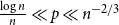 $\frac{\log n}{n} \ll p \ll n^{-2/3}$. In this paper, we explore this question further, asking for which pairs $p = p(n)$ and $q = q(n,p)$ we can expect $G(n,p)$ to be $q$-Ramsey simple.
We first extend Grinshpun’s result by showing that $G(n,p)$ is not just $2$-Ramsey simple, but is in fact $q$-Ramsey simple for any $q = q(n)$, provided $p \ll n^{-1}$ or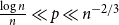 $\frac{\log n}{n} \ll p \ll n^{-2/3}$. Next, when $p \gg \left ( \frac{\log n}{n} \right )^{1/2}$, we find that $G(n,p)$ is not $q$-Ramsey simple for any $q \ge 2$. Finally, we uncover some interesting behaviour for intermediate edge probabilities. When $n^{-2/3} \ll p \ll n^{-1/2}$, we find that there is some finite threshold $\tilde{q} = \tilde{q}(H)$, depending on the structure of the instance $H \sim G(n,p)$ of the random graph, such that $H$ is $q$-Ramsey simple if and only if $q \le \tilde{q}$. Aside from a couple of logarithmic factors, this resolves the qualitative nature of the Ramsey simplicity of the random graph over the full spectrum of edge probabilities.


Measuring the effectiveness of programmed instructions (PI) to learn design thinking concepts for secondary school students
-
- Journal:
- Design Science / Volume 10 / 2024
- Published online by Cambridge University Press:
- 03 December 2024, e40
-
- Article
-
- You have access
- Open access
- HTML
- Export citation
Signalling and rich trustworthiness in data-driven healthcare: an interdisciplinary approach
- Part of
-
- Journal:
- Data & Policy / Volume 6 / 2024
- Published online by Cambridge University Press:
- 02 December 2024, e62
-
- Article
-
- You have access
- Open access
- HTML
- Export citation
Artificial intelligence at the bench: Legal and ethical challenges of informing—or misinforming—judicial decision-making through generative AI
- Part of
-
- Journal:
- Data & Policy / Volume 6 / 2024
- Published online by Cambridge University Press:
- 02 December 2024, e59
-
- Article
-
- You have access
- Open access
- HTML
- Export citation
The ethics at the intersection of artificial intelligence and transhumanism: a personhood-based approach
- Part of
-
- Journal:
- Data & Policy / Volume 6 / 2024
- Published online by Cambridge University Press:
- 02 December 2024, e61
-
- Article
-
- You have access
- Open access
- HTML
- Export citation
A scoping review on human-centered design approaches and considerations in the design of technologies for loneliness and social isolation in older adults
-
- Journal:
- Design Science / Volume 10 / 2024
- Published online by Cambridge University Press:
- 02 December 2024, e39
-
- Article
-
- You have access
- Open access
- HTML
- Export citation
Assessing design process knowledge in project-based learning: a comparative study in introductory engineering and junior manufacturing courses
-
- Journal:
- Design Science / Volume 10 / 2024
- Published online by Cambridge University Press:
- 02 December 2024, e37
-
- Article
-
- You have access
- Open access
- HTML
- Export citation
Artificial intelligence for collective intelligence: a national-scale research strategy
-
- Journal:
- The Knowledge Engineering Review / Volume 39 / 2024
- Published online by Cambridge University Press:
- 02 December 2024, e10
-
- Article
-
- You have access
- Open access
- HTML
- Export citation
Characteristics of effective design support: insights from evaluating additive manufacturing design artefacts
-
- Journal:
- Design Science / Volume 10 / 2024
- Published online by Cambridge University Press:
- 02 December 2024, e38
-
- Article
-
- You have access
- Open access
- HTML
- Export citation
A review of extensible continuum robots: mechanical structure, actuation methods, stiffness variability, and control methods
-
- Article
-
- You have access
- Open access
- HTML
- Export citation
Characterizing the use of contextual factors in engineering design: an exploration of global health designer practice
-
- Journal:
- Design Science / Volume 10 / 2024
- Published online by Cambridge University Press:
- 02 December 2024, e36
-
- Article
-
- You have access
- Open access
- HTML
- Export citation
D-MEANDS-MD: an improved evolutionary algorithm with memory and diversity strategies applied to a discrete, dynamic, and many-objective optimization problem
-
- Journal:
- The Knowledge Engineering Review / Volume 39 / 2024
- Published online by Cambridge University Press:
- 02 December 2024, e9
-
- Article
-
- You have access
- Open access
- HTML
- Export citation
Human–machine collaboration for enhanced decision-making in governance
- Part of
-
- Journal:
- Data & Policy / Volume 6 / 2024
- Published online by Cambridge University Press:
- 02 December 2024, e60
-
- Article
-
- You have access
- Open access
- HTML
- Export citation
Other-than-Human Perspectives on Écosystème(s): Towards an ecosemiotic approach to sound and media art
-
- Journal:
- Organised Sound / Volume 29 / Issue 3 / December 2024
- Published online by Cambridge University Press:
- 20 December 2024, pp. 303-314
- Print publication:
- December 2024
-
- Article
-
- You have access
- Open access
- HTML
- Export citation
Harold Clark, New Music in the Light of Nobleness: A Scandinavian Dream. An Expatriate’s View of Avant-Garde Norway, 1969–1979. Oslo: Norsk Musikforlag A/S, 2021. ISBN: 978-82-7093-734-9.
-
- Journal:
- Organised Sound / Volume 29 / Issue 3 / December 2024
- Published online by Cambridge University Press:
- 13 December 2024, pp. 352-353
- Print publication:
- December 2024
-
- Article
- Export citation
Improvising with Machines: A taxonomy of musical interactions
-
- Journal:
- Organised Sound / Volume 29 / Issue 3 / December 2024
- Published online by Cambridge University Press:
- 08 January 2025, pp. 340-351
- Print publication:
- December 2024
-
- Article
-
- You have access
- Open access
- HTML
- Export citation
