To save content items to your account,
please confirm that you agree to abide by our usage policies.
If this is the first time you use this feature, you will be asked to authorise Cambridge Core to connect with your account.
Find out more about saving content to .
To save content items to your Kindle, first ensure no-reply@cambridge.org
is added to your Approved Personal Document E-mail List under your Personal Document Settings
on the Manage Your Content and Devices page of your Amazon account. Then enter the ‘name’ part
of your Kindle email address below.
Find out more about saving to your Kindle.
Note you can select to save to either the @free.kindle.com or @kindle.com variations.
‘@free.kindle.com’ emails are free but can only be saved to your device when it is connected to wi-fi.
‘@kindle.com’ emails can be delivered even when you are not connected to wi-fi, but note that service fees apply.
Hipparchus was the most important astronomer of the ancient Greek world. This volume provides a comprehensive introduction to almost everything that can be known or reasonably surmised about his life and work. Hipparchus was the first to apply an effective geometric model to the cosmos, which enabled him to predict the positions of the Sun, Moon and stars more reliably than before. He was also the first to catalogue most of the stars that were visible in the northern hemisphere, giving a detailed account of their risings, settings and culminations. His most important discovery was the long-term movement of the sky, known as precession. Crucially, this study provides a translation and analysis of Hipparchus' only surviving work, the Commentary on the Phenomena of Aratus and Eudoxus, and reconstructs his catalogue of the stars, which has not survived, using a modern precession model.
This book, which draws on Lisa Bendall's lectures over three decades, provides an engaging and accessible survey of everything students need to know to read and understand texts in Linear B. As John Chadwick noted, the Linear B scholar must be 'not just an epigraphist, not just a linguist, not just an economic historian and archaeologist; ideally he or she…must be all these things simultaneously'. Volume 1 introduces the student to the writing system and the language, especially the phonology and morphology. It also explains the formal aspects of the documents and gives guidance on the tools available to the student and scholar. Volume 2 will provide a guide to using the documents to understand the Mycenaean world.
Many people read the Crito primarily as a companion piece to the Apology and as one of Plato's statements on the nature of politics and the citizen's relationship to the state. This book challenges both of those assumptions and shows, by close analysis of the characters, the argument and the dramatic features of the dialogue, that it is best read as an exploration of the nature and significance of Socratic moral reasoning. It shows that there is a single argument throughout the dialogue and that the 'Laws of Athens' are best understood as supporting Socrates' attempt to convince Crito that a commitment to the currently best rational argument justifies his submission to the death penalty, despite the injustice of his sentence. The importance of the Crito for later political and legal theory is great, but the reception of the dialogue should not blind us to its original intention and significance.
The Self in Premodern Thought reconfigures the historical study of the self, which has typically been treated in disciplinary silos. Bringing multiple disciplinary perspectives into conversation with each other, it broadens the discussion to include texts and forms of writing outside the standard philosophical/theological canon. A distinguished group of contributors, from philosophy, classics, theology, history, and comparative literature, explores a wide range of texts that greatly expand our understanding of how selfhood was conceived in the ancient, medieval, and early modern periods. The essays in this groundbreaking collection range from challenging new perspectives on well-known authors and texts, such as Plato and Augustine, to innovative explorations of forms of writing that have rarely been discussed in this context, such as drama, sermons, autobiographical writing, and liturgy.
This book is about the power of story-telling and the place of myth in the cultural memory of ancient Mesopotamia. Rather than reducing mythology to an archaic state of the mind, this study redefines myth as a system of knowledge (episteme) and part of cognitive and cultural experience serving as an explanatory system. It demonstrates how among the multiple ways of world-making (Nelson Goodman) myth not only reflects experiences and reality but also constitutes reality in text and image alike. Drawing on cognitive semiotics, visual studies, and cognitive narratology, it explores the power of the image in showing and revealing something that is absent (deixis). Thus, it demonstrates the contribution of the image to knowledge production. The book calls for re-introducing meaning when dealing with the imagery and iconology of ancient Mesopotamia and introduces an innovative approach to the art history of the ancient Near East.
Interest in the relationship between Paul's letter openings and Koine Greek letter-writing conventions has been steady for over a century, but little new data has emerged in recent years. In this study, Gillian Asquith offers a fresh perspective on Paul's epistolary practice by adopting a multidisciplinary method that synthesises sociolinguistics and lexicography. Comparing the language of Paul's letter openings with the register of language in documentary papyri, she demonstrates that high-register language in Koine Greek epistolary formulae contributes to warm and friendly relations between correspondents. Asquith argues that Paul creatively modifies epistolary norms by using unexpected, high-register language in the remembrance motif and litotic disclosure formula. Such usage, she posits, emphatically reassures Paul's recipients of his pastoral concern for them and heightens the persuasive force of his letters. Asquith's nuanced analysis contributes valuable new data to long-running debates around Paul's practice of prayer and the structure of his letters.
In the Roman Republic, elite women were legally permitted to control substantial assets – and many demonstrably were in direct control of their wealth. They were also the mothers, wives and daughters of the politicians who built Rome's empire and, in a time of high mortality, could find themselves running households that did not contain adult men. This volume explores the political and social consequences of elite female wealth. It combines case studies of individual women, such as Licinia, wife of C. Gracchus, Mucia Tertia and Octavia Minor, with broader surveys of the institutional frameworks and social conventions that constrained and enabled women's wealth and its consequences. The book contributes to the recent upsurge of interest in re-evaluating the role of women in Republican Rome and will be invaluable for scholars and students alike.
Latin poetry is defined by its relationships with poetry in other languages. It was originally constituted by its relation to Greek, and in later times has been constituted by its relation to the European vernaculars. In this bold and innovative book, distinguished Latinist Stephen Hinds explores these relationships through a series of vignettes. These explore ancient conversations between Latin and Greek verse texts, followed by modern (especially early modern) conversations between Latin and European vernacular verse texts, reflecting the linked stories of reception that make up the so-called 'classical tradition': conversations across language, across period, and sometimes both at the same time. The book's range is expansive, ranging from Homer through Virgil and the Augustans to late antiquity, the Renaissance, Romanticism and on to Seamus Heaney. There is an especial focus on the parallel vernacular and Latin output of Milton and Marvell in England and Du Bellay in France.
Roman law is justly famous, but what was its relationship to governing an empire? In this book, Ari Z. Bryen argues that law, as the learned practice that we know today, emerged from the challenge of governing a diverse and fractious set of imperial subjects. Through analysis of these subjects' political and legal ideologies, Bryen reveals how law became the central topic of political contest in the Roman Empire. Law offered a means of testing legitimacy and evaluating government, as well as a language for asking fundamental political questions. But these political claims did not go unchallenged. Elites resisted them, and jurists, in collaboration with emperors, reimagined law as a system that excluded the voices of the governed. The result was to separate, for the first time, 'law' from 'society' more broadly, and to define law as a primarily literate and learned practice, rather than the stuff of everyday life.
Reading Biblical Greek is aimed at students who are studying New Testament Greek for the first time, or refreshing what they once learned. Designed to supplement and reinforce The Elements of New Testament Greek, by Jeremy Duff, each chapter of this textbook provides lengthy, plot-driven texts that will be accessible as students study each chapter of The Elements. Each text is accompanied by detailed questions, which test comprehension of content from recent lessons and review challenging topics from previous chapters. The graded nature of the texts, together with the copious notes and comprehension questions, makes this an ideal resource for learning, reviewing or re-entering Greek. The focus of this resource is on reading with understanding, and the exercises highlight how Greek texts convey meaning. Finally, this book moves on from first-year Greek, with sections that cover the most important advanced topics thoroughly.
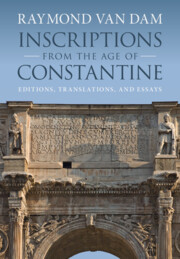
The reign of Constantine, Roman emperor from 306 to 337, was one of the most important periods in world history. Although literary texts often represented him as the first Christian emperor, the inscriptions engraved on monuments, statue bases, and milestones offer alternative perspectives. Inscriptions highlight the influence of the other emperors, the prominence of senators at Rome, the civic traditions for praising benefactors in provincial cities, the logistics of the economy, and the abiding importance of traditional cults. This book includes the Greek and Latin texts of over 800 inscriptions from the early fourth century, with translations and critical annotations. An extended Introduction and almost 200 short essays provide context by explaining the issues and problems, correlating the literary texts, and comparing the legends and images of coins. Without the emperor as the constant focus, the Age of Constantine becomes all the more fascinating.
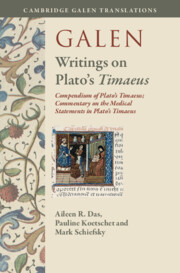
To Galen, Plato was the great authority in philosophy but also had important things to say on health, disease, and the human body. The Timaeus was of enormous significance to Galen's thought on the body's structure and functioning as well as being a key source of inspiration for his teleological world view, in which the idea of cosmic design by a personified creative Nature, the Craftsman, plays a fundamental role. This volume provides critical English translations of key readings of the Timaeus by Galen that were previously accessible only in fragmentary Greek and Arabic and Arabo-Latin versions. The introductions highlight Galen's creative interpretations of the dialogue, especially compared to other imperial explanations, and show how his works informed medieval Islamicate writers' understanding of it. The book should provoke fresh attention to texts that have been unjustly marginalized in the history of Platonism in both the west and Middle East.
Many think that reality is structured such that some beings are more fundamental than others and characterize this structure in terms of 'grounding.' Grounding is typically regarded as explanatory and as exhibiting certain order-theoretic properties: asymmetry, irreflexivity, and transitivity. Aristotle's notion of ontological priority, which inspired discussions of grounding, also has these features. This Element clarifies Aristotle's discussions of ontological priority, explores how it relates to other kinds of priority, and identifies important connections to metaphysical grounding. Aristotle provides numerous examples that appear to impugn ontological priority's order-theoretic coherence. This is Aristotle's “Priority Problem.” But Aristotle has an independently motivated solution that eliminates the threat from each of the apparently problematic examples and explains why such examples are ubiquitous. The author argues that a ground-theoretic analog of Aristotle's solution to the Priority Problem addresses recent challenges to grounding.
Previous studies of Greek oracles have largely studied their social and political connections. In contrast, this pioneering volume explores the experience of visiting the oracle of Zeus at Dodona in NW Greece, focusing on the role of the senses and embodied cognition. Building on the unique corpus of oracular question tablets found at the site, it investigates how this experience made new ways of knowing and new forms of knowledge available. Combining traditional treatments of evidence with more recent theoretical approaches, including from psychology, narratology and environmental humanities, the chapters explore the role of nature, sound, touch, and stories in the experience of consultation. By evoking the details of this experience, they help the reader understand more deeply what it was like for ancient men and women to visit the oracle and ask the god for help. This title is also available as open access on Cambridge Core.
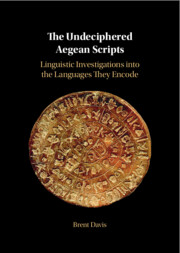
The decipherment of Linear B, an early form of Greek used by the Myceneans, by Michael Ventris and John Chadwick has long been celebrated. But five other scripts from the Bronze-Age Aegean remain undeciphered. In this book, Brent Davis provides a thorough introduction to these scripts and uses statistical techniques drawn from linguistics to provide insights into the languages lying behind them. He deals most extensively with the script of the Minoan civilization on Crete (“Linear A”), whose decipherment remains one of the Holy Grails of archaeology. He discusses linguistic topics in clear language and explains linguistic terms in a comprehensive glossary. The book also includes all data on which the various analyses of the scripts are based. It will therefore be of great interest and use not just to experts in the undeciphered Aegean scripts, but to novices and aficionados of decipherment as well.
Pat Easterling's articles are fundamental to her status as one of the most influential Hellenists of her generation. Characterised by unostentatious astuteness and an arresting capacity for observation, they put forward tersely considered arguments that have the weight of much longer discussions. Exacting attention to language and detail combines with clear-sighted openness to new developments within and beyond the discipline to allow the texts to speak in deeply human terms. This collection gathers significant articles from all stages of Easterling's career, many of them major points of reference. Volume 1 is devoted to Greek tragedy, and represents in particular her great affinity for Sophocles. Volume 2 presents work on other Greek literature, acting, transmission, scholia, reception, history of scholarship. Reflecting Easterling's extensive academic ties, several of the articles were originally published in less well-known volumes and are here made more widely available.
The narrative art of Herodotus' Histories has always been greatly admired, but it has never received an in-depth and systematic analysis. This commentary lays bare the role of the narrator and his effective handling of time, focalization, and speech in all the famous and much-loved episodes, from Croesus, via the Ionian Revolt, to the climax of Xerxes' expedition against Greece. In paying close attention to the various ways in which Herodotus structures his story, it offers crucial help to get a grip on the at first sight bewildering structure of this long text. The detailed analysis of Herodotus' narration shows how his masterful adoption and expansion of the epic toolbox endowed the new genre of historiography with the same authority as its illustrious predecessor. The commentary is suitable for all readers of Herodotus' Greek text: students, teachers, and scholars.
Pat Easterling's articles are fundamental to her status as one of the most influential Hellenists of her generation. Characterised by unostentatious astuteness and an arresting capacity for observation, they put forward tersely considered arguments that have the weight of much longer discussions. Exacting attention to language and detail combines with clear-sighted openness to new developments within and beyond the discipline to allow the texts to speak in deeply human terms. This collection gathers significant articles from all stages of Easterling's career, many of them major points of reference. Volume 1 is devoted to Greek tragedy, and represents in particular her great affinity for Sophocles. Volume 2 presents work on other Greek literature, acting, transmission, scholia, reception, history of scholarship. Reflecting Easterling's extensive academic ties, several of the articles were originally published in less well-known volumes and are here made more widely available.
What is wrong with disobedience? What makes an act of disobedience civil or uncivil? Under what conditions can an act of civil or uncivil disobedience be justified? Can a liberal democratic regime tolerate (un)civil disobedience? This Element book presents the main answers that philosophers and activist-thinkers have offered to these questions. It is organized in 3 parts: Part I presents the main philosophical accounts of civil disobedience that liberal political philosophers and democratic theorists have developed and then conceptualizes uncivil disobedience. Part II examines the origins of disobedience in the praxis of activist-thinkers: Henry David Thoreau on civil resistance, anarchists on direct action, and Mohandas Gandhi and Martin Luther King Jr. on nonviolence. Part III takes up the question of violence in defensive action, the requirement that disobedients accept legal sanctions, and the question of whether uncivil disobedience is counterproductive and undermines civic bonds.
This textbook offers students who have no prior background in biblical studies an understanding of the lasting contribution of Israel's scriptures. Bringing a literary approach to the topic, it strikes a balance between historical reconstructions, comparative religions, and theology. Among several distinctive features, It traces the legacy of monotheism first emerging in the pages of Israel's scriptures as an enduring contribution for twenty-first century readers. Monotheism gives the volume an immediate relevance because the so-called Abrahamic religions are rooted in this concept. Whether one is Jewish, Christian, Muslim, or secularist, students will gain a new understanding of the origins of monotheism as their common heritage. The Second Edition of this textbook includes expanded discussions within the text and in sidebars, notably on the history of biblical scholarship, modern methods of interpretation, and wisdom literature.