To save content items to your account,
please confirm that you agree to abide by our usage policies.
If this is the first time you use this feature, you will be asked to authorise Cambridge Core to connect with your account.
Find out more about saving content to .
To save content items to your Kindle, first ensure no-reply@cambridge.org
is added to your Approved Personal Document E-mail List under your Personal Document Settings
on the Manage Your Content and Devices page of your Amazon account. Then enter the ‘name’ part
of your Kindle email address below.
Find out more about saving to your Kindle.
Note you can select to save to either the @free.kindle.com or @kindle.com variations.
‘@free.kindle.com’ emails are free but can only be saved to your device when it is connected to wi-fi.
‘@kindle.com’ emails can be delivered even when you are not connected to wi-fi, but note that service fees apply.
I have reserved for discussion here certain passages containing more than a single interaction. Not all combinations are significant, though. The significant combinations in the Greek corpus are of several kinds, of which the best attested and conceptually simplest comprises those instances with a broadly or cumulatively preparatory effect in favour of the vehicle.
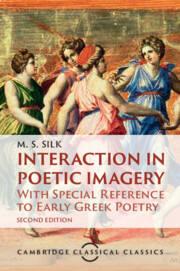
This path-breaking book has made an unusual and original contribution to literary theory by means of a study of the literature of ancient Greece. It investigates an aspect of poetic imagery in the practical context of Greek lyric and drama up to and including Aeschylus and Pindar. Several hundred passages are systematically examined, with many passages from English verse introduced to provide illustration. Using these, Michael Silk formulates a new critical concept, 'interaction', which characterises certain features of metaphor and other imagery and explores in detail their nature and significance. He then proceeds to discuss related issues in the fields of stylistics and literary theory, give fresh insights into several features of ancient literature, and – above all – make important contributions to the theory and practice of 'literary lexicography' in a dead language. This reissue contains a substantial new Introduction engaging with critical and scholarly developments since first publication.
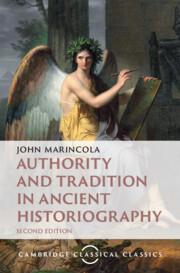
How did Greek and Roman historians claim the authority to narrate the deeds embraced by their histories? In this acclaimed and influential book, John Marincola examines all aspects of their self-presentation, surveying the entire field from Herodotus (fifth century BCE) to Ammianus Marcellinus (fourth century CE). He shows how each historian claimed veracity by imitating, modifying, and manipulating the traditions established by his predecessors. After discussing the tension between individuality and imitation, he analyses the recurring style used to establish the historian's authority: how he came to write history; the qualifications brought to the task; the inquiries and efforts he made in his research; and his claims to possess a reliable character. By showing how each historian used the tradition to claim and maintain his own authority, the book – now including a substantial new Introduction – helps us better understand the complex nature of ancient historiography.
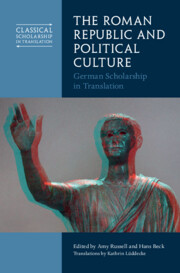
This volume makes available in English translation for the first time a series of hugely influential articles about Roman Republican politics which were all originally published in German. They represent a school of thought that has long been in dialogue with Anglophone research but has not always been accessible to all English-speakers, leaving many listening to only one side of a conversation. The contributions were part of a movement towards viewing Roman Republican politics more holistically, through the lens of political culture. They move beyond cataloguing institutions to treat art, literature, ritual, oratory, and public space as vital components of political life. Three new essays by Amy Russell, Karl-Joachim Hölkeskamp, and Harriet Flower discuss the history of German scholarship on the Republic and its interactions with Anglophone research, and new introductions to each piece by Hans Beck allow readers to situate the work in its intellectual context.
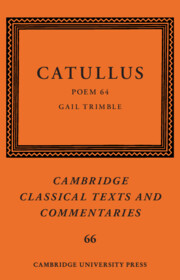
Catullus' longest poem, a miniature epic or 'epyllion' that tells two apparently unrelated mythological stories, is a central text in the Roman literary tradition. Allusive, exquisite, and sometimes shocking, it offers a profound exploration of human connection and aesthetic response against a backdrop of universal history. This major new edition addresses the interpretative challenges of the poem on every level of detail. The corrupt text is newly edited, while a line-by-line commentary of unparalleled depth and range integrates discussion of textual and linguistic matters with sophisticated literary criticism and a thoroughgoing awareness both of the poem's cultural and intertextual background and of its subsequent influence and reception. The introduction sets Catullus 64 in context, and an innovative epilogue draws together the threads of an overall interpretation. This book is an essential resource for the study of Latin poetry, and will transform its readers' understanding and appreciation of Catullus 64.
Chapter 4, ‘The Efficacy of Empirical Vision’, argues that physical sight can and should lead to belief in John. Scholars often cite John 2:23; 4:48; and 20:29 as evidence for John’s own critique of physical seeing as a means of coming to belief. The chapter argues that close reading of John 2:23 and 4:48 reveals human hearts to be the true cause of unbelief and shows that physical sight is the catalyst for all unbelief and all belief. Neither does John 20:29 condemn sight as a means of acquiring belief. Rather, it suggests that mediated seeing – via the text of the Gospel – can be as efficacious for belief as an actual encounter with Jesus. The chapter concludes that sight is complex, but that no critique of the positive relationship between sight and belief exists in John.
Having established that God is the goal of belief, that God is physically visible in Jesus, and that physical sight can lead to belief, Chapter 6, ‘Seeing Jesus and Seeing God’, draws these three points together by asking whether John portrays visual encounters with Jesus as visual encounters with God. The chapter argues that the physical act of seeing Jesus is a necessary condition for seeing God in him despite the challenge that God emerges as most visible in Jesus’s most acutely human moments. Evidence for this position arises from exegesis of three passages in which Johannine characters see Jesus (John 6:19; 19:6; 20:14–29) as well as John’s account of the crucifixion as glorification (12:1–50; 19:28–37). The chapter closes by turning to the crucifixion and examining the profound irony of Jesus’s death as the high point of divine visibility in the Gospel.
Chapter 3, ‘God on Earth’, argues that, for John, Jesus’s body is the place where one may see God. It opens with John’s association of Jesus with the tabernacle and the temple, the most comprehensive descriptions of Jesus’s flesh and body in the Gospel, and asks whether one can read Jesus’s body as the literal ‘house of God.’ Evidence for this reading comes from an overview of Israelite and Early Jewish theologies that portray a God who can be in two places at once. John evidences a corresponding understanding of God’s dual presence in his association of the flesh and body of Jesus with the tabernacle and temple and in the Farewell Discourse. The chapter concludes that God can be on earth in Jesus’s body as well as in heaven.
Chapter 1, ‘My Lord and My God’ in John 20:30–31’, asserts that the cause, content, and consequences of belief all suggest that Jesus is God. In John 20:27–29, Thomas sees Jesus and calls him ‘my Lord and my God’. After Jesus blesses those who believe without seeing him, John claims that he has written down signs in this book so that his readers can come to believe that ‘Jesus is the Christ, the Son of God’ and ‘receive life in his name’ (John 20:30–31). The proximity of both statements is not coincidental but reveals that 20:30–31 describes the same fullness of belief as Thomas’s exclamation. What emerges is that John’s portrayals of the ‘signs’, the titles ‘Christ’ and ‘Son of God’, and the resulting ‘life in his name’ are fundamentally theological. True belief will always make Thomas’s declaration.