To save content items to your account,
please confirm that you agree to abide by our usage policies.
If this is the first time you use this feature, you will be asked to authorise Cambridge Core to connect with your account.
Find out more about saving content to .
To save content items to your Kindle, first ensure no-reply@cambridge.org
is added to your Approved Personal Document E-mail List under your Personal Document Settings
on the Manage Your Content and Devices page of your Amazon account. Then enter the ‘name’ part
of your Kindle email address below.
Find out more about saving to your Kindle.
Note you can select to save to either the @free.kindle.com or @kindle.com variations.
‘@free.kindle.com’ emails are free but can only be saved to your device when it is connected to wi-fi.
‘@kindle.com’ emails can be delivered even when you are not connected to wi-fi, but note that service fees apply.
As we arrive at ciu. Dei 21 and 22, we reach the final destination of the two cities after their long pilgrimage on earth. Book 21 deals with the final repudiation of the ciuitas terrena, the eternal punishment of the damned in Hell. Book 22 examines the ultimate fate of the ciuitas Dei, the eternal reward of the blessed in heaven. But, as I will argue in this chapter, one can also read the final books of the City of God as the endpoint of a specific intellectual journey on which Augustine had embarked decades earlier, one that led him to abandon much of the mental furniture of a late antique philosopher and to embrace – even to pioneer – a cosmology and a theological anthropology with specifically Christian contours.
In Book 19, Augustine concentrates on leading two audiences, both beset by different forms of violence, unrest, and insecurity within and without, to accept God’s offer of the peace that endures in heaven’s everlasting life as the supreme good. Primarily, this appeal for peace has a protreptic quality to attract a non-Christian audience. Especially for their sake Augustine uses, in addition to the divine authority of Scripture, the reason of philosophical argument in Book 19. Secondarily, the appeal has a didactic exhortation for a Christian audience to seek more ardently the peace of the heavenly Jerusalem. Even the pilgrim Church has “sheer misery compared to the happiness we call ultimate” (ciu. Dei 19.10; Babcock, 2.364; CCSL 48.674). Augustine makes his appeal for peace by humbling the peace of what each of the two audiences experiences. All people experience in this life on earth, in different ways, not only a broken society, but also a broken heart. But without recognizing that experience in humility, why would readers yearn for heaven’s peace? To all, Augustine makes an appeal for what he calls pax plenissima atque certissima (ciu. Dei 19.10; CCSL 48.674).
Books 8–10 of The City of God complete the polemical interrogation of pagan culture. As Augustine says, the last five of these ten are addressed to the philosophers whose connivance with the blasphemies of the civic cult exposes the insufficiency of reason as a means to the knowledge of God and the perfection of moral character. In the three books discussed here, his interlocutors are the Platonists Apuleius and Porphyry, one the foremost African man of letters before Augustine himself, the other a trenchant critic of the scriptures who had derided Christianity as the superstitious worship of a dead man. Augustine’s case against both is that, notwithstanding their adherence to a school which had come close to Christianity in its consciousness of the unity and sovereignty of God, they had returned to the most demotic form of polytheism, making human access to the gods depend on a race of aerial spirits who are inferior in piety and benevolence to the best denizens of earth. Augustine’s aim is to show that their speculations are inconsistent not only with scriptural teaching on the origin of demons, but with the genuine traditions of Platonism, the confession of the ancient prophet Hermes Trismegistus and Porphyry’s own intimations of the true nature of God.
In conf., Augustine recounts how he was led to Manicheanism, in part, by his repugnance to Old Testament passages in which a human-like body is attributed to God (conf. 3.7). Ambrose helps to release the grip that Manicheanism had on Augustine by showing him that it is not always necessary to read the Old Testament literally (conf. 6.4 and 7.1). In Books 17 and 18 of the ciu. Dei, Augustine both rejects the notion that all of the Old Testament is allegorical (the allegorical cannot negate the literal meaning, and sometimes the text is purely historical) and affirms that the most important meaning of the Old Testament is prophetic (ciu. Dei 17.3). The earthly kingdom in the Old Testament is inherently allegorical and prophetic. It is not a kingdom that is about or for itself; it is about and for the future heavenly kingdom. The work of the prophets is to prevent the earthly kingdom from being taken too literally – as a kingdom whose meaning is wholly in the present and in itself.
This chapter explores four different types of explanatory factors that might be invoked to account for the emergence of different groups of scientific theories, ontologies or cosmologies, namely ecology, language, technology and socio-political factors. It arrives at the negative conclusion that none of these singly nor all four taken in conjunction allow us to predict and explain the world-views and modes of scientific investigation that the historical record and the ethnographic data provide evidence for. The varying trajectories of the different developments that we encounter thus demand nuanced particular analysis.
In the first three books of City of God, Augustine begins to defend Christianity against those who blame it for the sack of Rome. More specifically, Augustine is responding to both the written theological questions of the pagan Volusian, the proconsul of Africa (ep. 135), and Volusian’s spoken concerns relayed by his Christian friend, Marcellinus (ep. 136), that Christianity and Roman citizenship were incompatible. In his aim of exonerating the Christians from blame for Rome’s fall, Augustine, as Markus suggests, speaks of Rome “as an outsider.” But Rome plays a more complicated role in Augustine’s argument. For Augustine, we are a complex amalgam of experiences, memories, habits, affections, dispositions, and reason, all of which shape, both consciously and subconsciously, what we love. “To have a past,” as Wetzel observes, is “to admit grief into wisdom.” Augustine shares with his audience many of the same affective memories derived from his Roman upbringing and education. One need only recall Augustine’s recollection of how Virgil moved him to tears as a youth (conf. 1.13.20–21). Books 4 and 5 read not as a break from this Roman past, but as a recasting of memory. Citing Roman sources along the way, Augustine detaches paganism from romanticized images of Rome’s past, showing that traditional Roman religious practices not only fail to account for Roman successes, but also are the contrivance of elites used to conceal their criminality and justify domination.
Figures 5.1 and 5.2 give the simplest forms of the epicyclic and eccentric models respectively. In Figure 5.1 the planet (or sun or moon) (P) moves round the circumference of an epicycle, whose centre (C) itself moves round the circumference of what is called the deferent circle whose centre E is the earth. The sense of the movement of a planet on its epicycle is the same as that of the deferent circle, while for the sun and moon, which do not exhibit retrogradation, the two circles move in opposite senses.
Noted Augustine scholar J. H. S. Burleigh (d. 1985) once opined that Books 15–18 were “the least satisfactory section” of the entire ciu. Dei. While acknowledging that these words are comparative not superlative, this chapter suggests that there are good reasons for disagreeing with Burleigh’s assessment. Indeed, it contends that there is much to appreciate within this overtly “historical section” if one develops a sense for what Augustine is attempting within them.
Books 13 and 14, written around AD 418, are part of a broader set of Books 11–14 which deal with the origin of the earthly and heavenly cities. Books 13 and 14 were written in the midst of the Pelagian controversy but also sought to tackle an issue Augustine invested much time and energy in, from the very beginning of his ecclesiastical career. Furthermore, these two books can be read as commentaries on Genesis on the one hand, and as philosophical tractates critiquing Platonic and Stoic tenets on the other. And while Books 13 and 14 focus on the fall of Adam and its consequences, Augustine does use this opportunity to attack Pelagian positions explicitly in this context.
The predominant theme of ciu. Dei 2, which sets the course for Augustine’s critique of ancient Rome, is the disastrous influence of a religion without public moral teaching to offer. In exploring his treatment of that theme, we must first pause over the word ‘religion’, which is ours and not Augustine’s. ‘Religion and morality’ is the way we would naturally pose the question, and more commonly talk about morality without religion than about religion without morality. Augustine could also have expressed his question in our way. He uses the word ritus (plural), sometimes in phrases, as ritus sacri, ritus religionis, in ways that correspond sufficiently to our use of the term ‘religion’, and on one occasion he even refers to ‘religion and morality’ (ritibus moribusque; ciu. Dei 14.1). But he states the question in terms of the conduct of demons, really existing powers that are worshipped as gods in Roman religion, who have failed to provide the city with laws and its worshippers with moral instruction, and who have peremptorily demanded the homage of corrupting theatrical productions.
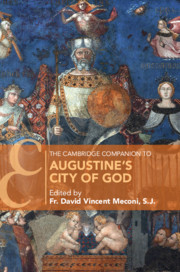
Augustine of Hippo's The City of God is generally considered to be one of the key works of Late Antiquity. Written in response to allegations that Christianity had brought about the decline of Rome, Augustine here explores themes in history, political science, and Christian theology, and argues for the truth of Christianity over competing religions and philosophies. This Companion volume includes specially-commissioned essays by an international team of scholars that provide new insights into The City of God. Offering commentary on each of this massive work's 22 books chapters, they sequentially and systematically explore The City of God as a whole. Collectively, these essays demonstrate the development and coherence of Augustine's argument. The volume will be an invaluable resource for students and scholars of ancient and contemporary theology, philosophy, cultural studies, and political theory.
This book challenges the common assumption that the predominant focus of the history of science should be the achievements of Western scientists since the so-called Scientific Revolution. The conceptual frameworks within which the members of earlier societies and of modern indigenous groups worked admittedly pose severe problems for our understanding. But rather than dismiss them on the grounds that they are incommensurable with our own and to that extent unintelligible, we should see them as offering opportunities for us to revise many of our own preconceptions. We should accept that the realities to be accounted for are multi-dimensional and that all such accounts are to some extent value-laden. In the process insights from current anthropology and the study of ancient Greece and China especially are brought to bear to suggest how the remit of the history of science can be expanded to achieve a cross-cultural perspective on the problems.
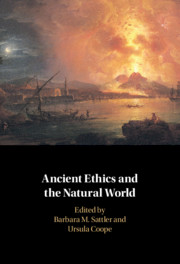
This book explores a distinctive feature of ancient philosophy: the close relation between ancient ethics and the study of the natural world. Human beings are in some sense part of the natural world, and they live their lives within a larger cosmos, but their actions are governed by norms whose relation to the natural world is up for debate. The essays in this volume, written by leading specialists in ancient philosophy, discuss how these facts about our relation to the world bear both upon ancient accounts of human goodness and also upon ancient accounts of the natural world itself. The volume includes discussion not only of Plato and Aristotle, but also of earlier and later thinkers, with an essay on the Presocratics and two essays that discuss later Epicurean, Stoic, and Neoplatonist philosophers.
This chapter discusses the relation between causation and moral responsibility. We generally hold adult human beings morally responsible for their actions, yet those action are also events in the natural world, enmeshed in causal chains that extend backwards in time long before the agent’s birth. If the causes in those chains necessitate their effects, it would appear that we must either give up the view that humans are morally responsible for their actions, or embrace the paradoxical view that humans are morally responsible for actions necessitated by events over which they have no control. Tuozzo argues that Aristotle’s causal theory avoids this dilemma by recognising two distinct types of causal chain or nexus. In one of these, the links between cause and effect are indeed necessary, from beginning to end. But chains of this sort are necessarily finite, with a definite beginning and end. Each of these necessary, finite causal chains are also enmeshed in a different sort of causal nexus, one that does extend indefinitely into the past. But this sort of indefinite causal chain is possible only because it contains links that are not necessitated. This enables Aristotle to account for moral responsibility by locating the necessitating cause of a human action in the agent herself. Nonetheless, Tuozzo concludes, Aristotle’s theory does have the paradoxical implication that, although the state of the world at a given time does not necessitate all subsequent events, a complete description of it would, in principle, allow all subsequent events – including human actions – to be predicted.