To save content items to your account,
please confirm that you agree to abide by our usage policies.
If this is the first time you use this feature, you will be asked to authorise Cambridge Core to connect with your account.
Find out more about saving content to .
To save content items to your Kindle, first ensure no-reply@cambridge.org
is added to your Approved Personal Document E-mail List under your Personal Document Settings
on the Manage Your Content and Devices page of your Amazon account. Then enter the ‘name’ part
of your Kindle email address below.
Find out more about saving to your Kindle.
Note you can select to save to either the @free.kindle.com or @kindle.com variations.
‘@free.kindle.com’ emails are free but can only be saved to your device when it is connected to wi-fi.
‘@kindle.com’ emails can be delivered even when you are not connected to wi-fi, but note that service fees apply.
The Principate of Nero is a well-documented period for a study about the literary evidence on Roman enslaved and freed people. In Neronian literature – as exemplified by Seneca, Persius, and Petronius – manumission is recurrently mentioned as a metaphor for describing forms of aristocratic behavior in imperial times, so that freed people became an important issue in discussions about the moral meanings of freedom and slavery under the Principate and its inherent elite competition for social dominance. Neronian authors criticized certain aristocrats by depicting them as morally acting like enslaved or freed persons, thus becoming examples of an indecorous behavior. The chapter argues that the representations of freed people in this context were related to the legal changes in slavery since Augustus, which involved a kind of surveillance of the practice of manumission and the creation of a new category of freed people, the Junian Latins, that did not automatically entail Roman citizenship. Both aspects had an impact not only on the more immediate relations between enslavers and enslaved persons, and on the social life of enslaved and freed people, but also reconfigured the ideas of slavery shared by the Roman elite.
This introductory chapter places the volume within its wider academic context through discussion of its method, background, and content. First, the chapter frames the debates that gave rise to the collection and sets out the central research questions that the chapters address. Second, it summarizes the current state of the literature, including a discussion of how similar lines of inquiry have developed in different disciplines (archaeology, legal history, epigraphy, and ancient history). Third, it discusses the contents and significant conclusions of the volume by summarizing the chapters and then by highlighting the major commonalities between them. Fourth, it outlines the volume’s unique contributions to the debate and sketches avenues for future research.
This chapter compares two fictional texts of the imperial period that represent freed persons, Xenophon of Ephesus’ Ephesiaca and Petronius’ Cena Trimalchionis. The comparison advances our understanding of how Roman freed persons may have come to terms with the experience of slavery. Ephesiaca expresses sympathy for the enslaved elite protagonists Habrocomes and Anthia not only as enslaved elites, but as enslaved persons per se. The novel continues its sympathy for the protagonists after they have been restored to freedom. In particular, the conclusion of Ephesiaca offers a sympathetic depiction of the protagonists’ response to what they had endured in slavery: Habrocomes and Anthia dedicate memorials to their parents, who had died while the protagonists were still enslaved; they withdraw from the wider community and reconstitute a family that includes their fellow freed persons; they spend the rest of their lives in celebration that is shadowed by their recollection of the past and the anticipation of their own mortality. The same motifs, viz., memorialization, recollection of a painful past, seclusion from the wider community, family constituted on the basis of shared experience rather than biology, and melancholic celebration, mark the representation of Trimalchio and his fellow freed persons in the Cena. The parallels suggest the possibility that these motifs typified the representation of the experience of freed persons, sympathetically in Ephesiaca and derisively in the Cena.
This chapter analyzes a number of municipal decrees and honorary inscriptions from Campania which can be dated to the second century CE. In these texts freed persons receive honors and privileges as a reward for their benefactions towards the community. The phenomenon itself is not surprising, but most acts of generosity by freed persons were done in their capacity as Augustales. In all cases discussed in this chapter the benefactions were done on a voluntary basis after negotiations with representatives of the city’s main political bodies. The most striking aspect of these texts is the language in which the benefactors are praised. They are heralded as role models whose behavior should be imitated by their fellow-citizens and their acts of generosity are praised as contributions to the political landscape. The benefactors provide a service to the community which corresponds to the standing of the city. While these texts may not prove that freed persons at the municipal level were consistently viewed in a positive light, a case can be made that at least some of them were regarded as valued members of the community. This evidence can then be used to broaden our perspective on the integration of freed persons in Roman society.
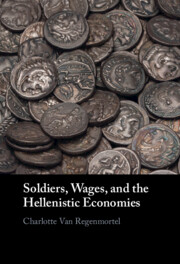
This book explains the military and economic developments that engulfed the ancient Mediterranean in the late Classical and early Hellenistic periods from the perspective of labour history. It examines the changing nature of military service in the vast armies of Philip and Alexander, the Successors, and the early Hellenistic kingdoms and argues that the paid soldiers who staffed them were not just 'mercenaries', but rather the Greek world's first large-scale instance of wage labour. Using a wide range of sources, Charlotte Van Regenmortel not only offers a detailed social history of military service in these armies but also provides a novel explanation for the economic transformation of the Hellenistic age, positioning military wage-labourers as the driving force behind the period's nascent market economies. This title is part of the Flip it Open Programme and may also be available Open Access. Check our website Cambridge Core for details.
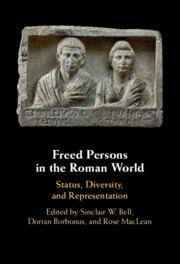
How were freed people represented in the Roman world? This volume presents new research about the integration of freed persons into Roman society. It addresses the challenge of studying Roman freed persons on the basis of highly fragmentary sources whose contents have been fundamentally shaped by the forces of domination. Even though freed persons were defined through a common legal status and shared the experience of enslavement and manumission, many different interactions could derive from these commonalities in different periods and localities across the empire. Drawing on literary, epigraphic, and archaeological evidence, this book provides cases studies that test the various ways in which juridical categories and normative discourses shaped the social and cultural landscape in which freed people lived. By approaching the literary and epigraphic representations of freed persons in new ways, it nuances the impact of power asymmetries and social strategies on the cultural practices and lived experiences of freed persons.
The Cambridge Comparative History of Ancient Law is the first of its kind in the field of comparative ancient legal history. Written collaboratively by a dedicated team of international experts, each chapter offers a new framing and understanding of key legal concepts, practices and historical contexts across five major legal traditions of the ancient world. Stretching chronologically across more than three and a half millennia, from the earliest, very fragmentary, proto-cuneiform tablets (3200–3000 BCE) to the Tang Code of 652 CE, the volume challenges earlier comparative histories of ancient law / societies, at the same time as opening up new areas for future scholarship across a wealth of surviving ancient Near Eastern, Indian, Chinese, Greek and Roman primary source evidence. Topics covered include 'law as text', legal science, inter-polity relations, law and the state, law and religion, legal procedure, personal status and the family, crime, property and contract.
This chapter discusses the concept of wage labour and its history and proposes a definition of wage labour that includes the provision of remuneration in exchange for labour power, but also emphasizes the labourers’ continued free status and their concomitant ability to influence the price of their labour power, and thus the level of their wages – thereby allowing the price of labour power to be set on the market. From this follows discussion of the role of wage labour in debates on the ancient economy – in part asking which workers can be seen as wage labourers – and, further, of how paid military service can constitute a form of wage labour. It is argued that for soldiers to constitute wage labourers, their service needs to be voluntary, of temporary nature, and remunerated in coin or in kind.
This chapter will investigate the reasons behind the transformation from polytheistic to monotheistic religiosity in the Levant during the first millennium BCE, seeking to understand how individuals were brought into a spiritual enhancement in their relationship with God that was marked by an avoidance of “things” toward an abundance of the word of God and the reference to His presence in the Temple built in Jerusalem.
Hired soldiers had to be incentivized to enlist, and subsequently induced to continue their service. Hence, together with the growing reliance on paid, voluntary tropps, we see the development of increasingly sophisticated systems of remuneration, comprising rewards in both coin and kind. Enlistment across all ranks of the royal armies was incentivized and, indeed, made possible via the provision of armour and equipment, or via grants of land to those recruited into elite divisions. Coined payments going beyond mere rations, as well as occasional bonuses, formed the bulk of the remuneration attested in both the textual and numismatic record. Additional benefits and privileges – such as the occasional right to plunder, tax breaks, legal protections, and family support – were also sometimes granted. Together, these incentives seem to have offered soldiers of the royal armies an above-average standard of living, as indicated by the qualitative and (sparse) quantitative evidence.
This dossier, included for ease of reference, contains the texts and translations of a selection of inscriptions cited in this volume, presented in chronological order. In each case, the text is accompanied by core information on the stone and bibliographical details of editions; the edition printed is indicated in bold. This is followed by the date, and discussion where major controversy exists. Abbreviations follow SEG and the Liste de Sigles of L’Année Philologique ; for all other publications, see the Bibliography.
In the early stages of the Iliad, an enraged Achilles famously questions the purpose of his presence at Troy: why are he and his soldiers risking their lives on the battlefield, when they have no stake in the war at hand and gain no share in the rewards of battle? Achilles, of course, had knowingly joined the deadly expedition in pursuit of eternal glory and yet, in doing so, he had forced his men to do the same.
The Homeric hero’s desire to acquire status on the battlefield was not merely a literary trope but also the expression of a harsh reality of elite society in the Archaic and Classical Greek world, whose members’ position of authority was based on their military service and status.1