To save content items to your account,
please confirm that you agree to abide by our usage policies.
If this is the first time you use this feature, you will be asked to authorise Cambridge Core to connect with your account.
Find out more about saving content to .
To save content items to your Kindle, first ensure no-reply@cambridge.org
is added to your Approved Personal Document E-mail List under your Personal Document Settings
on the Manage Your Content and Devices page of your Amazon account. Then enter the ‘name’ part
of your Kindle email address below.
Find out more about saving to your Kindle.
Note you can select to save to either the @free.kindle.com or @kindle.com variations.
‘@free.kindle.com’ emails are free but can only be saved to your device when it is connected to wi-fi.
‘@kindle.com’ emails can be delivered even when you are not connected to wi-fi, but note that service fees apply.
In 2022, a Tunisian citizen was arrested in Oslo when he tried to sell 30 Carthaginian bronze coins to a local antiques dealer. The dealer had previously alerted the police after receiving an email inquiry asking him whether he was interested in buying a ‘large number’ of Punic coins from an alleged underwater find, presumably a hoard, off the coast of Tunisia. The University of Oslo’s Museum of Cultural History, which cooperates with law-enforcement agencies and the authorities in cases involving illicit cultural artefacts, assisted with the identification of the coins. Eventually, the latter were returned to Tunisia, and Norwegian prosecutors dropped the charges against the Tunisian national. This article discusses the relevant legal framework of the case and the process that unfolded from the time when an attempt was made to sell the coins until they were returned to their country of origin. The broader numismatic implications of this find are also examined.
In this book, Jonathan Valk asks a deceptively simple question: What did it mean to be Assyrian in the second millennium bce? Extraordinary evidence from Assyrian society across this millennium enables an answer to this question. The evidence includes tens of thousands of letters and legal texts from an Assyrian merchant diaspora in what is now modern Turkey, as well as thousands of administrative documents and bombastic royal inscriptions associated with the Assyrian state. Valk develops a new theory of social categories that facilitates an understanding of how collective identities work. Applying this theoretical framework to the so-called Old and Middle Assyrian periods, he pieces together the contours of Assyrian society in each period, as revealed in the abundance of primary evidence, and explores the evolving construction of Assyrian identity as well. Valk's study demonstrates how changing historical circumstances condition identity and society, and that the meaning we assign to identities is ever in flux.
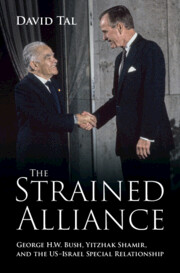
When George H. W. Bush ascended to the American presidency in 1989, one of the more urgent relationships that he was faced with building was that with Israel's Yitzhak Shamir. Drawing on newly declassified materials, from American and Israeli state and non-state archives, this book reveals the complexities of a relationship defined by both deep cooperation and sharp tensions. From the peace process to loan guarantees, from military aid to emotional diplomacy, The Strained Alliance uncovers the debates, conflicts, and strategic decisions that shaped this critical period between 1989–1992. In doing so, David Tal challenges the traditional perception that US-Israel relations were dominated by policy disagreements, highlighting instead the broader foundation of collaboration that endured behind the scenes. Tal provides fresh insights into the intricate dynamics of diplomacy, ideology, and leadership, offering a balanced perspective on one of the most pivotal chapters in US-Israel history.
This article analyzes the political ecology of modern Iran as envisioned in the report of Arthur Hills Gleadowe-Newcomen’s 1904–-05 Commercial Mission to South-Eastern Persia and a covert Persian counter-narrative penned by its military attaché, Mirza Riza Muhandis. The commercial ambitions of the British Empire in Qajar Iran involved a transformation of Iran’s environment. The critiques of these programs outlined in the travelogue of Mirza Riza Muhandis concern whom these interventions by science and engineering should serve. This case study highlights tensions over development and inequality at a critical moment in Iran’s history, just months before the beginnings of the 1906 Constitutional Revolution.
This article revisits the concept of the ‘Christian city’ in Late Antique North Africa by shifting the focus from topography to the lived and perceived urban experience. While earlier scholarship has emphasized the accumulation of Christian buildings, this study argues that religious transformation is equally, if not more, visible through the evolving practices of city inhabitants. By analysing both Christian and continuing pagan traditions between the fourth and seventh centuries, the article explores how monuments and public religious practices shaped the perception and function of the city. Special attention is given to the volumetric presence of sacred architecture and to the role of public spaces, particularly streets, in hosting religious acts. Ultimately, the study offers a more nuanced understanding of the Christian city: one defined not solely by the presence of basilicas, but by the rhythms, gestures, and visibility of religious life within the broader civic landscape.
This essay argues that the women, life, freedom movement should be understood as crucial site for the study of revolutionary praxis and feminist theory from which scholars and activists around the world can learn. While much attention has been given to efforts to co-opt the movement by monarchist and other “regime change” factions in diaspora, a lesser-known diasporic consequence has been the creation of Iranian feminist collectives oriented around intersectional and anti-colonial forms of transnational solidarity. By analyzing three such collectives that aimed to uplift critical feminist orientations emerging from the uprising in Iran, I chart shifts in ideas about organization, the meaning of revolution, and the contours of a “decolonial” feminist analysis in the Iranian context. I argue that these Iranian feminist collectives have built on the transnational feminist practice of making connections across differences, placing their critique of the Iranian state in relation to other iterations of patriarchal and militarized authoritarianism globally, including in the west.
This article critiques certain factions of the Iranian diaspora opposition for embracing retrotopia–a romanticized, imagined past that reflects present despair and future anxiety. Instead of supporting Iran’s civil society, some rely on foreign powers, promote archaic nationalism and monarchist nostalgia, or advance ethnic exceptionalism, thereby distorting the emancipatory ideals of the Zan, Zendegi, Azadi (WLF) movement. Their rhetoric often glorifies war, employs exclusionary and patriarchal discourses, and undermines pluralism, gender equality, and indigenous democratic change. These factions are identifiable as an “opposition against the movement,” obstructing rather than advancing emancipatory change. The Israeli-American war on Iran (June 2025) further exposed their alignment with external aggression, as well as their strategic confusion, ethical bankruptcy, and detachment from Iran’s grassroots post–Islamist vision of pluralism, inclusivity, and peaceful coexistence.
This article examines diasporic Iranian responses to protests sparked by the death of Jina (Mahsa) Amini in September 2022. While Amini’s death galvanized widespread dissent inside Iran, it also spurred diasporic Iranian solidarity, often expressed through the call to “be the voice” of Iranian protestors. I analyze two key practices of diasporic narration: first, framing the Woman, Life, Freedom protests as a “revolution” in social media discourse; and second, the circulation of nostalgic video montages idealizing pre-1979 Iran as a lost era of political freedom. Together, these practices reveal how diasporic narratives may dilute protest demands by fitting them into revisionist frameworks. The conclusion reflects on both the potential and limits of diaspora narration in shaping political memory and understanding.
Intertextual linkages between Neo-Assyrian royal inscriptions and mythological narratives have significantly contributed to our understanding of royal self-presentation and historicization. Less explored, however, are how such linkages may be interpreted and visualized within royal art. In this paper, I propose an intervisual connection between Ninurta mythologies and Assyrian royal lion hunts by unpacking modes of display and interaction embedded between image, text, and lived experience in the palace art of Ashurbanipal at Nineveh. Intervisuality was arguably deployed as an innovative strategy to craft a sophisticated connection between royal and divine kingship. I explore how Anzû, a mythological adversary of Ninurta that embodies chaos and disorder, was conceptualized and manifested across media, including cylinder seals and in relief art. Consequently, the paper displaces the typical focus given to the Assyrian king by instead investigating the roles of animals and monsters in upholding royal narratives. I argue that the form and actions of Anzû as embodied and performed in objects act as powerful symbolic referents that anchor its transformed image in royal hunt narratives. In conclusion, I consider why Ashurbanipal may have employed visual references to Anzû in his palace art.
This article analyzes the diasporic dimensions of the 2022 Jina Revolutionary Momentum and its transnational resonance in Berlin, where more than 80,000 protestors gathered in solidarity with events in Iran. It argues that the momentum is best understood not as a continuation of previous movements but as a revolutionary rupture that generates new horizons of possibility through the politics of care, contrasting fear as the regime’s dominant affective frame. Drawing on affect theory, the article explores how the revolutionary imaginary transformed both the Iranian diaspora and indirectly Berlin itself into sites of revolutionary performance. By situating the Iranian diasporic activism in the city’s longer history as a node for exiled revolutionary activity, the analysis highlights how diasporic activism influenced the national imaginary, fostered transnational solidarities, and reshaped the meaning of Kharej (abroad) from one of exclusion to one of affection within a broader revolutionary geography.
This paper examines trends in wage, income, and consumption inequality in Turkey from 2002 to 2023, a period marked by unorthodox economic policymaking before and after the COVID-19 pandemic. Using microdata from the Turkish Statistical Institute’s Household Budget Survey and the Survey of Income and Living Conditions, we document several salient distributional patterns. Wage inequality declined steadily over two decades, including during the recent episode of policy experimentation – coinciding with sustained minimum wage hikes and a rising share of university-educated workers. Income inequality also fell, though less markedly, before reversing in recent years due to widening disparities in capital and entrepreneurial income. In addition, consumption inequality rose dramatically during the unorthodox policy period, exceeding income inequality growth and driven primarily by a surge in durable goods consumption among top-decile households. These findings reveal the complex and multi-dimensional distributional consequences of unconventional economic policy in emerging markets and highlight the importance of examining inequality across multiple dimensions when evaluating policy effectiveness.
This paper investigates how Assyrian kings protected their material legacies for posterity and why in some prominent instances such protections failed, with a particular focus on the palaces of Kalḫu and Nineveh during the Sargonid Period. I approach this question through the lens of intergenerational reciprocity; Assyrian worldviews provided various channels through which past, present, and future kings could engage with one another in reciprocal and coercive relationships across time. Unlike curses and blessings, which were relatively easy for Assyrian kings to disregard, these reciprocal relationships provided more compelling incentives for rulers to honour and preserve their predecessors’ material legacies. However, practical or ideological concerns would sometimes result in the need to alter buildings in ways that damaged the material legacy of a past ruler. In some of these instances, steps were taken to symbolically compensate the past ruler in question for this damage. In this fashion, rulers were able to negotiate the ideological tension between tradition and innovation to preserve historical memory while adapting living cultural heritage to meet current needs.
This chapter analyzes the infrastructure of medical services and situates Arab doctors within this grid. The British Department of Health, on the one hand, was a significant employer, employing 25 to 35 percent of all Palestinian physicians at any given time. On the other hand, these doctors had minimal impact on decision-making: British medical officers occupied the top administrative echelons, restricting local medical professionals’ autonomy and career prospects and preventing the formation of a proto-state medical infrastructure. The chapter examines the tension between pressure from the Colonial Office to limit expenditure and pressure from Palestinian civil society to expand services. It then looks at Palestinian physicians’ working conditions at the department and Palestinian demands to improve medical services. The chapter concludes with attempts made by the department’s last director to remedy its ills during the final two years of the British Mandate.