To save content items to your account,
please confirm that you agree to abide by our usage policies.
If this is the first time you use this feature, you will be asked to authorise Cambridge Core to connect with your account.
Find out more about saving content to .
To save content items to your Kindle, first ensure no-reply@cambridge.org
is added to your Approved Personal Document E-mail List under your Personal Document Settings
on the Manage Your Content and Devices page of your Amazon account. Then enter the ‘name’ part
of your Kindle email address below.
Find out more about saving to your Kindle.
Note you can select to save to either the @free.kindle.com or @kindle.com variations.
‘@free.kindle.com’ emails are free but can only be saved to your device when it is connected to wi-fi.
‘@kindle.com’ emails can be delivered even when you are not connected to wi-fi, but note that service fees apply.
The article explores media depictions of industrial labour in Italy, with a special focus on visual, film and television portrayals, spanning from the 1960s to the first two decades of the twenty-first century. Rather than delving into an analysis of labour processes, the primary objective of the article is to scrutinise the gendered representations of work and whether and how the representation of work, including all professions, has played a pivotal role in shaping narratives about Italian society and its inherent contradictions. In this context, the article also emphasises the significance of what remains unrepresented, highlighting the absence of work as equally consequential as its presence. Of particular importance within this exploration is the examination of women's work, a realm less frequently depicted than that of men. The article dedicates specific attention to unravelling the nuances of women's role in the workforce, recognising their portrayal as a key element in understanding broader narratives about Italian society and its complexities.
During the first two decades of his career, Richardson's role as printer was hardly limited to setting the type for the periodicals that issued from his shop. Perhaps the most glaring evidence of his intervention in producing text is the fact that both 'The True Briton' (1723-24) and 'The Weekly Miscellany' (1732-41) just happen to have letters supposedly from women who protest the legal restraints against their participation in the public sphere. Neither the Duke of Wharton, the owner of 'The True Briton', nor William Webster, the desperately impecunious producer of 'The Weekly Miscellany', launched their journals with the objective of advancing radical views about political equality for women. But almost inadvertently this middle-aged, rotund printer at Salisbury Court was quietly feminizing journalism. After his first experiments in Whartons anti-Walpole journal he developed his satiric powers in the 'Miscellany' by creating not only his own feisty counterpart to Pope's coquette Belinda but even partnering with Sarah Chapone's subversive Delia. As an outlier in what was perceived to be a corrupt, predatory political world, Richardson readily assumed a female voice to express his resistance.
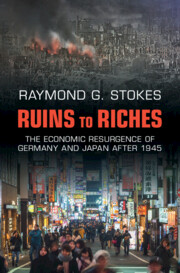
In 1945, Germany and Japan lay prostrate after total war and resounding defeat. By 1960, they had the second and fifth largest economies in the world respectively. This global leadership has been maintained ever since. How did these 'economic miracles' come to pass, and why were these two nations particularly adept at achieving them? Ray Stokes is the first to unpack these questions from comparative and international perspectives, emphasising both the individuals and companies behind this exceptional performance and the broader global political and economic contexts. He highlights the potent mixtures in both countries of judicious state action, effective industrial organisation, benign labour relations, and technological innovation, which they adapted constantly – sometimes painfully – to take full advantage of rapidly growing post-war international trade and globalisation. Together, they explain the spectacular resurgence of Deutschland AG and Japan Incorporated to global economic and technological leadership, which they have sustained to the present.
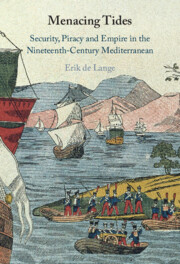
New ideas of security spelled the end of piracy on the Mediterranean Sea during the nineteenth century. As European states ended their military conflicts and privateering wars against one another, they turned their attention to the 'Barbary pirates' of Algiers, Tunis and Tripoli. Naval commanders, diplomats, merchant lobbies and activists cooperated for the first time against this shared threat. Together, they installed a new order of security at sea. Drawing on European and Ottoman archival records – from diplomatic correspondence and naval journals to songs, poems and pamphlets – Erik de Lange explores how security was used in the nineteenth century to legitimise the repression of piracy. This repression brought European imperial expansionism and colonial rule to North Africa. By highlighting the crucial role of security within international relations, Menacing Tides demonstrates how European cooperation against shared threats remade the Mediterranean and unleashed a new form of collaborative imperialism.
Chapter 4 presents the paradox of republican emancipation, a paradox based on the ambivalence of republican freedom at the time of the revolution. On the one hand, republican freedom is the status of those who are already masters of themselves. Freedom is independence and it is this independence that makes them capable of governing with competence and virtue. On the other, freedom is the newly claimed right of everyone, or anyone, not to be dominated – regardless of their virtue, or their economic and social situation, that is, regardless of their capacity to self-govern. But how can one reconcile the universal claim of freedom as nondomination with the republican supposition that the free person ought to be already socially, economically, and intellectually independent to be able to self-govern? If the many are incapable of self-governing, how can they ever become independent from the government of the few – how can they ever emancipate themselves? This chapter presents four instances of this paradox: the debate on passive/active citizenship, Condorcet’s position on the emancipation of slaves, Guyomar’s argument for the emancipation of women, and Grouchy’s proposal for changing the way we think about human dependence.
Chapter 5 presents the paradox of national universalism as a theoretical explanation of French republicans’ historical tendency to exclude foreigners and minorities. It retraces the formation of the discourse of “nation” alongside that of “people” as well as the development of nationalism alongside the discourse of universalism. It analyzes the tension caused by the conjunction of two phenomena: the existence (or supposition of) a historical nation, and the declaration of universalism on which the revolution based itself. Finally, the chapter presents education policies and civil religion during the French revolution as two instances of the paradox of national universalism.
Chapter 3 presents the development of new forms of republicanism in the revolutionary period. Republicanism was called upon to address a problem that was historically foreign to it: enabling the emancipation of a large and diverse people that had just lost the unifying power of their King. After examining the arguments of the first republican treatises (Condorcet, Robert, Billaud-Varenne), the chapter lays out the solutions republicans imagined to the problems that arose with the defection of the King. This included the attempt to create a united popular sovereign, and, in response to Montesquieu’s challenges, the creation of a virtuous and educated citizenry that was ready to defend the republic. Revolutionaries imagined a republic based on an abstract notion of citizenship and a representative system without representation of particular interests. This chapter concludes with a discussion of the debate between Sieyès, Condorcet, and Robespierre on the representation of the people in a republic.
Chapter 1 presents the debate about republicanism before the French Revolution. Montesquieu played an important part in this debate as he formulated the influential “scale thesis” according to which republicanism could not be adequate for a large country. Montesquieu raised a set of challenges to would-be republicans in France (the “motivation,” “unity,” and “epistemic” challenges). The rest of the chapter presents theoretical resources in different republican traditions (notably Italian, English, American) that informed the French republicans on key issues (conquest, freedom, commerce, institutions). This chapter retraces the context in which the myth of outdated republicanism was born, but also how the elitist and martial dimensions of the republican tradition shaped French republicanism.
The introduction begins with the crisis of republicanism in France today. It asks what republicanism is for the French and why exclusion lies at the center of its crisis. It then presents the characteristics of French republicanism (in particular, its universalism and its emancipatory dimension), its place in the broader republican tradition, and in the neo-republican revival. Finally, it introduces the theoretical paradoxes that led republicans to justify exclusionary practices despite their endorsement of emancipation.
Chapter 2 presents the conceptual transformation of republicanism that Rousseau operated while responding to Montesquieu’s challenges. In his writings, republicanism moved from an elitist theory based on virtuous self-sacrifice to an inclusive theory based on popular sovereignty and the rational interest of citizens. Rousseau developed a theory of republican citizenship as a shared intention toward creating and maintaining a community of free and equal beings—an inclusive theory of sharing freedom. Yet Rousseau’s theory has important shortcomings that plagued French republicanism after him. On the one hand, it presented a rational project of sharing equal freedom among all, but on the other, it emphasized particularism and nationalism as conditions of its realization.
The conclusion presents the recent attempt of French republicans to develop the idea of “integration” as a response to criticisms regarding the exclusionary dimensions of republicanism. Finally, it lays out what the ideal of sharing freedom, as it was articulated during the revolutionary period, can offer as a blueprint for contemporary republican theory.