To save content items to your account,
please confirm that you agree to abide by our usage policies.
If this is the first time you use this feature, you will be asked to authorise Cambridge Core to connect with your account.
Find out more about saving content to .
To save content items to your Kindle, first ensure no-reply@cambridge.org
is added to your Approved Personal Document E-mail List under your Personal Document Settings
on the Manage Your Content and Devices page of your Amazon account. Then enter the ‘name’ part
of your Kindle email address below.
Find out more about saving to your Kindle.
Note you can select to save to either the @free.kindle.com or @kindle.com variations.
‘@free.kindle.com’ emails are free but can only be saved to your device when it is connected to wi-fi.
‘@kindle.com’ emails can be delivered even when you are not connected to wi-fi, but note that service fees apply.
This book is the first of its kind to provide a comprehensive, contextualized and current account of China's development and regulation of cross-border listings. As the world's second-largest economy, it is crucial to understand how China regulates the overseas listing of its companies and the opening up of its capital market to foreign companies, particularly at a time of ongoing and escalating geopolitical tensions. Offering an up-to-date account of the subject, Professor Huang enables readers to gain a holistic and accurate understanding in this area. Providing a contextualized and practical analysis of the subject from a Chinese perspective, he explains not only what the law is but also why the law is the way that it is fundamentally. The book also examines the political, economic and social factors shaping the institutional context in which the law operates, assisting readers in understanding the reasons behind past regulatory actions and predicting future regulatory developments.
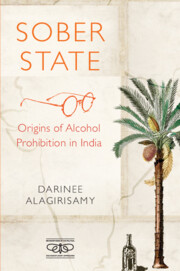
'What happens when a democratic state—still in the process of formation—commits to banning a substance, especially one as controversial as alcohol? This book traces the origins and evolution of alcohol prohibition in India, drawing on extensive archival research and rich vernacular sources to explain its surprising resilience over time. Since its inception, prohibition has served both as an ideal and a tool of state power—a dual role that has worked to shape its shifting trajectories. Each phase of enforcement has served to reaffirm prohibition's founding logic, thereby further embedding it in the machinery of governance—even as it has constrained its future implementation. Foregrounding intersections with caste and gender, the book illuminates how diverse social responses have made prohibition a deeply contested—sobering—yet enduring project. While prohibition may be a thing of the past in the West, history helps to keep it alive in India.'
Against the backdrop of worsening tensions across the Taiwan Strait, this Element analyzes the positions and policies vis-à-vis Taiwan of six major democratic US treaty allies-Japan, Australia, South Korea, the United Kingdom, France, Germany-and the European Union. Historically and today, these US partners have exercised far greater agency supporting Taiwan's international space and cross-Strait stability-in key instances even blazing early trails Washington would later follow-than the overwhelmingly US-centric academic and policy discourse generally suggests. Decades ago, each crafted an intentionally ambiguous official position regarding Taiwan's status that effectively granted subsequent political leaders considerable flexibility to operationalize their government's 'One China' policy and officially 'unofficial' relationship with Taiwan. Today, intensifying cross-Strait frictions ensure that US allies' policy choices will remain critical factors affecting the status quo's sustainability and democratic Taiwan's continued viability as an autonomous international actor. This title is also available as Open Access on Cambridge Core.
In this major new interpretation of Sino-North Korean relations, Gregg A. Brazinsky argues that neither the PRC nor the DPRK would have survived as socialist states without the ideal of Sino-North Korean friendship. Chinese and North Korean leaders encouraged mutual empathy and sentimental attachments between their citizens and then used these emotions to strengthen popular commitment to socialist state building. Drawing on an array of previously unexamined Chinese and North Korean sources, Brazinsky shows how mutual empathy helped to shape political, military, and cultural interactions between the two socialist allies. He explains why the unique relationship that Beijing and Pyongyang forged during the Korean War remained important throughout the Cold War and how it continues to influence the international relations of East Asia today.
The Communist Party of China has ruled mainland China since 1949. From Marxist revolution and class struggle to market reforms and national rejuvenation, the Party has repeatedly reinvented itself and its justification for monopolizing political power. Bringing together experts from a range of disciplines around the globe, this collection serves as a guide to understanding the Party's unparalleled durability. They examine a range of themes including the mechanics and organisation of one-party rule, the ideologies underpinning party rule, the Party's control of public discourse, technologies of social control, and adaptive policymaking. Read together, these essays provide a comprehensive understanding of the reasons for the Party's continued grip on political power in China today.
The “innovation championship” model has been instrumental in explaining policy innovations in China’s local governments, particularly at the provincial level. However, discrepancies between this model and real-world cases raise questions about its broader applicability. To address this, we employ a dichotomous framework (innovation generation/borrowing) and conduct multi-level quantitative analyses of government work reports. Our analysis suggests that between 2003 and 2022, most provincial innovations were driven by the championship model, which relies on central government recognition, while others were shaped by peer recognition mechanisms. Together, these form a “central and peer” (CP) model that prioritizes innovation generation while incorporating a degree of innovation borrowing. This CP model differentiates the innovation functions among provincial governments, which have formed a collective innovation network: pioneering provinces generate model policies, while others capitalize on these opportunities. Moreover, the extent of the central authority’s influence determines the relative importance of these two mechanisms.
The Taiwan Incident of 1874 – a prolonged Sino-Japanese confrontation over the killing of Ryukyu castaways, whom Japan claimed as its subjects – marked the full maturation of a new mode of Qing war preparation. This mode was characterized by global coordination, domestic and international competition, and the swift mobilization of personal connections to secure foreign weapons and loans – resources that were often interconnected. Facilitated by the efforts of various actors, this internationalized approach became a standard practice during the empire’s final decades. As the empire could no longer rely on domestic self-sufficiency in arms and funding, Qing military operations came to reflect the broader influence of global military and financial resources. The Qing empire’s capacity to mobilize global resources in pursuit of national objectives helps explain its resilience in an era dominated by imperial powers.
The dating of the qameṣ shift (*/aː/ > [ɔː]) in the Tiberian tradition of Biblical Hebrew has long been a scholarly puzzle. In this article I present possible evidence for this shift in the Greek transcriptions of Origen’s Hexapla, datable to the first half of the third century ce in Palestine. While the evidence is limited both in attested tokens and in grammatical scope, it is suggested that lexical diffusion may account for the gradual spread of this shift, as recorded in different stages of the transmission of Biblical Hebrew.
The Indian Ocean has long connected people, objects, and ideas across continents and cultures. This book asks how contemporary writers reimagine the Indian Ocean through literary figurations of the past. In doing so, it offers an oceanic perspective for rethinking the paradigms of postcolonialism by way of rich historical context and intertextual readings of Afro-Asian fiction. Drawing on historiographical research, archival theory, and literary analysis, this book explores how writers including Amitav Ghosh, Abdulrazak Gurnah, Sophia Mustafa, Ananda Devi, Shenaz Patel, and Barlen Pyamootoo imaginatively probe the historical and cultural legacies of transoceanic pasts within the political contradictions and identarian divisions of the postcolonial present. Traveling between South Asia and Eastern Africa and between the past and the present through literary, filmic, theoretical, and archival texts, this book contends that any understanding of South Asian or African present is incomplete without a consideration of their entangled pasts.
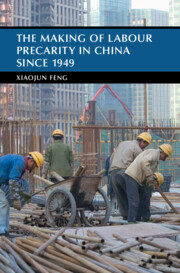
Globally, most workers live precarious lives. In this examination of China's industrial relations since 1949, Xiaojun Feng explores why this should be. China provides an important case to examine this question because it has gone through both socialist revolution and marketized reforms, the major economic and political dynamics that have shaped the world since the twentieth century. Developing a comprehensive analytical framework for the interpretation of archives, interviews, and participant observation, Feng explores the causes of and remedies for labour precarity in China. Bridging the 1949 and 1976 divides, this study unveils continuities and more fundamental discontinuities across these watershed moments, and sheds fresh light on the extent to which popular policy can counter labour precarity and the future dynamics of labour movements.
Statism with Chinese Characteristics offers a fresh perspective on the Chinese economy and its impact on the world. By diving into details and data such as the private nature of rural enterprises, early financial reforms, and the critical role of initial political openness, Yasheng Huang challenges the popular view that credits China's success to a unique blend of government interventions and autocratic governance. Huang shows how China's growth was driven by private entrepreneurship and gradual liberalization, not by infrastructural development, statist finance, and meritocratic autocracy. He confronts assumptions regarding the conventional wisdom about the Chinese economy, explicitly engaging with the policy pivot from the 1980s to the 1990s and infrastructure as a crucial factor behind China's growth. Underscoring the significant role of politics in shaping economic outcomes, this second edition explores the challenges facing the Chinese economy today, emphasizing how political changes dictate economic reforms, rather than the opposite.
This concluding chapter revisits the tour guides discussed in Chapter 4 and explores how they were instructed by representatives of the state to include the term xiangchou into their scripts. The repetition of xiangchou within the old heritage site illustrates the salience of the term, its cultural resonance, as well as its political influence. However, the tour guides’ personal interpretations of xiangchou also demonstrates the way the state’s appropriation of the term had created new forms of alienation: some Heyang locals feel homesick for a hometown they once knew and seems no longer to be. A divide has emerged between the xiangchou that drew urban tourists to Heyang, the xiangchou that locals hold for the Heyang of their childhood, the xiangchou expressed as a form of concern for the future of their hometown, and the xiangchou that the state invoked to implement its policy objectives upon the village.
Through a case study of the T’aegǔkki rallies beginning in late 2016, Chapter 6 examines why and how senior citizens took to the streets in large numbers to protest the impeachment of President Park Geun-hye and oppose the democratic and peaceful candlelight demonstrations. Analyzing the widespread emotions and narratives expressed by these older protesters, I argue that right-wing elites and intellectuals marshaled citizens by evoking historical experiences that aroused intense fear and outrage among older generations. In this chapter, I describe why the protests resonated so deeply with elderly citizens by focusing on their lived experiences during the Korean War and postwar industrialization and how the rise of new digital media inspired them to take to the streets on a large scale. Through grassroots organizing and by harnessing feelings of victimhood and fear among ordinary citizens, rightists cultivated a fertile ground for conservative mobilization.